
Trepidation and fear now envelop the entire country as the Federal Government may have acted too late before declaring emergency on insecurity given the spate at which terrorists and bandits rule supreme, killing a Brigadier General of the Nigerian Army, Musa Uba, abducting school girls with reckless abandon, sacking whole communities and imposing taxes and levies on local government areas in parts of the country
By Edu Abade
In saner climes, the government would have acted more decisively before the situation escalated beyond normal. But as usual, Nigeria and the government of the day capitulate, as terrorists and bandits reign supreme in parts of the country. Terrorism came to its sordid point when a Brigadier General of the Nigerian Army, Musa Uba was killed recently by terrorists.
Curiously, the abductions, killings and sacking of communities, mostly of Christian dominated areas only escalated shortly after the United State President, Donald Trump, threatened to intervene in salvaging Nigeria from Christian Genocide by terrorists.
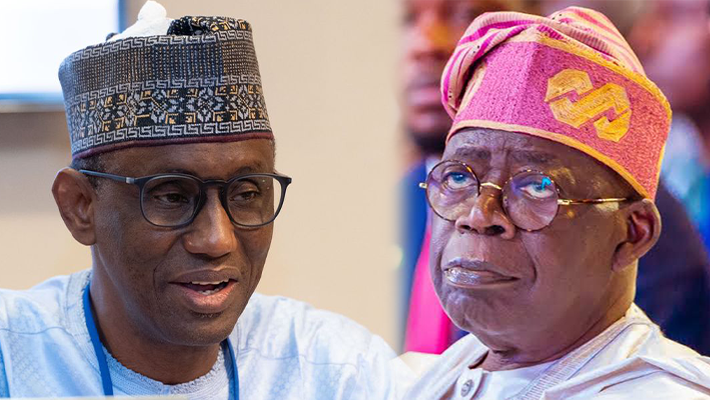
Following the threat, most Nigerians have argued for and against America’s involvement in the internal affairs of the country with some, including revered clergymen, arguing that the killings in Nigeria transcend religious lines, but the truth remains that Christian-dominated communities have been the worst hit by bandits and terrorists. And as the government continues to dilly-dally over the security situation in the country, more and more victims are being recorded daily. As of the last count, over 30,000 plus Nigerians have been killed in the terrorism war, yet in spite of declaring emergency on security, the President Bola Ahmed Tinubu-led administration has failed to name names, even when it is clear that some former and serving government officials have been indicted for aiding and abetting terror in the country. And so, the mayhem being unleashed on the country continues, while the government plays politics with the so-called Federal Government and United States collaboration on security through the Office of the National Security Adviser (ONSA), Nuhu Ribadu. An unconfirmed report allegedly labeled the immediate past administration of the late former President Muhammadu Buhari and former Governor of Kaduna State, Nasir el’Rufai who remains unapologetically opposed to the Tinubu government over the president’s failure to appoint him as minister, as those who ‘imported’ bandits from Niger and Chad to remove former President Goodluck Jonathan from Office in 2015. The bandits were said to have been abandoned after Buhari came into office in 2025. That puzzle has not been resolved, as the incumbent administration has blatantly refused to name names.
On Thursday, November 27, 2025, Kogi State Governor, Ahmed Usman Ododo after a meeting of the Kogi State Peace and Security Council in Government House, Lokoja, raised the alarm that major bandit commanders have relocated to the state from their previous domains.
Ododo disclosed this after lamenting that bandits have launched large-scale attacks on schools and churches, kidnapping hundreds of victims and triggering fears among many Nigerians, saying his government had launched a bold and far-reaching security blueprint and that Kogi “will not bow to criminal intimidation.”
At the meeting, which was attended by top traditional rulers, security agencies and community leaders, he announced immediate measures aimed at closing security gaps, especially in mining areas, which he described as “potential magnets for criminal groups if left unregulated.”
The governor said, “The major bandit commanders have relocated to Kogi State. We will not wait for them to attack us, we are going to take the fight to them. We are not going to bow to any criminals and we are not going to negotiate with them.”
Bandits have carried out widespread kidnappings, killings, cattle rustling, village raids and attacks on schools.
These groups operate from forest enclaves across states such as Zamfara, Katsina, Kaduna, Niger, Sokoto, and Kebbi. However, bandits have extended their attacks to states like Kogi, Kwara, among others.
The attacks have resulted in the death of thousands of civilians, with hundreds of residents displaced. Their actions have also forced school closures following the recent attacks on schools in some states in the country.
In another bizarre development and to further confirm that Bandits are known faces, a former Deputy Speaker of the House of Representatives, Ahmed Idris Wase, alleged that names of Boko Haram members were once discovered on the Nigerian Army recruitment list, warning that such infiltration was undermining the country’s security apparatuses.
Speaking during a special plenary session of the House convened to review the nation’s security situation, Wase said former Chairman, House Committee on Defence, Muktar Betara, could confirm the incident.
He said the development reflects the deep flaws in Nigeria’s recruitment processes, which have allowed individuals with criminal backgrounds to enter sensitive security institutions.
Wase, who revealed that he lost a brother and a cousin to terrorists, said the infiltration of the system helps explain why criminal groups continue to operate freely in parts of the country.
He added that insecurity has become so overwhelming that his surviving younger brother begged him to help secure a transfer out of their community.
He said: “My brother, former chairman of defense and my very good friend, Betara, will bear with me that we have moments when in the process of recruitment, we found in the list names of criminals. Boko Haram members were found on the Army list.
“There has to be a thorough way of ensuring that when we are recruiting, those of us who are politicians should recommend people of good character and integrity. That’s the only way we can solve this problem. You find a criminal in the system, and before you know it, whatever you do, you cannot have the problem resolved. So, we must change the system and way of our recruitment.
“Yes, as politicians, it’s good to recommend. This is what we are here for. But when you are recommending, please recommend people of integrity, people that will meet standards and ensure that they give the best access to our country.”
The former Deputy Speaker warned that Nigeria’s security crisis persists partly because some individuals were benefiting from the chaos, enabling criminals to move in convoys and operate with impunity.
Wase further lamented the politicisation of indigeneship and citizenship, describing it as one of the key issues dividing the country and calling for constitutional reforms to address the problem.
He noted that kidnapping has become routine, with about N5 billion reportedly paid as ransom in one year, while more than 30,000 people have been killed in Boko Haram-related attacks over time.
Wase urged lawmakers to take a holistic approach to the crisis, stressing that the scale of insecurity facing the country is more dangerous than many realise and requires urgent, coordinated action.
Also commenting on the security situation, former representative of Kaduna Central Senatorial District, Shehu Sani, however, commended President Bola Tinubu for canceling his planned foreign trips to prioritize Nigeria’s worsening security issues.
Sani, a human rights advocate, deemed the President’s choice as timely and essential in light of the heightened tensions in the country.
In a statement shared on his X account on Wednesday, November 26, 2025, Sani maintained that the president’s decision was vital not just for tackling urgent security matters but also for preventing potential widespread public outrage.
He highlighted that Nigerians are becoming more vocal on social media regarding the actions of their leaders. According to him, had President Tinubu proceeded with the international trips amid escalating insecurity, the public backlash online would have been substantial.
Sani stated that the criticism would have been so severe that “only God would have saved him from the ‘Gun ablazing’ social media.”
He said Tinubu’s choice to remain in Nigeria demonstrates an awareness of the public’s expectations during this challenging time, while noting that the President’s action reflects a readiness to address national issues directly rather than appearing indifferent to the citizens’ struggles.
Reiterating his viewpoint, the former senator affirmed that staying back was the most responsible decision the President could have made at this moment, stressing that Nigerians are closely observing how their leaders respond to security issues, with any sign of negligence potentially sparking widespread anger.
Sani’s stated, “The President suspending his foreign trips to address the urgent security situation in the country is the right thing to do. If he had traveled, only God would have saved him from the ‘Gun ablazing’ social media.”
On his part, for speaking up against Christian genocide in the country, the Regional Chairman of the Church of Christ in Nations (COCIN) in Plateau State, Reverend Ezekiel Dachomo, has raised the alarm over a direct threat to his life from Boko Haram militants, highlighting the ongoing insecurity and violence faced by Christians in Nigeria.
In a recent statement shared on video, Reverend Dachomo revealed that the Islamist terrorist group has placed a bounty on him for speaking out against their violent activities.
“Leaders of Boko Haram, the Islamic terrorists, have placed a bounty on my head, and anyone who kills me first will be rewarded,” he stated, underscoring the personal danger he faces for addressing the growing insecurity and Christian persecution in the country.
Reverend Dachomo’s disclosure came amid heightened tensions in Nigeria following the remarks of the President of the United States, Donald Trump, who recently threatened military intervention over the alleged genocide of Christians in Nigeria.
The statement has sparked a wide range of reactions across social media platforms and news outlets, with many Nigerians expressing both concern and hope that international attention might help address the rising violence.
He explained that his outspokenness regarding terrorism and insecurity has made him a target. Boko Haram, known for its brutal attacks on civilians, churches, and government institutions, has been responsible for thousands of deaths and widespread displacement in Nigeria over the past decade. Dachomo’s message serves as both a warning and a plea for awareness about the threats facing Christian communities in the region.
According to human rights observers, Boko Haram has consistently employed intimidation and targeted killings to silence opposition and spread fear. Religious leaders like Reverend Dachomo, who openly criticize the group and call for protection for their congregations, are particularly vulnerable to such threats.
The Regional Chairman of COCIN also appealed to both local authorities and the international community for urgent intervention to prevent further loss of life.
His revelation underscores the precarious situation faced by many Nigerians living in areas plagued by insurgent violence, particularly communities that are disproportionately targeted for their faith.
“This is not just about me; it is about every Nigerian who desires peace and safety. We need support to stand against this terrorism,” Dachomo stressed.