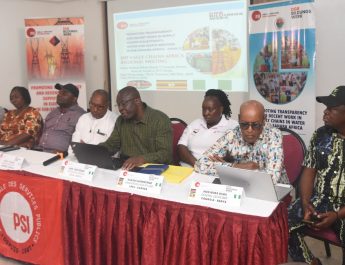
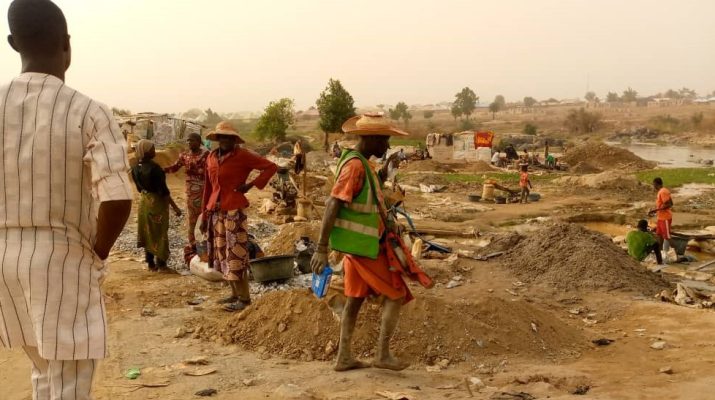
Beyond oil and gas resources, China, India and other advanced countries see what Nigeria and its leaders cannot see decades ago, which explains why as Nigeria and other African countries continue to explore and export crude oil, China and its allies corner Nigeria’s solid minerals sector, estimated at over $700 billion, carting away Gold, Lithium and the vast wealth in the sector through illegal and unregulated mining
By Edu Abade
Over the years, concerned Nigerian have expressed fears that oil and gas did the country more harm than good in the sense that the nation abandoned other sensitive sectors like solid minerals (which boast of Gold, Lithium, Lead, Copper and other solid minerals), agriculture and even technology in favour of what had earlier been described as the ‘Devil’s Excreta.’
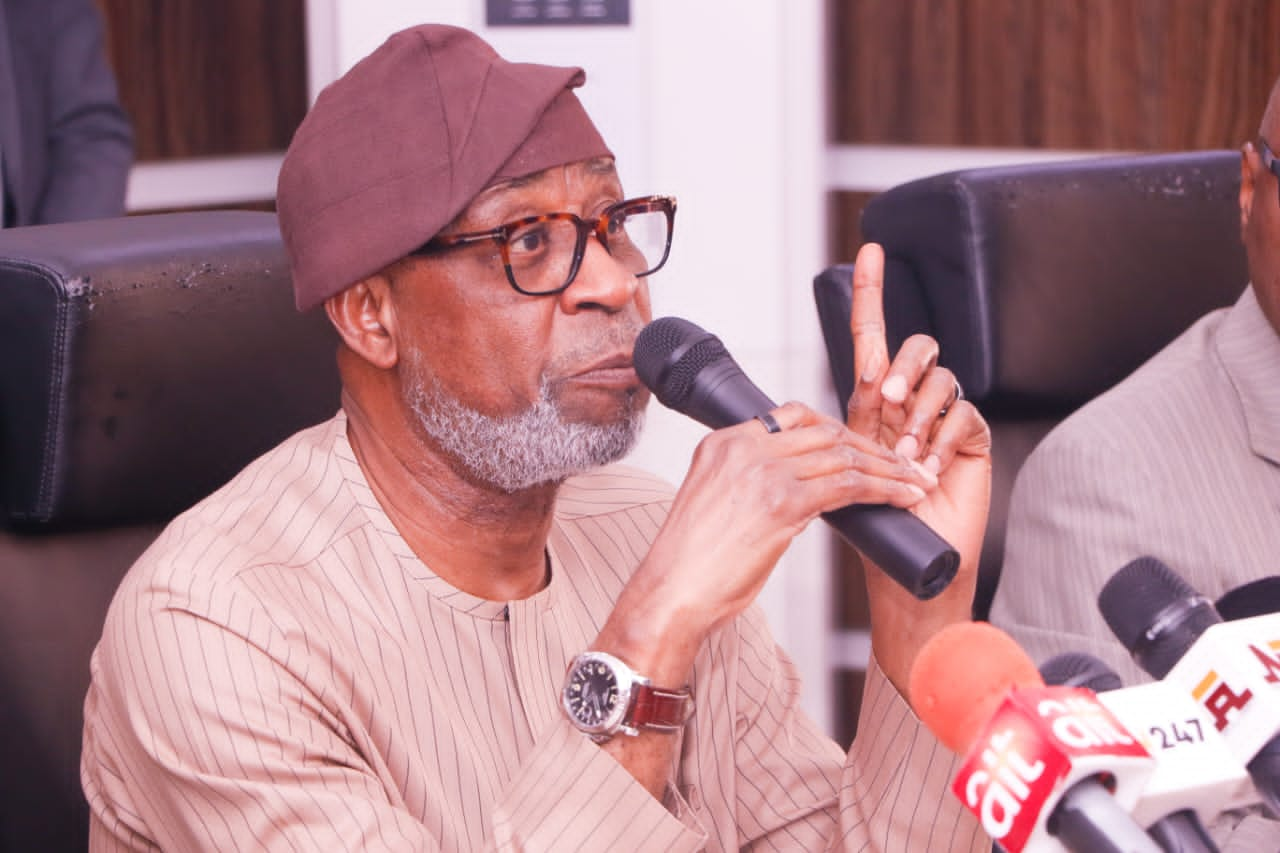
Now that International Oil Companies (IOCs) have almost exhausted the exploration of the black gold and are divesting from their onshore operations in the Niger Delta after six decades, is it not time for the Federal Government and the Dr. Dele Alake-led Ministry of Solid Minerals Development to shun politics and to look inwards and begin to explore ways of properly tapping the nation’s vast solid mineral resources estimated at over $700 billion or an equivalent of over N150 trillion?

A nationwide report titled: Silent Conquest: The Chinese Infiltration of Nigeria’s Solid Minerals Sector, conducted by the Renevlyn Development Initiative (RDI), revealed that Nigeria possesses one of the most extensive and diverse arrays of solid mineral resources in Africa. Estimates by experts in the sector place the total value of the country’s untapped solid mineral deposits at over $700 billion.
As a country bent on generating revenue, especially under the President Bola Ahmed-led government, these immense natural wealth, if transparently managed, have the potential to serve as a major revenue source for Nigeria beyond oil and gas.
Citing data from the National Bureau of Statistics (NBS) and the Nigeria Geological Survey Agency (NGSA), the report maintained that well over 40 different types of solid mineral deposits are found in over 500 locations across the country.
“These resources include precious metals such as gold, silver, and platinum; base metals like iron ore, lead, tin, zinc and industrial minerals including limestone, marble, gypsum, kaolin and bitumen. There are also significant deposits of transition and critical minerals such as lithium, cobalt and copper, which are increasingly vital for clean energy technologies.
“The scale of these resources underscores the country’s latent potential. For instance, Nigeria’s limestone reserves are estimated at over 10.6 billion tons, spread across 14 states including Kogi, Sokoto, Benue, and Gombe, while marble deposits, amounting to roughly 4.8 billion tons, are found in Edo, Oyo, Cross River, Ogun, Ondo and Plateau.
“Similarly, about 1.2 billion tons of gypsum has been found in the North East and parts of Abia, Edo, Kogi and Ogun States, while kaolin deposits amounting to an estimated 800 million tons are distributed across Anambra, Enugu, Ondo, Oyo, Kaduna and Plateau states.”
Speaking on the impact of the untapped mineral resources, Executive Director of RDI, Philip Jakpor, maintained that among the most promising discoveries remains Lithium, which he described as “a silvery-white metal essential for manufacturing batteries for electronics and electric vehicles.”
“In 2022, the NGSA confirmed commercial-scale lithium occurrences in Nasarawa, Kogi, Kwara and parts of the North Central region. Standard lithium exploration, which in essence means commercial value, begins at about 0.4 percent Lithium oxide (Li2O), but samples from Nigeria have been found to contain up to 13 percent Lithium oxide, among the highest grades globally. The value Nigeria’s Lithium reserves have been estimated at approximately $34 billion, underscoring the country’s potential to participate meaningfully in the global clean-energy supply chain.
“The International Energy Agency (IEA) projects that global Lithium demand will increase nearly five-fold by 2030, from 92,000 tons to 442,000 tons, driven by the growth of electric mobility and renewable energy storage. This global trend presents Nigeria with robust opportunity and a challenge-to harness its high-grade Lithium responsibly or risk losing it to illegal mining and unregulated export,” the report stated.
Jakpor lamented that despite these vast deposits, the contribution of the solid minerals sector to Nigeria’s economy remains alarmingly low, particularly given the denial of Chinese authorities’ involvement in illegal mining activities and their link to insecurity and other violent crimes in the country.
RDI also disclosed that the Nigeria Extractive Industry Transparency Initiative (NEITI) reported that given its potential, the solid minerals sector between 2007 and 2023 contributed less than 1 percent of generated only N1.137 trillion (about $3.8 billion) in government revenue, a negligible Gross Domestic Product (GDP) of the country, compared to over 90 percent derived from oil and gas.
“This imbalance reflects deep-seated challenges-weak institutional capacity, inadequate geological data, inconsistent policy enforcement, and widespread illegal mining. It also Chinese nationals, to infiltrate Nigeria’s mineral fields under the guise of investment while exposes the underlying governance failures that have allowed foreign actors, particularly engaging in unlicensed extraction.
“Reports from the Economic and Financial Crimes Commission (EFCC), the Nigeria Security and Civil Defence Corps (NSCDC), among others, documented repeated arrests and prosecutions of Chinese nationals involved in illegal Gold, Lithium and many lead mining operations across states such as Zamfara, Nasarawa, Kogi and Osun. In some cases, these operations are aided by local collaborators and facilitated by weak border and Customs controls, resulting in large-scale smuggling of minerals and loss of revenue to the state.
“The consequences of the unregulated activity go beyond economic losses. The environmental degradation of host communities, the displacement of local farmers, and the link between illegal mining and the operations of armed groups especially in northern Nigeria underscore the national security implications of this “silent conquest,” the report added.
It also insisted that the timing of the surge in unlicensed mining activities is particularly significant, adding: “From 2018 and especially starting in 2022, coincides with the Federal Government’s renewed push to diversify the economy away from oil dependency. However, this diversification has unfolded without commensurate institutional oversight, creating an enabling environment for the plundering of Nigeria’s solid minerals wealth.
In its response, NEITI’s solid minerals audit covering between 2007 and 2023 provided crucial evidence of systemic leakages and the limited transparency that continues to define the sector. The audit findings reinforce the urgent need for comprehensive reform to strengthen mineral governance, enforce accountability, and secure Nigeria’s sovereignty over its natural resources.
“The background to the report, therefore, establishes a clear contradiction: a nation endowed with immense mineral wealth yet unable to benefit from it. The rise in illegal mining driven by both foreign and local actors reflects a structural weakness that has left host communities impoverished, the environment degraded and the state’s fiscal base severely undermined.
“Nigeria’s solid minerals sector is emerging as a strategic pillar in the country’s economic diversification efforts, yet it remains underdeveloped despite its vast potential due to government’s negligence and connivance of traditional rulers in mineral host communities.
“Nasarawa State has become one of the most active hubs for mineral extraction, particularly lithium, which has drawn significant investment from Chinese companies. The state now hosts one of Africa’s largest Lithium processing plants, established through a partnership between the Nasarawa State Government and Avatar New Energy Materials Company Limited.
“Other Chinese firms including Jiuling Lithium Mining Company and Nizhong Mining Company-are also involved in large-scale extraction of lithium, tin ore and related minerals. This rapid growth reflects a broader global demand for critical minerals and China’s heightened interest in Nigeria’s geological landscape,” the report further stated.
The RDI survey also revealed that NEITI’s 2023 Solid Minerals Industry Report pointed to persistent gaps in revenue report, contract disclosure and implementation of Community Development Agreements (CDAs), which undermine both sector growth and development outcomes for host communities.
According to the report, a more serious challenge remained the persistence of unlicensed and informal mining, adding that in most host communities, illegal operations have turned farmlands, forests and riverbeds into unregulated extraction fields, causing environmental degradation, increasing social tension and depriving government of substantial revenues.
“The absence of effective enforcement by the relevant government agencies has allowed foreign and artisan miners alike to operate with little regard for standards or community welfare. But the growing interest in solid minerals did not develop in isolation. Prior to 1993, public attention on extractive activities was narrow, largely focused on waste and air pollution.
“The turning point came with the non-violent campaign by the Movement for the Survival of the Ogoni People (MOSOP), led by the late Ken Saro-Wiwa, which exposed the environmental and governance failures in Nigeria’s oil-producing regions. This movement broadened national consciousness around natural resource governance. The 2011 UNEP Environmental Assessment of Ogoniland later validated these concerns and stimulated new waves of agitation across communities affected by extraction-within and outside the Niger Delta.
“Two additional factors have reinforced the current interest of mining host communities. The first is the principle of benefit sharing. Section 162(2) of the 1999 Constitution guarantees producing areas at least 13 percent of revenue derived from their natural resources-a provision won after decades of agitation in the Niger Delta.
“Mining communities have since interpreted this as an opportunity to demand similar attention and compensation. The second factor is the shock of the 2020 pandemic, which triggered a sharp decline in oil prices and exposed Nigeria’s vulnerability to global oil fluctuations. This experience pushed the federal government to more seriously pursue economic diversification through solid minerals.
“By 2022, the government banned the export of unprocessed minerals to encourage local value addition, signaling a major shift toward a more structured and profitable mining landscape. This attracted global investors-especially from China-but also ushered in a surge of operators unwilling to comply with regulations, fueling community grievances and undermining governance.
“These developments have reshaped public expectations, strengthened community voices and increased scrutiny of how Nigeria’s mineral wealth should be managed. Collectively, they set the foundation for the growing demand for fairness, accountability, and stronger institutional oversight in the country’s solid minerals sector.
“Unless decisive action is taken to restore order and transparency to the solid minerals sector, Nigeria risks repeating the familiar cycle of resource exploitation without development, a modern-day silent conquest of its natural wealth,” the report concluded.