

Nigeria’s ever-ailing health sector is hit by crisis of negligence and carelessness on the part of its professionals, leading to numerous avoidable deaths and permanent disabilities
By Patrick Ogboru
Nigeria’s public and private health institutions are gradually turning into disaster areas where harvests of deaths and permanent disabilities are becoming common occurrences. An Architect, Alfred Ogene, who lives in Lagos is lucky to survive the carelessness of medical experts in a private hospital in Lagos where he went to obtain treatment for paralysis. But instead of being cured of his ailment, Ogene’s health condition worsened, leading to permanent incapacitation and litigation.
Ogene, has filed a high-stakes lawsuit against R-Jolad Hospital Nigeria Limited, alleging gross medical negligence which he claimed left him with permanent damage to his urinary system and plunged him into severe physical, emotional, and economic distress.
In a Memorandum of Claim filed through his lawyers, Mr. Ogene is seeking over ₦800 million in damages, including compensation for pain and suffering, loss of earnings, loss of enjoyment of life, psychological trauma, and a refund of medical expenses allegedly incurred as a result of the hospital’s negligence.
Court documents indicated that Ogene was admitted to R-Jolad Hospital in the early hours of November 15, 2025, for the management of partial paralysis following a stroke that affected his right limbs. His lawyers maintained that before admission, he had no history of urinary dysfunction.
Due to his limited mobility, a urinary catheter was inserted into his manhood to assist urination. However, the claimant alleged that complications emerged within 24 hours. He reportedly noticed abnormal urine leakages and experienced excruciating groin pain after a catheter change carried out by a nurse.
Despite repeated complaints, the hospital staff-particularly a nurse identified as Elizabeth-allegedly dismissed his concerns, assuring him that the pain was normal. His condition, the claim stated, rapidly deteriorated, resulting in abdominal swelling, acute distress, and eventual medical emergency.
The lawsuit hinged on an alleged breach of duty of care, a central obligation imposed on healthcare providers to act in accordance with accepted medical standards.
In specific terms, the claimant alleged that the catheter was wrongly inserted and poorly managed.
Warning signs of complications were ignored or downplayed, timely medical intervention was delayed, leading to acute urinary retention, emergency procedures, including suprapubic bladder drainage, were only performed after serious injury had already occurred.
Under the Nigerian tort law, a claimant must establish the existence of a duty of care, a breach of that duty, and a direct causal link between the breach and the injury suffered. Ogene’s legal team argued that all three elements have been clearly established in the case.
The Memorandum of Claim further asserted that the alleged negligence caused extensive trauma to the bladder and urethra, leaving the claimant dependent on a catheter and unable to resume normal personal, professional, or ministerial duties.
The hospital’s indifference and aloofness over its mishandling of Ogene’s case only made things worse.
Ogene who has over 40 years experience as a consultant architect claimed to have suffered permanent urinary impairment, psychological trauma and humiliation, loss of marital intimacy, inability to earn income and inability to undertake physiotherapy which is essential for stroke recovery.
The claimant also added that an independent consultant urologist has confirmed that the injuries are consistent with the catheter-related trauma. Hence, he is seeking ₦500 million in general damages for alleged negligent treatment, ₦100 million for mental and psychological trauma, ₦200 million for loss of enjoyment of life, ₦10 million monthly from December 2025 to 2042 as loss of earnings and as well as a refund of hospital bills and legal costs.
The claimant has also proposed Alternative Dispute Resolution (ADR) as a pathway to amicable settlement, warning that failure to engage would result in full-scale litigation.
Reacting to the suit, R-Jolad Hospital, through its Customer Service Officer, Ayomide Olayiwola, confirmed awareness of the complaint and said the matter had been escalated for internal investigation.
The hospital insisted that it would not comment on the specific allegations due to patient confidentiality obligations, but maintained that all complaints undergo clinical audits, internal reviews, and management oversight in accordance with its quality assurance and clinical governance standards.
If Ogene survived negligence and carelessness of doctors, and is alive to drag the hospital to court to seek compensation, Aishatu Umar, a Kano-based mother of five, is not as fortunate. She had since passed on after surgical scissors was carelessly dumped in her abdomen while she underwent surgery in a public hospital in Kano.
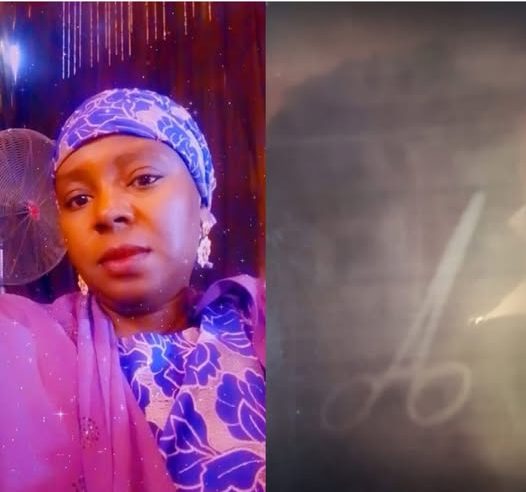
Aishatu who passed on last week due to complications had surgical operation at the Abubakar Imam Urology Center, Kano, where a pair of scissors was allegedly forgotten inside her body. Reports indicated that after the surgery Aishatu began to feel severe pains and visited the medical facility many times to complain about her condition. It was gathered that on each of the post-surgery visits, the hospital merely administered pain killers on her without thorough investigation into the real cause of the pains. The routine continued until complications occurred which led to her demise.
The Kano state hospitals management board had since confirmed that the death of Aishatu Umar, a mother of five, was caused by medical negligence at the Abubakar Imam Urology Centre.
Aishatu died on Sunday January 11 while undergoing a corrective surgery to remove a pair of scissors allegedly left inside her abdomen during an earlier operation at the government-owned facility.
Abubakar Mohammed, a relative of the deceased, said Umar had suffered severe abdominal pain for months after undergoing surgery at the hospital in September 2025.
Reacting to the incident, the hospitals management board said it ordered an investigation into the circumstances surrounding her death.
In a statement on Tuesday, January 13, Samira Suleiman, spokesperson of the board, said a preliminary investigation confirmed that surgical scissors were mistakenly left inside Umar’s body during the earlier procedure.
“The preliminary findings of the investigation ordered by the Executive Secretary, Dr Mansur Mudi Nagoda, revealed clear medical negligence, as surgical scissors were left inside the patient after the procedure,” Suleiman said.
She added that the board had taken immediate disciplinary action against those involved.
According to the board, the matter was referred to the Kano State Medical Ethics Committee for a comprehensive probe and appropriate disciplinary measures.
“As an immediate step, the Board has suspended three personnel directly involved in the case from carrying out any clinical responsibilities, pending the outcome of further investigations,” the statement reads.
“The board extends its deepest condolences to the family of the late Aishatu Umar and sympathizes with them over this painful loss. We reassure the public that negligence will not be condoned in any form.”
The death of the son of a celebrated author, Chimamanda Adichie, in a private hospital in Lagos recently also sparked outrage among numerous citizens. The famous author blamed a hospital in Lagos, Nigeria, for the death of her 21-month-old son, Nkanu.
Adichie visited Lagos for the Christmas holidays when her son suffered an infection. Nkanu died on January 6, which, according to The New York Times, was one day before he was supposed to be flown to The Johns Hopkins Hospital in Baltimore, United States (US). Nkanu was one of Adichie and her husband, Dr. Ivara Esege’s twin boys. The couple also share a 9-year-old daughter.
In a leaked WhatsApp chat with family and friends, Adichie claimed Euracare Hospital in Lagos was negligent in their care, including by allegedly giving the young boy too much propofol sedation and not monitoring him afterwards, which she said led to seizures and cardiac arrests.
Omawumi Ogbe, a family spokesperson, confirmed the conversation’s contents to PEOPLE. In the private chat, Adichie alleged that the anesthesiologist was “criminally negligent,” and turned off her son’s oxygen and carried him on his shoulder to the Intensive Care Unit (ICU).
The grieving mother described her son’s condition entering the hospital as “unwell but stable” before adding, “Suddenly, our beautiful little boy was gone forever. It’s like living your worst nightmare. I will never survive the loss of my child.”
Adichie’s sister-in-law, Dr. Anthea Nwandu, alleged to Nigerian broadcaster AriseTV that Nkanu suffered a brain injury due to lack of oxygen.
Ogbe also said in a statement that while Adichie’s detailed comment about her son’s death was “not meant for public consumption,” she added, “While we are saddened that such a deeply personal account of grief and trauma was leaked, the details therein highlight the devastating clinical failures the family is now forced to confront. We hope that the substance of that message, detailing the gross medical negligence that led to this tragedy, remains the central focus even as we look forward to the truth and accountability.”
The spokesperson added, “A legal notice has been issued to Euracare Multi-Specialist Hospital, and the family will work with their legal representatives to engage the appropriate institutions.”
Euracare Hospital released a response to Adichie’s leaked claims, telling The New York Times that Nkanu arrived critically ill, adding, “the suggestion that this tragic outcome resulted from medical negligence is erroneous.”
The hospital also told the BBC that “reports currently being circulated contained inaccuracies,” calling Nkanu’s death a “profound and unimaginable loss.”
Following the death of Adichie’s son, the Lagos State government and Medical and Dental Council of Nigeria (MDCN), launched parallel investigations into the alleged medical negligence at Eurocare Hospital, Victoria Island, Lagos.
It was gathered that the Lagos State’s hospital regulatory body, Health Facility Monitoring and Accreditation Agency (HEFAMMA), has already paid an inspection visit to Eurocare Hospital to verify the facts behind conflicting accounts circulating in the media.
Credible sources also disclosed that the family’s petitions directly triggered the involvement of HEFAMMA, the Nigerian Medical Association (NMA), and MDCN, the statutory regulator of medical practice in Nigeria.
A former President of the Nigerian Bar Association (NBA), Dr. Olisa Agbakoba, has insisted that the medical negligence case involving the family of the celebrated author, Adichie, represents only the “visible tip of a much larger crisis” plaguing Nigeria’s healthcare system.
Agbakoba, in a statement, said the incident has once again exposed deep-rooted regulatory failures that have left patients vulnerable and families devastated.
The former NBA President described the tragedy as a grim reminder of systemic incompetence in parts of the country’s health sector, noting that he was not surprised by the outcome, given long-standing lapses in oversight and accountability.
Agbakoba said: “The recent tragic loss of Nnamdi Nkanu, one of the twin sons of Chimamanda Ngozi Adichie and her husband, Dr Ivara Esege, has brought this national crisis to the forefront.
“As someone who has focused on medical malpractice for over 20 years and handled more than 50 cases, this incident is yet another example of the unacceptable state of care in some Nigerian hospitals. I am, quite honestly, not shocked that a simple procedure at a so-called reputable hospital ended so terribly.”
Agbakoba noted that the reported administration of Propofol demands exceptional care, warning that improper dosage could have fatal consequences.
According to him, “Propofol requires extreme caution due to its potential for cardio-respiratory failure. An overdose can be fatal, and there appears to be a strong possibility of overdose in this case.
“The Chimamanda case has forced national attention, but it reflects only a fraction of the suffering endured daily by Nigerian families. This is a national emergency that demands immediate action.
“Today, under the National Health Act and state health laws; this infrastructure has practically disappeared.”