
The Lagos State Government defies all pleas and entreaties against demolishing the Makoko Community water front in the Akoka area of the state, a move that has caused several avoidable deaths and elicited protests from members of the community and their sympathizers across the country including civil society groups, who have done everything possible in the past five years to stop the dislocation
By Edu Abade
Speaking at a recent seminar for journalists, a reporter from one of the national dailies had expressed concern that regardless of public outcry and protests against government actions, government and policy makers at all levels play God by doing whatever they please. That assertion manifested last week with the demolition of the Makoko Community, a major fishing hub on the fringes of the Akoka Community bothering the famous University of Lagos.
Flouting community concerns and even litigations instituted by some of the affected community folks, the Lagos State Government, headed by Governor Babajide Sanwo-Olu and the state’s Ministry of Environment and Water Front Development, had ordered the demolition of the entire community to pave way for a Chinese industrial and residential settlement, as it was earlier learnt.
Following the demolitions, angry Makoko residents protested to the governor’s office and the State House of Assembly in Alausa on Thursday, January 15, 2025 demanding an immediate halt to ongoing demolitions and compensation for families displaced in the waterfront settlement.
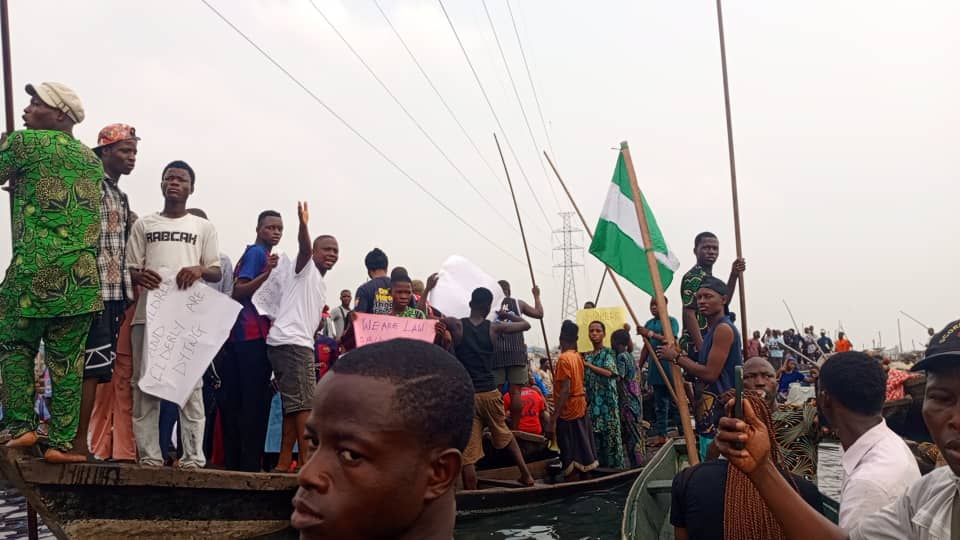
The protesters described the action as peaceful and urged activists, socialists, trade unionists, NGO advocates and members of the public to join them to amplify what they described as the voices of poor people facing displacement, while urging the Nigeria Police Force to respect the right of citizens to protest.
On Thursday, the protesters had blocked part of the road at the LSHA to resist what they described as the state government’s ongoing demolition of buildings in Makoko.
The demonstrators were led by CAPPA activists and community leaders, who accused the LASG of violating agreements reached with residents and embarking on demolitions beyond approved safety setbacks from power lines.
They carried placards with messages including “Please hear our cry, limit demolition to 100 metres,” “Save our homes, lives and the Makoko community,” and “They deceived our illiterate Baales,” while chanting solidarity songs.
Zikora Ibeh, Assistant Executive Director of CAPPA, alleged that since January 5, 2026 security operatives and demolition teams had violently displaced residents, including women and children.
“The Lagos State Government has entered the Makoko community and violently displaced people from their ancestral homes,” Ibeh said. “Women, children, fathers and families have been tear gassed out of their homes and rendered homeless without shelter, water or alternatives.”
She described the demolitions as a deliberate attempt to remove poor residents from prime waterfront locations for elite interests and said the government had failed to provide basic relief.
Ibeh further alleged that deaths had occurred during the exercise, including babies and women, and called for an immediate investigation.
“We are here to ask the governor why these demolitions have continued despite the deaths recorded in the community,” she said.
“We want the demolitions halted immediately, compensation paid to affected families, and investigations opened into the use of force.”
Ibeh added that residents had initially agreed to demolitions within 30 metres of power lines, later adjusted to 50 metres and then 100 metres, but alleged that demolitions had extended beyond those limits.
“As we speak, demolitions are still ongoing in the community,” she said. “The government has violated its own agreements, local laws and international standards.”
Ojo Jide, a community leader and member of Slum Dwellers International, described the demolitions as chaotic and lacking documentation.
“There is no profiling, no data capturing, no house numbering,” he said. “How do you compensate people or resettle them when there is no record of what you have destroyed?”
Resident Phineas Kojah said the demolitions contradicted assurances given by Governor Sanwo-Olu.
“The governor promised us that demolitions would be limited to 100 metres from the power lines and that we would not be evicted from Makoko,” Kojah said.
A representative of the Lagos State House of Assembly received a letter from the protesters on behalf of the governor, assuring them that their demands would be communicated for necessary action. The protest was ongoing at the time of reporting.
MEANWHILE, The Centre for Children’s Health Education, Orientation and Protection (CEEHOPE) Nigeria, Health of Mother Earth Foundation (HOMEF), and Corporate Accountability and Public Participation Africa (CAPPA) have strongly condemned the Lagos State Government’s ongoing brutal demolition of homes at the Makoko waterfront community, which has reportedly resulted in the death of two babies and an adult, mass displacements and the arrest of a community leader advocating for restraint and due process.
In a statement, they described the incidents as an unfortunate pattern of disregard for the constitutional rights to life and wellbeing of marginalised residents eking out a living despite years of neglect by the state government.
They further highlighted the troubling arrest of Mr. Oluwatobi Aide (also known as Woli), a youth leader in the community, who was arrested by security agents on Monday, January 12, 2026 and detained at the Area F Police Station, Ikeja, after earlier being taken to the Rapid Response Squad (RRS) office in Alausa.
Eyewitness accounts revealed that Aide approached officials of the demolition squad to appeal for at least a few hours to allow affected residents retrieve their belongings after it became clear that the demolitions had extended beyond the originally communicated corridor and perimeter to power lines.
Rather than engage with the community’s concerns, security agents reportedly arrested him. Since his arrest, Aide, who was tear-gassed during the demolitions and hospitalised last week, has experienced a further deterioration in his health while in detention.
Condemning the demolitions and arrests, Executive Director of HOMEF, Nnimmo Bassey, said, “We view these latest attacks on vulnerable populations and the urban poor as the most violent manifestations of Lagos State government’s contempt for those it views as human scrap to be cleared for elite profit and at the pleasure of land speculators and the rich.
“The thuggish arrest of community members and forced displacement of families who have always known Makoko as home, underscores the helplessness of the struggling people in the country. We see this assault as comparable to what Nigerians are suffering at the hands of bandits in some parts of the nation. This state campaign of land-grabbing and displacement is repugnant and must be halted.”
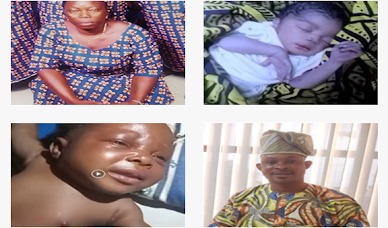
According to the groups, since January 5, 2026, armed thugs, security personnel and demolition teams with bulldozers have descended repeatedly on Makoko, a historic fishing community on the Lagos Lagoon with a population estimated at over 100,000 residents. Homes were set on fire with little or no notice, in some cases while residents were still in their homes. Tear gas was deployed against women, children and elderly persons, leaving several persons injured and hospitalised and with three persons-including two babies-reported dead so far. Among the dead are 70-year-old Ms. Albertine Ojadikluno and five-day-old Epiphany Kpenassou Adingban.
They noted that “Over 3,000 houses have reportedly been destroyed so far, displacing more than 10,000 people. Five schools, two clinics, and several places of worship have also been demolished. Many displaced residents – including children – are now sleeping in boats, canoes, churches, school buildings, or in the open, exposed to the elements and serious health risks.”
On his part, Executive Director of CAPPA, Akinbode Oluwafemi, said, “These actions starkly contradict earlier assurances by officials of the Lagos State Ministry of Urban Development that the exercise was limited to structures within 50 metres of power lines-a claim later shifted to 100 metres, despite legal standards generally stipulating a 30–50 metre corridor,”
“Demolitions have since extended to areas such as Oko-Baba, which are not under power lines at all, reinforcing fears that the true objective is the wholesale clearance of the thriving Makoko community.”
Executive director of CEE HOPE, Betty Abah, lamented that Makoko’s experience is not isolated.; adding, “Over the past year, the Lagos State Government has carried out similar demolition exercises in communities including Oko-Baba, Ayetoro (parts of Makoko), Otumara, Baba-Ijora, Oworonshoki and Precious Seeds, displacing tens of thousands of low-income residents, particularly women and children.
“In several cases, demolitions were carried out without prior notice, consultation, or provision of alternative accommodation, and in defiance of pending court cases or injunctions. Earlier evictions in Badia East, Otodo-Gbame, Maroko, Monkey Village, Ilaje-Bariga, and Ifelodun reveal a long-standing pattern of forced evictions that have shattered livelihoods, uprooted families, and left women and children exposed to heightened risks of violence, hunger and poverty,” Abah added.
The Environmental Rights Action/Friends of the Earth Nigeria (ERA/FoEN), Kreative Arts Foundation For Community Engagement (KAFCOME), Nigeria, Oilwatch Africa, Connected Advocacy, Nigeria, International Climate Change Development Initiative, Nigeria, Fishnet Alliance Rivers State, Young Professionals in Policy and Development (YouPaD), Nigeria, Coalition for Socio-ecological Transformation of Nigeria (CoSET), Tubali Development Initiative, Nigeria condemned the demolitions.
Others are FeminismLab, Nigeria, Centre pour la Justice Environnementale Togo (CJE-Togo), Priye Kebbina, Policy Alert, Nigeria, We The People, Nigeria, Centre for 21st Century Issues, Nigeria, Ermera Farmers Union, Timor-Leste, Movement for Alternatives and Solidarity in Southeast Asia (MASSA), Rafto Foundation for Human Rights, Norway, Basic Rights Watch and WoMin African Alliance, Africa.
The groups described the state’s actions as unconstitutional, saying, “These actions constitute grave violations of Section 44 of the Nigerian Constitution, Nigeria’s obligations under the African Charter on Human and Peoples’ Rights, and international standards prohibiting forced evictions without due process, consultation, adequate notice, compensation and resettlement.
“We, therefore, demand an immediate halt to all demolition activities in Makoko and other affected Lagos communities. The unconditional release of Oluwatobi Aide and any other community members arrested in connection with peaceful advocacy or inquiries related to the demolitions.
“We also demand an independent and transparent investigation into the reported deaths, use of force, and human rights abuses, with those found responsible brought to justice, as well as adequate compensation, restitution and resettlement for all affected residents, including restoration of destroyed schools, clinics and livelihoods, as well as respect for court processes, community consultation and due process in all urban development initiatives.”
They warned that urban development “cannot be pursued through violence, fear, and dispossession. Clearing communities without humane alternatives only deepens Lagos’s housing crisis, estimated at a deficit of over four million housing units, and undermines social stability.
“CEE-HOPE, HOMEF and CAPPA stand in solidarity with the people of Makoko and all communities facing unlawful evictions across Lagos State. We call on the Lagos State Government to abandon coercive approaches and adopt rights-based, inclusive, and environmentally sustainable urban development that prioritises human dignity, housing security, and livelihoods over land speculation and private profit.”
In a statement earlier made available to journalists, Media and Communication Lead of HOMEF, ‘Kome Odhomor, it said the undersigned national and international human rights, environmental, and social justice organisations, strongly condemn the ongoing violent demolition of Makoko, a historic fishing community on the Lagos Lagoon, by the Lagos State Government.
“Since January 5, 2026, armed demolition teams have razed homes, schools, clinics, and places of worship in Makoko, using tear gas and excessive force against residents, including women, children, and the elderly. Hundreds of families have been rendered homeless, with many forced to sleep in boats, churches, and the open.
“Over the past year, similar demolitions have displaced tens of thousands of people across communities, including Oko-Baba, Ayetoro (parts of Makoko), Otumara, Baba-Ijora, Oworonshoki, and Precious Seeds, often without notice, consultation, or any alternative arrangements for affected residents, with most houses set ablaze by the demolition team even with residents’ properties still in them. Same patterns have also been exhibited in several evictions dating years back including those of Badia East, Otodo-Gbame, Maroko, Monkey Village, Ilaje-Bariga and Ifelodun, among others. Several deaths have also been reported as direct fallouts of the actions.
“This pattern demonstrates a clear and repeated disregard for due process and court orders, as many communities had pending cases or injunctions restraining the state, which were ignored. These actions violate Nigeria’s constitutional protections and international human rights standards, threaten the cultural and economic survival of waterfront communities, and worsen Lagos’s acute housing shortage, which already affects millions of residents.
“We call on the Lagos State Government to immediately halt all demolitions, respect court orders, investigate reported abuses, and provide adequate alternatives and compensation to affected communities. Authorities must adopt rights-based, environmentally sustainable urban development that prioritizes human dignity, housing security and livelihoods over forced displacements. We stand in solidarity with Makoko and all communities facing unlawful and violent evictions in Lagos,” the statement reads.