
Acting Customs Area Controller in charge of the Kirikiri Lighter Terminal Command, Lagos, revamps the port for higher revenue generation, putting emphasis on traders’ compliance enforcement and zero tolerance for trade malpractices
By Innocent Chukwu
At the Kirikiri Lighter Terminal (KLT) Command in Lagos, a quiet revolution is underway. Since Deputy Comptroller Bolaji Lukman Adigun assumed office as Acting Customs Area Controller late last year, the Command has witnessed a surge in optimism, with officers and stakeholders alike speaking of a renewed sense of purpose.
A Reputation Built on Numbers and Integrity
Adigun’s journey to KLT is marked by his stellar performance at Port Harcourt Area II Command, Onne, where he served as Deputy Comptroller of Revenue. There, he earned a reputation as a “super revenue guru,” plugging leakages and setting new records in collections. “He understands the abacus of customs duty,” one officer remarked, “and he applies it with the precision of a mathematician and the heart of a leader.”
The Command has not only witnessed a surge in revenue in the ongoing wind of change but also a renewed focus on enforcement and trade compliance, redefining the Command’s trajectory. At KLT, his brief tenure has already seen revenue collections hit all-time highs. Officers attribute this to his insistence on operational discipline and his sharp eye for detail. “He understands the abacus of customs duty,” a colleague said with admiration, “and he applies it with precision.”
Enforcement: Tightening the Net
Adigun’s leadership is not just about revenue. He has strengthened enforcement operations, deploying intelligence-driven strategies to curb smuggling and illicit trade. Thus in line with his philosophy is his insistence that compliance must go hand in hand with facilitation. “We cannot allow revenue gains to be eroded by non-compliance,” he told officers during a recent briefing.
Stakeholders have noticed the difference. A freight forwarder remarked, “You can feel the change. Enforcement is tighter, but processes are smoother. It’s a balance we’ve long needed.”
Trade Compliance: Building Trust and Efficiency
Adigun has also prioritized trade compliance, ensuring that importers and agents adhere to regulations while enjoying streamlined clearance processes. His approach blends firmness with collaboration. “Customs is not just about enforcement,” he explained. “It is about partnership—with port operators, freight forwarders, and sister agencies. Together, we can build a system that works for everyone.”
This philosophy has begun to restore confidence among stakeholders, who see KLT as a command that is not only revenue-focused but also committed to fairness and efficiency.
Human Touch in Leadership
Beyond the numbers, Adigun is admired for his gentlemanly approach. Officers describe him as approachable yet firm, a leader who listens but insists on discipline. At his inauguration, he thanked his predecessor, ACG Joy Edelduok, for her “results-driven leadership” and pledged to consolidate on her achievements. His words resonated with many: “We must remain disciplined, focused, and committed to the Service’s mandate. Together, we will build a stronger KLT.”
Tackling KLT’s Structural Challenges
While revenue has already spiked under his watch, Adigun is keenly aware of the Command’s deeper challenges. KLT has long depended on sister commands to divert boxes to its terminals, a practice that leaves it vulnerable. He is believed to have given audience to some critical stakeholders in the clearing trade who complained that “We cannot continue to rely on the prevailing history of goodwill by Apapa and Tin Can area commands. We hope that you will be able to speak with the relevant authorities to look into case to see the need to begin to stem vessels directly here this command.
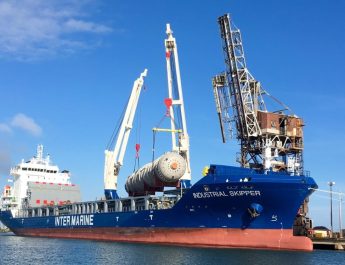
“KLT must stem more vessels directly if we are to stand tall as a command of choice”, the stakeholders argued, even as a shipping agent at the handover ceremony noted earlier, “If KLT can attract more vessels, it will ease pressure on Apapa and Tin Can, and give importers more options.”
It is believed that this appeal resonates with Adigun who is already pushing to take the activities of the command a notch higher.
Another pressing need is infrastructure. With rising cargo volumes, KLT’s facilities are already stretched thin. Adigun has assured that he would study the proposition and see what can be done to establish additional terminals and the modernization of existing ones.
“Sufficient space, better equipment, and smarter processes are desirable, and this administration ably led by our CGC has been looking at all possibilities to excel and expand. Only then can we match our revenue growth with operational excellence”, he reassured stakeholders.
Early Wins and Renewed Confidence
Already, officers report a new energy in the Command. Revenue collections have hit all-time highs, and enforcement activities have tightened. “He has a way of spotting loopholes others miss,” one junior officer shared. “It keeps us on our toes, but it also makes us proud to be part of something bigger.”
Stakeholders, too, are optimistic. A freight forwarder described Adigun as “a round peg in a round hole,” adding, “His leadership is not just about figures; it’s about giving KLT a new identity.”
Aligning with the CGC’s Vision
Adigun’s roadmap aligns seamlessly with the Comptroller-General of Customs’ modernization agenda, which emphasizes efficiency, transparency, and revenue optimization. By consolidating gains while addressing structural bottlenecks, he is positioning KLT as a model of customs operations nationwide.
The Road Ahead
The challenge before Adigun is formidable: sustain revenue growth, attract direct vessel calls, expand terminal capacity, and modernize operations. Yet his track record and leadership philosophy suggest he is well-prepared. For officers and stakeholders, his tenure represents more than a transition. It is a chance to redefine KLT’s role in Nigeria’s maritime economy.