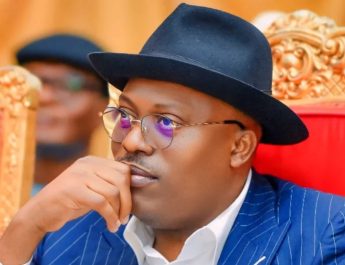

Former governor of Kano State and Minister for Defence, Rabiu Musa Kwankwaso falls into the United States America’s (US) dragnet against terrorism financing and Christian genocide allegedly being perpetrated across the country by Islamic extremists
By Our Correspondent
It sounds unbelievable yet true. The American government has begun to unravel Islamic extremists and their sponsors who are behind the daily massacres of innocent Nigerians especially Christians, the daily kidnappings and hostage taking and bombings of Churches mostly in the northern region. A task that has been impossible in Nigeria, that is, unraveling public figures involved in sponsoring terrorism in the country, is now receiving international attention.
At the last count, United States lawmakers have introduced a Bill they said was aimed at addressing alleged religious persecution and mass killings of Christians in Nigeria, including a proposed terrorist designation for Fulani militias and sanctions against certain Nigerian individuals and groups, including the presidential candidate of the New Nigeria Peoples Party (NNPP) in the 2023 elections, Dr Rabiu Musa Kwankwaso.
Kwankwaso is a former governor of Kano state, and also a former Minister for Defence who parades a large political followership which goes by the name, The Kwankwasiyya Movement. But The Kwankwasiyya Movement has and the NNPP have swiftly defended their leader said to be out of the country at the moment.
The American lawmakers’ Bill, titled “Nigeria Religious Freedom and Accountability Act of 2026” (HR 7457), was introduced by a member of the American House of Representatives identified as Riley Moore and co-sponsored by Chris Smith, Chairman of the House Foreign Affairs Sub-committee on Africa, alongside other Republican lawmakers.
Other sponsors of the Bill include Chairman House Appropriations Committee, Tom Cole; House Foreign Affairs Committee Chairman, Brian Mast; Appropriations Subcommittee on National Security and Related Programmes Chairman, Mario Diaz-Balart; and Foreign Affairs South and East Asia Subcommittee Chairman, Bill Huizenga.
Moore, author of the Bill, has been one of US politicians insistent on claims of systemic Christian persecution in Nigeria. He paid a visit to Nigeria in November 2025 over the alleged Christian genocide in Nigeria.
America’s President, Donald Trump had designated Nigeria a Country of Particular Concern in November 2025, a move that allows the US executive branch to apply diplomatic and economic sanctions against Nigeria.
Trump had also authorised coordinated strikes with the Nigerian government against suspected militants on the Christmas Day in 2025.
The Bill came amid renewed international attention, following President Trump’s re-designation of Nigeria as a Country of Particular Concern, CPC, over religious freedom concerns.
If the Bill is passed into law, it will mandate the US Secretary of State to submit an annual report to Congress detailing efforts to address what it describes as religious persecution in Nigeria.
The Bill specific requirements include, an assessment of Nigeria’s compliance with the International Religious Freedom Act, a review of actions taken, or not taken, by the Nigerian government to prevent persecution, prosecute perpetrators, repeal blasphemy laws, protect vulnerable communities, and facilitate the safe return of internally displaced persons (IDPs), identification of individuals and entities sanctioned, or under consideration for sanction, under the Global Magnitsky Human Rights Accountability Act or listed as Entities of Particular Concern.
Other requirements are, an evaluation of US security assistance to Nigeria and whether such support risks enabling or exacerbating religious persecution, details of humanitarian assistance delivered to displaced Christians, including funding amounts, recipients, and measurable outcomes, an investigation into whether the Nigerian government is taking appropriate steps to cease enforcement of blasphemy laws, and to look into instances of non-Muslims, Muslims, and dissenters being subjected to Sharia law or blasphemy laws; and an assessment of internally displaced persons (IDP) conditions, including safety, humanitarian needs, and prospects for return.
There were also include in the Bill an evaluation of any steps taken by the Nigerian government during the reporting period to address religious persecution, dismantle extremist networks, prosecute attackers, reform security forces, or improve protection for at-risk communities as well as recommendations for further executive actions or congressional authority deemed necessary and most helpful to halt the religious persecution and mass atrocities occurring in Nigeria.
In addition, the bill urged the US Secretary of State to determine whether certain Fulani-ethnic militias qualify for designation as a Foreign Terrorist Organisation (FTO) over religious violence in Nigeria.
The legislation recommended targeted sanctions, including visa bans and asset freezes, against individuals and entities allegedly responsible for severe violations of religious freedom.
Among those listed are Kwankwaso, Miyetti Allah Cattle Breeders Association of Nigeria (MACBAN), Miyetti Allah Kautal Hore, and Fulani-ethnic nomad militias in Nigeria.
The Departments of State and Treasury will be required to impose sanctions or report to Congress why such measures have not been taken.