
Many questions arise as President Bola Ahmed Tinubu rushes the establishment of the state police apparatus as solution to the insurgency and terrorism ravaging the country
By Udoka Ekeleme, Abuja
Security experts said President Bola Ahmed Tinubu appears to be in a hurry to establish police forces in all the states in the country as if that would solve the problem of insecurity which results in daily massacre of hundreds of citizens, mass abductions and ransom demands and banditry, mostly in the Northern part of the country. The experts insist that the establishment of state police may not be the best solution to the problem of insecurity if the Federal Government lacked the will and sincerity to fight the menace.
These have cited several examples of government’s collusion in aiding and abetting insurgency, yet the government has not refuted the allegation. The examples abound, they include government’s negotiation with bandits, Boko-Haram and ISWAP members who were fully armed with AK-47 riffles during such negotiations, yet security agents would not lay hands on them. Experts also alleged that the Federal Government is in the habit of paying ransom amounting to billions of naira to terrorists in hard currency to rescue kidnap victims. They further alleged that sometimes, the security agents would look away while the insurgents perpetrate their heinous crimes without any explanation. For example, the abduction of school children in Kebbi State last year took place after the military personnel guarding their school were ordered to vacate their security post by yet to be identified superior Commander. It was reported that the terrorists came and abducted the school children when the soldiers vacated their duty post.
Many opinion leaders and Civil Society Orgaisations (CSOs), since then, have been demanding from the Federal Government to investigate and reveal the identity of the Commander who ordered the soldiers in the Kebbi incident out of their duty post before the insurgent struck. But the government has continued to keep mum.
The Government’s alleged complicity in, and lackluster attitude to fighting terrorism recently forced the Kaduna State-based Islamic cleric, Sheikh Abubakar Amad Gumi to frontally accuse the Federal Government of knowing who the insurgents are, their names and their locations. Surprisingly, until the time of filing this report, the Federal Government is yet to comment on or refute the damning allegation, fueling suspicion that Gumi’s allegation may be nothing but the truth.
Analysts are asking how state police personnel can confront terrorists who are wasting the lives of many soldiers trained for war, on daily basis, except there is another purpose for which Tinubu’s state police would be established. Because such neophyte police operatives based on experts’ estimation, cannot muster the courage and capacity to confront reckless and brutish terrorists. Hence, many analysts insist that the passage of the law to establish state police at the National Assembly may hit a brick wall because, according to them, as an underdeveloped, third world country, Nigeria has not yet attained the maturity stage to adopt state police, otherwise the operatives would merely become a tool in the hands of reckless state governors to oppress perceived enemies.
Amid the controversies surrounding state police establishment, President Tinubu appears fixated on the contentious policy even as he forces his way to persuading the All Progressives Congress (APC) majority National Assembly to amend the constitution to accommodate state police. Unknown to Tinubu, a member of the lower legislative chamber volunteered to Tentacle that the law to establish state police may be hard to pass at the two chambers of the legislature. The honourable mentioned that if Tinubu thought the passage will be as easy as that of the Electoral Act 2026, he will be making a grave mistake because many Northern region APC legislators will not consent to state police bill.
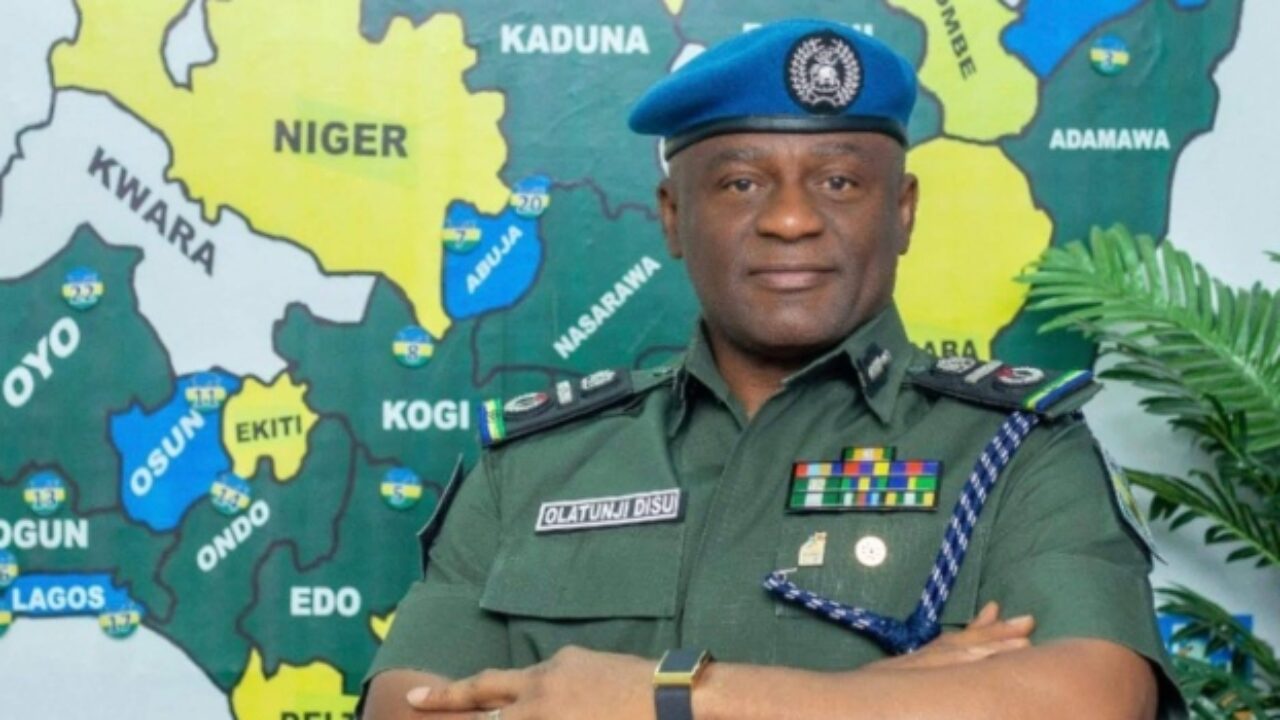
In Tinubu’s hurry for the establishment of state police, the Inspector General of Police (IGP), Olatunji Rilwan Disu, submitted a framework for the creation of the institution in the Senate for constitution amendment, on Thursday, March 26, 2026.
While submitting the framework to the upper legislative chamber, the IGP said the move was part of efforts to decentralize policing in the country.
The IGP submitted the framework to the Deputy President of the Senate, Senator Barau Jibrin (APC, Kano North), who chairs the Senate Committee on the Review of the 1999 Constitution, at the senator’s office in the National Assembly, Abuja.
In a statement by the Special Adviser to the Deputy President of the Senate on Media and Publicity, Ismail Mudashiru, it was explained that the 75-page framework was submitted on behalf of the IGP by Professor Olu Ogunsakin, Chairman of the committee set up by the Nigeria Police Force to examine the modalities for the establishment of state police in Nigeria.
The framework with the title, “A Comprehensive Framework for the Establishment, Governance and Coordination of Federal and State Police,” the document outlines the proposed structure and operational procedures of the State Police.
According to the IGP, “The report covers the considered views, professional insights, and strategic recommendations of the Force, derived from extensive consultations and a careful assessment of the operational, legal, and administrative implications of instituting State Police in Nigeria. It is our expectation that the contents of this report will meaningfully contribute to ongoing deliberations and assist in shaping informed, balanced, and pragmatic decisions on this critical aspect of national security architecture.”
He added that the report was forwarded to the Chairman and the Committee on the Review of the 1999 Constitution as the Nigeria Police Force’s official input on the subject.
Responding, the Deputy President of the Senate commended the IGP for his proactive approach to the establishment of state police, noting that it aligns with President Bola Ahmed Tinubu’s agenda to strengthen national security.
He stated that the Senate Committee on the Review of the 1999 Constitution, under his chairmanship, would examine the framework alongside other memoranda submitted to it for the review of the country’s constitution.