As 2027 politics heats up, besides alleged coercing almost all the state governors to join the ruling All progressives Congress (APC), the President Bola Ahmed Tinubu administration deploys City Boys to the South East and other parts of the country to consolidate his hold on power for a second term till 2031, but Igbo youths counter the move with the establishment of Home Boys
By Edu Abade
In less than a year, Nigeria will hold a general election that would usher in a new government, either by returning incumbent President Bola Ahmed Tinubu for another term of four years or electing a new president to run the country. The presidency is aware that the stakes are high due to what most Nigerians consider as Tinubu’s unpopular policies since assuming office on May 29, 2023.
In his desperation to clinch another term next year, Tinubu has deployed several tactics, including cajoling most governors of the Peoples Democratic Party (PDP) to join the ruling All Progressives Congress (APC), some of who, like the Bayelsa State Governor, Douye Diri, are not even seeking reelection in 2027.
As of the last count, 32 of the 36 state governors are now members of the ruling party with speculations that more governors may join the APC before 2027, effectively marking an era of a one-party state, as had been speculated-a development that is alien to democracy in the history of Nigeria.
Only recently, Tinubu’s foot soldiers unveiled the City Boys Movement, the Tinubu support group advocating his reelection. The Movement, led by Seyi, Tinubu’s son, is essentially a youth mobilisation platform with involvement of prominent private-sector figures for the President’s second term.
The City Boys Movement for which the President has allegedly deployed a whopping N500 billion to the South East alone is akin to Daniel Kanu’s “Youths Earnestly Ask for Abacha (YEAA)”, one of the contraptions by the ill-fated General Sani Abacha military administration to advance the agenda of the head of state at transition to civilian presidency.
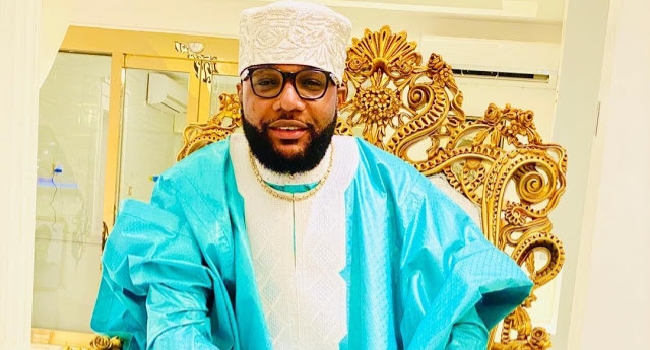
Details of the group indicate that the City Boy Movement is a youth-focused, political grassroots organization dedicated to mobilizing support for President Tinubu’s “Renewed Hope” agenda. It aims to bridge the gap between government and the youth through empowerment programmes, education on policies, and grassroots mobilization to foster active participation in governance.
According to its promoters, the mission of the City Boy Movement is to engage and empower young Nigerians, shifting them toward active participation in government, rather than protests.
The movement is led by individuals such as Director-General, Francis Oluwatosin Shoga and patron Seyi Tinubu. It operates with a strong structure, including ambassadors in communities across Nigeria.
Its supporters also claimed that the movement was instrumental in bringing President Tinubu to office and it continues to support his administration’s policies, such as the fuel subsidy removal.
In 2025, the Movement had expanded into several states, including the five states of the South east. Other states where the Movement is said to have a foothold include Benue, Ondo, Plateau, Kwara, and Edo. During one of its engagements in Edo, Governor Monday Okpebholo pledged 3.5 million votes to the president in 2027.
In Edo, the Movement also empowered youths with grants ranging from N100,000 to N150,000 after an application process, with beneficiaries largely comprising artisans and traders. By January 2026, it had established structures across all geopolitical zones, with zonal and state coordinators tasked with grassroots mobilisation.
By February, the Movement introduced a national female leadership structure. The Executive Commissioner for Corporate Services at the Federal Competition and Consumer Protection Commission (FCCPC) was appointed as the Movement’s National Women Leader while Sophie Uzodimma, daughter of Imo State Governor Hope Uzodimma, was named Deputy Women Leader.
In Anambra, Adaora Soludo, daughter of Governor Chukwuma Charles Soludo was appointed as the Movement’s State Women Leader.
In his opinion piece titled: Tinubu’s South East City Boys and Limits of Rascality, Editor of TheNitche, an online news medium, Emeka Alex Duru, explained that Igbo socialites in the City Boys Movement include Emeka Okonkwo (E-Money), Obinna Iyiegbu (Obi Cubana), Pascal Okechukwu, (Cubana Chief Priest), entrepreneur Cletus Uzoezie Oragwa (Zenco) and others.
“They are mostly young men that are creating waves in their immediate communities and beyond. The members of the Movement have been understandably upbeat and excited for many reasons, including the rare opportunity for handshakes with the President, anticipated opportunity to enlarge their business spaces or seek cover for some past deeds that can be exposed by a vicious presidency if they fail to play along. They, therefore, deserve to be allowed to humour and entertain themselves, in assuring the President that they will deliver and hand over the South East to him in 2027.
“Infantile as that may sound, it is one of the beauties of democracy-plurality of views and opinions. But it seems that the guys in the Movement are beginning to assume that they are forces to be reckoned with in the politics of the South East. And they are allowing rascality to blur their senses and drive their activities, in the process, veering into topics that are clearly beyond them. They now see themselves as the new faces of Igbo leadership. During a parley with Enugu State Governor, Peter Mbah, who recently defected to the APC, Iyiegbu (Obi Cubana) stretched his assumption of importance too far by claiming that ‘Our people (the Igbo) lack political knowledge and our work is mostly to educate them.’”
He did not state how he was going to refocus the Igbo on the path of knowledge. The anger generated by the loose comments was yet to die down when his sidekick Cubana Chief Priest declared in Owerri, Imo State that: ‘We the Igbo are the people that were defeated during the war, we do not want to lose again.’”
When therefore the City Boys assured the President that they were going to deliver the South east to him, they were merely telling him what he wanted to hear. Analysts said that they cannot do so in a free and fair poll, that these socialites lack the roots and the reach among the people. Political pundits also added that what would rather determine how far Tinubu can go in the zone vis-à-vis the 2027 presidential election would be his performance scorecard in the region and the nation, which, all considered, is abysmally low.
According to Duru, “The people and residents of the South east justifiably feel they are excluded from the Tinubu government in appointments, policies and programmes. These are the issues the President needs to deal with as the election draws close. Doing so requires strategic partnership with the people who bear the brunt, their real leaders and not with noisy individuals on the flight for fancy.”
Responding to the development, the African Democratic Congress (ADC) described the movement as a ‘political immorality’, maintaining that Iyiegbu’s comments angered many Southeasterners, some of whom described his tone as condescending.
His comments also drew the ire of the ADC, one of the opposition parties contesting against the ruling All Progressives Congress (APC) in the forthcoming general election.
According to the ADC’s Chairperson for the membership re-registration and validation exercise in Anambra State, Ben Nwosu, the movement is a charade that exploits the nation’s economic hardship as bait for electoral gain.
Speaking in an interview, Nwosu, a former member of the Anambra State House of Assembly, also described the Movement as “political immorality,” arguing that most of its promoters were not grounded in politics but are driven by what he termed “cash politics,” often dispensed through palliatives.
Nwosu said, “Their approach to what they call support for the president is a celebration of poverty and a mockery of the masses,” citing what he described as a “city boy versus village boy clash” over palliatives during the just-concluded ‘Renewed Hope’ Tour in Owerri, Imo State.
Nwosu maintained that despite the Tinubu administration’s promises, the country continues to grapple with widespread hunger and worsening insecurity. “The basic things promised by this government have not been met.”
“For instance, Tinubu said during the campaign that if he does not provide electricity for Nigerians, then he does not deserve to be reelected—and today I say, Amen! Because another four years with this government and its cabinet would be disastrous,” Nwosu added.
The party chieftain further criticised the ruling party for galvanising support for the president’s reelection based on ongoing or abandoned federal projects in the region. “Are we fools?” he asked, condemning the Movement for trading political support in exchange for basic rights.
Also in its intervention, a pro-democracy advocate and member of the defunct National Democratic Coalition (NADECO), Emejulu Okpalaukwu, argued that while “money-driven politics” is often criticised today, its roots predate the current political dispensation, tracing back to when opulence began to shape Nigeria’s political culture.
He stressed the need for merit-based leadership, where competence and willingness—not wealth—determine access to power, adding, “Nigerians are not ready to work for fundamental change. We may be moving towards it, but the majority still worship money, so people get the leaders they deserve, not the ones they desire.”
However, the inordinate ideals of the City Boy Movement which revolve around sharing items and money to poverty-stricken citizens, were deflated recently in Owerri where they went to share food items and other materials to influence South eastern youths to adopt Tinubu as their preferred presidential candidate. At the event on Monday, March 16, 2026, the City Boys Movement leaders including Seyi Tinubu escaped physical assault when they were confronted by the South east rival group identified as the Home Boys Movement and other South eastern youths. In the ensuing melee, the items they brought to share among the impoverished South easterners were violently carted away, while the movement leaders escaped physical assault by whiskers.
The movement leaders were warned never to bring their campaign of poverty to any part of the South east.