
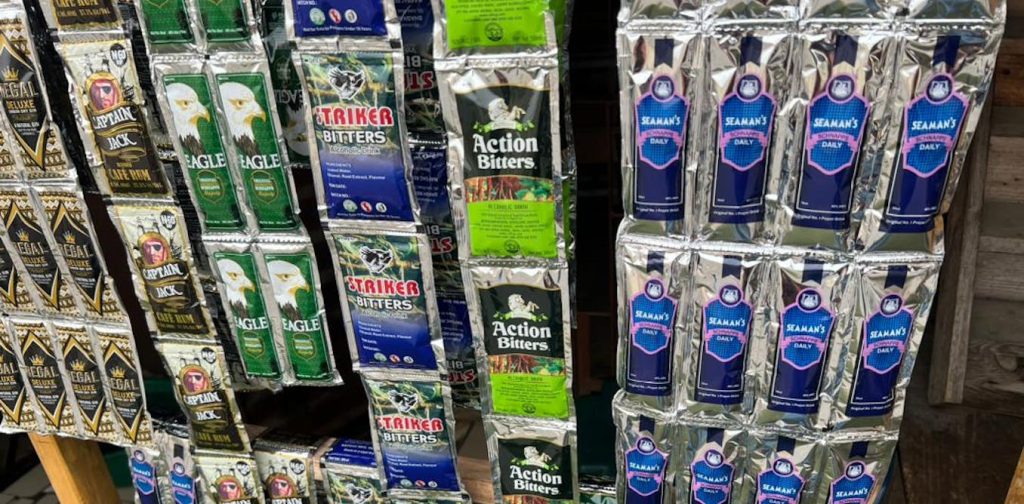
The Manufacturers Association of Nigeria (MAN) tackles the National Agency for Food and Drug Administration and Control (NAFDAC) over its decision to ban the production and sale of sachet and small bottle alcohol
By Patrick Ogboru
The Manufacturers Association of Nigeria (MAN) has issued serious warning to the National Agency for Food and Drug Administration and Control (NAFDAC) to reconsider its decision to ban the production and sale of sachet and small bottle alcohol beverages in the country by the end of 2025, insisting that the consequences of the policy would be counterproductive given the unemployment rate in the country. MAN said should NAFDAC implement the policy, it will destroy over 500,000 direct jobs and put over N1.9 trillion investment by Nigerians in jeopardy.
NAFDAC had announced that the production and sale of alcoholic beverages in sachets and bottles smaller than 200 milliliters would be prohibited by December 2025.
 The Director General of NAFDAC, Mojisola Adeyeye, disclosed this during a press briefing in Abuja on Tuesday, November 25, 2025. During the media interaction, Adeyeye noted that the decision was part of the agency’s efforts to address the growing misuse of cheap alcoholic drinks among youths and drivers.
She said, “The proliferation of high-alcohol-content beverages in sachets and small containers has made such products easily accessible, affordable, and concealable, leading to widespread misuse and addiction among minors and commercial drivers.
“This public health menace has been linked to increased incidences of domestic violence, road accidents, school dropouts, and social vices across communities.”
The NAFDAC ban policy came after the Senate had on Thursday November 20, 2025 directed it to implement a total ban on the production and sale of alcoholic drinks packaged in sachets and containers below 200 milliliters by December 2025. The Senate had insisted that no further extension of the deadline would be allowed.
The resolution followed an extensive debate on a motion sponsored by Senator Asuquo Ekpenyong (Cross River South), who expressed concern over NAFDAC’s repeated postponements of the ban despite growing public health and social concerns.
Ekpenyong reminded lawmakers that the agency had previously scheduled 2023 as the deadline before extending it to 2024, and later 2025, a pattern he said had emboldened manufacturers to continue lobbying for more time.
He cautioned that any further delay would constitute a betrayal of public trust and undermine Nigeria’s commitment to international health and safety standards.
Adeyeye, however, explained that the directive followed the Senate resolution raising concerns about the availability of low-cost alcoholic beverages in sachets, which have reportedly contributed to social and health problems.
She recalled that NAFDAC had previously entered into a Memorandum of Understanding (MOU) with stakeholders to implement a phased withdrawal of the products, with earlier deadlines postponed from 2023 to 2025. She also hinted that the Senate’s latest resolution was final, and warned that no further extensions would be granted.
She urged manufacturers, distributors, and retailers to begin full compliance ahead of the enforcement date.
Adeyeye clarified that the ban was a protective measure, not a punitive one, aimed at safeguarding public health.
According to her, “This ban is not punitive; it is protective. It is aimed at safeguarding the health and future of our children and youth.
 Reacting to the impending ban, MAN has warned that the decision to ban the production and sale of alcoholic beverages packaged in sachets and small PET bottles by December 31, 2025 could lead to the loss of over N1.9 trillion investments by indigenous companies and 500,000 direct, and five million indirect jobs.
In a statement on Sunday, November 23, 2025, the Director General of MAN, Segun Ajayi-Kadir, while calling for the reconsideration of the ban, noted that the issues had earlier been resolved by an enlarged committee comprising all the stakeholders and NAFDAC representatives, who validated the National Alcohol Policy in October 2025.
He emphasised that the statement of abuse by minors as a result of sales of the products in sachets has been dismissed by several empirical research that were independently conducted by the government.
The MAN DG said, “This pronouncement, which we believe is counterproductive and forebodies economic dislocation of significant proportions for the nation at this period, will have serious consequences for the now stabilizing economy for the following reasons: “Loss of over N1.9 trillion investment, largely by the indigenous Nigerian companies; consequential mass retrenchment of over 500,000 direct employees and approximately five million indirect jobs through contracts, marketing and other logistics.
“Reduction in capacity utilisation in manufacturing, which in recent quarters began to gradually improve on account of the industry’s contribution as a component of the food and beverages sector; and loss of indigenous businesses that may gradually obliterate local entrepreneurship development in the economy.”
Ajayi-Kadir further stated: “A ban would also literally yield the market to the influx of foreign brands, which are mostly smuggled. Apart from possible unwholesomeness, this will be at the expense of excluded domestic producers and loss of revenue for the Government.
“We, therefore, make a strident appeal for an expedited endorsement and implementation of the validated Nigeria National Alcohol Policy and its multi-sectoral implementation framework. We believe that this will make the implementation of the unwarranted ban unnecessary.”