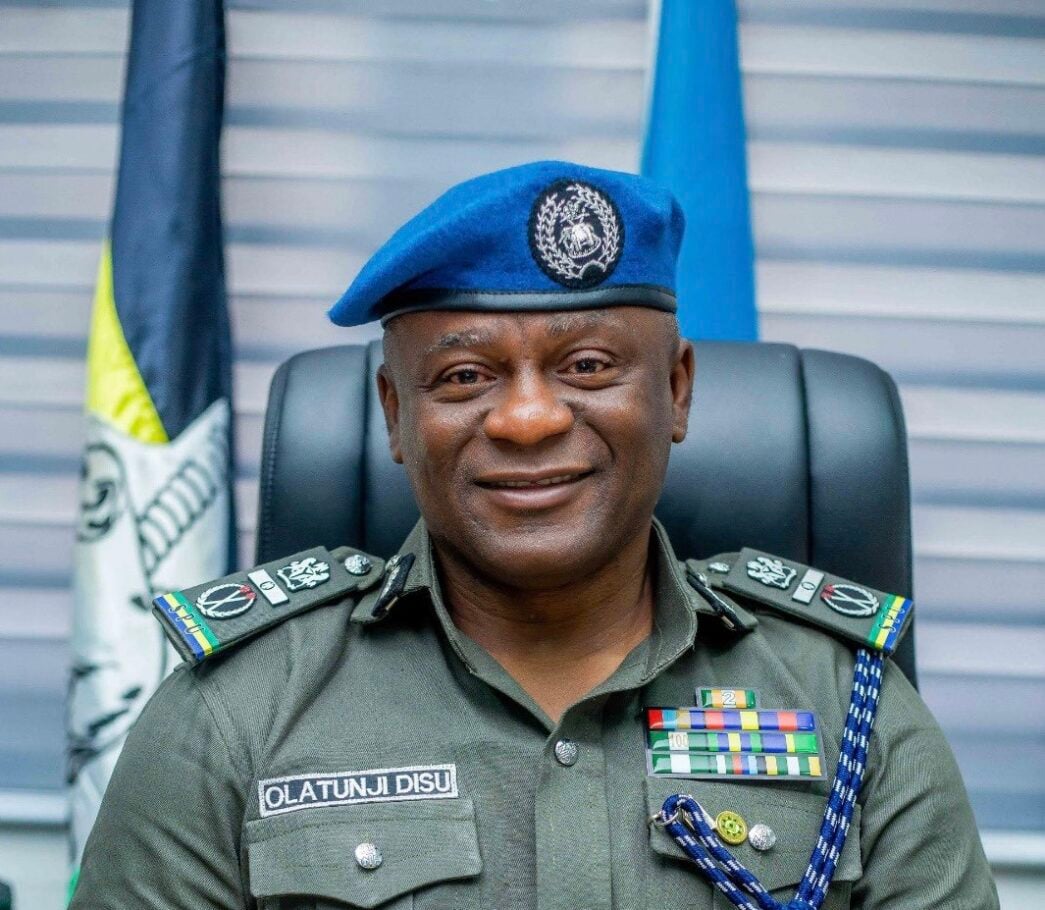
Olatunji Disu takes over the helm of affairs at the Luis Edet Police Headquarters Abuja as the new Inspector General (IGP), raising national expectations as he begins his reform journey
David Oladimeji
The appointment of Olatunji Rilwan Disu as the new Inspector-General of Police has stirred renewed hope across Nigeria’s security landscape, with citizens, policymakers, and security experts expressing cautious optimism about the future of policing in the country. At a time when insecurity remains one of Nigeria’s most pressing challenges, many believe his emergence signals an opportunity for institutional rebirth within the Nigeria Police Force.
For many Nigerians, the foremost expectation is the restoration of public trust in the police. Years of strained relations between citizens and law enforcement officers have left confidence at a low ebb, making Disu’s leadership a critical test of whether professionalism and accountability can once again define policing in Africa’s most populous nation.
Observers say the new police chief steps into office with a reputation shaped by operational discipline and strategic policing experience. His previous assignments in intelligence and tactical operations have fueled expectations that the era of reactive policing may gradually give way to proactive and intelligence-driven crime prevention.
Closely tied to public confidence is the demand for an end to police brutality and impunity. Civil society organisations and youth groups are watching keenly, expecting firm internal reforms that will ensure officers operate strictly within the bounds of the law while respecting citizens’ rights and dignity.
Security analysts also anticipate renewed emphasis on community policing, widely regarded as a sustainable solution to grassroots crime. Strengthening collaboration between local communities and divisional police formations is expected to help detect threats early and improve information sharing.
Beyond operational reforms, attention has turned inward to the welfare of police personnel. Experts argue that improved salaries, housing schemes, insurance coverage, and better working conditions will not only boost morale but also reduce corruption and enhance professional conduct among officers.
Technology deployment is another major expectation trailing Disu’s appointment. With criminal networks becoming increasingly sophisticated, stakeholders believe modern surveillance systems, forensic tools, digital databases, and smart policing platforms must form the backbone of contemporary law enforcement strategy.
Many Nigerians are equally hopeful that emergency response mechanisms will witness significant improvement. Drawing from his experience with rapid response operations, citizens expect quicker reaction times to distress calls and visible police presence capable of deterring crime before escalation.
Across various regions battling kidnapping, armed robbery, and communal violence, the pressure on the new Inspector-General remains immense. Nigerians are looking beyond policy pronouncements to measurable reductions in violent crime and safer highways, communities, and urban centres.
Internal discipline within the force has also emerged as a recurring expectation. Stakeholders insist that effective supervision, strict adherence to ethical standards, and transparent disciplinary procedures will be essential in repositioning the police as a respected national institution.
Another critical task before the new police boss is strengthening collaboration with other security agencies. Analysts note that modern security threats demand coordinated intelligence sharing among the military, immigration authorities, civil defence corps, and intelligence services.
Political neutrality remains equally important as Nigeria’s democratic space continues to evolve. Many citizens expect the police under Disu’s leadership to uphold the rule of law without partisan influence, particularly during elections and politically sensitive operations.
Youths and digital-age citizens are also demanding improved communication from law enforcement authorities. Regular public engagement, transparency in operations, and effective use of digital platforms are seen as necessary steps toward bridging the long-standing gap between the police and the public.
Security experts further stress that expectations surrounding Disu extend beyond personal performance. His tenure is widely viewed as a defining moment that could determine whether meaningful institutional reforms can outlive individual leadership within the force.
Ultimately, Nigerians believe the success of Olatunji Rilwan Disu will not be measured by promises or public goodwill alone, but by visible transformation in safety, accountability, and justice delivery. As he assumes command of the Nigeria Police Force, the nation watches closely, hopeful that a new chapter of professional and people-centred policing is about to unfold.