The upper legislative chamber of the National Assembly, the Senate, sings discordant tunes over an alleged N210 trillion scandal involving the Nigerian National Petroleum Company Limited (NNPCL) and its erstwhile Group Managing Director (GMD), Mele Kyari
By Patrick Ogboru
The Nigerian Senate is in the news again. This time around, it has sung discordant tunes in the past week on whether to arrest or not to arrest a former Managing Director of the Nigerian National Petroleum Company Limited (NNPCL), Mele Kyari, over an alleged unaccounted N210 trillion by the NNPCL and his refusal to honour several invitations extended to him by the Red Chamber. Reports said the Senate had last week ordered the arrest of Kyari, who is said to be receiving medical treatment in Germany, after he repeatedly failed to appear before lawmakers investigating the ₦210 trillion, about $154 billion, in disputed financial entries at the NNPC.
The investigation followed nine hearings into 19 audit queries covering 2017–2023 and reflects growing demand for accountability amid Nigeria’s rising government borrowing and fiscal pressures.
Lawmakers rejected NNPC’s explanation of the disputed funds and insist on documents and testimony from former executives. Kyari claimed he informed the Senate of his medical treatment in Germany.
The probe also highlighted ongoing failures at Nigeria’s state refineries, which have consumed billions of dollars in rehabilitation funds but remain unreliable, increasing dependence on imported fuel.
The Senate Committee on Public Accounts issued Kyari’s arrest order on Wednesday, June 10, 2026.
The investigation has intensified scrutiny of Africa’s biggest oil producer, where billions of dollars have been spent on state-owned refineries that have yet to achieve reliable production.
“Anywhere Mele Kyari is, the former GCEO should be arrested and brought before the committee immediately,” committee chairman Ibrahim Dankwambo said after lawmakers approved the motion.
The ₦210 trillion under review, equivalent to about $154 billion, does not necessarily represent missing funds.
NNPC told lawmakers that ₦103 trillion ($75.6 billion) reflected accrued expenses, while ₦107 trillion ($78.5 billion) was listed as receivables.
However, Senators rejected the explanation and demanded supporting documents and testimony from former company executives.
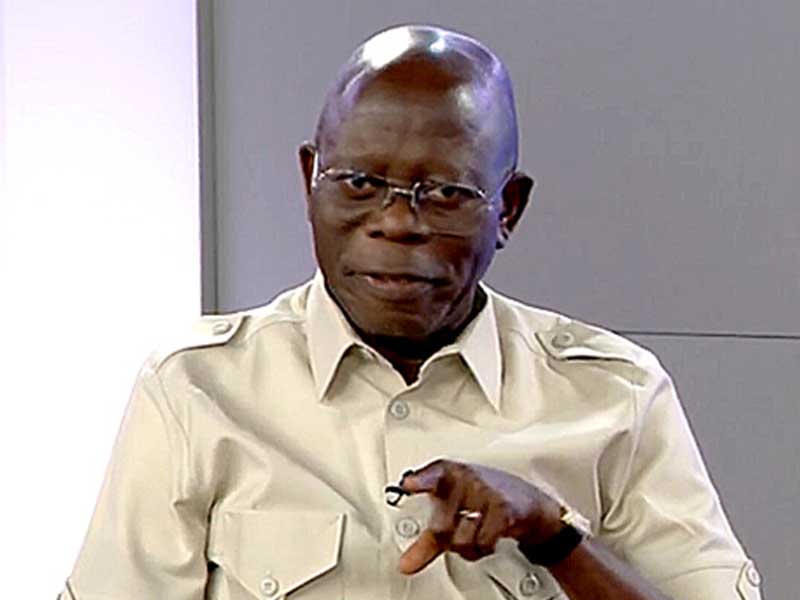
Appointed by former President Muhammadu Buhari in 2019, Kyari led NNPC first as GMD and later as Group Chief Executive following the company’s restructuring. He remained in the role until 2025.
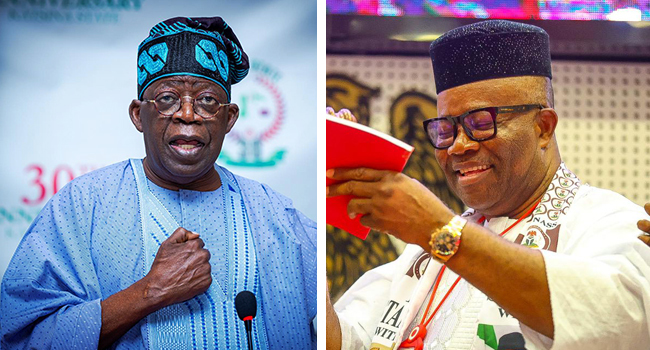
Adams Oshiomhole, a former state governor who now serves in the Senate, backed the arrest motion and said Kyari must personally account for decisions taken during his tenure.
“Some people believe they are bigger than Nigeria,” Oshiomhole said. “The law must be effective when it catches the lion, not only when it catches the rabbit.”
Oshiomhole urged the committee to issue the warrant “not tomorrow, but today”.
“These are allegations involving trillions of naira at a time Nigerians are suffering, and the country is borrowing heavily,” Oshiomhole said.
Another lawmaker informed the committee that Kyari was receiving medical treatment in Germany and had promised to attend the hearing.
Kyari said he had notified Senators about his condition and was “deeply shocked” by the arrest order.
However, the Senate Committee maintained that his repeated absence had stalled the investigation.
The audit dispute came at the time Nigeria increases borrowing to finance government spending and infrastructure.
In October 2025, parliament approved a $2.85 billion foreign borrowing plan, including a proposed $500 million sovereign Sukuk.
More recently, the government arranged access to as much as $5 billion through a derivatives agreement with First Abu Dhabi Bank.
The International Monetary Fund warned that such financing structures could be complex and opaque, creating additional fiscal risks.
Nigeria is also expected to spend about $11.6 billion on debt servicing in 2026, close to half of projected government revenue.
Scrutiny of NNPC has also focused on Nigeria’s four state-owned refineries in Port Harcourt, Warri and Kaduna.
The facilities have a combined processing capacity of 445,000 barrels a day and were intended to reduce the country’s dependence on imported petrol, diesel and other refined products.
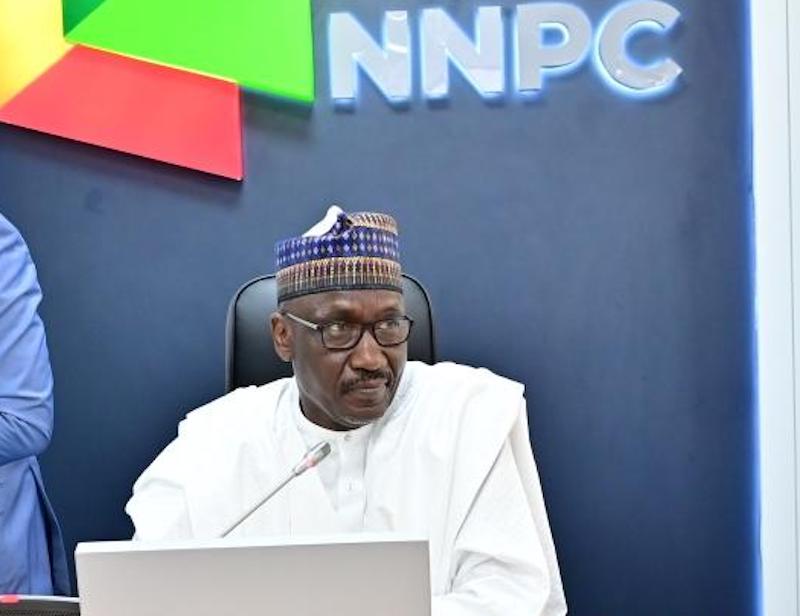
However, years of rehabilitation programmes and billions of dollars in spending have failed to restore sustained production.
The Port Harcourt refinery resumed limited operations in November 2024 after a rehabilitation programme valued at about $1.5 billion. NNPC shut it again in May 2025 for maintenance and a performance review.
The Warri refinery also restarted briefly before halting production, while the Kaduna plant has yet to return to commercial operations.
Nigeria’s parliament previously estimated that about $25 billion had been spent over a decade trying to repair the state-owned refineries.
Despite being one of Africa’s biggest crude oil producers, Nigeria has continued to depend on imported fuel and the privately owned Dangote refinery in Lagos.
In a sudden twist, the Senate has disowned the arrest warrant imposed on the ex-NNPC boss Kyari even as it rebuked Oshiomhole for stoutly supporting the arrest.
The Senate on Thursday, June 11, 2026 distanced itself from comments by Senator Oshiomhole describing the NNPCL as “a bunch of criminals and thieves,” insisting that the remarks did not reflect the position of the Red Chamber.
The upper legislative chamber also declared that no Senate Committee had the authority to issue, authorise or execute a warrant of arrest except in strict compliance with the Legislative Houses (Powers and Privileges) Act and with the express approval of the Senate President.
The resolutions followed a motion sponsored by the Senate Leader, Senator Opeyemi Bamidele, during plenary.
The clarification came barely 24 hours after the Senate Committee on Public Accounts recommended the issuance of a warrant of arrest against the immediate past GCEO of the NNPCL, Kyari, over his alleged failure to honour invitations extended by the committee.
Bamidele warned that any attempt by a Senate Committee to independently issue or execute a warrant of arrest without authorisation from the Senate President could amount to an unlawful exercise of power.
He said, “The power to issue a warrant affecting the liberty of a citizen is an extraordinary statutory power which must be exercised strictly in accordance with the procedure prescribed by law.
“The constitutional doctrine of fair hearing and the presumption of innocence require that no person or institution be adjudged guilty except by a court of competent jurisdiction after due process of law.”
He warned that such statements could be interpreted by the public as the official position of the Senate and undermine confidence in the impartiality of ongoing oversight proceedings.
“Such statements, if left unclarified, may be misconstrued by the public as representing the official position of the Senate and may undermine confidence in the impartiality and objectivity of ongoing legislative oversight proceedings.”
The Senate subsequently adopted a resolution formally dissociating itself from the comments and clarifying that they do not represent the findings, opinion, resolution or official position of the upper chamber.
Deputy Senate President Barau Jibrin strongly backed the motion, describing it as part of the constitutional responsibilities of the Senate Leader.
Reading from Senate rules and constitutional provisions, Barau stressed that committees are subordinate organs of the Senate and may only make recommendations rather than independently exercise powers reserved for the chamber.
“The Committee overstepped its bounds, and he has done the right thing by drawing attention to it.”
“We need to do things in line with our rules and with the law of the land”, Barau said.
Senator Mohammed Tahir Monguno described the motion as a necessary intervention to preserve the credibility of the legislature.
According to him, it would be contradictory for lawmakers to make laws for national governance while simultaneously violating those same laws.
“The Senate, being the highest law-making body of the country, should not only be above board but should be seen manifestly to be above board.”
“We should not make statements that seek to impugn the character of public officers or individuals in society.”
Former Kebbi State Governor and Senator Adamu Aliero was among the strongest critics of Oshiomhole’s comments.
He described the statement as “reckless” and argued that it could damage Nigeria’s investment image internationally.
“The NNPC is the cash cow of this country. Such reckless statements send wrong signals to outsiders and can jeopardise foreign direct investment.”
Aliero urged the Senate to collectively condemn and distance itself from the remarks to protect both the image of NNPCL and the Senate.
Former Abia State Governor and Senator Orji Uzor Kalu also defended the strategic importance of NNPCL to Nigeria’s economy.
He urged Oshiomhole to publicly withdraw the statement.
“It is not good for any committee or individual to criminalise a big company like NNPC.”
Kalu added, “Our future lies in this country. We have no other country than Nigeria.”
Responding, the former Edo State governor defended his comments, saying they were made in reaction to attacks on lawmakers by NNPCL officials.
“I acted under provocation because distinguished members were being attacked without any proof of the allegations being made. We are knowledgeable of the rules and not ignorant of them”.
“If it is the view of the Senate that I should apologise, I have no problem with that.”
Oshiomhole said he had no intention of bringing the Senate into disrepute and maintained that he was only defending the institution and its members.
“Rather than provide answers, we were told that senators do not have a monopoly on patriotism and were accused of recommending their children for employment in NNPC. The lawmakers were denigrated, and I reacted in defence of the Senate.
“I was not the mover of the motion seeking the issuance of a warrant of arrest, and I do not understand why my name was singled out. The Senate Leader referred to my reaction and not to the issues that prompted it.
“We sat here and took a decision regarding the alleged missing N210 trillion. We were informed that Mele Kyari refused to appear before the Committee. What brought us here in the first place was the allegation that NNPC’s approved auditors could not account for the funds, according to the Auditor-General’s report,” the Edo North senator told lawmakers.
His remarks were interrupted when the Senate Chief Whip raised a point of order, urging him to confine his comments to the matter before the chamber.
The intervention triggered a brief uproar before Senate President Godswill Akpabio restored order.
Akpabio reminded Senators that the motion under consideration was limited to Oshiomhole’s alleged unparliamentary remarks and the issue of a purported arrest warrant issued without following due process.