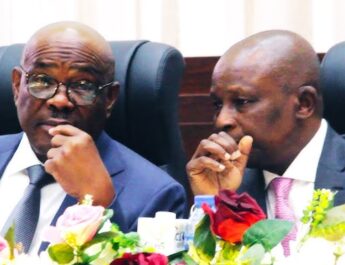
Stakeholders still argue that President Bola Ahmed Tinubu has no need to rush the establishment of the state police as a panacea for insecurity within a few months preceding the 2027 general election, even as he prepares to receive the National Policing Bill next month
By Udoka Ekeleme, Abuja,
Edu Abade
Suspicion and knocks are trailing the hurried approach of the Federal Government in the establishment of state police. Although many stakeholders have agreed that Nigeria was due to have policing structures at the sub-national levels, they equally argued that the Presidency’s rush to conclude the legal aspects that would guarantee the establishment at the National Assembly is suspicious when juxtaposed with the 2027 general election which comes up in less than five months. Many, therefore, concluded that there is an ulterior motive behind the rush. Others alleged that the new police structure may be deployed to rig the 2027 elections in favour of the ruling All Progressives Congress (APC).
Barring any unforeseen circumstance, President Bola Tinubu will receive the Executive National Policing Bill for review on September 3, the Presidency revealed on Monday, August 3, 2026.
The Presidency also announced that it has unveiled a public information portal through which Nigerians can submit memoranda and position papers to shape the legislation before it is reviewed by the President and transmitted to the National Assembly. However, there was no indication on the part of the Executive that the draft Bill would be subjected to public hearing for scrutiny.
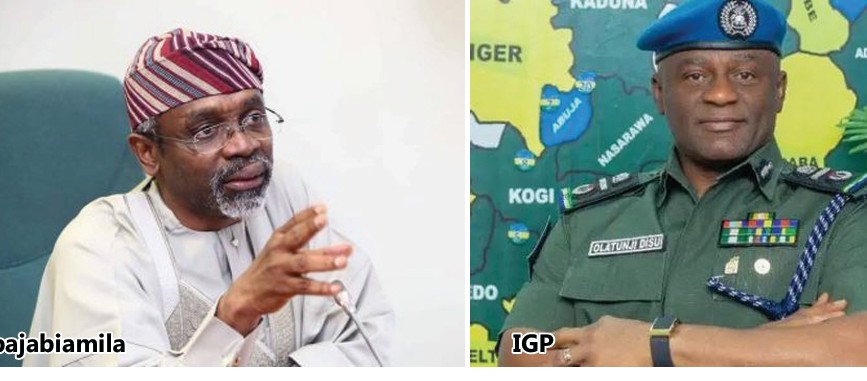
The Chief of Staff to the President and Chairman of the Presidential Working Group on the National Policing Bill, Femi Gbajabiamila, made the disclosures while briefing State House correspondents after convening a meeting of the group at the Aso Rock Presidential Villa, Abuja on the said date.
During the briefing, Gbajabiamila disclosed that the approved work programme was a seven-week, milestone-driven exercise that would run from July 27 to September 14, 2026.
Gbajabiamila said, “The resulting Executive Bill package is scheduled for presentation to the President on the 3rd of September.
“Subject to his approval, and I think we have tweaked that so the national consultation will come before the President’s final approval, after which the text and supporting materials will be revised and prepared for formal transmission to the National Assembly.”
Chairman of the state police establishment bill further explained that the final package would comprise schedules, an explanatory memorandum, a legal audit and consequential-amendments matrix, a clause-by-clause analysis, a state readiness framework, a fiscal and implementation note, a validation report, a risk register and a controlled digital archive.
According to him, “This is a monumental reform that Nigerians have debated for many years. Our central task now is to design a lawful, professional and sustainable federal and state policing system that places greater capability closer to the people while preserving national standards, national security and the rights of every Nigerian.
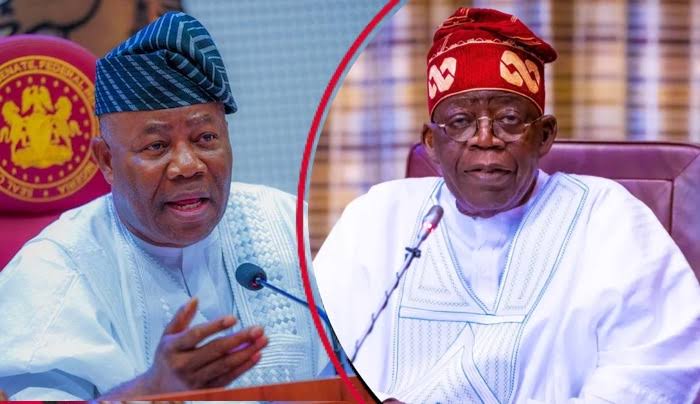
“The Senate approved the state police constitutional proposal on June 24, 2026, and the House of Representatives passed the executive state police Bill on 23 July, 2026.
“The constitutional amendment is, however, not yet in force. It must obtain the approval required from the state Houses of Assembly as prescribed under the Constitution.
“Until that process is concluded, there is no operational state police service anywhere in Nigeria, and the Nigeria Police Force remains the constitutionally recognised police institution.”
On the guiding philosophy of the reform, Gbajabiamila argued that state policing must not become an instrument of political control, stating that, “State Police cannot mean 36 state militias, just as national standards cannot become a disguised method of re-centralising day-to-day state policing.
“No political office holder should be able to direct the arrest of an opponent, the suppression of lawful political activity or the selective enforcement of the law.
“Federal intervention must remain exceptional, evidence-based, proportionate, time-limited and reviewable.”
Gbajabiamila revealed that the website went live on the same Monday, and would give Nigerians a direct channel to submit memoranda for roughly two weeks, with a possible extension.
“There will be a website which has gone live already, for members of the public to learn about the stages of what we’re doing, and to actually contribute and send their contributions through that platform.
“So the public is included, no matter your station in life. The website will metamorphose hopefully in the next couple of days”.
Speaking on the sub-national police structure, the Inspector-General of Police (IGP), Olatunji Disu, disclosed that the Committee that developed the framework for the proposed state police system studied India, the United States of America and Pakistan’s models before submitting its recommendations.
Disu urged police personnel to take an active role in shaping the national conversation on the proposed establishment of State Police through informed engagement, objective analysis and public enlightenment.
The nation’s number one police officer, said these on Thursday, August 6, 2026 at a one-day workshop on State Police organised by the Nigeria Police Institute at the Nigeria Police Resource Centre, Abuja.
The IGP described the workshop as a timely platform for critical reflection on one of Nigeria’s most significant security policy debates, stressing the need for police personnel to be well-informed as discussions on the proposed reform continue across the country.
Disu said, “As discussions on the creation of State Police continue to gain momentum across the country, members of the Nigeria Police Force must remain well-informed and contribute constructively to the ongoing discourse.
“The workshop provides an opportunity for participants to examine the implications of State Police, raise pertinent questions, address legitimate concerns and make meaningful contributions that would enrich national policy discussions on policing and internal security.
“A lot of comparative analysis has been done. We have taken time to study nations where they have state police – India, America and even Pakistan – and how things work there.
“The governors have already set up their committees. They have already almost concluded. In fact, they have concluded.
“We started late. We caught up with them, and I’m happy to say our work is what they are deliberating on today.
“I think it took us 17 days only to come up with a framework that has become the genesis of what everybody is working on today. And we still need to put some finishing touches to it”.
However, stakeholders have argued that the opening of a portal by the Gbajabiamila-led team for members of the public to submit memoranda, was not enough to guarantee a balanced state police Bill that will be devoid of control by the country’s desperate politicians. These stakeholders further argued that the inclusion of opinions of the public in what Gbajabiamila and his team are doing is subject to their discretion. This is an indication, according to analysts, that the state police establishment Bill is an exclusive preserve of the Federal Government and the ruling APC which may be intended for election manipulations.
But the Supreme Council for Shariah in Nigeria has cautioned the Federal Government and the National Assembly against rushing the constitutional amendment process to establish state police, insisting that broader national consultations must precede any final decision on the proposed reform.
The Council said although Nigeria’s worsening insecurity required urgent action, state police should not be presented as a quick fix to the country’s security challenges.
In a statement on Sunday, August 2, 2026 issued by its Secretary-General, Nafiu Baba Ahmad, the Shariah Council said it had been closely monitoring the national debate and legislative process on state police, and described the issue as one with profound implications for justice, national unity and the country’s future.
According to the Council, Nigeria is grappling with one of the worst security crisis in its history, with thousands killed, millions displaced and widespread destruction of farms, businesses and livelihoods.
It noted that while every genuine effort to improve national security deserved support, the shortcomings of the country’s security architecture stemmed largely from inadequate funding, corruption, poor welfare, insufficient personnel, weak intelligence gathering, obsolete equipment and poor coordination among security agencies.
The Council said, “The immediate priority should therefore be the comprehensive reform and strengthening of existing security institutions through improved funding, recruitment, modern technology, intelligence gathering, border security, accountability and professionalism”.
The Council argued that merely transferring policing powers to state governments would not automatically resolve these structural deficiencies.
It also expressed concern over what it described as the apparent haste with which constitutional amendments on state police were being pursued.
According to the Council, changes to Nigeria’s security architecture should be subjected to extensive national consultations, transparent public hearings and broad consensus among stakeholders.
The Council also warned that without adequate constitutional safeguards, state police could become instruments of political intimidation and discrimination.
It stressed that Nigeria’s religious, ethnic and political diversity required a policing system that guaranteed equal protection for all citizens.
The Council, therefore, called for independent oversight institutions, transparent and merit-based recruitment, professional training, effective complaints mechanisms, judicial and legislative oversight, sustainable funding and constitutional guarantees against abuse of power before any state police system is introduced.
It urged President Tinubu, the leadership of the National Assembly, state governments and other stakeholders to conclude comprehensive nationwide consultations and address the concerns raised by Nigerians before proceeding with any constitutional amendment on state police.
Also speaking in an interview on Arise Television last week, Ustaz Abubakar Mohammed, President of the Council stressed that it was not opposed to state police establishment. Rather, Mohammed said, “We are opposed to rushed, unguarded and unaffordable state police. We are opposed to constitutional amendment rush that alters and changes Nigeria’s security architecture that defies national consensus.
“Rushing the establishment of state police is no solution to insecurity. The conditions are not met. The process of passing the bill has issues. Let the people be carried along”.
Civil society organizations have cautioned the Federal Government that Nigeria’s worsening insecurity cannot be solved by establishing state police alone, saying the country must also address the deeper governance, economic and social conditions fueling violence and criminality.
The Rule of Law and Accountability Advocacy Centre (RULAAC), Africana League and the Corporate Accountability and Public Participation Africa (CAPPA) organized a workshop on Tuesday, July 28, 2026, with the theme: “Insecurity and State Policing in Nigeria: The Way Forward”.
The organizations canvassed a broader approach that combines policing and justice sector reforms with good governance, expanded economic opportunities, stronger accountability mechanisms and meaningful youth participation in any new policing architecture.
Speaking on “State Policing in Nigeria: The Imperative, the Risks and the Architecture for Accountability”, the Executive Director of RULAAC, Okechukwu Nwanguma, cautioned against treating insecurity primarily and solely as a policing problem.
He said governance failures, poverty, unemployment, corruption, impunity, weak institutions, communal conflicts and political exclusion all contribute to insecurity, adding, “Police can respond to crime, but they cannot eliminate the structural conditions that produce it. No restructuring of police institutions alone will solve Nigeria’s security crisis.”
Nwanguma acknowledged that decentralizing policing could improve responsiveness but warned that it could also reproduce existing abuses if adequate safeguards were not put in place.
“Without these safeguards, decentralization may simply transfer abuse from Abuja to the state capitals,” he warned, while also expressing concern about the process of considering the ongoing constitutional amendment for state police, saying such a far-reaching reform required transparency, rigorous debate and broad stakeholder consultation.
Also speaking, the Executive Director of Africana League, Dr. Glory Ukwenga, said any reform of Nigeria’s policing architecture must deliberately include young people, who she described as both primary actors and victims of insecurity.
Ukwenga noted that young people constitute more than 70 per cent of Nigeria’s population, yet their participation was largely absent from discussions around the proposed state policing framework.
In his intervention, CAPPA’s Executive Director, Akinbode Oluwafemi, who spoke on “Building a People-Centred Security Framework for Nigeria”, said a decentralized policing model could make policing more responsive to communities, but stressed that the fundamental question must be what kind of policing Nigeria wants to build.
A statement made available to journalists by Media and Communications Officer at CAPPA, Robert Egbe, quoted Oluwafemi as saying, “The fundamental issue is the philosophy behind the kind of policing we want in Nigeria, querying, “Do we want a police service that communities can relate with? Or do we just want to instill fear so that the elites and those in authority can exert violence on the people?
“The police should not be instruments of fear and intimidation. Human rights should be protected.
“Another issue is who controls the police? Will it remain an instrument of those with political authority and means? Or will it become an integral part of communities, protecting people who have a democratic say in how the powers ceded to the police are exercised?” he asked.