Activists drawn from the academics, community representatives and civil society groups canvass inclusive environments for Nigeria and African communities with a view to achieving, sustaining and preserving nature in its purest form
By Edu Abade
Nigerian environmental activists, climate crusaders and advocates of community livelihoods and their international collaborators have canvassed what they termed ‘inclusive environment for not only rural communities, bust also Nigerian and African urban centres and cities, giving the rising scale of rising global climate crisis.
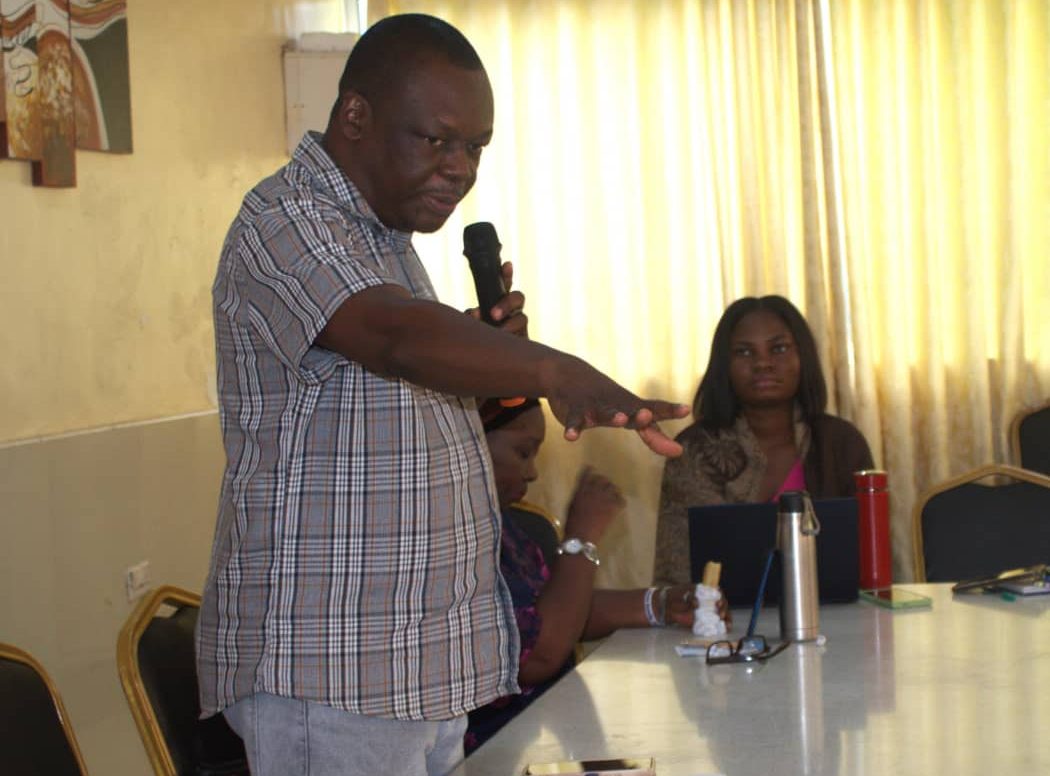
They spoke at a hybrid workshop which brought together stakeholders, policymakers and community groups to explore a new environmental justice framework following in depth research on behalf of the Sustainable and Inclusive Growth Commission (SIGC) by the University of Chester and the University of Derby in the United Kingdom (UK).
The researchers explained that environments framework is a recently developed tool for use by members of the public and private sector to guide when developing, implementing and monitoring environmental sustainability measures. It is intended to provide a resource which can be adapted for use by organizations and as such will develop and grow to meet the individual context.
In 2023, the research team, which included Professor Chantal Davies, Dr. Holly White, Dr. Kim Ross and Dr. Eghosa Ekhator engaged in a 12-month research project titled: Inclusive Environments: Designing a Framework for Environmental Justice in which they used principles of co-production via community and stakeholder engagement and research to develop an environmental justice framework for environmental sustainability decision making.
Their survey was based on existing equality impact assessment approaches) for use by public and private sector organizations across the sub-region of Cheshire and Warrington and beyond, while the environmental justice toolkit, website, and web tool development (an interactive web-based tool for the framework) was launched in July 2025.
In his opening remarks heralding the workshop, Executive Director of the Renevlyn Development Initiative (RDI), Philip Jakpor pointed out that the aim of the workshop was to provide adequate information on the Inclusive Environments research and an opportunity for participants to explore how the Inclusive Environments (Environmental Justice) Framework could be used in their own organizations in the Nigerian context.
“Environmental injustices are rife in Nigeria. This workshop will deliberate on how the Environmental Justice Framework can be adapted to the Nigerian context. We are pleased to be able to include keynote sessions with Dr. Eghosa Ekhator (Associate Professor of International Environmental Law and Co-Lead for the International Law, Environmental and Human Rights Research Cluster (University of Derby Law School); Chief Eric Dooh (a Nigerian community leader and farmer from Goi in Gokana Local Government Area of Rivers State), Barrister Chima Williams, an environmental lawyer and Chief Constance Meju (a journalist, environmentalist and women rights advocate.)
During the hybrid seminar, moderated by Jakpor, the organizers -University of Derby in partnership with the Renevlyn Development Initiative (RDI) and the Environmental Defenders Network (EDEN), he commended the partners for honoring the invitation to attend what he described as, “This very important meeting convened by our research partner from the University of Derby, United Kingdom in partnership with RDI and EDEN.
“The subject matter we are treating today is one that has remained a sore spot for many local communities that host so-called development projects, be they oil and gas or solid minerals mining or even projects like road construction. As you all know, in Nigeria, conducting Environmental Impact Assessment (EIA) is mandatory for projects that are likely to have significant impacts on the environment and people living in the project right of way.
“Community people are supposed to be part and participants in the process. Their views are supposed to matter and inform the project going forward or not. If they insist that a project with significant impacts must go ahead then there must be some safeguards agreed with the project implementers. They can also insist that a project should not go forward.
“Unfortunately, what we see in Nigeria is limited or no community involvement in the EIA processes and total lack of transparency on the part of project implementers. There are many projects whose so-called EIA cannot even be found.
“From the Niger Delta where oil spills and other impacts are daily occurrences to the northern parts of the country where illegal mining impacts continue to affect the environment, the story is the same. Communities hosting development projects insist that such projects are foisted on them with no prior consultations held.”
He lamented that the EIA processes, especially in oil producing host communities of the Niger Delta were fraught with lack of transparency because the process is viewed as a mere formality by the implementers, maintaining that there was complete disregard for community views and most companies only “inform” the communities of the projects instead of including them as stakeholders whose views matter.
“The exclusion of communities in these processes make it nearly impossible or arduous for them to demand or get justice when their right to a safe environment is violated. We hardly hear of companies penalized for breach of EIA processes. Monitoring processes of implementation of projects are not rigorous enough to ensure they comply with what is written in black and white. These gaps are largely responsible for the environmental degradation across the country.
“We do not intend to dwell on the gloom. We will hear from our discussants what the state of the environment in their community look like, how they have tested the laws, and from our media interventionist, what challenges journalists face in exposing environmental breaches. Most importantly, we will hear from our partners at the University of Derby about an environmental justice toolkit they developed with the sole aim of putting the people at the center of EIA processes.”
Lead interventionists, who spoke virtually at the hybrid summit, including Professor Chantal Davies, Dr. Holly White, Dr. Kim Ross and Dr. Eghosa Ekhator, admitted that global climate crises have assumed a very dangerous and disturbing dimension in that major polluters of the Global North have been evasive in providing funding for the mitigation and adaptation of the larger impacts of climate change, even as countries of the Global South, among them African countries, continue to bear the greater burden of the crises.
They therefore, canvassed frontal and coordinated efforts at confronting the menace of greenhouse emissions, expansion of fossil fuel exploration, illegal and irresponsible mining of solid minerals and decimation of community livelihoods, especially as they affect Nigeria and other African countries.
Major talking points during the meeting dovetailed towards that inclusion of climate change issues that have mostly led to divestments of International Oil Companies (IOCs) and Domestic Oil Companies (DOCs) and why the IOCs have been divesting their onshore assets and moving deeper offshore, for which environmentalists had constantly insisted was suspect due to the monumental devastation oil exploration activities have caused, especially in oil producing host communities of the Niger Delta region.
While the challenges persist for decades, Chief Eric Dooh, who participated virtually in the meeting, confirmed that the people have expressed delight that oil exploration activities were resuming again in the area, but stressed that proper Environmental Impact Assessments (EIAs) should be carried out while all legal issues pending in court must be resolved possibly out-of-court.
He also requested that an all-inclusive meeting of impacted and host communities should be convened to be followed by a proper needs assessment of projects to be carried out before commencement of all projects going forward.