
By Nwokeocha Onyinyechi Agatha
Beads, being among humanity’s earliest artistic creations, occupy a remarkable position in African cultural history. Beyond their aesthetic value, they encapsulate social hierarchy, spiritual authority, gender expression, and artistic identity. This paper offers a comprehensive analysis of bead culture within Nigeria and the African continent at large.
It traverses the evolution of beads from prehistoric artifacts to contemporary fashion statements, while emphasizing their enduring spiritual, economic and artistic roles. The research underscores the relevance of beads traditions in the preservation of indigenous identity and the need for proactive cultural documentation within museum space.
Across centuries and civilizations, beads have served as visual languages of power, identity, and faith. In African societies, they represent more than ornamental beauty that embody collective memory, ancestral legacy and social order.
In Nigeria, beads stand at the crossroads of art, ritual, and heritage. They mark personal milestones, signify status, and mediate spiritual relationships between the physical and metaphysical realms. From the coral regalia of the Benin monarchs to the waist beads of Yoruba women, these small but potent objects articulate the African worldview where matter, spirit, and identity coexist.
 This study seeks to explore the cultural depth of beads through historical, ethnographic, and artistic lenses. It further examines their transformation under contemporary influences global trade, fashion, and digital expression while reaffirming their value as living heritage within Nigerian museums and cultural discourses.
The archaeological evidence of beads affirms Africa’s pioneering role in their craftsmanship. Excavations at Ile-Ife, Benin and Igbo-Ukwu have revealed intricate glass and stone beads dating between the 9th and 14th centuries CE, reflecting sophisticated knowledge of metallurgy, chemistry, and artistic design. These discoveries challenge colonial-era assumptions that complex bead industries originated only in Europe or Asia.
The Igbo-Ukwu bronzes, for instance, contained over 165,000 glass and carnelian beads believed to have been imported through early trans-Saharan trade, testifying to Nigeria’s participation in global exchange networks long before colonial contact. Similarly, the Benin royal workshops refined coral and ivory bead artistry to symbolize divine kingship and political authority.
In many African societies, beads also served as mediums of commerce, diplomacy, and storytelling. They functioned as early forms of currency, adornment for deities, and communicative codes for lineage and status. This historical continuum underscores the African mastery of symbolic expression through material culture.
The traditional and epic bead heritage reveals ritual and spiritual dimensions. Beads hold profound metaphysical significance in traditional religion. Among the Yoruba, beads-known as ileke-are considered vessels of ase (spiritual energy). They serve as protective amulets, instruments of consecration, and emblems of divine covenant.
Priests, kings and initiates wear distinct bead arrangements that align with their spiritual offices. For instance, white beads denote purity and are worn by followers of Obatala, while blue-green beads represent fertility and are associated with Osun
Beads are present in every life cycle ritual-birth, initiation, marriage, and burial-linking the individual to ancestral continuity. Their presence at these thresholds of life signifies not an empty adornment outside, but also the guardianship and cosmic balance.
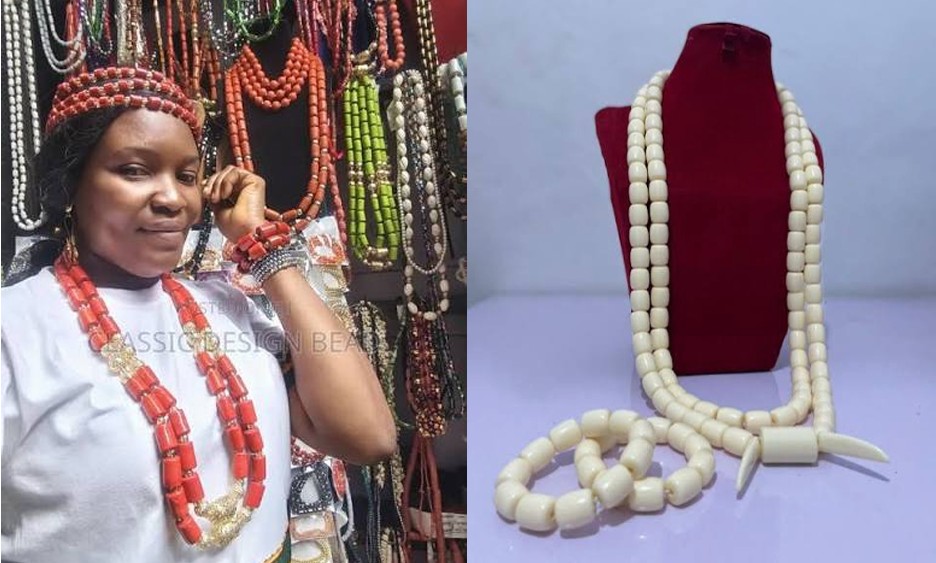
Beads serve as social and political emblems. Throughout precolonial Africa, beads were instruments of governance and symbols of nobility. In the Benin Kingdom, coral beads (Ivie) remain exclusive to the Oba and his chiefs, signifying rulership sanctioned by spiritual authority. The Ooni of Ife, Oba of Lagos and other Yoruba monarchs similarly wear layered bead regalia as visible insignia of power, wisdom, and continuity.
Beyond royalty, beads distinguished social class and achievement. Certain bead types were reserved for titled individuals, warriors, or elders, reinforcing societal hierarchy. Thus, beads acted as materialized power, embodying the moral and political codes of traditional society.
Beads also embody ethnic and regional interpretations. Beads in Nigeria are rich cultural symbols of royalty, status, and heritage, with specific colors and styles tied to different tribes and occasions.
Red coral beads signify royalty and marriage, while waist beads (jigida) denote femininity. Major traditions include Yoruba (Ileke), Igbo (Mgbaji) and Benin (Coral), heavily worn at weddings and ceremonies.
Key Tribal Bead Associations include Yoruba (South West): Known for Ileke, especially red coral beads representing royalty and nobility among Kings (Obas) and chiefs.
In Benin/Edo Kingdom, red coral beads are paramount, used heavily by the Oba and chiefs to symbolize power, wealth, and spiritual authority while in Igbo (South East), they are known as Mgbaji, these beads are crucial in traditional weddings to symbolize wealth and status.
Among the Ijaw of the Niger Delta, coral beads are highly valued as symbols of tradition, nobility and high social status and in Hausa (North), they are known as Jigida (waist beads), which are often made from plastics, bones, or shells. They are worn for beauty, to enhance femininity and sometimes believed to offer protection.
In Tiv Land (Middle Belt), their beads often reflect the colours of their traditional A’nger cloth (black and white), symbolizing courage and strength.
As for colour symbolism and occasions, red (coral) signifies royalty, power, high social status and traditional weddings; white stands for purity, peace and spiritual connection; black connects with African identity and heritage; blue connotes wisdom and energy, while green is often associated with growth and prosperity.
Waist Beads (Jigida) are used to signify maturity, confidence and fertility and for occasions like traditional weddings, brides and grooms are heavily adorned in beads to signify prosperity and matrimonial union.
During coronations and conferment of chieftaincy titles, beads are used to distinguish royalty and titled individuals and in cultural festivals, they are used to display heritage through beadwork. However, each region integrates local materials, colours and crafting styles that reflect their spiritual philosophy and environment. The resulting diversity forms a vibrant cultural atlas of bead usage across Nigeria.
Beads in the Modern Era
Artistic Evolution and Contemporary Expression
Modern Nigerian art and fashion have reinterpreted bead aesthetics for global appreciation. Contemporary designers incorporate traditional motifs into haute couture, jewelry design, and performance art. Exhibitions now present beads not merely as artifacts of the past, but as dynamic media for storytelling and innovation.
This evolution demonstrates the adaptability of African aesthetics, proving that tradition and modernity can coexist harmoniously.
Socio-Economic Impact and Gender Empowerment
The contemporary beauty industry is a vital component of Nigeria’s creative economy. Beads making and design workshops provide employment, particularly for women and youth in rural and urban settings. Artisans market their creations at weddings, exhibitions, and online platforms, merging tradition with entrepreneurship.
This growing enterprise not only sustains livelihoods but also safeguards intangible heritage by encouraging new generations to engage with traditional skills. Thus, beadwork becomes a medium of economic self-reliance and cultural revival.
Conservation and Museum Representation
Museums serve as custodians of cultural continuity. Institutions such as the National Museum, Lagos, document bead collections and curate exhibitions that interpret their historical and symbolic relevance. Through conservation practices, cataloguing, and education programs, museums ensure that these fragile artifacts survive environmental threats and human neglect.
Furthermore, digital documentation and virtual exhibitions now allow global audiences to access and appreciate Africa’s bead legacy without geographical constraints.
Craftsmanship, Materials and Techniques
Traditional artisans once relied on materials sourced from nature seeds, stones, shells, ivory, clay, and metals. The introduction of glass beads through ancient trade routes expanded artistic diversity, giving rise to distinctive regional craftsmanship.
Modern beads production employs glass-blowing, stringing, wire-braiding, and mold-casting. Despite industrial advances, many artists maintain indigenous methods that preserve authenticity. The process from raw material selection to final stringing reflects patience,
This continuity of practice situates bead making not only as an art form but as a cultural ritual of creation.
Religious Contexts and Identity Representation
Beads traverse religious boundaries, uniting various faiths through symbolic continuity. In African Traditional Religion, they embody divine authority; in Christianity, they appear as rosaries symbolizing meditation; in Islam, they manifest as tasbih, aids to remembrance and devotion. Across all these contexts, beads operate as tactile conduits between humanity and the sacred. They sustain spiritual focus, express identity, and affirm belonging within communities of faith
Challenges and Preservation Approaches
Globalization and industrial imitation threaten the integrity of traditional bead culture. The influx of cheap synthetic imports undermines the value of handmade pieces and discourages local production. Additionally, inadequate conservation measures in museums contribute to the deterioration of fragile organic materials.
To address these challenges: Government and museums should sponsor workshops that document indigenous techniques. Cultural institutions must integrate bead studies into educational curricula. Collaboration with artisans can promote ethical sourcing and sustainable tourism. Digital archiving initiatives should preserve design patterns for future generations. Such proactive efforts ensure that bead culture remains a living and evolving heritage, not a relic of the past.
In conclusion, beads embody the essence of African creativity-where beauty, belief, and identity converge-They carry testimonies of history written not in ink but in colour, texture and form. From sacred rituals in ancient palaces to modern catwalks and museum displays, beads narrate the story of resilience, continuity and transformation.
Therefore, preserving the beads heritage is both a cultural and moral duty. It ensures that the language of beads remains one that is spoken across generations and would continue to inspire pride, scholarship and artistic innovation for centuries and generations to come.
Mrs. Agatha is Assistant Director, National Museum, Onikan, Lagos