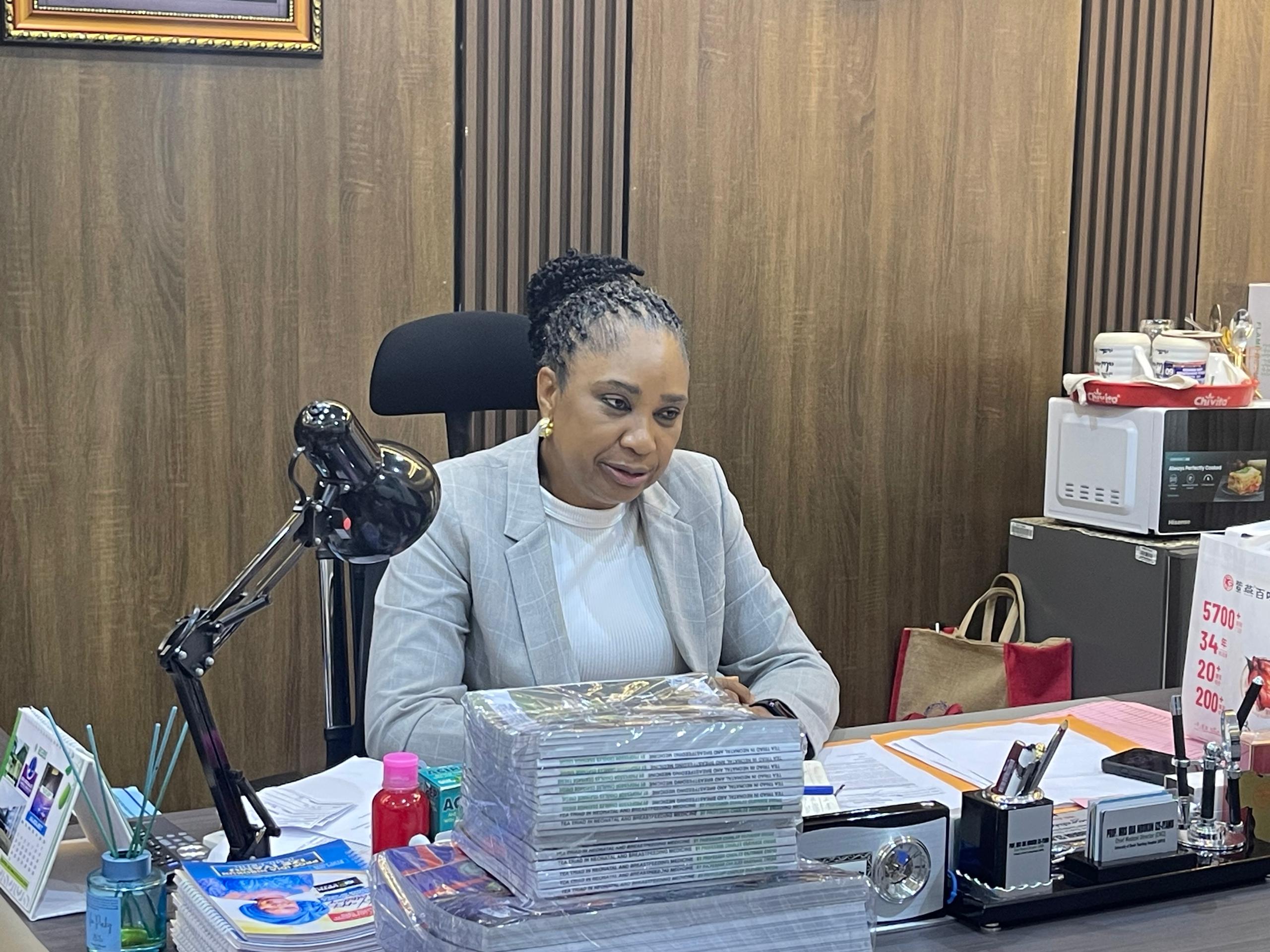
The Chief Medical Director of the University of Benin Teaching Hospital (UBTH), Prof. (Mrs.) Idia Ize-Iyamu has disclosed how UBTH has implemented a “CARES” agenda to drive clinical and academic excellence, infrastructure revitalization, staff welfare, and sustainability. She explained that under her watch, UBTH has significantly upgraded its medical infrastructure with the federal government support, including a modern oncology center, a 160-Slice CT Scan machine, and a revitalized 10-ton liquid Oxygen Plant. She spoke in an interview with newsmen during a facility tour of the UBTH noting that the hospital has enhanced patient care by renovating dilapidated facilities, re-equipping departments, providing advanced staff training, and conducting free medical outreaches to ensure accessible and affordable healthcare for all
How did your preparation and vision for the job of the first female Chief Medical Director (CMD) of the University of Benin Teaching Hospital start?
My journey toward becoming the first female Chief Medical Director (CMD) of the University of Benin Teaching Hospital (UBTH) began long before my appointment, rooted in a deep commitment to transformative healthcare leadership. As a consultant and long-standing member of the UBTH community, I recognized the immense potential we had to elevate patient care, staff welfare, and institutional infrastructure. My vision was clear: to foster a culture of excellence, transparency, and innovation, ensuring that UBTH remains a beacon of advanced medical practice in West Africa. Breaking the glass ceiling was not a personal milestone alone, but a call to demonstrate that leadership is defined by competence, resilience, and a clear strategic roadmap. By focusing on collaborative governance and patient-centered care, we set out to build a legacy of sustainable progress from day one. So, when I became the CMD of the ubth, I had this vision to take the hospital to the next level of greatness, and I wrote it down. And that was captured with what we call the “UBTH CARES” agenda and it’s an acronym where you have the “CARES.” The ‘C’ stands for clinical and academic excellence. The ‘A’ is for Advancement through training and capacity building. The ‘R’ is for Revitalization of infrastructure because if you notice, most of the teaching hospitals are dilapidated because the structures are old, and UBTH is over 50 years, and you can imagine what we met when we came on board. The ‘E’ is for employee welfare and community engagement, and the ‘S’ is for sustainability through partnerships because whatever you do, you have to be able to sustain it. The UBTH has been over 50 years old and you can imagine what we met when we came on board. This was the vision that we came on board with. We began to look at how we could embrace clinical excellence and also remember we are a research and training centre. So, we are also looking at academic excellence. UBTH doctors and staff are also trained to get the best in what they do and to be up to date. At the same time, giving a state-of-the-art treatment to our patients that comes on what we call ‘C’ for clinical excellence. Our efforts at championing Clinical excellence is also in line with what President Bola Ahmed Tinubu GCFR wants us to do because part of his vision for the renewed hope agenda is to have clinical excellence in all the hospitals. This is why you see quality healthcare delivery in all the hospitals with education and health a priority for this regime. This has been encapsulated in our ‘UBTH CARES agenda.’ We also try to look at how the hospitals can be better, how we can have state of the art equipment, revitalization of infrastructure, and advancement through cutting-edge technology.
What is your assessment of the UBTH state-of-the-art Oncology Centre for cancer treatment?
Prior to my coming on board as a Chief Medical Director, the Federal Government built a modern oncology center at the University of the Teaching Hospital, which was commissioned in July of 2025. When I came on board in August 2025, the UBTH oncology unit was one of three that have been set up by the Federal Government and the only one in the south-south. We have a state-of-the-art linear accelerator and a CT scan that will simulate the lesions, the cancer treatment that needs to be done before the patients are taken to the linear accelerator, which is the cancer treating machine. Now, this machine was donated by the federal government to the University of Benin Teaching Hospital. The federal government is very passionate about the health of all Nigerians, and this machine will help to reduce the burden of cancer care in Nigeria. We also have the cancer health fund, which is also sponsored by the Federal Government for indigent patients who do not have money to treat themselves because cancer is a very expensive disease in quote and to treat it, you need a lot of money.
How does the support programmes for cancer patients work?
The Cancer Health Fund (CHF) is available for indigent Nigerians who can key into the fund and receive cancer treatments in the University of the Teaching Hospital. Now, this is what we call advancements in technology, and it also falls under the ‘UBTH CARES’ agenda. The Federal Government also donated three centers, the University of the Teaching Hospital is one of such, and the only centre in the south-south of Nigeria, Also, we have the 160-Slice CT Scan machine, which was donated by the Japanese government, and the federal government decided to graciously install it here in the University of Benin Teaching Hospital. This 160-Slice CT Scan is one of three in Nigeria. It is the most modern machine. So, if you look at UBTH, we have the 160-Slice CT Scan, which is radiology, one of three in Nigeria, and then we have the linear accelerator and the CT simulator in our oncology center also in UBTH, which is one of three, because the one in UBTH is the only one in the south-south. So, we are meant to take care of cancer care in the south-south of Nigeria. We are talking of radiation oncology and radiology, and UBTH is still number one.
What are the other critical interventions in the emergency care unit?
When we came on board, we began to look at several things as to the challenges that affect our people and the disease burden. Because once in a while, you have to evaluate what you see and where you are going. The first thing we decided was that most patients in these government hospitals require oxygen, and oxygen is a critical factor in any hospital. When I came on board, I met an abandoned oxygen plant, which we revitalized. This oxygen plant was also given to us courtesy of the federal government. This 10-ton liquid oxygen plant, we revitalized within a few months of my assumption of office. This oxygen plant has been meeting the needs of our oxygen demand for patients in the Accident and Emergency room in theater, in ICU and in the wards for critically ill patients. This intervention has also reduced the cost of treatment, and all these things we are talking about have been given to us so graciously by the federal government of Nigeria.
Are you satisfied with the level of infrastructure you met on ground giving the severity of cancer related cases?
Well, the first thing we did was to look at how we can begin to improve our infrastructure. We looked at the dilapidated buildings, staff members morale, and we said, “Okay, let’s tackle it one after the other.” First, we went to the Accident and Emergency unit and we were able to improve the number of equipment there. We purchased patient monitors and defibrillators, and we were able to improve the number of other things there so we could see an optimal number of patients with the best quality of care. We also began to look at buildings that were dilapidated. We moved to the Professor Ejide Dental complex, the Dental complex which was in quote the worst building in UBTH, and we were able to make it look beautiful. Additionally, we went to the Mortuary complex, which was also very badly dilapidated, and we have been able to carry out a turnaround at the morgue and increased the capacity from the 72 refrigerated body units, and at the end of completion we will have 472 refrigerated body units. What we did at the morgue is total overhaul and re-equipping of our mortuary services.
What is the level of commitment to overall patient care?
We also decided to look at patient care, we moved to the Intensive Care Unit (ICU), we moved to the theatres, and we have been doing systematic revamping and rehabilitation bit by bit. It’s a strategic plan because, basically, we thought of what can we do for the patients and at the same time, the caregivers who are the doctors, the nurses, and the allied medical staff.
Are there some clinical interventions you like to share with us?
Yes! Once we settled down, we moved to the laboratories where we were able to buy a state-of-the-art equipment for the laboratories to be able to get tests out on time. We were able to also re-equip the O&G theatre from the kind donation of some of our partners, who were able to get theatre equipment for the Gynae Theatre II, and that included the operating bed, operating light, an aesthetic machine electro-coetry and all that sophisticated equipment, courtesy of one of our partners. We also bought some state-of-the-art equipment, which included the orthopantomeogram combined with the cephalometric arm, and also a laparoscopic tower for O&G to be able to do gynecological surgeries.
You may want to share your experience in training and re-training of staff members since assuming office?
Definitely! In training, we were able to begin to train our doctors, our nurses, and our lab scientists, who started in-house training, which included capacity building. Other basic training on staff management, how to manage patients, how to resolve conflict, and how to work in a good workplace environment. We also got trainers from outside the country. We had trainers from the United States of America who came to train our emergency medicine doctors and how to use various machines in the emergency room to save lives.
What about your partnerships and donations?
Just recently, we had some doctors who came in from Italy, from Australia, and from Spain to train gynecologists on ultrasonic evaluation of Endometriosis. The program was also used to train the radiologists, the radiographers, the sonologies, the obstetricians, and gynecologists. The training would also improve the capacity for clinical care. We also want to go into telemedicine, robotics, and those things that will help our doctors to be able to improve their clinical care and their clinical services. We’ve also had donations from partners. Just recently, we commissioned the geriatric lounge and library from one of our partners, a patient’s child who was so satisfied with the quality of treatment that was given to his late father in UBTH and graciously donated the state-of-the-art library and lounge and also with the promise for more things.
Has there been any positive benefits from your collaboration with the state government?
That has been very positive. The state government has been very supportive under the leadership of Governor Monday Okpebholo, who has also promised to build a N2.5 billion pediatric complex for the UBTH. I know that by the time the government finishes with all the bureaucratic bottlenecks, the project will come on board. They are yet to commence, but I know that it’s in the preparation stages. We also went to our outstations because the University of Benin Teaching Hospital, when it was established, also looked at taking care of the poor and the underserved in our community. We have two out stations, one in Udo community, which is an outstation in the Ovia South West Local Government Area of Edo State, and the other one in Ogbona, which is situated in Etsako Central Local Government Area of Edo State, that’s Edo South and Edo North respectively. Both of them were in a very, very serious state of dilapidation. So, we decided to take them one by one, and we started with the Comprehensive Health Center (CHC) in Udo, and we have moved to some extent in the renovations. Where there were no doors, no windows, and the place was totally dilapidated, and we have repaired it. By the special address of God, between the 11th and 14th of August, we are going to do a free medical and dental outreach where we plan to treat over 5,000 people from the underserved community, which is mainly comprising farmers and fishermen and noteworthy, there’s no real hospital in that area. The free medical outreach is going to be completely free, and we look at it as part of the Corporate Social Responsibility (CSR) of the University of Benin Teaching Hospital. Subsequently, we’ll move to the second Comprehensive Health Centre in Edo North, which is situated in Ogbona sometime later in the year, or maybe early next year.
What are the specific aims and objectives of the free medical outreaches?
We are trying to give back. UBTH has been in existence for over 50 years. We are trying to revitalize our infrastructure. We are trying to improve patient care. We want to make it affordable for the poor and for the rich. It doesn’t matter who you are. We want to improve those services, and that is why we are giving back. Just recently, we did 100 free cataract surgeries in support of the retirement of one of our own Professor Omolabake Edema, after 70 years of age and 46 years of meritorious service to the University of Benin Teaching Hospital. The surgeries were done by the surgeons in UBTH, and it was completely free. You can see that part of our vision is to make health available, accessible and affordable for everybody.
Any concrete gains from UBTH’s Corporate Social Responsibility (CSR) initiatives and the CARES mantra?
Most assuredly! Once in a while, we give back through CSR in which the patients do not pay anything. It is free. At other times, the care is very, very affordable because most of these services are subsidized very much. The Federal Government has also donated equipment. We have also been able to buy some equipment. The summary of it all is that every Nigerian citizen is entitled to free health care, whether you have money, you don’t have money, UBTH does not turn anybody away. That is my vision for the University of Benin Teaching Hospital. We are very determined to ensure that the UBTH cares mantra aims for health care excellence. To that extent, we are committed to providing universal healthcare for all, Clinical Excellence, Academic Excellence, because everybody deserves a good life, free of disease, and everybody must have a hospital they can go to, a doctor that they can call their own, and a specialist that will be available. Here at UBTH, it is a one-stop centre of every specialty that you can think of in Nigeria, and if you were to go to a private hospital, you would not be able to afford the services that UBTH performs.