
Echoes From MARAN’s 2026 Lecture
At the Maritime Reporters’ Association of Nigeria’s (MARAN) Annual Lecture known as “MAMAL”, held in Lagos penultimate week, stakeholders in the Marine and Blue Economy Ministry gathered to chart course for the advancement of the maritime business sector as reported by the Editor-in-Chief, Innocent Chukwu
Stakeholders in Nigeria’s maritime sector have called for comprehensive modernisation of the nation’s seaports. They argued argued that improved infrastructure alone cannot make the country a competitive maritime hub without efficient cargo evacuation, digitalization of processes, transparent charges and effective regulation.
The stakeholders spoke at the fourth Annual Maritime Lecture of the Maritime Reporters’ Association of Nigeria (MARAN), held on Thursday, September 10, 2026, at the Naval Dockyard event center, Victoria Island, Lagos.
The lecture, which attracted key players across the maritime industry, had as its theme, “Nigerian Ports Modernisation, Charges and the Competitiveness Question.”
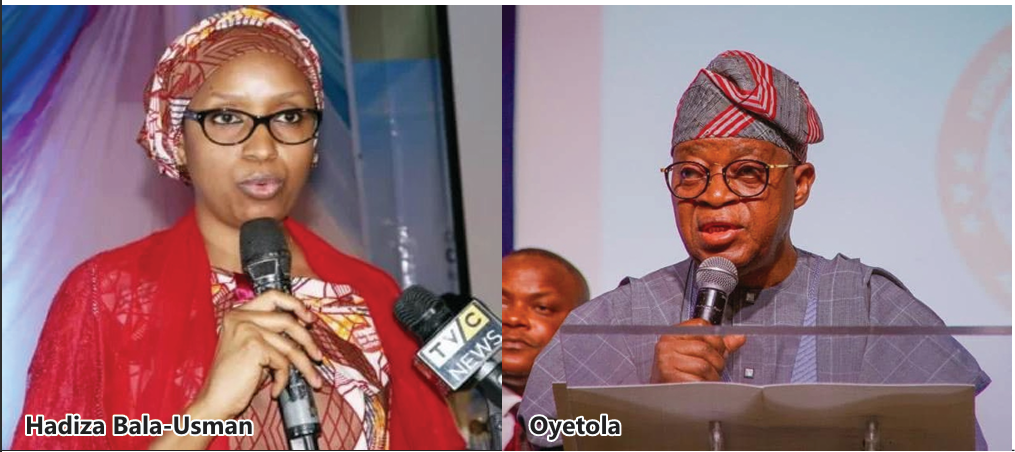
Former Managing Director of the Nigerian Ports Authority. (NPA), and Special Adviser to President Bola Ahmed Tinubu on Policy Coordination, Hadiza Bala Usman, said port modernisation must be judged by its impact on cargo movement, vessel turnaround time, logistics costs and the country’s export capacity.
Usman identified infrastructure and operational models, modern equipment, digitalization of operations, institutional reform, human capital development and commercial modernisation as the six major pillars required to transform Nigerian ports.

She said the importance of efficient ports to the Nigerian economy could not be overemphasised, noting that the nation’s seaports handle more than four-fifths of its physical imports and exports.
The former NPA boss warned that high port costs were eventually transferred to consumers, manufacturers and businesses, thereby increasing the cost of goods and undermining Nigeria’s competitiveness.
She, however, commended recent improvements at the country’s sea ports, citing the World Bank and S&P Global Market Intelligence Container Port Performance Index, which ranked Tin Can Island Port 10th globally and Lagos Port Complex, Apapa, 12th among the world’s most improved container ports between 2020 and 2025.
Usman said the gains recorded in the sector must be sustained through continuous investment, stronger coordination among government agencies, and measurable improvements in port performance.
She also called for a comprehensive review of the nation’s port tariff structure, arguing that the focus should be on the total cost of moving cargo through the supply chain rather than isolated charges imposed by individual operators and agencies.
According to her, statutory port tariffs, terminal handling charges, shipping-line charges, detention, demurrage, haulage, documentation and clearing costs must be considered collectively in determining the competitiveness of Nigerian ports.
Usman advocated a predictable, transparent and performance-based tariff regime, saying charges should be linked to the quality and value of services delivered to port users.
She further recommended the publication of an annual Port Economic Performance Report containing data on vessel and truck turnaround times, cargo-handling productivity, equipment availability, Customs clearance, logistics costs, digital transactions, export connectivity and customer satisfaction.
Minister of Marine and Blue Economy, Adegboyega Oyetola, represented by the General Manager, Corporate and Strategic Communications, NPA, Seyi Iyawe, said the Federal Government was committed to transforming Nigeria’s maritime infrastructure and making the country a leading maritime hub in West and Central Africa.

Oyetola said the approved modernisation programme for Apapa, Tin Can Island and other ports would involve the reconstruction of critical infrastructure, deepening of channels, replacement of obsolete equipment and improvement of port operations.
The Minister said the government was also expanding deep-sea port capacity to decentralise cargo flows, reduce pressure on traditional ports and create new economic corridors for investment, employment and industrial development.
He added that investments in tugboats, mooring boats, pilot boats and other marine assets were aimed at improving vessel movement, safety and operational efficiency, while improved maritime security had strengthened confidence in Nigeria’s waters and ports.
Oyetola said the Nigerian Ports Economic Regulatory Agency would further strengthen the sector by monitoring tariffs, enforcing service standards, promoting fair competition and protecting port users from arbitrary and unpredictable charges.
Executive Director, Operations and Technical, Tantita Security Services Nigeria Limited, Capt. Dr. Warredi Enisuoh, warned that port modernisation would fail to achieve its desired impact if attention was not paid to what happens outside the port gates.
Enisuoh said the government must modernise roads, railways, inland waterways, truck management systems and other cargo evacuation channels alongside port infrastructure.
He stated that automating operations inside Apapa or Tin Can Island would not eliminate congestion if cargo could not be evacuated efficiently.
The Tantita executive also called for an integrated one-stop-shop system to reduce the delays and costs associated with multiple agencies and regulatory processes confronting shipping agents and other port users.
He urged the Federal Government to develop viable ports across the country rather than concentrating virtually all major maritime activities in Lagos, saying alternative gateways would help distribute cargo and reduce pressure on Lagos.
Enisuoh also warned that poor city infrastructure could undermine billions of naira invested in port modernisation, stressing that ports, roads, rail, bridges, inland waterways and logistics hubs must be developed as one interconnected system.
The Acting Rector of the Maritime Academy of Nigeria, Dr Kevin Okonna, said port competitiveness was fundamentally tied to efficiency, innovation, safety, technology, regulation and the quality of human capital driving the maritime sector.
Okonna said the Academy had continued to invest in modern training infrastructure, advanced simulators, practical facilities and improved learning environments to equip cadets and maritime professionals with skills required by the Nigerian and global maritime markets.
The Director-General of the International Maritime Institute of Nigeria, IMION, also commended MARAN for sustaining the annual lecture, stressing that modern ports required competent manpower, innovative technology, efficient processes and sound regulatory frameworks.
The institute called for transparent and competitive port charges aligned with the quality of services rendered, while urging stronger collaboration among government, regulators, terminal operators and other industry stakeholders.
National President of the National Association of Government Approved Freight Forwarders, NAGAFF, High Chief Tochukwu Ezisi, described port modernisation as a necessity rather than a choice.
Ezisi, who was decorated as a Patron of MARAN at the event, called for greater automation, digitalisation, smart infrastructure and rationalisation of port charges to enable Nigeria compete effectively with other maritime nations.
He said excessive tariffs, overlapping levies and other costs were hurting businesses, urging the government to benchmark Nigeria’s charges against international standards.
Ezisi identified efficiency, cost rationalisation and infrastructure investment as critical pillars for repositioning the maritime sector, adding that improved port performance would strengthen Nigeria’s position under the African Continental Free Trade Area.
Founder of NAGAFF, Dr Boniface Aniebonam, pledged N1m support to MARAN and expressed his willingness to work with the association’s current leadership despite disagreements between both organisations in the past.
Aniebonam urged maritime journalists to remain committed to truth, professionalism and responsible reporting, saying the industry needed a credible media that would hold stakeholders accountable.
President of the Maritime Arbitrators Association of Nigeria, MAAN, Chief Jean Chiazor Anishere, SAN, represented by Mrs Oyeyemi Jimi-Salami, urged MARAN to sustain its contribution to accountability, transparency and informed policy discourse in the maritime sector.
She said a knowledgeable and independent maritime press was essential to monitoring reforms and ensuring that policies designed to improve Nigeria’s maritime competitiveness produced measurable results.
President of WISTA Nigeria, Dr Odunayo Ani, meanwhile, called for greater participation of women in strategic decision-making across the maritime sector.
Ani said women must move beyond inclusion to leadership, urging government and industry stakeholders to recruit, retain, promote and sponsor qualified women while creating safe and inclusive workplaces.
She said WISTA Nigeria would intensify mentorship, networking, advocacy and leadership programmes designed to equip women to play more influential roles in the maritime industry.
The stakeholders agreed that Nigeria’s port competitiveness could not be achieved through infrastructure investment alone, insisting that technology, regulation, security, tariffs, human capital and hinterland connectivity must operate as one integrated system.
They urged the Federal Government and maritime agencies to sustain reforms that would reduce the cost and time of cargo movement, attract more regional cargo, support manufacturing and exports, create jobs and strengthen Nigeria’s position as a major player in the global maritime economy.