Renewed Hardship Beckons 2027
…As Fuel Price May Hit N3,000
Concerned Nigerians caution that economic hardship faced by Nigerians may worsen in 2027 as they predict that fuel pump price may reach an all-time high of between N3,000 per liter if the Middle East crisis persists and President Bola Ahmed Tinubu fails to formulate policies capable of lifting Nigerians from the quagmire created by hasty removal of fuel subsidy
By Edu Abade
Nigerians are in for more economic trouble come 2027. Reason is that experts in the oil and gas sector have predicted that with the escalating tension in the Middle East, fuel pump price may hit N3,000 in 2027, especially if President Bola Ahmed Tinubu is elected president for another term of four years. Experts have also warned Nigerian masses to brace up to the looming unprecedented hardship, otherwise corpses may litter the roads due to unbearable hunger. Currently fuel sells at an average N1,500 per litre.
Nutrition experts noted that there are several dimensions of poverty, ranging from economic hardship, inability to feed one’s family, clothe one’s wife and children, pay rent and provide other necessities of life to mental derailment and depression. Currently, about 64 per cent of citizens are living below the poverty line due to government’s insensitive policies. This World Bank data translates to over 140 million Nigerians living in multi-dimensional poverty. Thus, another astronomical increase in the price of fuel will increase transportation fares which will reflect in the rising cost of other items.
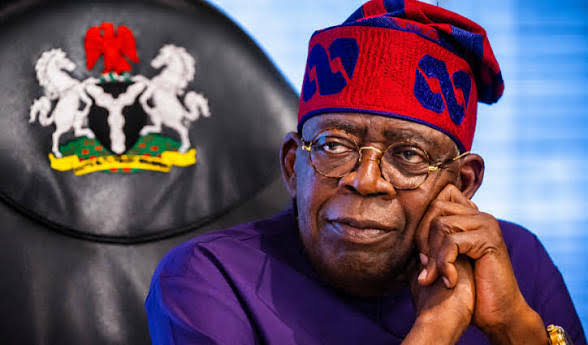
As poor citizens have experienced severe hardship in the past four years under the President Tinubu administration, an increase in their experience, experts added, will result in catastrophe which the government may find difficult to contain.
Ordinary Nigerians have not felt the economic hardship and suffering under previous administrations as under the present government. The Situation is so dire that average households now resort to using charcoal, firewood and other unconventional means to cook their meals as petrol, kerosene and gas have gone way out of their reach. Those who could hitherto afford the 12.5kg of cooking gas have been reduced to filling mere 3kg because their purchasing power has drastically reduced due to the devaluation of the naira by Tinubu administration.
That is not to consider transport to and fro work, for which most workers who stay far way from their offices have resorted to spending the days and nights in the uncomfortable corners of their offices during week days only to return to their homes on Fridays. That is the reality that the President Tinubu government has brought upon Nigerians since 2023 due to the hasty removal of fuel subsidy.
Yet, as crude oil price rises above $109 per barrel at the international market and petrol price surges to N1,500 per litre in the local market, there are fears that fuel price may increase further to N3,000 or more next year, especially if Tinubu returns for another term of four years.
The rise in crude prices came as Gulf states called off a planned meeting with Iran on reopening the Strait of Hormuz, while Yemen’s Houthi fighters launched dozens of missiles and drones at Saudi Arabia’s King Khalid Airbase in Khamis Mushait.
The development has heightened concerns about crude oil supplies and the movement of petroleum products through the Strait of Hormuz, one of the world’s most important energy shipping routes.
Data from Oilprice.com, indicate that Brent crude rose by more than three per cent when markets reopened on Monday, September 14, 2026 trading above $109 per barrel, while West Texas Intermediate crude traded at about $104 per barrel.
The crude price increase is expected to sustain pressure on the Nigerian downstream market, where consumers are already grappling with rising pump prices.
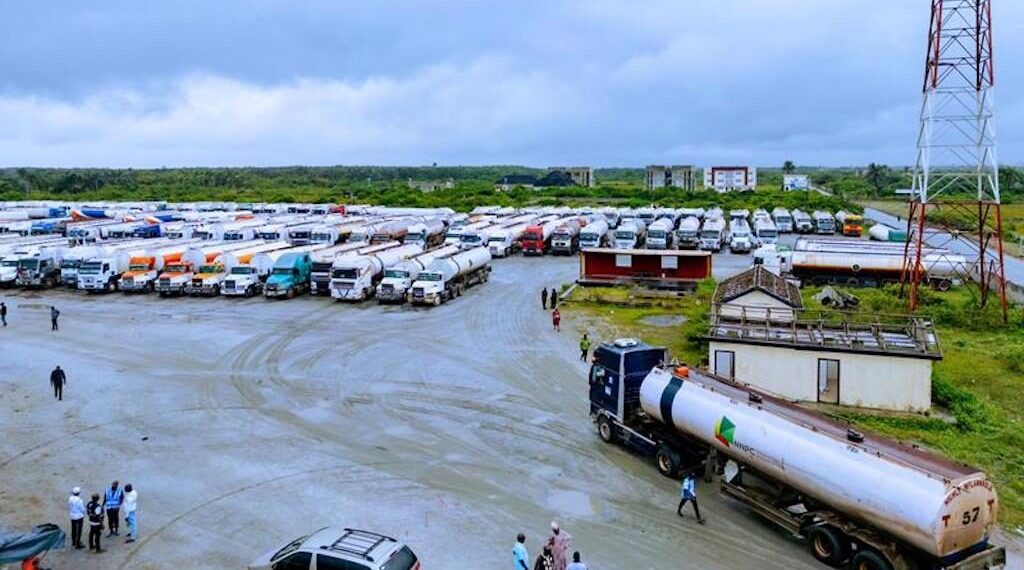
Tentacle can report that petrol prices have climbed to about N1,400 or N1,500 per litre in some parts of the country, following a series of increases in the ex-depot and gantry prices of the commodity.
Dangote Petroleum Refinery had on Saturday, September 12, increased its gantry price of petrol from N1,265 to N1,350 per litre, representing an increase of N85 per litre, a situation that made retail marketers to increase their prices to between N1,350 to N1, 500 across the country.
The latest increase marked the fourth upward adjustment in the refinery’s gantry price since August 21, when petrol sold for N1,165 per litre. In just about three weeks, the refinery’s gantry price increased by N185 per litre, representing a rise of about 15.9 per cent.
The latest development has renewed concerns among Nigerians over the possibility of petrol prices rising further, particularly as international crude prices continue to respond to the worsening geopolitical crisis in the Middle East between the United States and Iran.
The crisis around the Strait of Hormuz has raised fears of disruptions to global oil supplies. Adding to the concerns, a drone attack on Friday, September 11, reportedly disrupted Saudi Arabia’s East-West pipeline, the kingdom’s major alternative route for transporting crude outside the Strait of Hormuz.
The pipeline, which has the capacity to carry about seven million barrels per day to the Red Sea port of Yanbu, could become critical if disruptions around Hormuz persist.
Reports indicated that a prolonged disruption to the pipeline could affect a significant volume of global oil supplies. The crisis has also extended towards the Bab al-Mandab Strait after the Houthis reportedly captured Perim Island and deployed fighters on the Greater and Lesser Hanish islands.
In Nigeria, the development is coming at a period when petrol consumers are already lamenting the rising cost of transportation and other goods and services. An increase in petrol prices typically raises transport costs, with the effect spreading to food distribution, logistics and the prices of other commodities.
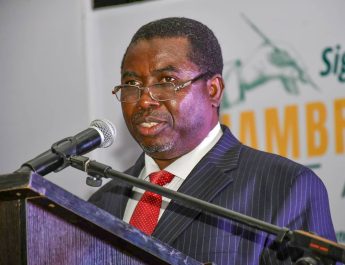
The development has led to severe economic strains for Nigerians to the extent that President of the South-East South-South Professionals of Nigeria (SESSPN), Hannibal Uwaifo, a Senior Advocate of Nigeria (SAN), recently criticized the Federal Government over the economic hardship Nigerians have experienced following the removal of the petrol subsidy and the floating of the Naira.
Speaking in an interview captured by Tentacle on September 12, 2026, Uwaifo argued that Nigerians had yet to see meaningful benefits from the subsidy removal despite the financial pressure it created for households and businesses.
Uwaifo said, “People can’t pay their house rents, they can’t even feed their families. So, all these put together, this regime is a total failure, with all due respect.”
In his assessment of developments in the country under President Tinubu, a foremost freight forwarder and founder of the New Nigeria People’s Party (NNPP), Dr. Boniface Aniebonam, said the president was doing his best to address Nigeria’s economic challenges, but maintained that the true measure of the administration’s performance should be the standard of living of ordinary Nigerians.
Aniebonam: “From the perspective of President Tinubu and the APC, they believe they are doing their best. But ultimately, the standard of living of Nigerians should be the basis for assessing the government. As far as most Nigerians are concerned, things are not going well, and they have every right to say so. Those of us outside government speak from a disadvantaged position because the government has access to information that we may not have.”
On his part the presidential candidate of the Social Democratic Party (SDP), Adewole Adebayo, has warned that petrol could sell for as much as N5,000 per liter if President Tinubu secures a second term in the 2027 presidential election.
Adebayo gave the warning through a statement issued on Wednesday by his campaign’s Chief Communications Adviser, Comrade Mark Adebayo, following another increase in petrol prices across the country.
He lamented that he latest increase has pushed petrol prices close to N1,500 per litre at some filling stations, adding to concerns over the rising cost of transportation and other essential goods and services.
Adebayo attributed the possibility of further increases to the direction of the Federal Government’s economic policies, particularly the deregulation of the downstream petroleum sector and the floating of the Naira.
He argued that continued depreciation of the Nigerian currency could have a direct effect on the cost of imported petrol because the product is priced in US dollars stressing that a significant fall in the value of the Naira would increase the landing cost of petrol and eventually place more pressure on pump prices.
“If the exchange rate hits N3,500 to $1 in the coming years, the landing cost of fuel alone will exceed N4,000,” Adebayo said, and warned that the situation could become more difficult for consumers because fluctuations in international crude oil prices could be reflected in domestic petrol prices following the removal of the subsidy.
Tentacle recalled that President Tinubu announced the removal of the petrol subsidy during his inauguration on May 29, 2023, saying the policy was necessary as part of his administration’s economic reforms.
The decision immediately triggered a sharp increase in petrol prices and contributed to higher transportation and living costs. The Federal Government, however, has continued to defend the policy, arguing that it has delivered economic benefits and reduced the burden of subsidy payments on public finances.
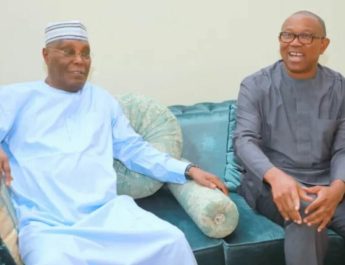
Former Vice President Atiku Abubakar, who is the presidential candidate of the African Democratic Congress (ADC), has said he would restore the petrol subsidy if elected, citing the need to reduce the hardship being experienced by Nigerians.
The ADC also criticized the latest increase in petrol prices, with the party warning that the rising cost of fuel was worsening pressure on households and businesses.
In a statement issued on Tuesday by its National Publicity Secretary, Bolaji Abdullahi, the party said the latest increase had come at a time when Nigerians were already dealing with higher transportation, food, electricity, education and housing costs.
“Every increase in the price of petrol directly raises the cost of living because businesses and households depend on fuel for transportation, electricity and other daily activities. President Tinubu has turned the petrol pump into an instrument of punishment for everyday Nigerians,” the party said.
The ADC also raised concerns about the effect of higher fuel prices on education, saying some private schools had reportedly increased their fees by between 30 and 40 per cent.
The party said parents were facing additional financial pressure because incomes had not risen at the same pace as the cost of food, transportation, rent, school fees and other household expenses.
It also acknowledged that private school operators were dealing with increased expenses, including electricity, petrol, rent, taxes and staff salaries.
The opposition party said the rising cost of fuel was also affecting businesses because companies had to spend more on transportation, electricity generation and the movement of goods.
“At N1,470 per litre, petrol is no longer simply a commodity. It is Tinubu Tax, which has made life unbearable for the majority,” the ADC said.
The party argued that economic reforms should eventually improve citizens’ welfare rather than increase the financial burden on households adding, “A reform that continuously makes people poorer is not working,” it said.
Atiku has separately demanded greater transparency over government revenues and deductions, particularly those involving the Federation Account Allocation Committee (FAAC), following the latest petrol price increase.
Through his Senior Special Assistant on Public Communication, Phrank Shaibu, Atiku questioned why Nigerians were paying as much as N1,470 per litre when crude oil was trading at about $102.52 per barrel.
“With crude oil around $102.52 per barrel, Nigerians are paying as much as N1,470 per litre. In 2008, when crude oil reached about $147 per barrel, petrol sold at N65 per litre under the Yar’Adua administration,” Atiku said.
He called for a reconciliation of oil revenues and deductions from 2023 to date, saying Nigerians should be able to establish how much revenue was generated, what deductions were made before distribution and where the funds eventually went.
“Nigerians deserve accounts they can interrogate, not accounting labels designed to discourage questions,” he said.
Atiku also questioned the use of funds saved following the removal of the petrol subsidy, recalling that the government had said the savings would create room for greater investment in sectors such as education, healthcare and infrastructure.
“After all the pain imposed on Nigerians, they have a right to ask: where are the subsidy savings and where is the money?” he asked.
He further called for scrutiny of financial transactions involving the Renewed Hope Infrastructure Development Fund, OML 143, oil production revenues and the Nigerian National Petroleum Company Limited’s international liquefied natural gas trading operations.
“These allegations are too serious to be answered with press statements and political insults. Every barrel can be measured, every cargo identified and every legitimate payment traced,” Atiku said.