N16T Con Highway Haunts Umahi
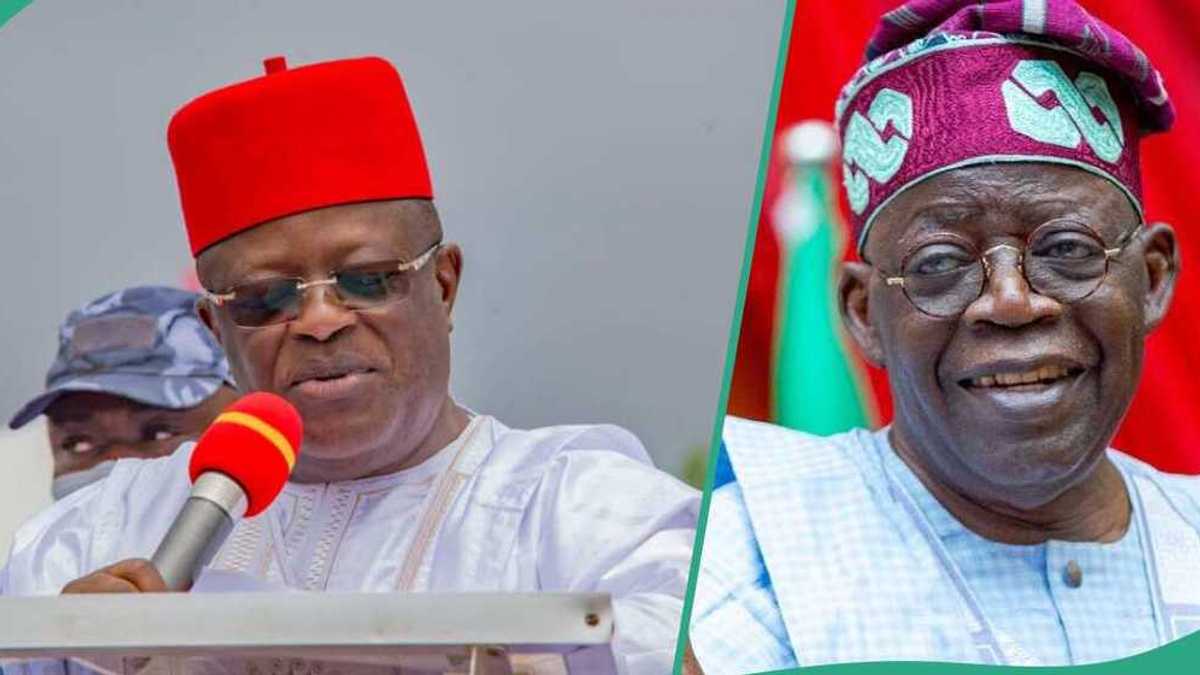
Nigerians kick after Minister of Works, Dave Umahi announces that President Bola Tinubu orders the rerouting of the contentious Lagos-Calabar Coastal Highway from its original plan, thus raising concerns about project’s viability, cost, funding and accountability issues
By David Oladimeji
The Lagos-Calabar Coastal Highway, conceived as one of Nigeria’s most ambitious infrastructure projects, is increasingly becoming a test of the Federal Government’s credibility, financial discipline and commitment to transparent governance. What was presented as a transformative road corridor connecting communities and unlocking economic opportunities along the coastline is now facing mounting questions over its cost, execution strategy and long-term sustainability. With the project’s reported cost running into more than N16 trillion, the latest development has placed Works Minister David Umahi under renewed scrutiny.
The controversy intensified following Umahi’s announcement that President Bola Tinubu had directed a rerouting of the highway through Benin and the existing East-West Road which connects the South south and South west regions instead of the original virgin coastal route. Although the government may have its reasons for reconsidering aspects of the route, the announcement has raised a fundamental question: How thoroughly were the original plans examined before the Federal Government committed enormous public resources to the project?
For a country struggling with rising living costs, deteriorating purchasing power, unemployment and a growing demand for basic infrastructure, the prospect of substantial adjustments to a multitrillion-naira project is bound to attract public attention. Nigerians are entitled to know whether the proposed rerouting represents a carefully considered engineering improvement, a response to emerging realities or evidence of shortcomings in the original planning process.

The concern is not necessarily that infrastructure projects must remain unchanged from conception to completion. Major construction projects sometimes require modifications because of environmental assessments, engineering discoveries, land acquisition challenges or changing economic priorities. But many stakeholders have argued that when a project of this magnitude is altered, the government owes the public a clear explanation of the reasons, financial implications and expected benefits of the decision.
Umahi, who has consistently defended the coastal highway as a strategic national investment, now finds himself at the centre of an uncomfortable debate. Some argued that as the minister responsible for federal roads, he must demonstrate that the project is being guided by sound engineering, transparent procurement, realistic financial projections and a clear understanding of the country’s infrastructure priorities. Political enthusiasm alone, according to them, cannot substitute for rigorous project planning.
The highway has been promoted as a potential economic game-changer, capable of improving transportation, opening up coastal communities, stimulating tourism and strengthening trade between major commercial centres. Properly designed and executed, such a corridor could reduce travel difficulties, encourage investment and create employment across several states. Yet the promise of economic transformation does not exempt the project from scrutiny; rather, its enormous ambition makes accountability even more important. Yet another group of analysts said the road is among the campaign slogans of the President Tinubu reelection pursuit. In fact, many Nigerians wonder why the coastal highway should be re routed after countless of building belonging to citizens had been demolished, some without compensation.
At the heart of the debate is the reported N16 trillion cost associated with the controversial highway. As expenditure estimates climbed and the government considered changes to the route, Nigerians have been asking whether the original financial projections adequately captured the full cost of delivering the project. They also want to know how much has already been spent, how much remains outstanding and whether the revised alignment will increase or reduce the overall financial burden.
For ordinary citizens, the difference between an announced project cost and the actual amount ultimately spent is not an academic exercise. Every additional naira committed to a major road project represents public money that must compete with other urgent demands, including healthcare, education, security, rural roads, electricity and social protection. “A government facing severe fiscal constraints cannot afford to treat multitrillion-naira commitments as if they were insulated from the economic realities confronting the country”, said Mr Smart Ameh, a public analyst.
The intervention of former Vice-President Atiku Abubakar has further sharpened the political dimension of the controversy. Atiku and other critics have questioned aspects of the Federal Government’s handling of the project, intensifying calls for explanations over its planning, financing and execution. While political opposition inevitably shapes public debate, the substantive questions surrounding a major national infrastructure project deserve answers regardless of the identity of those raising them.
Former Cross River State governor Donald Duke has also questioned the financial feasibility of the coastal highway. His reported warning that Tinubu cannot fund the project, accompanied by the remark, “You can’t continue hoodwinking the citizens all the time,” captured the frustration of critics who believe that ambitious announcements must be matched by credible funding arrangements and demonstrable results.
Duke’s criticism which included that some states along the coastline such as Bayelsa, needed no coastal road because there would be numerous overhead bridges involved, raised a broader issue that extends beyond the coastal highway: the difference between political declarations and the financial capacity required to turn them into reality. Governments routinely announce large infrastructure programmes to signal ambition and inspire public confidence. But the real measure of leadership lies not in the grandeur of such announcements but in the government’s ability to finance, execute and maintain the projects without destabilising public finances.
The Federal Government, for its part, must be given the opportunity to explain the technical and economic considerations behind the proposed rerouting. If the revised alignment offers better connectivity, reduces construction difficulties or improves the highway’s long-term usefulness, those benefits should be presented transparently.
The rerouting question also placed the quality of the original feasibility studies under examination. If the highway’s alignment was subjected to comprehensive technical assessments before construction commenced, the government should explain what new information has made the adjustment necessary. If circumstances have changed, officials should identify those circumstances and disclose the likely consequences for cost, completion time and the communities affected.
Equally important in the estimation of critics is the impact on communities and businesses along the proposed corridor. They said that road projects can transform local economies, but they can also disrupt livelihoods, affect land ownership and impose environmental costs. Any revised route through Benin and the East-West Road must therefore be assessed not only in terms of engineering convenience but also in relation to affected communities, existing transport infrastructure and the wider development needs of the region.
The coastal highway’s economic justification must also be examined against Nigeria’s immediate transportation challenges. Across the country, motorists contend with deteriorating roads, dangerous potholes, prolonged journeys and rising vehicle maintenance costs. Farmers struggle to transport produce, manufacturers face expensive logistics and traders absorb the consequences of unreliable transport networks. While a strategic coastal corridor could help address some of these difficulties, its benefits must be measured against competing infrastructure needs.
One analyst said this is where the debate over national priorities becomes unavoidable. Should the Federal Government concentrate enormous resources on a single flagship corridor while other critical roads remain in poor condition? Or can it develop the coastal highway while maintaining a balanced programme of rehabilitation and construction across the federation? He said the questions are not mutually exclusive, but the government must demonstrate that its spending decisions reflect a coherent national transportation strategy rather than a preference for projects with greater political visibility.
Speaking about the project, Umahi had initially stated that President Tinubu ordered the project to divert through the existing East-West Road from Ondo into Edo State to avoid difficult terrain and manage climate change-related flooding around areas like the Ughelli axis in Delta State. However, following public controversy and pushback, Umahi was to clarify that the original 750-kilometre coastal highway remained intact and under construction. Instead of replacing the route, Umahi added that Tinubu approved an additional 400-kilometre integration of the East-West Road to be raised and reconstructed alongside it.
The government, according to Umahi, also planned to elevate vulnerable sections of the East-West Road by approximately two metres above current water and projected flood levels.
For now, the coastal highway remains caught between the promise of national transformation and the burden of public skepticism.
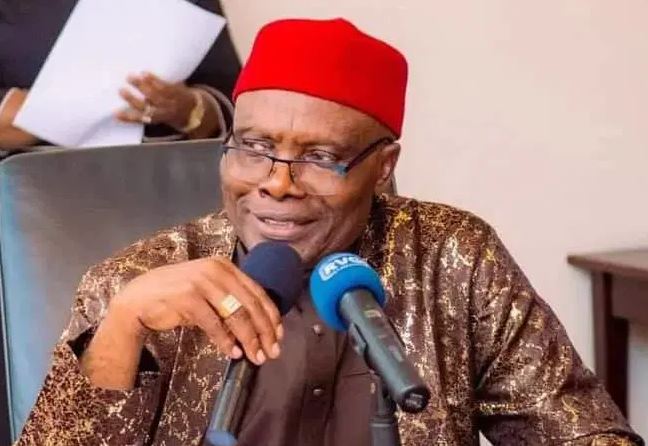
The People’s Democratic Party’s (PDP) chieftain, Senator Adolphus Wabara, has called for a comprehensive investigation into the Lagos-Calabar Coastal Highway project, raising concerns over alleged breaches of procurement and other statutory requirements.
Wabara accused the Tinubu-led Federal Government of failing to ensure compliance with due process, transparency and accountability in the award and execution of the project.
In a statement, the former Senate President questioned whether the contract had been awarded in accordance with the Public Procurement Act, 2007, and other applicable legal and regulatory requirements.
He also raised concerns about the engineering design, environmental impact assessment and legislative approvals for the project, urging the relevant authorities to establish whether all necessary procedures were followed.
Wabara said the controversies surrounding the proposed 750-kilometre highway had raised questions about the management of public infrastructure projects under the All Progressives Congress (APC)-led administration. He stressed that projects of such strategic importance should be subjected to transparent procurement processes and appropriate regulatory oversight.
The PDP BoT chairman argued that questions surrounding the contract award, funding and environmental assessments warranted an independent review to determine whether the project complied with established requirements.
He also questioned the decision to realign sections of the highway towards existing roads, reportedly in response to climate change and other environmental concerns.
According to him, the development underscored the need to examine the adequacy of the original engineering plans and environmental assessments.
Wabara called for a comprehensive investigation into the conception, approval, contract award and implementation of the project, urging the relevant authorities to establish the facts and address any irregularities found.
He said public infrastructure projects should remain open to scrutiny, regardless of the level of government responsible for their execution.
He said, “The secrecy, lack of public accountability and utter disregard for statutory frameworks are alarming and unacceptable in a democracy”.
Wabara maintained that major infrastructure projects should be executed in accordance with the law, transparent procedures and established accountability mechanisms.