
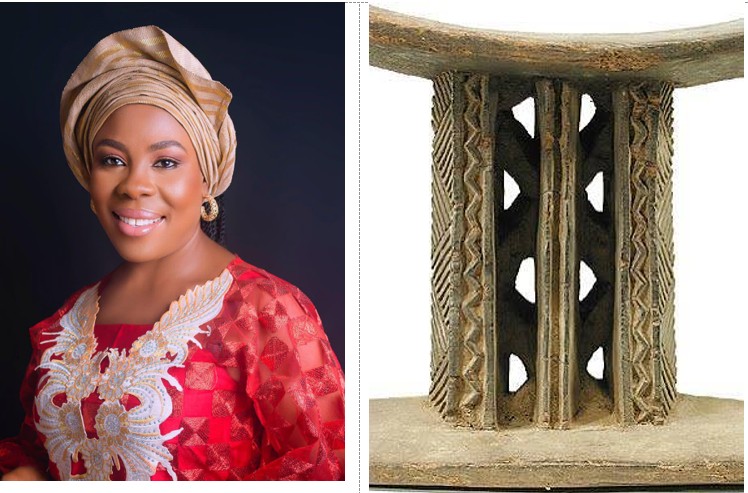
By Nwokeocha Onyinyechi Agatha
The Igbo people of south-eastern Nigeria are known for rich cultural traditions rooted in ancient sophisticated leadership and deep spiritual customs. Among several symbolic cultural identities which define the Igbo nation is the stool (Oche or Ekete). Stool represents not just a seat for comfort, but an embodiment of socio-cultural status, ancestral connection and an insignia of office or governance.
It serves as thrones for kings, seats for great and titled men and honorific symbols for accomplished women, as well-as sacred tools for divination end ancestral reverence. The Stools are usually located in king palaces, shrines, homes of noble families and amidst gathering of kinsmen during important ceremonies and deliberation.
As for its function and cultural significance, the stool represents a symbol of authority in almost all cultures in Igbo Land.
The king’s stool is traditionally known as Oche Eze, Oche Obi or Oche Igwe. None other than the Obi, Eze or Igwe seats on the stool. It is a sacred emblem of power, authority and continuity; serving as a direct link between the past and the present ruler.
In Igbo land, and in most other African settings, the stool is also a symbol of honour. In this regard, the stool known as Oche Nwanyi (Women’s Stool) is most popular among the Enugu Igbo communities as a special stool of honour given to a (wife) woman by her husband after she has successfully given birth to 10 or more children, this stool depicts fertility, resilience and robust contribution to the family lineage.
In other climes the stool also stands for a symbol of responsibility. In Igboland, during some socio- cultural activities, certain stools are carved with symbols of wisdom, power and ancestral protection and presented to individuals as part of initiation process for Nze Na Ozo or Ichie titles. These stools depict authority and responsibility in the community.
There are also stools for political influence and general governance. In Igbo customary courts the elders sit in accordance with seniority on special stools while the younger men and observers sit on other kinds of chairs or even benches.
With special regard for motifs on the stools, they are usually made of hard wood like the iroko and mahogany for strength and durability. They also carry decorative materials like beads, metals, and cowries depicting royalty and wealth.
For instance, special carvings of human and animal figures on some of the stools represent power and spirituality.
However, there have been impacts of western-style and modern furniture on Igbo stools as it is generally known that the introduction of western- style and modern furniture negatively impacted the use of the stool
There is also the aspect of preservation of the legacy of Igbo cultural stool to the extent that the relevance of the stool is, however, preserved through socio-cultural activities like festivals, chieftaincy installations, title taking, as thrones for kings and titled men. Also, the stools are used during rituals and by diaspora members to connect with tradition
The stools are further preserved in local and international museums and in souvenirs thereby successfully blending culture with commerce, trade and other economic activities.
In all, traditional stools in Igbo land, once revered and deeply woven into the socio-political and spiritual fabric of the community, have undergone significant transformations in meaning usage and relevance.
The wind of modernization, the influence of western education, urbanization and globalization have altered the landscape of traditional authority and cultural expression. Yet, the stools remain resilient symbols, adapting to new realities while retaining echoes of their historic significance.
Mrs. Agatha is Assistant Director, National Museum, Onikan, Lagos