Eventually, more revelations coming from Prince Adeniyi Adeyemi, the principal actor in the disputed Presidential Foreign Intervention Promotion Council (PFIPC), is putting the presidency on the spot prompting more tongues to wag as to why the Senate refuses to act, perhaps knowing that the presidency has no effective defence
The unending brouhaha over the controversial Presidential Foreign Intervention Promotion Council (PFIPC), took a dramatic turn on Wednesday, July 8, 2026 when the embattled Director-General of the Council, Prince Adeniyi Adeyemi, announced his readiness to cooperate fully with the Independent Corrupt Practices and Other Related Offences Commission (ICPC) to unravel how the alleged ghost agency secured a whopping N1.3 billion allocation in the 2026 budget.
Adeyemi’s declaration came on the heels of a 30-day ultimatum issued by President Bola Tinubu to the ICPC to investigate the Council, which the Presidency insisted is non-existent and completely fraudulent.
Prince Adeyemi who spoke from his hideout while granting interview to an internet personality, VeryDarkMan, stated that he was prepared to turn over vital official documents that relate to the Council to security agencies to assist the ongoing investigation.
The embattled Director General of the PFIPC expressed shock over how an agency the Presidency publicly disowned could find its way into the nation’s legal framework for funding.
According to Adeyemi, “I am willing and ready to help security agencies or any panel set up by Mr. President to unravel the truth. In fact, any moment from now, I will go to the DSS or the police to submit all the documents I have to help them investigate and look into this matter.

‘’They should authenticate them. They should verify them. They should unravel the truth.
“When the Presidency said the agency does not exist, I wondered how an agency that found its way into the national budget could suddenly be described as fake.
‘’I was in detention for 23 days during the period the budget was being prepared. I did not prepare or defend any budget, and nobody went to defend it on my behalf. That is why I am confused about how the agency found its way into the national budget.”
On his previous accusations against the Chief of Staff to the President, Femi Gbajabiamila, Adeyemi also said, “I wouldn’t say he’s lying, and I wouldn’t say he’s telling the truth. That is why I requested that Mr. President set up an investigative panel to unravel the truth, so we will know those involved.”
Adeyemi also claimed he was attacked by gunmen near Zuma Rock in September 2025 and reiterated that his involvement with the Council was driven by a desire to attract foreign investment to Nigeria.
“I don’t really have a negative plan. It’s all about passion for the country. That agency is to bring foreign investors to Nigeria and make Nigeria a preferred destination for investment,” he said.
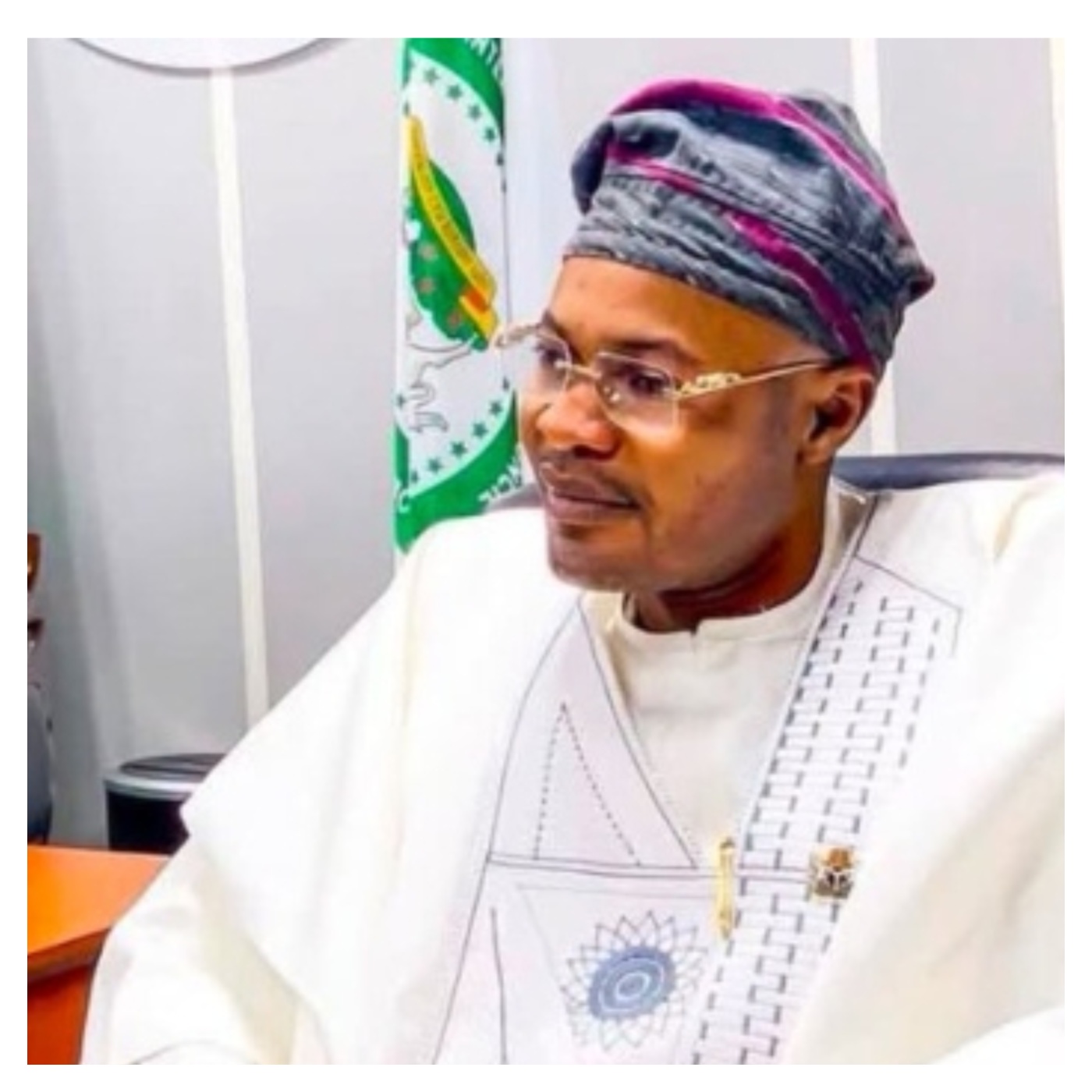
On their part, Federal Lawmakers in the House of Representatives also expressed deep concern on the same Wednesday, July 8, about how a non-existent Agency could operate from the Federal Secretariat Complex in Abuja for nearly a year, engaged foreign diplomatic missions, and successfully inserted a N1,302,978,000 allocation under budget code 0111062001.
Moving a motion of urgent public importance, Hon. Yusuf Gagdi warned that the breach exposed a dangerous vulnerability in Nigeria’s appropriation process.
Gagdi said, “The entity allegedly relied on documents claiming to be an Act codified as Chapter N2117 of the Laws of the Federation, whereas no such legislation exists. The nearest existing law is the Nigerian Investment Promotion Commission (NIPC) Act, which the purported council appeared to duplicate.”
To unravel the circumstances surrounding the alleged insertion, the House subsequently gave its Ad-Hoc Committee a four-week mandate to summon the Minister of Budget and Economic Planning, alongside the Director-General of the Budget Office, to explain the verification lapses.
In addition, lawmakers directed the Committee to verify all Ministries, Departments and Agencies (MDAs), listed in the 2025 and 2026 appropriation frameworks against their legal instruments of establishment and receive briefings from relevant security and anti-corruption agencies without prejudicing the ongoing court case.
The House further urged the Office of the Accountant-General of the Federation (OAGF) to ensure that no funds were released or warrants honoured in favour of the disputed entity, pending the outcome of the investigation.
Lawmakers also resolved that henceforth, the Budget Office should submit alongside every Appropriation Bill a comprehensive list of all MDAs proposed for funding, indicating the legal instrument establishing each agency to prevent similar occurrences.
Speaking in support of the motion, Chairman of the House Committee on National Security and Intelligence, Ahmed Satomi, described the development as a grave threat to the integrity of Nigeria’s budgetary process.
He said it was disturbing that an agency allegedly unknown to both the Presidency and the National Assembly could secure budgetary allocations.
“This is a nationally important issue. We must investigate it thoroughly because it affects the sanctity of our budget process and the confidence Nigerians have in parliament,” Satomi said.
Adding a stunning revelation to the debate, the Deputy Speaker, Benjamin Kalu, confessed that his office had been deceived by the group due to the high-level official clearance they wielded.
“The experience shows that a letter-head bearing the Presidency or an office in the Federal Secretariat is no longer sufficient proof that an organisation is legally established,” Kalu lamented.
In a rather disappointing move, the Nigerian Senate was swift to distance itself from investigating issues surrounding the PFIPC. Instead, the Red Chamber on Wednesday, July 8, insisted that it would amount to duplication of effort for it to embark on a separate investigation because the President, Ahmed Tinubu had already directed the ICPC to investigate the saga.
Senator Kawu Sumaila (Kano South), citing Order 9 and Rule 9(c) of the Senate Standing Orders, had attempted to move a substantive motion demanding that the Senate Committees on Ethics and Appropriations grill executive officers over the ghost budget line, which breakdown showed over N800 million for personnel costs, N200 million for overheads, and N300 million for capital expenditure.
However, the Deputy Senate President, Barau Jibrin, who presided over plenary, stopped the mover mid-way, insisting that the National Assembly must give the ICPC a chance to complete its 30-day mandate.
Jibrin said, “As I said earlier, the Presidency has taken up this matter by directing that the ICPC investigate fully how this matter came to be. And I think ICPC has started. I believe that what we need to do at this stage is to have the report of the ICPC, and then we can act on that report and deal with it as we feel appropriate.”
Recall that President Tinubu had directed the ICPC to investigate PFIPC, and also gave the anti-graft agency 30 days to unravel the alleged fraud and submit a comprehensive report.
The directive was conveyed on Tuesday, in a statement by the Special Adviser to the President on Information and Strategy, Bayo Onanuga, who said the PFIPC was never established by the Federal Government and has no legal, constitutional or executive basis.
According to Onanuga, the investigation followed the discovery that Adeyemi Matthew allegedly masqueraded as the Director-General of the non-existent council and falsely claimed to be a presidential appointee.
The presidential spokesman said Tinubu directed the ICPC to investigate the alleged use of forged appointment letters and other official government documents, as well as claims that the fake presidential appointment was used to seek official recognition, diplomatic support, including visa facilitation, and open multiple bank accounts in the names of purported government agencies.
Beyond the principal suspect, the President instructed the Commission to identify and investigate all collaborators and determine how the alleged fictitious organisation acquired the appearance of official legitimacy.
The probe, Onanuga said, would examine the origin and use of forged official documents, the processes through which official recognition or diplomatic support may have been sought or obtained, the opening and operation of related bank accounts, the source and movement of funds, and the role of any public official, financial institution, intermediary or private individual that may have facilitated or participated in the alleged scheme.
Tinubu also directed the Commission to identify institutional and procedural loopholes that may have been exploited and recommend immediate reforms to prevent a recurrence.
To ensure a speedy investigation, all Ministries, Departments and Agencies (MDAs) have been instructed to provide the ICPC, upon lawful request, with all relevant records, documents and any other assistance required to conclude the probe within the stipulated period.
Reacting to the development, former Vice President, Atiku Abubakar, described the deployment of the ICPC as a face-saving, internal cover-up designed to shield powerful actors within the Presidential Villa.
In a statement signed by his Senior Special Assistant on Public Communication, Phrank Shaibu, Atiku demanded the immediate dissolution of the ICPC probe in favour of a Special Independent Commission of Inquiry composed of the Nigerian Bar Association (NBA), opposition parties (PDP, ADC), civil society organisations, and retired jurists.
“What Nigerians demanded was never another internal government investigation. We demanded an independent investigation. In every constitutional democracy, a party whose conduct is under scrutiny cannot simultaneously appoint itself investigator, judge and final authority over its own case,” Atiku fired back.
Pointing out glaring contradictions in the presidency’s stance, Atiku stated: “Only one week ago, the Presidency emphatically told Nigerians that the matter had already been thoroughly investigated by the Police. If all of that is true, what exactly is the ICPC expected to spend another 30 days investigating?
“The issue before Nigerians is no longer whether one individual allegedly forged documents. The issue is how an organisation the Presidency insists never existed allegedly acquired office accommodation, interacted with government institutions, sought diplomatic recognition, reportedly conducted recruitment exercises, operated multiple bank accounts and projected the authority of government over an extended period. Bureaucracies do not unknowingly sustain official-looking operations for months.”
In the same vein, the African Democratic Congress (ADC), also strongly rejected the ICPC route, warning that the anti-graft agency answers directly to the executive and might be compromised.
The party’s National Publicity Secretary, Mallam Bolaji Abdullahi, accused the presidency of already pre-judging the investigation by declaring Adeyemi’s documents as “forgeries” before the ICPC could even commence forensic evaluation.
“A government that is drowning in scandals cannot be trusted to investigate itself. A Presidency that is at the very heart of a historic scandal such as this does not have the credibility to authorise an investigation into a matter that has brought an entire country into disrepute,” Abdullahi declared.
Interestingly, many Nigerians had not known anything about the PFIPC until recently when the presidency denied its existent, and described Adeyemi as a “con artist”, and the agency itself as “fake”. The man at the centre of the storm has blown the lid off the whole matter, raising questions, weighty allegations, against the Chief of Staff to the President, Gbajabiamila. But the presidency said it has filed charges in court against Adeyemi, while the embattled Director General of the PFIPC, Adeyemi, fired back and told his accusers that he would not be “intimidated or discredited” without response because, in his words, “you cannot beat a child and expect him or her not to cry”.
According to Adeyemi, the major issue behind the disagreement between himself and Gbajabiamila is that the latter allegedly requested 48 percent of the take-off grant of the N27.3 billion from the agency, which he rejected after Gbajabiamila reportedly collected N400 million by proxy, with a balance of N200m remaining for him to secure the appointment as the boss of the organisation. Indeed, questions have arisen such as, how did a “fake” government agency get N1.3 billion allocation in the 2026 budget if in deed, it was non-existent? Official records showed that the now ‘fictitious’ agency not only acquired hundreds of civil servants as staff and office space to operate.
At a recent press briefing before he went into hiding, Adeyemi had said, “This is not an emotional question, it’s a procedural one”, indicating that the national budget does not emerge in isolation. The budget passes through multiple layers of bureaucratic drafting, executive coordination, ministerial inputs, budget office review, and perhaps finally, legislative scrutiny by both chambers of the National Assembly, where Gbajabiamila served for two decades and rose from a minority to majority leader, and ultimately the Speaker, House of Representatives for four years before his present position.
Gbajabiamila is the gatekeeper to the presidency, whom every staff in the presidential Villa must report to. How the PFIPC documents escaped his office remains one of the haunting questions being raised by many Nigerians. But more questions remain unanswered, how did President Tinubu append his signature to a budget that includes a ‘fake agency’? Was he blindfolded to do that, or was he conned by one of his top aides? How could a ‘fake agency’ disowned by the presidency have secured high-level banking facilities and administrative approvals without the involvement of top government officials?
In other words, how could a fictitious agency have domiciliary account in dollars and pounds, and a Treasury Single Account (TSA) with the Central Bank of Nigeria? Did these accounts escape the scrutiny of the CBN Governor, Deputy Governors and all the Directors? The weight of evidence seems not to favour the presidency’s position, even though the court has the final say. However, official documents in the public domain appear to cast doubts on government’s claim that the Presidential Council does not exist.
Information from the OSGF also showed that it processed and forwarded the request by Adeyemi seeking office accommodation from the Federal Government from recovered properties by the anti-graft agency, the Economic and Financial Crimes Commission (EFCC). One of the letters was dated November 26,2024, and was signed by the Permanent Secretary (General Services office), Mr. Nnamdi Maurice Mbaeri, on behalf of the SGF, George Akume.
Also, Registry stamps showed that the letter was duly received by the SGF’s office. Adeyemi was also cleared by the SGF’s office to attend the Canada-Africa Fintech Summit in August last year. There is also correspondence between the National Assembly and the agency, raising the question as to why the Senate has chosen to sit on the fence. May have, therefore, asked if the Senate is trying to shield anyone.
Meanwhile, Pa Adetunji Adeniyi, father of Adeyemi, has said police operatives raided his home three times in two days, destroyed parts of his property, confiscated phones, and arrested him while searching for his son dead or alive.
On Monday, July 6, security personnel stormed the family’s residence of the Adeyemi’s in Ogbomoso, Osun State and arrested Adeyemi’s father, alongside a family friend who was visiting the home.