Political pundits are of the opinion that nothing concrete will come out of the President Bola Tinubu’s probe into the alleged fraud in Aso Rock corridors in the name of a Presidential Foreign Intervention Promotion Council (PFIPC) in which his Chief of Staff, Femi Gbajabiamila, has been indicted of sleaze running into hundreds of millions of naira, but he denies the allegations, prompting the President’s order to investigate the scandal, but many Nigerians doubt the credibility of such probe of a high-profile government official by an agency loyal to the presidency
By Edu Abade
President Bola Ahmed Tinubu on Tuesday, July 7, 2026 ordered the Independent Corrupt Practices and Other Related Offences Commission (ICPC) to probe the alleged fake agency, the Presidential Foreign Intervention Promotion Council (PFIPC).
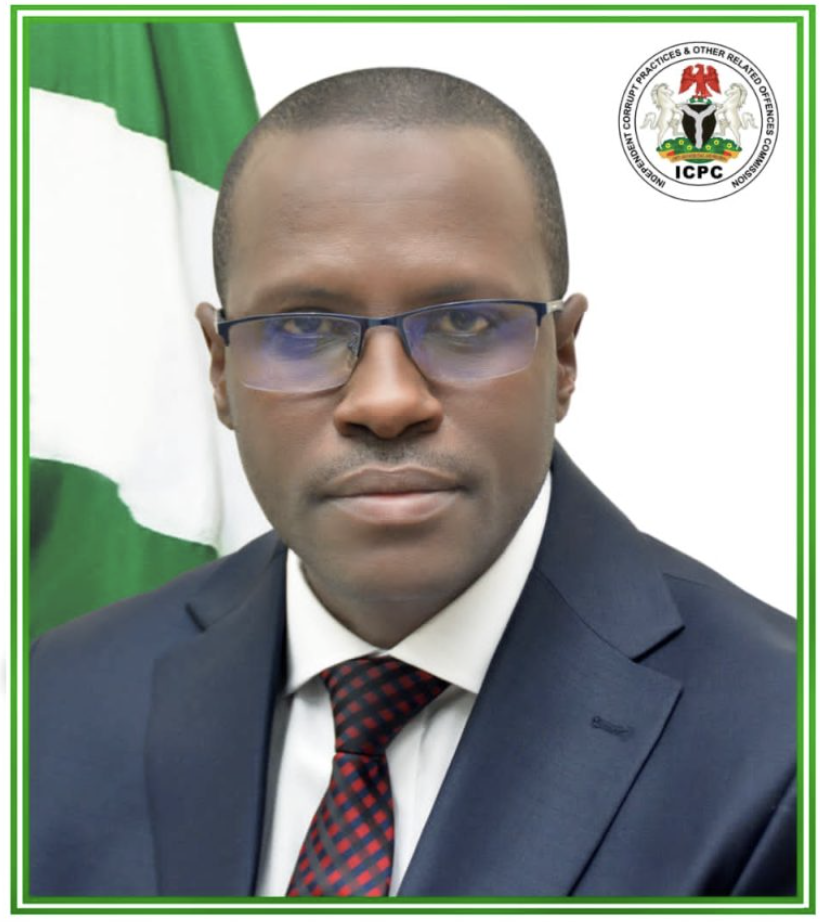
But what manner of probe it would be remains a conjecture to many Nigerians, seeing that by the way they operate in Nigeria, anti-graft agencies, including the ICPC and the Economic and Financial Crimes Commission (EFCC) remain appendages of the incumbent government.
The two chambers of the National Assembly, the Senate and House of Representatives, have also backed the President’s directive to probe the alleged fake Agency, but Nigerians are aware that the Godswill Akpabio-led Senate and Tajudeen Abbas leadership of the House of Representative have not, and could not possibly stand down any request from President Tinubu.
Putting it rather sarcastically during the week, Muhammad Ahmad Kware, a columnist, had asked, who orders the probe? President Bola Ahmed Tinubu. Who issued the statement on the probe? Senior Special Adviser (SSA) to the President on Media and Publicity, Temitope Ajayi.
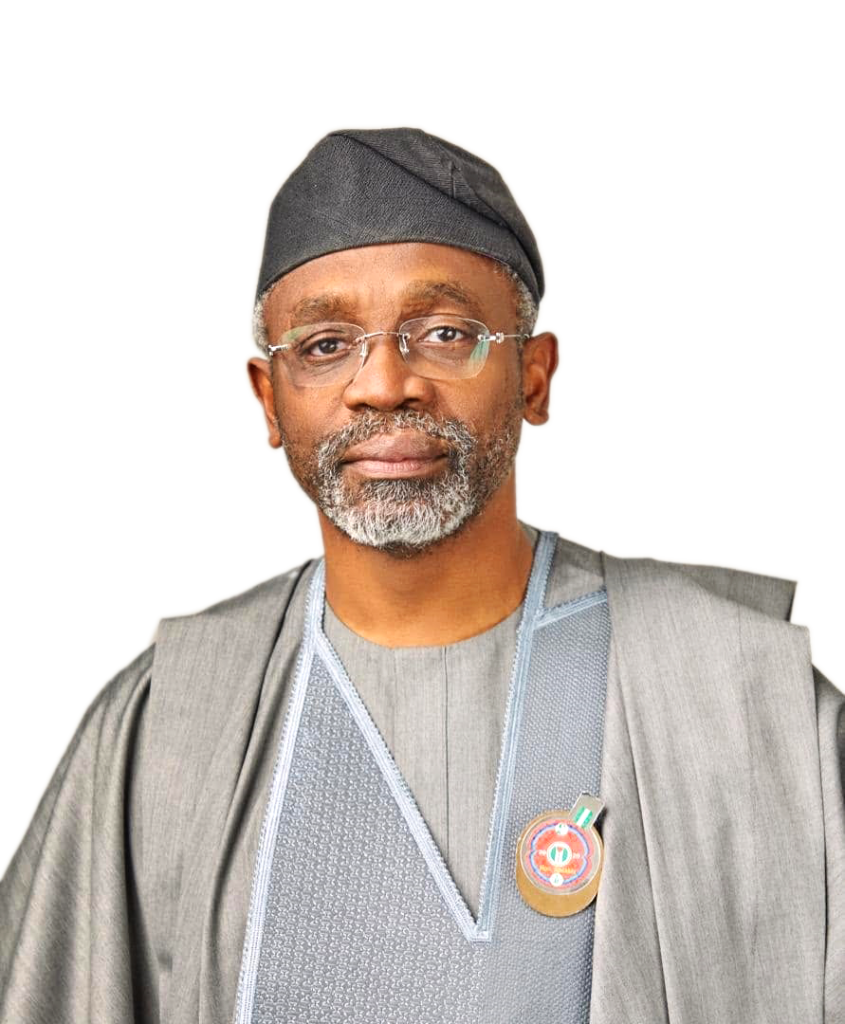
Who to be investigated? Prince Adeniyi Adeyemi Mathew and the alleged collaborator? Femi Gbajabiamila, Chief of Staff to President.
While insisting that the probe would just end up as just another smokescreen exercise because the indicted personalities and the heads of all the investigating agencies are all of the South west extraction, Kware argued that the Inspector General of Police (IGP), Olatunji Disu, Director General of the Department of State Service (DSS) Adeola Ajayi, Chairman of EFCC, Ola Olukoyede, Attorney General of the Federation, Lateef Fagbemi (SAN), Director of Public Prosecution, Rotimi Oyedepo (SAN) are all of Yoruba tribe, and that even if the probe progressed to the Supreme Court, it is not unlikely going to be decided by a panel of justices led by the Chief Justice of Nigeria (CJN), Kudirat Kekere-Ekun. In the end, the probe is tagged South west versus South west or Yoruba versus Yoruba, a situation that will make the ICPC investigation a mere jamboree and waste of time.
The probe comes as the agency was allocated ₦1.3 billion in the 2026 national budget despite never existing as a legitimate federal body in the estimation of the presidency. How ever, according to analysts, the facts speak for themselves.
The Special Adviser to the President on Information and Strategy, Bayo Onanuga confirmed in a statement that Tinubu directed the ICPC to investigate the forged appointment letters and official government documents allegedly used by one Adeniyi Adeyemi Mathew, who presented himself as Director-General of the so-called council and falsely claimed to be a presidential appointee, it stated.
It added: “The investigation is to examine the provenance and use of false official documents; the processes through which official recognition or diplomatic support may have been sought or obtained; the opening and operation of any related bank accounts; the source and movement of any funds involved; and the role of any public officer, private individual, financial institution, intermediary or other person or entity that may have facilitated, enabled or participated in the alleged scheme.”
Tentacle can report that the alleged fake agency scandal has highlighted not only brazen impersonation and forgery but also systemic failures and potential collusion by public servants who enabled the fraud to persist for over a year.
Experts and observers argue that the ICPC probe on the alleged fake agency scandal must go beyond the principal suspect to hold accountable complacent officials whose negligence or complicity allowed a ghost agency to secure office space in the Federal Secretariat, open bank accounts, engage diplomatic missions, and receive budgetary provisions.
Timeline of the PFIPC Scandal: How a Fake Agency Operated in Plain Sight
2024 (Alleged Inception): Adeniyi Adeyemi Matthew (also referred to as Prince Adeniyi Adeyemi Matthew) reportedly began setting up operations for the PFIPC, later linked in some claims to a Presidential Economic Advisory Council variant. He allegedly forged appointment letters purporting to come from the Presidency.
Early to Mid-2025: The fake council secured office space in the Federal Secretariat in Abuja. It operated with apparent legitimacy, hosting foreign ambassadors, receiving invitations to official events, and opening multiple bank accounts (reports mention up to 34 fraudulent accounts, including with the Central Bank of Nigeria). Despite a federal hiring freeze, a waiver is allegedly granted for around 300 staff positions.
October 17, 2025: Chief of Staff to the President Femi Gbajabiamila alerted security agencies (DSS and Police) about the fraudulent operations and forged documents bearing his signature and seal.
October 27, 2025: Police arrested Adeyemi at the Secretariat office. Searches of his office and residence yielded documents supporting allegations of forgery, impersonation, and fraud.
November 27, 2025: Police filed an eight-count charge against Adeyemi and two accomplices at the Federal High Court in Abuja for conspiracy, forgery, and impersonation. Gbajabiamila and others are listed as prosecution witnesses. Forensic analysis reportedly confirmed signatures on key documents were forged. Adeyemi is granted bail and remains on bail.
June 11, 2026: Gbajabiamila issues a public disclaimer, warning foreign missions, financial institutions, and others against dealing with the non-existent PFIPC.
Late June 2026: Public outrage erupts after revelations that the 2026 Appropriation Act includes ₦1.3 billion for the PFIPC. Questions arise about how the line item entered the budget without proper scrutiny or defense before relevant committees. The Presidency reiterates the agency has no legal basis.
Early July 2026: Police arrest Adeyemi’s father in Ogbomoso (later released) amid a manhunt or questioning related to the suspect’s whereabouts. Adeyemi, represented by Femi Falana, maintained he will appear in court on July 27, 2026, and has vowed to clear his name. Allegations and counter-allegations intensify, including claims of internal collaborators.
July 7-8, 2026: President Tinubu ordered a 30-day ICPC probe. The Senate distanced itself, stating no petition was received and the matter is sub judice, emphasizing the budget line was not inserted by the legislature.
The Tinubu directive explicitly calls for examining “the wider circumstances” that enabled the fictitious body to gain legitimacy.
These include bureaucratic lapses especially on how forged documents were accepted by the Office of the Head of Civil Service, Budget Office and other MDAs, budgetary oversights evident in the inclusion of a non-existent agency in the 2026 budget without verification and institutional failures in the processing of correspondence by the Office of the Secretary to the Government of the Federation (SGF) and potential facilitation by financial institutions or public officers.
“The integrity of the Presidency and the institutions of the Federal Government must be protected against impersonation, forgery, abuse of official identity and the exploitation of weaknesses in the public service,” the directive stated, insisting that all culpable persons, including public officers, must face strict legal action.
Analysts argue the case exposes deeper governance vulnerabilities in Nigeria’s public service. Allowing a fake agency to function from a prime government location, draw potential funds, and interface with international entities for an extended period suggests either gross incompetence or deliberate collusion by insiders. The ICPC investigation is expected to trace fund movements, roles of intermediaries, and procedural loopholes.
As the ICPC begins its 30-day probe on the alleged fake agency, Nigerians await a thorough report that not only prosecutes the masterminds but also reforms the systems that made such an audacious fraud possible.
Meanwhile, the case remains before the courts, with Adeyemi’s next appearance scheduled for July 27, 2026. The outcome of both the judicial process and the ICPC investigation could have lasting ramifications for public trust in government institutions.
Nigerians believe that nothing meaningful will come out of the probe as already, Minister of the Federal Capital Territory (FCT), Nyesom Wike, on Thursday, July 9, 2026 dismissed the PFIPC allegations as a political smear adding that linking Gbajabiamila to the alleged fake agency just as he described the claims as a politically motivated attempt to discredit the Presidency.
Speaking during his monthly media briefing in Abuja, Wike said the allegations lacked credibility and insisted that President Tinubu acted appropriately by directing ICPC to investigate the matter.
He maintained that due process should be allowed to take its course, while faulting calls by former Vice President Atiku Abubakar and other opposition figures for Gbajabiamila’s removal before the conclusion of investigations.
“The demand by Atiku is not new. What did he do when he was Vice President? I know the Chief of Staff very well. Without prejudice, I know him very well,” Wike said.
According to the minister, the office of the Chief of Staff is often the first target of those seeking to embarrass an administration, arguing that the allegations were designed to create public distrust in the government.
“If you want to embarrass any government, the first person you target is the Chief of Staff because people believe that once you get to him, the government will be embarrassed,” he stated.
Wike questioned the logic behind claims that Gbajabiamila could have approved funds for an agency that had no legal existence, insisting that the Chief of Staff neither creates government agencies nor prepares budgetary allocations.
“Does it make sense that an agency that does not exist, he will ask somebody to give it such an amount of money? It is madness. The Chief of Staff cannot create a budget. It is simply not possible,” he said.
Besides, the Human Rights Writers Association of Nigeria (HURIWA) has faulted President Tinubu’s directive to the ICPC to investigate the controversial PFIPC, describing it as a political exercise intended to manage public outrage rather than establish the truth.
The group argued that the investigation had already lost the appearance of independence because President Tinubu publicly dismissed allegations against his Chief of Staff, , before the anti-graft agency commenced its probe.
In a statement issued yesterday by its National Coordinator, Emmanuel Onwubiko, HURIWA said the President’s remarks created the impression that some individuals had been absolved before investigators examined the available evidence.
“It is not how an independent anti-corruption investigation should begin. When the President appears to have reached a conclusion before investigators commence their work, the outcome becomes predictable in the eyes of Nigerians,” the group stated.
HURIWA, however, clarified that it was not accusing Gbajabiamila of any wrongdoing but noted that, as one of the individuals publicly named in the PFIPC controversy, he should be subjected to the same impartial and evidence-based investigation as every other person mentioned.
“If the allegations are frivolous, investigators should establish that through evidence. If they are false, the courts should make that determination. The President should not be seen as assuming the roles of investigator, prosecutor and judge by politically absolving key figures before investigations begin,” it said.
HURIWA, therefore, charged the ICPC to investigate every individual linked to the PFIPC controversy without fear or favour, insisting that evidence—not political considerations—should determine the outcome.
“The rule of law demands equal accountability. The Presidency must resist every temptation to influence, directly or indirectly, the course of this investigation. Anything short of a genuinely independent probe will be seen by Nigerians as a political smokescreen designed to bury uncomfortable questions instead of confronting them,” the group stated.
Adeyemi in his testament copied General Yakubu Gowon GCFR; Chief Olusegun Obasanjo; General Ibrahim Babangida; General Abdulsalami Abubakar; Dr. Goodluck Ebele Jonathan; President of the Senate; Speaker House of Representatives; Chief Justice of Nigeria; Sultan of Sokoto; Ooni of Ife; Alaafin of Oyo; Soun of Ogbomosoland; Emir of Kano; Akiolu of Lagos; Shehu of Borno; Oba of Benin; Obi of Onitsha and Olu of Warri
He also copied Obong of Calabar; Emir of Ilorin; Etsu Nupe; Pastor Enoch Adeboye; Bishop David Oyedepo; Pastor William F. Kumuyi; Bishop Matthew Kukah; Channels Television; Africa Independent Television (AIT); Television Continental (TVC); Arise News; Sahara Reporters; The Punch; Vanguard; Daily Trust; ThisDay; The Nation; BusinessDay; The Guardian; The Cable; Big Cabal Media; Premium Times
He equally copied the Socio-Economic Rights and Accountability Project (SERAP); BudgIT; Enough is Enough Nigeria (EiE Nigeria); Human and Environmental Development Agenda (HEDA Resource Centre); United Nations Development Programme (UNDP); United Nations Office on Drugs and Crime (UNODC); Transparency International, Amnesty; Human Rights, World Bank, International Monetary Fund (IMF); Department of State Security; Inspector General of Police; National Intelligence Agency; Defence Intelligence Agency; Nigerian Security and Civil Defense Corps; Nigeria Immigration Service (NIS)
Others are the European Union Delegation to Nigeria; African Union; Economic Community of West African States (ECOWAS); West African Monetary Agency (WAMA); African Caribbean and Pacific (ACP); Multi-National Joint Task Force (MNJTF); International Criminal Court (ICC); Organization of Islamic Cooperation (OIC); Multinational Organizations; Algeria Embassy; Angola Embassy; Argentina Embassy; Australia High Commission; Brazil Embassy; Canada High Commission; China Embassy; Japan Embassy; Netherlands Embassy; Spain Embassy; United Kingdom High Commission and United States Embassy
For a former Minister of Youth and Sports Development, Solomon Dalung, President Tinubu, the Secretary to the Government of the Federation (SGF), George Akume, Gbajabiamila, and the National Security Adviser (NSA), Nuhu Ribadu, should be held responsible over the PFIPC scandal.
Dalung also insisted that the Director-General of the Department of State Services (DSS), the Chairman of the Economic and Financial Crimes Commission (EFCC) and Governor of the Central Bank of Nigeria (CBN) should also be probed.