Strategic Vote Buying Sparks Outrage
Minister of the Federal Capital Territory (FCT), Nyesom Wike’s promise of N10 million bounty to Ward Chairmen in both Rivers State and the FCT if they deliver their domains to President Bola Ahmed Tinubu in January 2027, and Minister of Women Affairs, Imaan Sulaiman-Ibrahim’s sharing of N100,000 cash to women during an empowerment programme in Lafia, Nasarawa State sparks allegations of strategic vote buying gimmick and rigging, with opposition political parties calling on the relevant agencies to investigate the saga
By Edu Abade
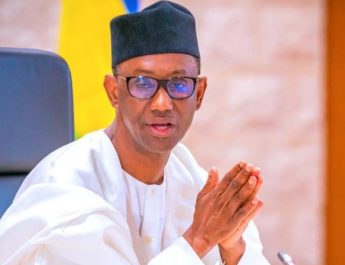
President Bola Ahmed Tinubu men have come out boldly to tell Nigerians that the die is cast and that there is no going back on their resolve to win the January, 2027 presidential election by hook or crook. The latest recruit in the do-or-die affair is Minister of Women Affairs, Imaan Sulaiman-Ibrahim, who was sighted distributing bundles of N100,000 cash and other items to women in Lafia, Nasarawa State
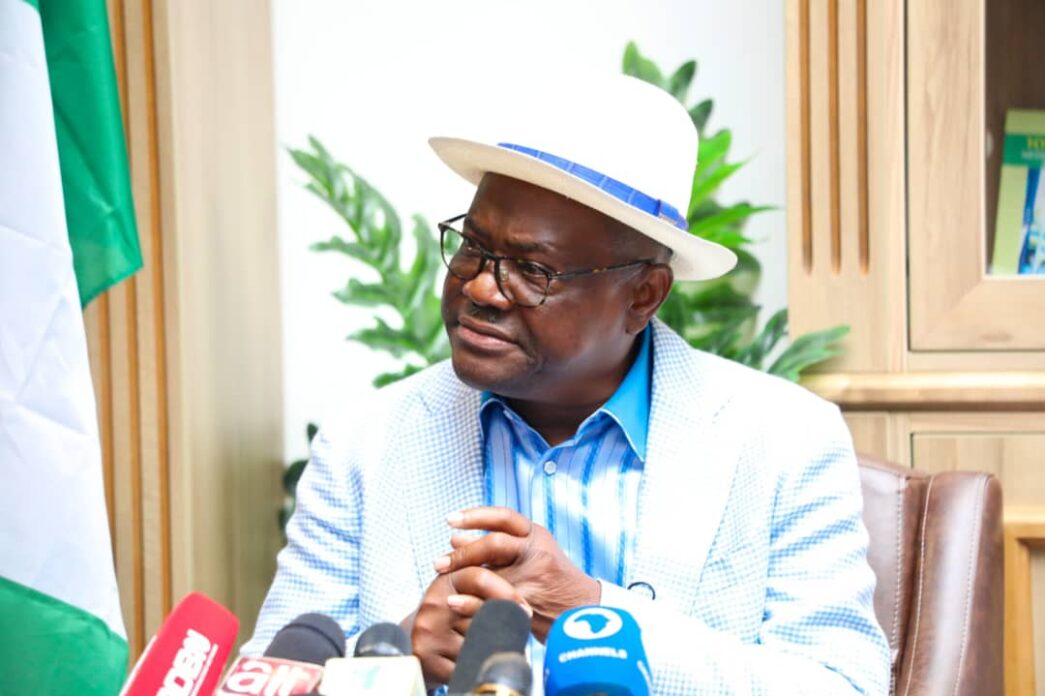
On his part, since joining the President Tinubu government in 2023, Minister of the Federal Capital Territory (FCT), Abuja, Barrister Nyesom Wike, has dominated almost all major political discourses in the country. In his characteristic manner of going the whole hug to please his benefactor, he had constantly thrown caution to the winds by deploying a combination of violent disposition, garrulousness and a heavy war chest amassed over the years as governor of oil-rich Rivers State and other public offices to remain dominant in the politics of his home state and at the national level.
His audacity has been derived from the solid backing of the presidency and the vanishing voices of Rivers elder statesmen, who have largely remained silent in the face of Wike’s domineering posture, which has earned him more enemies than friends both at home and across the country. And so, Wike had remained seemingly indomitable in the country’s politics.
As the 2027 electioneering campaigns gather momentum, the FCT Minister recently declared that he must win Rivers State and the Federal Capital Territory for President Tinubu, failing which he will resign. In a move that confirms that Wike is a violent election rigger, as he had been described not quite long ago in a cover story by this medium, he has proved that point beyond any reasonable doubt by offering N10 million to each councilor who wins their wards for the president in Rivers State and the FCT in the 2027 general elections.
Checks by Tentacle revealed that there are 23 local government areas and 319 electoral wards in Rivers State, which translates to about N3.190 billion at N10 million per ward, while the FCT, Abuja has six local government areas, 62 electoral wards, 2,822 polling units and 1,526, 962 registered voters. Put together, the total amount Wike is dangling before the councilors in both strongholds exceeds N3.810 billion-a huge amount by all standards.
Wike made the pledge on Monday, November 9, 2026 at his Rainbow Coalition stakeholders’ meeting attended by traditional rulers, political stakeholders and residents in Kwali Area Council where he promised to give councilors in the Territory’s six area councils ₦10 million each if they deliver their respective wards to President Tinubu and other members of the All Progressives Congress (APC) in the 2027 elections.
“Any councilor that delivers his ward will get N10 million reward. Therefore, go and meet your leaders, go and meet your youth groups, go and consult with associations. Let’s deliver our ward to Mr. President,” he said.
The promise will amount to ₦620 million if all 62 councilors in the FCT secure victory for the president and other APC candidates in the nation’s capital.
In the build-up to the 2027 polls, the former Rivers State governor formed the Rainbow Coalition, a platform through which members of different political parties, including the ruling APC and the Peoples Democratic Party [PDP], will support Tinubu’s re-election for a second and final term and vote for candidates of their choice in other elections.
Tentacle recalls that although Wike is a chieftain of the PDP, he wields considerable influence among APC public officeholders in the FCT. The FCT has six area councils namely Abaji, Abuja Municipal Area Council (AMAC), Bwari, Gwagwalada, Kuje and Kwali, with 62 electoral wards and councilors. The Abuja Municipal Area Council (AMAC) has 12 wards, while each of the other five area councils has 10.
The pledge comes as political mobilisation gathers momentum ahead of the January 16, 2027, presidential and National Assembly election, with Wike openly committing his political structure to Tinubu’s re-election.
However, the arrangement raises concerns about electoral inducement and the use of financial incentives to influence political activities ahead of the 2027 polls. Under Section 125 of the Electoral Act 2026, a person commits electoral bribery by corruptly offering or promising money, gifts or other benefits to procure the return of a candidate to an elective office or influence a voter’s decision.
The law also criminalizes the payment of money intended to be used for electoral bribery. The minister did not disclose who would finance the ₦620 million potential payout, or how the money would be disbursed. The Wike’s proposed ₦620 million reward also comes days after he procured brand-new Sport Utility Vehicles (SUVs) for traditional rulers in the FCT. The proposed gift also comes against the backdrop of statutory limits on campaign expenditure ahead of the 2027 elections.
Section 92(2) of the Electoral Act 2026 pegs the election expenses of a presidential candidate at ₦10 billion, limits governorship candidates to ₦3 billion, senatorial candidates to ₦500 million and House of Representatives candidates to ₦250 million.
The promise followed Wike’s defence of his administration’s decision to procure brand-new SUVs for first-class traditional rulers in the FCT.
The vehicles have attracted criticism from political commentators, who questioned the spending amid competing development needs, particularly in a nation’s capital where hospitals are ill-equipped or non-functional, schools are dilapidated, and several communities lack access to potable water, among other challenges.
However, Wike dismissed allegations that the vehicles amounted to political inducement or bribery, arguing that traditional rulers deserved dignity and respect, saying that the Tinubu administration would continue to provide support to traditional rulers despite the criticisms.
Responding to criticisms over the pledge, Wike explained that the money was not meant for votes buying but would be for councilors who deliver their wards for the President in the January 16, 2026 polls.
The Minister had come under criticism following his financial incentive promise, with some individuals claiming that it should be regarded as vote buying.
However, speaking on Tuesday, November 10, 2026 during an inspection of ongoing infrastructure projects in Abuja, Wike clarified that he never asked the councilors to buy votes, adding, “I didn’t tell them to take the money and go and buy votes.’ I said, ‘Go and work. Show commitment. Demonstrate that you really mean what you are talking about. When you win, come and we are going to reward you.
He differentiated between rewarding political commitment and offering money to voters in exchange for their support. He said the councilors were challenged to prove their commitment through effective mobilization.
He compared the offer to athletes who are promised houses or other benefits if they return from international competitions with trophies. He asked why a similar reward in politics should automatically be read as bribery.
Wike, who faulted sections of the media for failing to tell legitimate rewards apart from vote-buying, arguing that political parties and their candidates routinely spend money on campaign advertisements without facing the same scrutiny and urged journalists to pay closer attention to the difference between financial inducements meant to sway voters and rewards promised to political mobilisers for hitting set targets.
Responding to the development at a Rainbow Coalition stakeholders meeting, attended by traditional rulers, politicians and residents of Kwali Area Council in Abuja, National Chairman of the APC, Nentawe Yilwatda, spoke in defense of the FCT Minister, insisting that the N10 million pledge to councilors in Rivers and the FCT is not inducement.
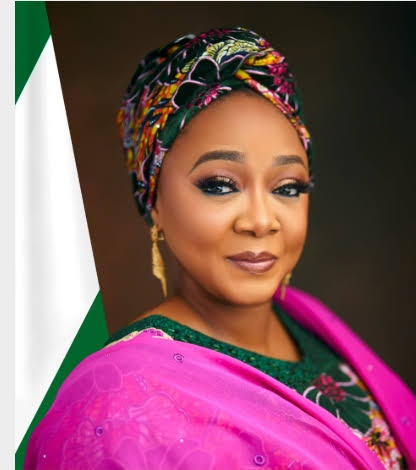
On his part, Minister of Women Affairs, Imaan Sulaiman-Ibrahim was sighted sharing N100,000 in cash to women beneficiaries during an empowerment programme in Lafia, Nasarawa State at an APC event ahead of the 2027 elections
In the footage sighted by Tentacle, the minister was spotted handing out bundles of cash to women in a hall, while some attendees are spotted wearing outfits bearing the APC insignia.
The distribution took place during a pre-rally empowerment programme organised under the initiative of the First Lady Oluremi Tinubu. The programme also featured the distribution of refrigerators, sewing machines and grinding machines to the beneficiaries.
Between 100 and 200 women reportedly received N100,000 each as additional capital to support their businesses, while selected market traders also benefited from business kiosks.
Reacting to the video of the minister’s distribution, one social media user questioned the source of the money, suggesting that it could be funds saved from the removal of the fuel subsidy.
“I believe this is our Subsidy money. It’s better to reverse it than allow these few clowns to enjoy, while over 200 million Nigerians are suffering,” the user wrote.
The development comes after representative of Kogi Central Senatorial District, Senator Natasha Akpoti-Uduaghan, also recently distributed cash grants ranging from between N100,000 to N5 million to constituents during an empowerment programme on November 2, 2026, to mark her third anniversary in the 10th National Assembly.
The senator’s cash distribution, which was captured in videos circulated on social media, attracted criticism from civic technology organisation MonITNG, which questioned whether such handouts should be celebrated as meaningful representation and poverty alleviation.
Opposition Parties, Groups React
However, political opponents and critics have sharply condemned Wike’s promise of a ₦10 million reward to councilors, especially in the FCT and Rivers State who deliver their wards for President Tinubu in the 2027 general elections, framing the offer as a form of vote-buying and voter inducement, arguing that dangling a ₦10 million cash reward per ward functions as financial inducement rather than legitimate political mobilisation.
The African Democratic Congress [ADC] described Wike’s cash incentive and Sulaiman-Ibrahim’s distribution of cash and other items to women in Nasarawa only days to the general elections, as a rape of democracy and an attempt to buy votes or induce the electorate across the country.
Speaking through the ADC Vanguard Group, it argued that the pledge effectively places a monetary value of ₦10 million per ward in the 62 wards in the FCT, amounting to ₦620 million and other huge cash payments t women in Nasarawa on the electoral process.
The party maintained that announcing a financial reward before the contest compromises the integrity of the vote, comparing it to indirect voter influence rather than legitimate political organizing.
The ADC and other critics have questioned the source of the ₦10 million per councillor payout and whether it violates provisions against electoral inducement.
Also reacting to the development, leadership of the Nigeria Democratic Congress (NDC) strongly opposed Wike’s pledge of a ₦10 million reward to councilors who deliver their wards for President Tinubu in the 2027 general elections.
Rivers State Chairman of the NDC, Success Jack condemned Wike’s comments and vowed to resist any attempts to manipulate or influence the 2027 electoral outcome in the state. The NDC leadership in Rivers argued that the electoral process, in Rivers and across the country has evolved past the point where financial inducements or pressure can dictate results, urging voters to strictly protect their ballots and track transmission to the INEC portal.
Other figures and groups aligned with the NDC, including supporters of its presidential candidate Peter Obi and figures like the Pan-Niger Delta Development Forum {PANDEF}, the NDC governorship candidate in Rivers State, Chief Dumo Lulu-Briggs have criticized the ₦10 million per ward pledge. Critics and opposition actors contend that tying cash bonuses to winning specific territorial wards amounts to improper electoral inducement and a misuse of political influence, calling on anti-graft agencies and INEC to investigate the matter.
Political analysts and public affairs commentators such as Azu Osumili contend that the massive scale of the promise-calculating multi-billion-naira payouts across wards and local government areas-amounts to clear vote-buying and urged INEC to invite Wike for questioning.
On their part, civil society voices and online critics have pushed back against the financial priority of the offer, maintaining that such substantial sums should instead be channeled toward fixing dilapidated primary schools, healthcare centers and basic community infrastructure in the FCT.
In a statement issued on Tuesday, November 3, 2026 MonITNG asked Senator Akpoti-Uguaghan to reconsider what it described as the growing practice of presenting cash distribution as an empowerment initiative.
“The display of millions of Naira in cash as an empowerment initiative by Akpoti-Uduaghan raises serious questions about our understanding of representation, leadership and poverty alleviation,” the organisation said.
It also questioned what citizens were celebrating and whether leadership should be measured by the amount of physical cash politicians could display and distribute to crowds.
MonITNG argued that genuine empowerment should focus on creating sustainable economic opportunities, supporting small businesses, investing in education, providing vocational training, improving access to healthcare and establishing economic structures that enable citizens to earn decent livelihoods without depending on politicians.
It warned that when politicians turn poverty into an opportunity for public spectacle, they risk normalising a culture of dependency among citizens.
The two cash distribution exercises have renewed public attention on politicians’ empowerment programmes, particularly the practice of distributing money, food items and other material benefits to constituents as evidence of political performance.
Some critics also highlighted what they view as hypocrisy in political spending, comparing the cash promise to harsh rhetoric around elections (such as “rig and die” warnings) and pointing out a shifting moral standard among political actors depending on who holds power.
In his intervention, a former National Commissioner of INEC, Festus Okoye, cautioned that Wike’s promise to pay ₦10 million to each FCT and Rivers State councilor for delivering wards to the APC could prompt investigations by the electoral body and the Nigeria Police Force.
He explained that the pledge raises questions about the potential violation of electoral laws prohibiting the inducement of officials to influence election results, pointing out that in the Nigerian political structure, the ward serves as the most critical unit for grassroots control.
“Ensuring party dominance at the ward level is essential for securing local government administration and building a foundation for state and national contests. However, the transition from political mobilization to direct cash incentives for elected officials creates significant legal risks,” he stated.
On the legal implications of Wike’s offer and electoral conduct, Okoye stated that the Nigeria Police Force has the mandate to investigate criminal allegations, such as bribery or illicit financial inducements, insisting that INEC is responsible for maintaining the integrity of the electoral process and ensuring that political actors adhere to established codes of conduct.
“If the ₦10 million pledge is interpreted as an attempt to bribe local officials to guarantee specific electoral outcomes, it could constitute a breach of the Electoral Act. The Act contains provisions designed to prevent the use of money to influence the performance of duties by those involved in the electoral process or those representing political parties.
“The distinction between campaign spending and illegal inducement remains a central point of concern for observers. While political parties are permitted to fund mobilization efforts, providing specific, high-value cash rewards to elected representatives in exchange for guaranteed electoral results falls into a high-risk category for regulatory intervention.
“As of now, there has been no official response from Wike’s office or the APC leadership regarding the potential legal ramifications of the pledge. The matter now depends on whether a formal petition is filed with the police or the electoral commission to initiate a probe,” he said.