
2027:
Rotational Power Struggle Deepens North-South Division
As South west monarchs throw support behind President Bola Tinubu’s reelection on the basis of rotational presidency, arguing that the presidency must remain in the South till 2031, the Arewa Consultative Forum (ACF) disagrees, insisting that the argument for rotational presidency lacks Constitutional backing
By David Oladimeji
The endorsement of President Bola Tinubu’s re-election bid by South west monarchs and the Middle Belt Forum, alongside the Arewa Consultative Forum’s rejection of rotational presidency, has intensified Nigeria’s long-running debate over regional power-sharing ahead of the 2027 general elections.
At the centre of the dispute is a familiar but contentious question: whose turn is it to occupy the nation’s highest political office come 2027? What should ordinarily be a contest of ideas, competence and national development is increasingly becoming a battle over regional entitlement, political agreements and the controversial principle of rotational presidency.
Last week, the South west Council of Obas and Traditional Rulers and the Middle Belt Forum (MBF) had argued that the presidency should remain in Southern Nigeria until 2031, citing the need to sustain power rotation, promote equity and preserve national unity. Traditional rulers across the South west and the MBF endorsed President Tinubu’s re-election bid in 2027, insisting that the presidency should remain in Southern Nigeria until 2031 to sustain power rotation and promote national unity.
However, the Arewa Consultative Forum (ACF) rejected the rotational presidency arrangement, describing it as unconstitutional and undemocratic and argued that presidential succession should be determined through democratic competition.
The contrasting positions emerged after a meeting of the South west Council of Obas and Traditional Rulers on Wednesday November 11, 2026 at the palace of the Olubadan of Ibadanland, Oba Rashidi Ladoja, in Oke Aremo, Ibadan, Oyo State, where the monarchs endorsed Tinubu.
The meeting, attended by prominent monarchs from the six South west states, endorsed the continuation of Southern leadership beyond the 2027 elections, describing power rotation as essential to political stability, equity, inclusiveness and national cohesion. However, they failed to factor in the neglect of the South east region which has never had a shot at the presidency since 1999.
In a communiqué read by the Alake of Egbaland, Oba Adedotun Gbadebo, the Council maintained that the presidency should remain in the South in the next electoral cycle, arguing that the arrangement has helped preserve political balance and mutual trust among Nigeria’s geopolitical zones. The argument of the South west Obas would not hold water in the presence of the South east citizens who have been locked out of presidential power since 1999. The South west region have occupied the Aso Rock Presidential Villa for a period of 20 years, 12 years as president and eight years as vice president through Olusegun Obasanjo, Tinubu and Yemi Osinbajo respectively.
The monarchs said: “The principle of rotational presidency has, over the years, contributed significantly to political stability, inclusiveness, and national cohesion across Nigeria.
“In the interest of fairness, equity, and the continued strengthening of national unity, the Council expressed the view that the rotational arrangement should be sustained and that the presidency should remain in Southern Nigeria in the next electoral cycle, in line with the spirit of power rotation that has helped preserve peace and stability in the country.”
Beyond the question of presidential succession, the monarchs reaffirmed their support for Tinubu and his administration, acknowledging the Federal Government’s efforts to address national challenges and advance its development agenda.
They urged traditional rulers across the region to intensify grassroots mobilisation and sensitisation to encourage citizens to support government programmes and policies.
Aligning itself with the monarchs, the Middle Belt Forum declared support for the continuation of Southern leadership until 2031 and endorsed Tinubu’s re-election.
The Forum, however, said its support was based on the expectation that Southern political leaders would reciprocate by backing a Middle Belt presidential candidate in 2031.
MBF spokesman, Luka Binniyat, said that the Forum had consistently maintained that presidential power should remain in the South until 2031.
The Arewa Consultative Forum, however, faulted the position of the South west monarchs and the Middle Belt Forum, insisting that rotational presidency has no constitutional backing and should not be treated as a binding requirement in Nigeria’s democratic process.
The ACF said the monarchs were entitled to express their views but maintained that power rotation was merely a gentleman’s agreement among political parties and politicians, not a constitutional provision.
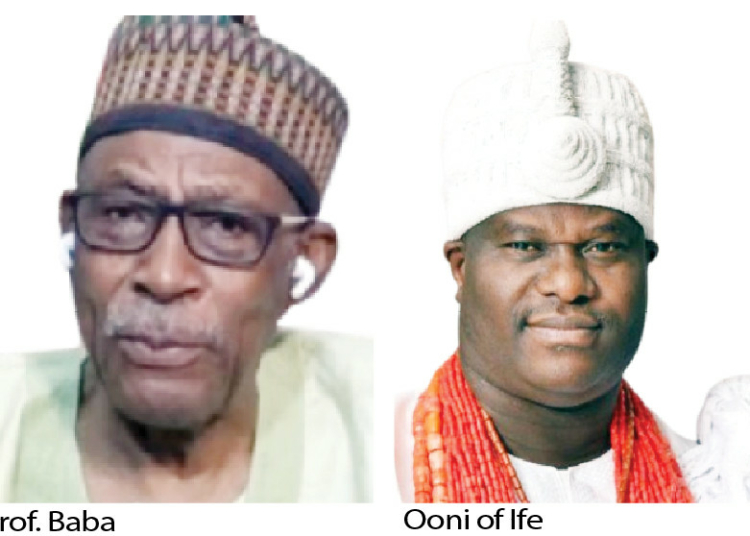
The Forum’s National Publicity Secretary, Prof. Tukur Muhammad Baba, said that Nigeria should adhere to democratic principles if it was committed to practising democracy.
“Our position is that if we are practising democracy, let us practise democracy. And if we have to have this, it should probably be made through a constitutional arrangement.
“But for now, we think it is not ideal for democracy, and that is our position,” Baba said in a tacit support for former vice president Atiku Abubakar’s presidential pursuit.
Sections of the northern political establishment, however, appear uncomfortable with the suggestion that the region must wait until 2031 before producing another president. The ACF’s argument revolves around constitutional eligibility, democratic competition and the right of qualified Nigerians from every region to seek elective office.
This disagreement has raised fundamental question about the nature of Nigeria’s democracy: should political power be determined by an informal regional understanding or by the constitutional right of citizens to contest elections? While the Constitution guarantees every qualified Nigerian the right to seek the presidency, political parties must also contend with the realities of national inclusion, political stability and the need to prevent any region from feeling permanently excluded.
The situation has created an uncomfortable contradiction. Politicians and political groups that previously defended rotational presidency when it favoured their regional interests may now question its relevance when political calculations change. Such selective commitment weakens public confidence in the principle and reinforces perceptions that power rotation is often more about political convenience than national unity.
The ruling All Progressives Congress (APC) is particularly exposed to this dilemma. With Tinubu seeking another term, the party is visibly navigating competing interests within its northern and southern structures. Its ability to maintain cohesion could depend on how effectively it manages the expectations of influential regional blocs without creating the impression that any section of the country has been deliberately sidelined.
Beyond the ruling party, opposition politicians are likely to exploit the disagreement. The North-South debate provides an opportunity for political actors seeking to build alternative alliances, attract regional support and challenge the ruling party’s electoral calculations. Consequently, the conversation about rotational presidency could become a major instrument of political mobilisation ahead of 2027, analysts posited.
They said that the danger, however, lies in allowing regional calculations to overshadow the issues that directly affect ordinary Nigerians. According to them, millions of citizens are struggling with rising living costs, unemployment, insecurity, poor infrastructure and declining purchasing power. For them, the most important question is not whether the next president would come from the North or South, but whether the individual can provide competent leadership and improve their living conditions.
Nigeria’s political history offers sufficient evidence that regional origin alone does not guarantee effective governance. The country has experienced administrations led by politicians from both regions, yet poverty, corruption, insecurity and institutional weakness have remained persistent. This suggests that the quality of leadership deserves greater attention than the geographical identity of the person occupying Aso Rock.
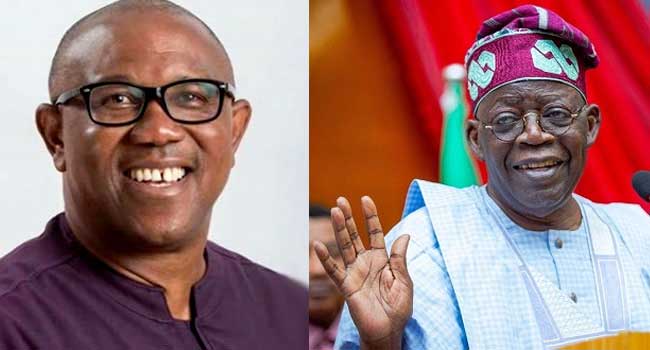
At the same time, dismissing rotational presidency entirely would be politically simplistic, according to a prominent commentator. He said that in a country marked by deep historical grievances, unequal perceptions of representation and persistent identity-based competition, power-sharing arrangements can provide an important platform for building trust. The challenge is to ensure that such arrangements promote inclusion rather than become instruments for dividing the electorate. This commentator cited the predicament of the South east in the country’s political equation. He also questioned the moral standing of the South west traditional rulers in demanding rotational presidency and endorsing Tinubu for re-election when the region has taken the longest shot at the presidency since 1999. This analyst who declined to be identified in print argued that the South west region which is now pushing for rotational presidency, is also the region which denied the South east the opportunity to rule Nigeria in 2023 when the infamous glitch occurred with the Independent National Electoral Commission (INEC’s) server which allegedly ceded victory to Tinubu instead of Peter Obi who was obviously leading during the election.
Pundits argued that political parties must therefore demonstrate maturity by addressing competing expectations through dialogue, internal democracy and transparent decision-making. The 2027 election, they said, should not become a referendum on which a region would desire to dominate the other. Rather, it should provide an opportunity to examine the records, policies, competence and integrity of those seeking public office.
The National Assembly and other political institutions also have a responsibility to strengthen the country’s democratic foundations. If rotational presidency is considered essential to national stability, its principles and implications deserve a more honest national conversation. Leaving such an important arrangement entirely to informal agreements among powerful politicians creates room for manipulation, conflicting interpretations and avoidable regional suspicion.
The positions taken by the South-West monarchs, the Middle Belt Forum and the ACF have highlighted the growing influence of traditional and regional institutions in Nigeria’s electoral politics. While their interventions may help articulate concerns about inclusion and stability, they must not replace the constitutional role of voters or reduce elections to negotiations among elite groups.
Ultimately, the North-South contest over the 2027 presidency is about more than political succession. It reflects Nigeria’s unresolved struggle to balance constitutional democracy, regional inclusion and the quest for national unity. Unless political leaders rise above sectional calculations, the debate could deepen divisions at a time when the country desperately needs cooperation.


