CODAF, FUPRE Partner On Zero Waste
In a bid to transform waste education to a sustainable future, the Community Development Advocacy Foundation unveils its From Global Movement to Zero Waste Campus initiative with a Postgraduate Diploma in Zero Waste at the Federal University of Petroleum Resources Effurun, Delta State
By Edu Abade
The Community Development Advocacy Foundation [CODAF] and the Federal University of Petroleum Resources, Effurun [FUPRE] have unveiled a Postgraduate Diploma in Zero Waste to transform waste education for a sustainable future.
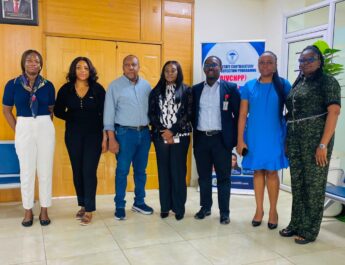
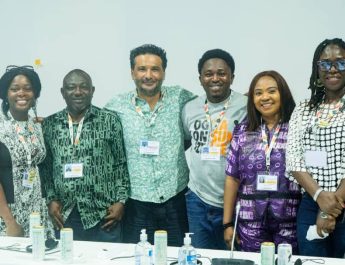
The initiative was unveiled at a webinar titled From Global Movement to Zero Waste Campus, Transforming Waste Education for a Sustainable Future, which celebrated the progress made through the CODAF-FUPRE partnership.
Director of Campaigns and Administration at CODAF, Maimoni Ubrei-Joe, said the conversation is about moving beyond seeing waste as something to be discarded, to equipping students with knowledge and practical skills to prevent waste, recover valuable materials, promote composting and develop alternatives to dumping and burning.
He disclosed that the partnership has led to the integration of zero waste approaches into postgraduate teaching and the commencement of the Postgraduate Diploma in Zero Waste.
Executive Director of CODAF, Richard Benin, thanked FUPRE and the Centre for Waste Management and Sustainable Resources for believing in the vision, and appreciated the Global Alliance for Incinerator Alternatives [GAIA] Africa for its support.
“As a youth-led organization, we see what this means. A generation of young people is learning that waste is not something to burn or dump but a resource to recover and return to the soil. Like we always say in CODAF, why waste the waste?” he said.
Benin added that the university has built zero waste material recovery, composting and black soldier fly technology into its waste management courses.
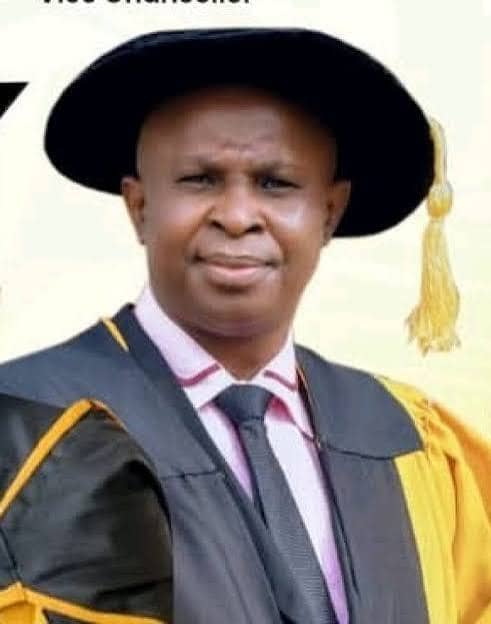
Vice Chancellor of FUPRE, Professor Ezekiel Agbalagba, said zero waste has become a key objective of the university to ensure that hydrocarbon production does not impact society, maintaining that the university was committed to the initiative and will do everything possible to sustain the global movement to zero waste, in line with the Sustainable Development Goals [SDGs].
“It is our objective to ensure that not just we produce hydrocarbons but how we can make it sustainable and ensure it doesn’t impact society while we drive energy renewal and renewable energy projects,” he said.
On his part, GAIA African Regional Director, Niven Reddy, said GAIA is a global movement of organizations and individuals paving the way for zero waste implementation.
“Zero waste is a system made up of multifaceted approaches-demonstrating organic separation at source, mainstreaming organic waste management which is the largest percentage of our waste stream in Africa, recognition and integration of waste pickers, advancing reuse systems, and challenging incineration,” he said.
He described the collaboration between civil society and academia in Nigeria as exciting, noting that mainstreaming zero waste in education is critical for passing it from generation to generation.
Also speaking, GAIA Zero Waste and Climate Program Manager, Desmond Alugnoa, said GAIA has been practising zero waste through its members in over 31 countries and over 100 organizations, prioritizing movement building, campaigns, capacity building and community education.
He said GAIA has helped register five waste pickers cooperatives and national unions since 2019, including in South Africa, Tanzania, Kenya, Nigeria and Ghana, noting that waste pickers are key to house-to-house separation education.
Alugnoa cited outstanding zero waste models in Accra, Durban and Tanzania, some of which have won global recognition, including the GAYO model in Accra, Ghana which won the Earthshot Prize in 2024.
He also announced the Africa Zero Waste Academy, a platform for training practitioners on implementation and holding government accountable, which has trained over 100 practitioners and led to over 30 new pilots in reuse and composting across the continent.
Participants agreed that the partnership between FUPRE and CODAF shows how a global movement becomes local action in the classroom, in a compost pile and in the students who decide to do things differently.