

Following the recent suffocation of 33 detained citizens in the custody of the Nigeria Security and Civil Defence Corp (NSCDC), as well as the indictment of the agency by a panel of investigation, more revelations appear to be unraveling about the notoriety of the officials and their operation modes, as well as the agency’s inhuman detention facilities, even as the panel recommends summary dismissal, prosecution of NSCDC officers, N1.4 billion compensation for victims
By David Oladimeji
An independent ministerial committee has recommended summary dismissal, administrative sanctions and prosecution of some officers of the Nigerian Security and Civil Defence Corps (NSCDC), over the deaths of the 33 detainees in the custody of its Niger State command in Minna, along with N1.4 billion in compensation for victims and survivors of inhuman detention while in the custody of the Corp.
The committee’s chairman, Jonathan Kure, who presented the report to the Minister of Interior, Olubunmi Tunji-Ojo, in Abuja, on Thursday, October 29, 2026 described the deaths as “entirely preventable.”
Kure said the committee concluded that the incident was a preventable custodial tragedy, caused by severe overcrowding, unlawful and unsuitable detention conditions, failure of duty of care, disregard of repeated distress warnings, inadequate supervision, and wider systemic deficiencies.

He said the evidence did not support claims that the deaths resulted from a disease outbreak.
Kure said, “Available medical and forensic evidence instead indicated that the fatalities resulted from an environmental asphyxia, an acute respiratory failure caused by prolonged confinement in a severely overcrowded and poorly ventilated detention cell, aggravated by heat stress and dehydration.”
The 65-page report, of which 46 pages form the main body, examined the arrest, detention, treatment and deaths of detainees between September 15 and 17, 2026. It was commissioned by the minister, following a presidential directive.
The committee said the tragedy stemmed from enforcement operations against suspected illegal mining in and around Minna the capital of Niger State.
According to Kure, “The operation was undertaken without an approved operational order, proper planning and consultation with relevant mining authorities, or involvement of the specialised Mining Marshals unit. National headquarters was not informed before the operation commenced.”
He said the raids led to the arrest of men, women and children, and that by the evening of September 16, 75 persons had been detained.
Kure added that after one of the detainees was releases, 74 others remained in custody overnight, with about 50 male detainees confined in a cell measuring about 20 square metres.
The committee said the cell had “a solid metal door, inadequate airflow, no running water, poor lighting, and no functioning toilet.”
It said further that food and drinking water were either unavailable or grossly inadequate, adding that adults and minors were held together.
The committee found out that the conditions breached constitutional safeguards, the Administration of Criminal Justice Act (ACJA), the Child Rights Act (CRA) and accepted international standards.
In conclusion, the Kure-led committee concluded that the treatment meted out to the detained citizens by the NSCDC officials “Amounted to cruel, inhuman, and degrading treatment, and created an environment in which fatalities became foreseeable and preventable.”
Kure said signs of distress began shortly after 7pm on September 16 and continued through the night, adding that, “Detainees repeatedly banged on cell doors and walls, shouted for assistance, and pleaded for water.”
“These distress calls were heard by officers assigned to nearby duties,” he said.
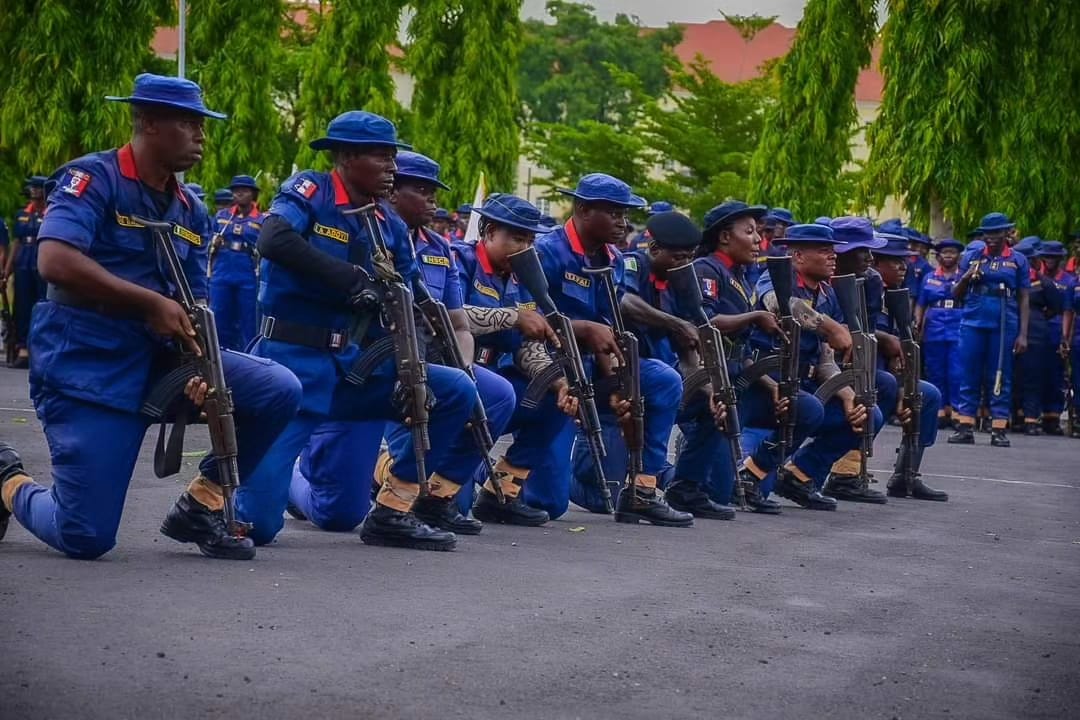
NSCDC officials, Kure said, “Failed to open the cell, decongest the facility, or arrange emergency intervention.”
The deaths occurred inside the male cell between 8pm on September 16 and 7am on September 17, 2026.
“By the time the cell was opened, many detainees had died,” Kure said.
The committee authenticated 33 deaths, 14 of them minors, and identified 41 survivors, adding that the higher figures reported immediately after the incident “could not be reconciled with available records and identified victims.”
Though some survivors alleged that an aerosol substance was sprayed into the cell before the deaths, Kure said the committee found no evidence to support this claim and concluded that the allegation remained unproven on the available evidence.
The committee held individual officers responsible, stressing that the State Commandant, Suberu Siaka, authorised and supervised the operation without proper planning, approval or oversight, giving rise to overcrowding.
It said the Head of the Investigation Unit, T. S. Sodiq, facilitated unlawful detention practices, ignored legal and medical concerns, and failed to act, despite direct awareness of the deteriorating conditions.
SC Usman Ndamaka was accused of maintaining overcrowded conditions, instructing subordinates not to open the cell, failing to respond to emergency alerts, and taking part in the cleaning and alteration of the detention area before independent examination.
The committee said ASC I Hassan Mohammed failed to open the cell, despite repeated distress signals and did not adequately escalate the emergency, while DSC Abubakar Dabang profiled the suspects into detention, including minors, and failed to protect their rights and properly document exhibits.
It said DSC Musa Marafat unlawfully arrested and detained Emmanuel Emeka over a civil debt dispute unrelated to mining, contributing directly to his continued unlawful detention until his death.
Beyond individual misconduct, it identified institutional weaknesses in the NSCDC, including “inadequate detention infrastructure, lack of effective custodial oversight, absence of CCTV monitoring systems, weak documentation practices, poor emergency medical capability, ineffective supervision, weak intelligence reporting arrangements, workforce imbalance, and chronic underfunding.”
The Kure-led committee also reported that these deficiencies created an environment in which serious violations occurred and “would continue to occur without timely detention intervention.”
The committee listed certain hinderances to thorough investigation including the unavailability of detention register for 16th September 2026, 30 of the 33 deceased were buried before post-mortem examinations, and the detention area was cleaned, disinfected and altered before independent forensic investigators arrived. It nonetheless concluded that “sufficient evidence existed to establish the essential facts, causes, and responsibilities.”
The committee hence recommended “summary dismissal of officers found primarily responsible; prosecution for offences, including murder, criminal negligence, torture, and inhuman treatment where applicable; as well as investigation by anti-corruption agencies into allegations of extortion and exhibit mismanagement.”
It also recommended administrative sanctions for officers whose failures contributed to the incident but “did not amount to primary culpability.”
On compensation, the committee recommended N30 million for each of the 33 bereaved families and N10 million for each of the 41 survivors, totaling N1.4 billion.
It also recommended educational support for dependents of the deceased, medical rehabilitation for survivors, psychological support for affected families, and a formal apology by the Federal Government. To prevent a recurrence, it recommended construction of standard detention facilities across all NSCDC commands, installation of closed-circuit television (CCTV), systems in custodial areas, an independent inspectorate and custodial oversight mechanism, enhanced custodial management and human rights training, among others.
Thirty-three lives reportedly ended in circumstances that should trouble every Nigerian. The victims, suspected of illegal mining, were in the custody of the NSCDC in Niger State when they reportedly suffocated. What should have been a routine law-enforcement operation became a grave test of institutional responsibility, professional discipline and respect for human life. Citizens insisted that the authorities must answer a basic question: How did people taken into custody by an agency entrusted with protecting lives end up dead under its supervision?
For the families, this is not merely another security-related incident. It is the permanent loss of fathers, sons, brothers and breadwinners. Detainees depended on authorities for their immediate safety and could not freely leave an unsafe facility or necessarily obtain help when danger emerged. Once people are detained, responsibility for protecting their lives rests heavily on those exercising custody.
The reported suffocation raised fundamental questions: Was the facility adequately ventilated? How many people were confined there? Were inspections conducted? Did officers receive warnings that detainees were in distress, and what action followed?
Opinion leaders added that the victims’ alleged involvement in illegal mining cannot diminish their right to life. Illegal mining raised legitimate concerns about environmental degradation, public revenue and community security.
Money, however, cannot adequately address multiple deaths in state custody. Compensation may help families pay school fees, settle bills and support children who have lost fathers or households that have lost principal earners. But no payment can restore a son to his parents, a husband to his wife or a father to his children.
Sani Danbauchi, whose 16-year-old son, Abdullahi, reportedly died in the incident, welcomed the recommendation while acknowledging the irreparable loss.
“No amount can replace my son, but we welcome their recommendation,” Danbauchi said.
His words captured the families’ painful dilemma. They may need assistance to survive the consequences of their loss, but accepting compensation does not mean abandoning their demand for accountability. Government must not mistake acceptance of aid for acceptance of unanswered questions.
Another bereaved parent, Lawal Mohammed, whose 18-year-old son, Suleiman Lawal, was also reported dead, stressed that justice goes beyond money.
“We have taken it as the act of God, but we also desire justice. It is not about the compensation but a sense of having a closure, that those behind the incident were brought to book,” he said, according to the same report.
Compensation and accountability serve different purposes. Financial assistance may address some consequences of death, but it cannot establish how the deaths occurred or who was responsible. Those questions require evidence, a credible investigation and legal action where wrongdoing is proved.
Public anger was reflected in protests in Minna. A protester identified as Muhammad questioned the deaths and demanded action.
“What happened was that we woke up in the morning only to hear that they had killed our brothers. For what reason would they kill our brothers?” he asked.
He added: “They went there simply to earn a living, and they were killed. We want the government to ensure justice is served regarding this terrible injustice that has happened to us.”