Who Brought Untold Hardship To Nigeria?
Opposition political parties insist that the near-12 years of the All Progressives Congress (APC) government at the centre has witnessed the highest level of corruption, impunity, insecurity, unemployment, poverty, hunger and hardship compared to other administrations since independence in 1960, however, the government of President Bola Ahmed Tinubu thinks otherwise as it claims hardship had existed in the land before the advent of the incumbent administration
By Our Correspondent
Speaking at the All Progressives Congress (APC) 2027 presidential campaign flag-off for his reelection at the Kaduna Township Stadium, on Saturday, October 24, 2026, President Bola Tinubu said his government was working to eradicate the hardship foisted on the people by his opposition to the presidential contest.
He also promised supporters prosperity if re-elected, assuring them that they would not regret giving him a second term.
Tinubu said, “You gave me joy to remember the victory you gave me to become President. I come again to thank you for that, to seek your mandate for the second term, to keep a promise on prosperity, continuity and progress. I have an argument, I hear my opponents talking about hunger and poverty. Who created it? They did! They created hunger, they created poverty, we are trying to eradicate it.
“We pay salaries regularly, our governors are working, I am proud of them, they are developing. To you, the children of our country, it’s a promise of a second term – prosperity; you will not regret going to the votes.”
However, Tinubu defended his government’s policies at the Kaduna rally, urging supporters to be wary of what he described as misleading claims by his opponents.
“Be careful; watch them. Don’t let them lie to you. What is past is in the past. Fuel subsidy is in our past; no more corruption, no more falsification of invoices, no more lies, no more smuggling of fuel,” he said.
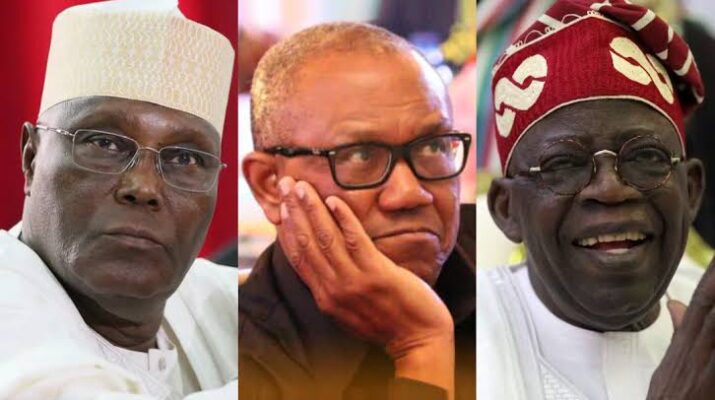
Since the statement, Tinubu and his government have come under intense criticism over his struggles to absolve his administration of blame in the hardship ravaging citizens. Many have argued that Tinubu’s major opponents in the 2027 presidential election, namely Atiku Abubakar of the African Democratic Congress (ADC) and Peter Obi who flies the Nigerian Democratic Congress (NDC) flag, have never been heads of any government in Nigeria. While Atiku was a Vice President, Obi ruled Anambra as governor.
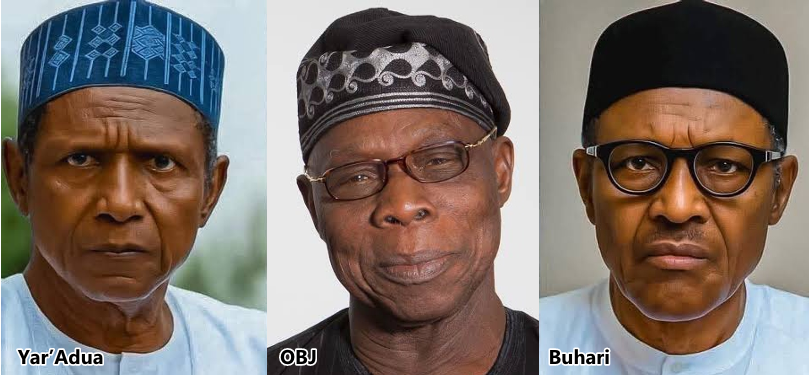
These pundits argued that under past presidents since 1999, including Olusegun Obasanjo, Umaru Yar’Adua and Goodluck Jonathan, citizens didn’t witness the level of hardship they have experienced under the APC 12 years administration. They added that between 1999 and 2015 when the People’s Democratic Party (PDP) was in power at the centre, dollar exchange to naira did not exceed N200, fuel price was under N200, while inflation remained single digit. Indeed, it was Tinubu, according to critics, who led a protest that grounded the country when Jonathan government attempted to remove fuel subsidy in phases in 2012. Obasanjo obtained debt forgiveness of over $30 billion from international lenders, while Yar’Adua brought down fuel price from N87 to N67.
But the APC government, analysts added, which took over power in 2015, under Buhari destroyed the fabrics of the nation’s economy. Buhari allegedly mortgaged the country’s crude oil, printed more cash through the ways and means formula and had the Naira exchanged for over N460 for one dollar. Pundits agreed that it was the Buhari government that ushered in the hardship, while Tinubu government has taken it to a level that has reduced Nigeria to the status of the poverty capital of the world, with over 63 percent of citizens being multi-dimensionally poor. What worries many opinion leaders and the electorate is that Tinubu who had said during his campaign promises in 2022 that if his government failed to fix electricity, Nigerians should not vote for him a second time, has been unable to fulfill the promise, but is campaigning for another term.
Many economists have also stressed that Tinubu’s World Bank/International Monetary Fund (IMF)-induced economic policies are at the centre of the economic hardship pounding citizens. Under the alleged guidance of these monetary institutions, Tinubu had announced his infamous “fuel subsidy is gone” on the day he took over power from his immediate predecessor, Buhari. Tinubu government was to devalue the Naira which exchange rate to dollar soared to as high as N1,900 to one dollar. It was Tinubu government which removed electricity subsidy and saw inflation risen beyond imagination. Coupled with loss of jobs and biting unemployment, Nigeria was to unavoidably slide into a state where inflation eroded purchasing power of households.
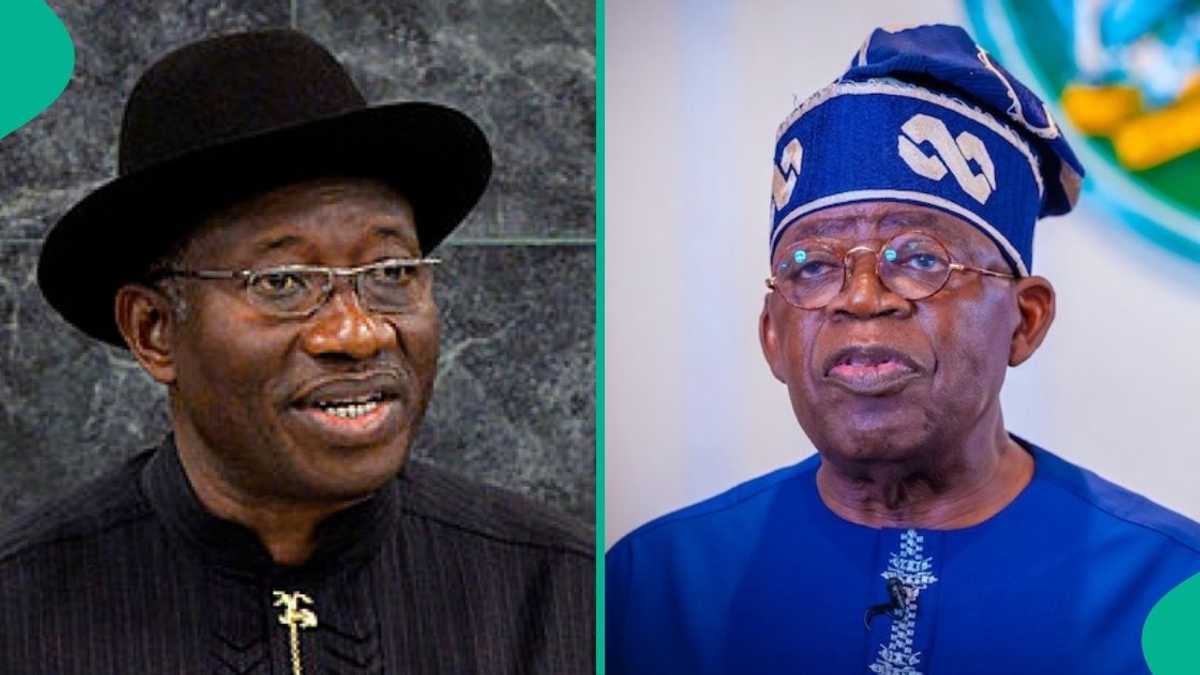
Experts said the ever-rising fuel price to as high as N1,450 for a litre under Tinubu government has also affected the prices of other goods, thereby impoverishing citizens. More worrisome is the incessant local and external borrowings of the Tinubu government. As at last week, Tinubu has submitted another proposal to the Senate for approval to borrow another $21.7 billion to finance infrastructure. If the upper chamber would approve the request, pundits said it may plunge the country deeper into debt of over N200 trillion naira. Borrowing under Tinubu is in spite of the alleged savings from the removal of the fuel subsidy.
In Nigeria today, the distance between earning a living and merely surviving has become painfully narrow. A market woman watches customers walk away because they cannot afford food. A commercial driver calculates whether daily earnings can cover fuel and household expenses. An unemployed graduate wonders why years of education have failed to secure a decent job, while a salaried worker discovers that an increase in pay disappears at the supermarket. Against this backdrop, President Tinubu’s reported remarks at the APC rally in Kaduna blaming his opponents for the hunger and poverty confronting Nigerians, have reopened a fundamental question: Who brought the country to this point, and who should take responsibility for changing its fortunes?
Tinubu’s argument has political implications because the APC has controlled the Federal Government since May 2015. By October 2026, the party had spent more than 11 years in power under two presidents-Buhari and Tinubu. That period is long enough for Nigerians to examine its economic record beyond campaign promises and political explanations. While no administration controls every economic variable, analysts argued that a governing party cannot indefinitely attribute the consequences of its policies to those who left office years earlier. They also said the relevant test is what APC government inherited, what it changed, what improved and what became worse under its watch.
Economists stressed that there is an important distinction between identifying the origins of an economic crisis and accepting responsibility for managing it. Nigeria’s economic difficulties did not begin in 2015. Previous administrations struggled with oil-price volatility, corruption, infrastructure deficits, foreign-exchange pressures and inadequate job creation. Jonathan’s government, for example, faced serious economic and security challenges, while the administrations before him left their own unresolved problems. But acknowledging these failures does not absolve subsequent governments in the estimation of analysts. According to them, every new administration inherited a combination of assets, liabilities and policy choices. Leadership, they argued, begins when it accepts responsibility for addressing them.
The comparison with the administrations of Obasanjo, Yar’Adua and Jonathan remains central to the public debate. During parts of their tenure, petrol prices and the naira’s nominal exchange rate were considerably lower than the levels Nigerians now confront. That made some everyday expenses more manageable, although those periods were not free of hardship, fuel-price adjustments or foreign-exchange problems. Nor does a lower official exchange rate automatically mean the economy was healthier, particularly when access to foreign currency was restricted.
Nevertheless, Economists insisted that the comparison mattered because citizens judge economic performance partly by the cost of feeding their families, transporting goods and keeping businesses alive.
When Buhari took office in 2015, his administration promised change and relief from the problems associated with the previous government. Instead, Nigeria entered recession in 2016, followed by another recession in 2020 during the COVID-19 pandemic. Inflation, foreign-exchange restrictions, fuel-price increases and weak economic growth placed households and businesses under considerable pressure. The pandemic and the global oil-market shock complicated the government’s task, but they did not explain every domestic policy decision. By the time Buhari left office in May 2023, the APC had already spent eight years trying to shape the country’s economic direction without citizens feeling any positive impacts.
Tinubu, on his part, was said to have inherited an economy burdened by fiscal pressure, foreign-exchange distortions and declining purchasing power, his government spin doctors insisted. Yet, watchers of government policies stressed that Tinubu’s decision to remove the petrol subsidy on his inauguration day in May 2023, and subsequently altering the foreign-exchange regime, triggered another wave of economic turmoil. Petrol prices rose sharply, the naira depreciated and the cost of moving goods increased because transportation affects nearly every stage of the food supply chain, higher fuel costs spread through markets, shops, factories and households. The government defended the reforms as necessary corrections to longstanding distortions, but millions of Nigerians experienced their immediate consequences as a dramatic increase in the cost of survival.
Stakeholders said the central criticism is not that reforms should never be undertaken. Fuel subsidies carried substantial fiscal costs, while multiple exchange rates created opportunities for arbitrage and complicated economic planning. The question many experts asked was whether the reforms were accompanied by adequate consultation with experts and relevant stakeholders, whether the protection of vulnerable households and a credible plan to expand domestic production were factored in before implementation.
Many experts argued that when the price of petrol rises faster than wages, public transportation would remain expensive even under unstable electricity, while the adjustment would fall disproportionately on people with little financial cushion. According to Ralph Ikenna, a policy analyst, policies may have an economic rationale and still impose severe social costs if implementation failed to protect those least able to absorb them.
Ikenna lamented that inflation illustrates the difference between official economic progress and household experience. He said even when the rate of inflation declined, it did not mean prices would return to their former levels. It means, Ikenna argued, that prices are rising more slowly. For a family whose food budget has already been stretched by years of increases, a lower inflation rate may offer little immediate relief. Market traders must pay more to replace their stock, restaurants must contend with higher ingredient costs, and workers discover that their salaries purchase less than they once did. Ikenna advised government to demonstrate not merely that inflation is easing, but that real incomes and access to essential goods are improving.
The foreign-exchange market tells a similarly complicated story, said Michael Oleh, another analyst. Oleh argued that the Naira traded at substantially lower nominal rates against the dollar under earlier administrations, although official and parallel-market rates often diverged. Tinubu’s reforms sought to unify the market and reduce distortions, but the subsequent depreciation, according to Oleh, increased the Naira cost of imported goods, machinery, medicines and industrial inputs. Domestic manufacturers that depend on imported materials faced higher production costs, while consumers absorbed part of the increase through prices. The administration may argue that exchange-rate adjustment was unavoidable, but Nigerians are entitled to ask when greater stability and productivity will translate into stronger purchasing power, said Oleh.
Experts admitted that poverty makes the debate even more serious. The National Bureau of Statistics (NBS) had reported in its 2022 Multidimensional Poverty Index that approximately 133 million Nigerians, or 63 per cent of the population at the time, were multidimensionally poor. The measure covered overlapping deprivations in health, education and living standards, rather than income alone. The development, many argued, indicated that the problem was already widespread before Tinubu assumed office. But the figure also exposes the scale of the challenge the APC has had more than a decade to confront. The question is whether government policies are reducing those deprivations and creating lasting routes out of poverty.
For unemployed graduates and underemployed workers, mere macroeconomic explanations can sound distant from daily reality.
The electricity crisis predates the APC, but more than 11 years of federal leadership has made analysts to insist that it was reasonable to demand evidence of sustained improvement. Since almost 12 years of APC rule, the country is still struggling with the less than 4,000 megawatts of electricity APC inherited from the PDP. This lack of vision on the part of APC has compelled analysts to argue that success should be measured by dependable supply, affordable tariffs relative to incomes, stronger distribution infrastructure and reduced operating costs for businesses, not simply by announcements of reforms or new projects.
Reacting to what it referred to as Tinubu dodging responsibility for the intense hardship in the land, Atiku said Tinubu was either delusioned or having political amnesia. In a statement issued by his Director of Strategic Communication, Phrank Shaibu, Atiku said, “The APC governed Nigeria for eight years before you took office. You have added another three and a half years. Nigerians know who has been in power, and hardship did not begin when the opposition started talking about it. Stop insulting their intelligence and answer for your record”.
But the APC reacted to the Atiku backlash, arguing that Tinubu was not dodging any responsibility. According to the party’s national spokesman, Felix Morka, argued that Tinubu was working hard to address the issue of poverty in the land. Morka stressed that “Poverty has been with us for a very long time. The President was saying the problem he is working hard to fix was created by some of those who today see poverty and hunger as though they descended on our country only in the last few years”.