After days of speculation, former Vice President and presidential candidate of the African Democratic Congress (ADC) for the 2027 presidential election, Atiku Abubakar, settles for his arc-rival and critic, Rotimi Amaechi, former governor and minister, as his running mate resulting in the slogan of ‘AA ticket’
By Udoka Ekeleme, Abuja,
David Oladimeji
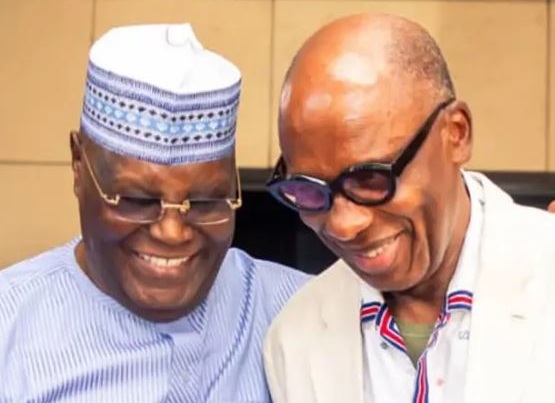
Eventually, the presidential candidate of the African Democratic Congress (ADC) for the upcoming January 2027 presidential election, Atiku Abubakar, has chosen his rival at the ADC presidential primary election as vice presidential candidate. His name is Rotimi Chibuike Amaechi, a former governor of Rivers State and former Minister of Transportation. The choice followed many days of speculating who Atiku would settle for among an array of candidates considered eminently qualified to run a joint ticket with him.
Barring any last-minute change of formation, Atiku has succeeded in setting up what is now referred to as a possible ‘AA ticket’ on the presidential ballot of the ADC by picking Amaechi, as his running mate.
While declaring the choice of his running mate on Friday, June 12, 2026, Atiku also declared that the actions by the Bola Tinubu-led All Progressives Congress (APC) administration contradicted the spirit, sacrifice and legacy of June 12.
Coming after weeks of rigorous negotiations within the Nigeria Democratic Congress (NDC) coalition platform, which was threatened by post-primary recriminations, the choice of Amaechi cames as a bold counter to the OK ticket pairing of Peter Obi and Rabiu Kwankwaso on the rival NDC for the January 16, 2027, presidential election.
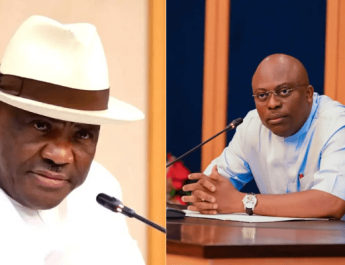
By settling for Amaechi, Atiku seems to have decided to do what he failed to do in the lead-up to the 2023 election cycle, when he refused to accept former Rivers State governor, Nyesom Wike, who emerged as the first runner-up in the Peoples Democratic Party (PDP) presidential primary.
While the duo of the 2023 Labour Party (LP) presidential candidate, Obi, and his New Nigeria Peoples Party (NNPP) counterpart, Kwankwaso, joined the ADC, speculations were rife that the party had a predetermined plan to have Atiku run with the former transportation minister to achieve a North-East/South-South balance on the party’s presidential ballot.
But contrary to those conjectures, Amaechi, shortly after he filled and returned his N90 million presidential nomination form, said he was not positioning himself for a VP slot.
Further, pushing back on the reports of a possible pairing with Atiku after Obi and Kwankwaso left ADC for the NDC, Amaechi, on May 20, ruled out the possibility of a consensus rather than a direct primary.
Recall that Amaechi contested the ADC presidential primary with Atiku on May 25, 2026, whereupon he came second to Atiku and has since rejected the outcome, alleging widespread voter disenfranchisement and electoral malpractice during the exercise.
Amaechi, in a statement issued on his X handle after the primaries, described the results announced by the party as “concocted” and insisted he would not accept an outcome that failed to reflect fairness and transparency.
According to him, “Following reports of widespread voter disenfranchisement in most parts of the country during the African Democratic Congress (ADC) Presidential Primaries yesterday, I unequivocally reject the concocted results being announced”.
“I had initially stated that I would only accept the outcome of the primaries if the process was free, fair, and transparent, and I stand by my word”.
“I will not accept results from a process that does not reflect the values that the ADC had pledged to uphold, to rescue Nigerians from the impunity and gross mismanagement that our country is currently facing in the hands of the ruling party”.
“There’s no way that about eighty per cent of members of the party were not allowed to vote, and you expect me to accept such results. Then what makes us different from the others?” he queried.
“The whole idea of the ADC was to give the Nigerian people a platform, to amplify the voices of the downtrodden, and make Nigeria a better place for everyone irrespective of backgrounds, ethnicity, or religion”.
“A party that criticizes the ruling APC and INEC for vote buying, rigging and writing of results, cannot be engaged in vote buying, writing of results, and other electoral malpractices that lead to the disenfranchisement of voters who are party members. This is not acceptable”.
Amaechi’s statement was regarded by many political analysts as a direct attack on Atiku’s quest to run for presidency. But few days after the primaries, precisely on Thursday, May 28, 2026 Atiku visited Amaechi at his Abuja residence, which fueled speculation that the former vice president was keenly interested in making the former Rivers governor his running mate.
Atiku was accompanied by former Sokoto State Governor Aminu Tambuwal, former ADC National Chairman Ralph Nwosu, and other party leaders.
But as Atiku hesitated in announcing his vice-presidential candidate, speculations began to emerge as to who he would eventually pick. One question was increasingly dominating conversations within opposition circles, policy forums and political think tanks: who will emerge as the running mate to the former Vice President?
While no official decision was announced, the names being mentioned revealed the strategic calculations likely to shape the opposition’s path to power. The choice of a vice-presidential candidate has evolved beyond mere constitutional necessity; it has become a critical instrument for coalition building, regional balancing and voter mobilization.
Atiku, one of Nigeria’s most experienced politicians, understands better than most that presidential elections are won not only through popularity but also through carefully crafted alliances. The selection of a running mate could therefore determine whether a political coalition gains momentum or struggles to consolidate support across the country.
Among the names which generated considerable interest were Dr. Ngozi Okonjo-Iweala. The globally respected economist and Director-General of the World Trade Organization, who possesses credentials that few Nigerian public figures can match. Her reputation for fiscal discipline and economic reform could strengthen the credibility of any ticket seeking to persuade voters that it has the capacity to rescue the economy.
Supporters of an Okonjo-Iweala vice presidential candidacy argued that her emergence would symbolize competence, integrity and international confidence in Nigeria. At a time when economic concerns dominate public discourse, such a choice could appeal to professionals, young voters and the business community.
Another highly regarded figure speculated to be Atiku’s running mate is Dr. Akinwumi Adesina, President of the African Development Bank. Adesina’s record in agriculture, development finance and economic transformation has earned him admiration across Africa and beyond. His technocratic profile would likely reinforce any campaign focused on growth, job creation and industrial development.
Yet Nigerian politics have often shown that electoral success requires more than technical expertise. Political structures, grassroots networks and mobilization machinery remain powerful determinants of victory. This reality places former Rivers State Governor Rotimi Amaechi among the strongest potential contenders.
Amaechi brings decades of political experience, extensive connections and proven electoral influence. His ability to command loyalty across political divides and his roots in the South-South region could provide strategic advantages in a highly competitive race.
Political observers noted that Amaechi’s inclusion on a ticket would not merely be symbolic. It could reshape alignments within opposition ranks and attract key political actors seeking a candidate with substantial governance experience and organizational strength.
Media entrepreneur and politician Dele Momodu’s name also cropped up during the Atiku waiting days. Analysts said Momodu represents a different dimension of political appeal. Known for his communication skills, extensive national reach and engagement with Nigeria’s elite and youth populations, many argued that Momodu could help project a message of inclusiveness and modern political engagement.
Although he lacks the extensive political machinery associated with some of the other contenders, his visibility and ability to shape public narratives remain significant assets. In an age where media influence increasingly affects political outcomes, such strengths cannot be ignored.
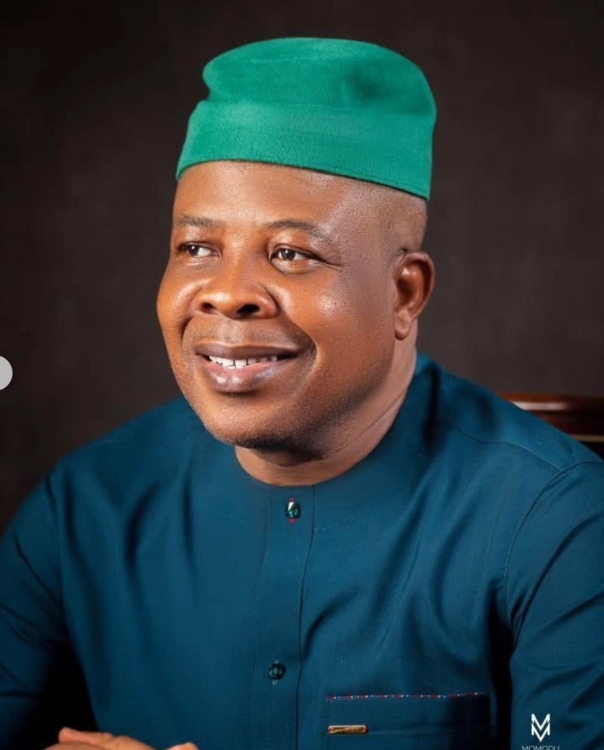
Another name that attracted attention as potential VP to Atiku is former Imo State Governor Emeka Ihedioha. His experience in both executive and legislative leadership positions give him a unique understanding of governance and public administration. More importantly, his emergence could enhance efforts to strengthen support in the South-East.
The South-East remains a crucial factor in Nigeria’s political equation. Many political analysts believe that selecting a running mate from the region could send a powerful message of inclusion, national integration and political accommodation.
Former Aviation Minister Osita Chidoka also appeared in the running mate discussions surrounding possible vice-presidential options. Widely respected for his policy-oriented approach and reform credentials, Chidoka represents a generation of public servants associated with institutional development and governance innovation.
For some strategists, the choice may ultimately come down to whether the opposition prioritizes technocratic competence or political effectiveness. Both qualities are important, but electoral realities often demand a delicate balance between expertise and grassroots influence.
There is also the question of coalition management. Should multiple opposition groups unite behind a common candidate, the vice-presidential slot could become a key bargaining tool for maintaining cohesion among diverse political interests.
Regional considerations will likely play a significant role as well. Nigeria’s complex political environment requires careful attention to geographical representation, religious sensitivities and demographic realities. Any successful ticket must be perceived as broadly representative of the country’s diversity.
Economic conditions may further influence the decision. With inflation, unemployment and investment concerns remaining major issues, voters may be attracted to candidates with strong economic credentials and practical solutions to national challenges.
Atiku’s eventual choice of Amaechi will, therefore, be judged not only on political calculations but also on the message it sends about governance priorities. Nigerians will seek indications of how a prospective administration intends to address pressing national challenges.
Beyond personalities, the debate reflects broader questions about leadership in Nigeria. Should the next generation of leaders be drawn primarily from experienced politicians, accomplished technocrats or reform-minded public servants? The answer may shape the country’s political future.