As President Bola Tinubu government vigorously pursues the establishment of the controversial State Police as panacea for the alarming insecurity in the country, experts point out numerous challenges that will face the policy if it eventually scales through
By David Oladimeji
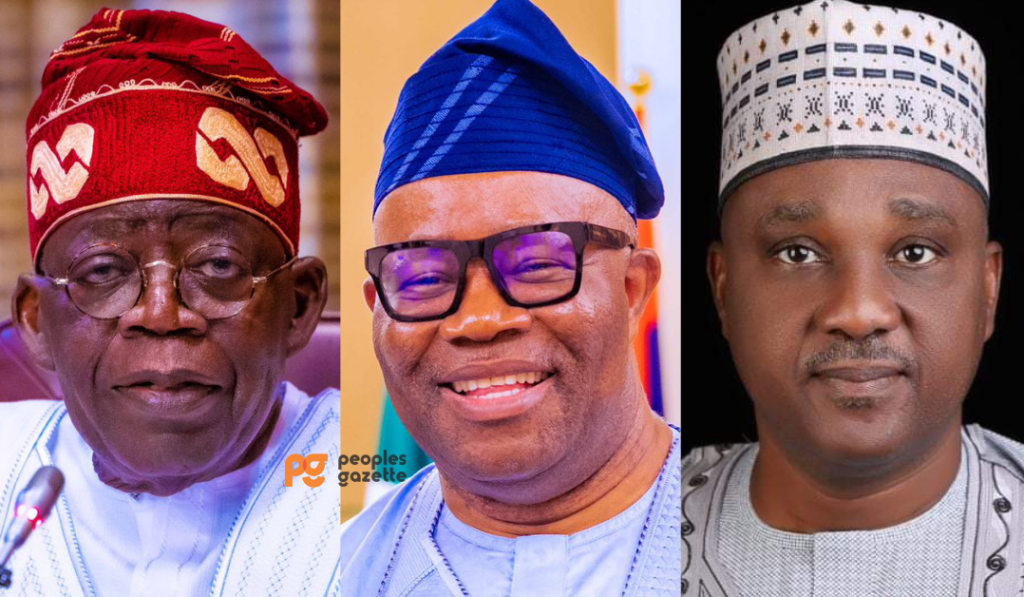
President Bola Tinubu has formally requested and championed the establishment of state police as a critical constitutional reform to combat Nigeria’s security challenges. The landmark movement to decentralize the country’s policing system has rapidly advanced through the legislative process.
Last week, the House of Representatives passed the State Police Bill (officially the Sixth Alteration Bill). The Bill alters the 1999 Constitution to officially establish both a Federal Police and individual States’ Police formations. The proposal passed the lower chamber with an overwhelming majority, seeing 288 lawmakers vote in favor and only four voted against it. President Tinubu has consistently rallied support for policing decentralization, urging the National Assembly to execute the required constitutional amendments to reshape Nigeria’s security framework. No state police formation can begin operations unless it is backed by a specific law passed by the relevant State House of Assembly and verified to meet national minimum standards. The proposed legislation grants State Governors the authority to appoint Commissioners of Police for their respective states.
The Federal Police will continue to perform policing functions in a given state until that state’s force becomes operational. Federal forces will only intervene in state security matters if there is a complete breakdown of law and order, upon the request of a governor, or if the state police face financial or administrative collapse.
The push for localized security has been a long-advocated response to rampant kidnappings, banditry, and farmer-herder clashes. While the presidency and National Assembly heavily support the reform, ongoing public discourse highlights the need for strict legal frameworks to prevent the political misuse of state forces by governors.
The call for the creation of state police in Nigeria has become one of the most passionate and divisive conversations in the nation’s contemporary political history. What began as a security reform proposal has evolved into a wider debate about federalism, democracy, accountability and the future of governance in Africa’s most populous country.
Across the country, the argument appears straightforward. Nigeria is battling terrorism, insurgency, banditry, kidnapping and violent crimes that have stretched the capacity of the existing security institutions. Communities under siege want immediate solutions, and many see state police as a logical answer.

For supporters, the current centralized policing structure is increasingly outdated. They argue that a nation of more than 200 million people cannot effectively police diverse communities from a single command structure headquartered in Abuja.
Their position is reinforced by a recurring contradiction in Nigeria’s governance framework. Governors are widely described as chief security officers of their states, yet they exercise limited operational control over the police formations responsible for maintaining law and order within their territories.
This contradiction has fueled demands for a policing model that can give sub-national governments greater authority over their security matters. To many proponents, security is most effective when it is localized, responsive and community-driven.
They point to the advantages of local knowledge. Officers recruited from within states are more likely to understand local languages, customs, terrain and social dynamics. Such familiarity, they argue, can improve intelligence gathering and strengthen trust between communities and security agencies.
But as enthusiasm grows, so do the questions. And they are not ordinary questions. They are the kind of questions capable of determining whether state police will become a national solution or a national crisis.
The first concern revolves around funding. Security is expensive, and effective policing requires more than uniforms and patrol vehicles. Experts stressed that, it demands sophisticated intelligence systems, communication networks, training institutions, modern equipment and competitive welfare packages.
Many Nigerians therefore wonder whether states already struggling to pay salaries can shoulder such responsibilities. Several states remain heavily dependent on the monthly federal allocations. Critics ask whether those same states can realistically sustain independent police organizations.
The fear is that poorly funded state police forces could become ineffective, vulnerable to corruption or susceptible to influence from powerful political interests. A police officer who is unpaid or poorly equipped is often unable to perform effectively.
Equally troubling is the issue of manpower. How many officers should each state recruit? Should numbers be determined by population size, geographical spread or security challenges? Without uniform standards, Nigeria risks creating vastly unequal policing structures across the federation.
Beyond funding and personnel lies an even more complicated challenge—the relationship between federal and state police. In moments of national emergency, who takes command? What happens when a criminal operation spans multiple states? Who resolves conflicts between competing authorities?
These concerns become especially significant in a country where security threats rarely respect state boundaries. Terrorist groups, kidnappers and criminal networks often operate across multiple jurisdictions, requiring coordinated responses rather than fragmented efforts.
Some Nigerians have therefore proposed that state police should have clearly defined responsibilities. According to this school of thought, state police should strictly focus primarily on combating terrorism, insurgency, banditry and kidnapping while avoiding politically sensitive functions.
The objective behind such recommendations is clear. Many citizens fear that state police could become entangled in electoral politics if granted unrestricted powers.
Perhaps no concern has generated more public debate than the possibility of political abuse. Critics worry that state police could become instruments in the hands of sitting governors seeking to consolidate power and weaken opposition voices.
Nigeria’s political history provides ample reason for caution. The country has witnessed numerous allegations of political intimidation, abuse of authority and manipulation of public institutions. Opponents of state police fear that decentralizing policing without adequate safeguards may multiply these challenges.
Election periods present an even greater source of anxiety. In a fiercely competitive political environment, many Nigerians are uncomfortable with the idea of governors exercising direct influence over armed security personnel during campaigns and elections.
This concern explains why constitutional lawyers, civil society groups and governance experts continue to advocate robust oversight mechanisms. Many argue that state police should never be accountable to governors alone.
One proposal receiving widespread attention is the requirement for the concurrence of at least two-thirds of a State House of Assembly before the establishment or significant deployment of state police. Advocates believe such a measure would introduce democratic checks and reduce the risk of unilateral decisions.
Others recommend independent police service commissions, judicial review panels and federal oversight frameworks capable of investigating complaints and sanctioning abuses. Their goal is to ensure that state police serve citizens rather than political interests.
Yet beneath all these debates lies a deeper question about the nature of Nigeria’s security crisis itself. Is insecurity primarily a policing problem, or is it a symptom of broader economic and social failures? Poverty, unemployment, inequality and weak institutions continue to fuel instability in many parts of the country.
Critics argue that creating state police without addressing these root causes may merely produce a more localized version of existing problems. They caution that security reform must go hand-in-hand with governance reform.
Ultimately, the debate over state police is not simply about uniforms, patrol vehicles or command structures. It is about power—who controls it, how it is exercised and what safeguards exist to prevent abuse.
As Nigeria stands at this critical crossroads, the nation faces two competing fears. One is the fear of continuing with a centralized policing system many consider inadequate. The other is the fear of creating state-controlled security institutions that could become political weapons.
Analysts argued that the challenge before policymakers is therefore not merely to establish state police, but to build a framework that protects both security and democracy. Until that balance is achieved, they said, the conversation will remain one of the most consequential and contentious debates shaping Nigeria’s future.