
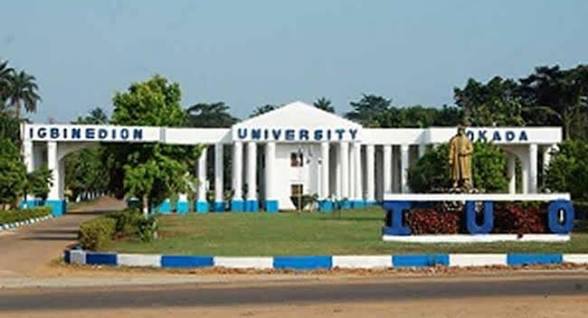
Environmental activists and climate justice crusaders canvass urgent action on just climate transition insisting that the opportunity presented at a summit in Edo State on the sidelines of this year’s World Environment Day signpost Nigeria’s moment of victory
By Edu Abade
There is an urgent need for Nigeria and other African countries to begin to engage in actions that would create a fertile ground for just climate transition, if the country and the continent are to survive the excruciating impacts of the global climate change crises
This was the verdict of Executive Director of the Health of Mother Earth Foundation (HOMEF), Dr. Nnimmo Bassey in his keynote address at the World Environment Day hosted by the Igbinedion University, Okada on June 5, 2026.
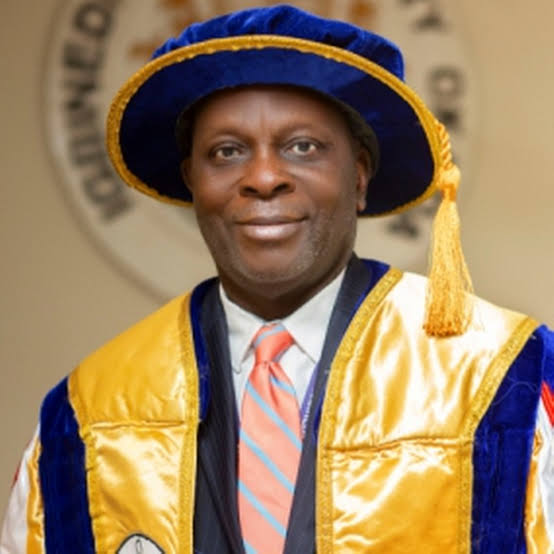
Bassey, who commended the Vice Chancellor, Igbinedion University, Okada, Professor Lawrence Ikechukwu Ezemonye for inviting him to share his thoughts at the World Environment Day commemoration, also praised the management of the university, the Centre for Climate Change and Sustainable Development Goals, the faculty, students, invited guests and all participants gathered here today.
He said the global theme of this year’s celebration, Inspired by Nature. For Climate. For Our Future with Now for Climate, as the campaign focus remains both a warning and a call to action, adding, “It reminds us that climate action is no longer something that can be postponed to the future. The future has already arrived.
“As we mark the World Environment Day, the topic, Now for Climate: Nigeria’s Moment, Edo’s Opportunity – Universities at the Vanguard of the Climate Transition has obviously been crafted to underline the vital role that universities as citadels of learning must play to help halt the mindless global slide towards climate chaos and show what real climate action looks like and how it must be practicalized. Now for Climate leaves no room for procrastination or for the propagation of false solutions.”
Bassey explained that since its establishment in 1972, the World Environment Day has served as the largest global platform for environmental awareness and action and has been an annual reminder that humanity’s wellbeing is inseparable from the wellbeing of the Earth, noting that the day reminds everyone that clean air, fertile soil, healthy forests, flowing rivers and a stable climate are not luxuries, but the foundations upon which society and economy depend.
“The theme of this year’s WED is another wake-up call for the world to accept that we cannot stay on pathways that deepen environmental degradation, weaken community resilience, and lock us into unsustainable patterns of production and consumption. It will be a plunge into chaos if we fail to build a future based on ecological sustainability, renewable energy, food sovereignty, environmental justice and community wellbeing.
“Nature clearly shows the interdependence of all beings, and that a resilient and livable future lies in maintaining those webs of solidarity and cooperation rather than competition, militarism and accompanying destruction. Learn from Nature, defer to Mother Earth, end destructive extractivism, consume less and end mindless wastages. A rapid shift from dependence on fossil fuels is the keyway of averting the climate crisis. Stop gas flares, stop oil pollution, stop burning our communities.
“This underscores the need for urgent climate action now. The poly-crisis confronting the world manifests through climate disruptions, biodiversity loss, pollution, food insecurity, economic instability, armed conflicts, displacement of populations, and widening inequality. These challenges are often discussed separately, but they are deeply interconnected.
“Whereas the Paris Agreement set a target of temperature increase of 1.5 and well below 2 degrees Celsius above preindustrial levels it has become clear that these were mere wishful thinking because action has not been taken to curtail the upward temperature swing. Droughts and floods are reducing agricultural productivity, triggering food shortages and threatening livelihoods,” he stated.
Speaking further, he pointed out that environmental degradation was contributing to forced migration and social tensions adding that conflicts over land, water and other resources were becoming more frequent in many parts of the world just as rising temperatures have been affecting public health, increasing the spread of diseases and exposing vulnerable populations to extreme weather events.
“The climate crisis is the epicentre of the poly-crisis. It is an economic problem, a social problem, a public health problem, and increasingly, a security problem. It is a crisis that touches every aspect of our lives.
“Across Nigeria, the evidence is all around us. Floods destroy homes and infrastructure. Coastal erosion threatens communities along our coastline. Desertification advances in the north. Farmers struggle with changing rainfall patterns. Fishers contend with degraded aquatic ecosystems. Heat stress is becoming more severe. These impacts are already affecting livelihoods and weakening the resilience of communities, yet those who suffer the most are often those who contributed the least to creating the problem.
Climate Justice
Africa contributes 2 to 3 percent of global greenhouse gas emissions, but the continent bears a disproportionate share of the consequences. This is one of the greatest injustices of our time. The communities most exposed to climate impacts are often those with the fewest resources to adapt. It was in recognition of this patently unjust situation that the United Nations Framework on Climate Change has a justice principle as a major anchor. That principle, formalized at the 1992 Earth Summit, is known as the Common But Differentiated Responsibilities (CBDR) underscores a shared obligation to address environmental degradation based on unequal contributions to the problem and the differing capacities to tackle it. In other words, those who contribute most to the crisis should do the most towards addressing it.
For this reason, climate change must always be discussed alongside climate justice. The climate crisis did not emerge by accident. It is rooted in an economic model built on excessive extraction, overconsumption, and the treatment of nature as an endless source of raw materials and an unlimited sink for pollution. The same logic that has devastated ecosystems, polluted rivers, destroyed forests, and sacrificed communities in pursuit of profit is also driving climate disruption.
This reality is especially familiar to us in Nigeria. For decades, communities in the Niger Delta have lived with the consequences of an extractive economy that prioritizes oil and gas production over environmental protection and human wellbeing. Research and reports that lay bare this dire situation include the Niger Delta Environmental Survey commissioned by Shell; United Nations Environment Programme report of the Assessment of the Environment of Ogoniland; the Bayelsa State Oil and Environment Commission report. Health of Mother Earth produced a concise report outlining key findings of the NDES, UNEP and BSOEC reports in a publication titled: Disasters Foretold and Retold.
Oil spills, gas flaring, contaminated water sources, degraded farmlands, and damaged ecosystems have imposed enormous costs on local communities. These environmental harms are not isolated incidents. They are symptoms of a broader capitalist development model that treats people and nature as expendable.
Renewables and the Just Transition
As the world moves toward renewable energy, we must ensure that we do not repeat these mistakes under a different name. The transition away from fossil fuels is necessary. Science leaves no room for doubt on that matter. But the transition must be just. It must not become another chapter in the long history of extraction and exploitation. It must not simply replace fossil fuel colonialism with green colonialism.
Around the world, we already see signs of this danger. Vast areas of land are being acquired for carbon farming and diverse offset projects. Critical minerals needed for renewable technologies are being extracted from already disadvantaged communities and territories. Large-scale renewable energy projects are often designed to serve distant markets while local communities remain without reliable access to electricity and basic services. A transition that would prioritize the wellbeing of the planet and the people must be just.
A just transition requires us to ask important questions: Energy for whom? Development for whom? Who benefits, and who bears the costs? These are not technical questions. They are questions of justice, democracy, and accountability. For Nigeria, the climate challenge presents both a danger and an opportunity. With Edo State as the “heartbeat of the nation”, it is obvious that harms climate and other ecological harms experienced in the nation also centres on the heart.
The danger lies in continuing along a path that deepens environmental degradation, weakens community resilience, and locks us into unsustainable patterns of production and consumption. The opportunity lies in building a future based on ecological sustainability, renewable energy, food sovereignty, environmental justice, and community wellbeing. This is where Edo State has a significant opportunity.
Edo State
Edo possesses rich forests, fertile lands, important biodiversity, and communities with deep environmental knowledge. These ecological assets are the foundations of long-term prosperity. Forests regulate rainfall, protect watersheds, conserve biodiversity, store carbon, encapsulate cultures, and sustain livelihoods. Their value extends far beyond the timber that can be extracted from them. In this regard the state has protected forests with species that attract global attention and interests. The state also has a history of plantations especially of rubber and oil palm. The footprints of these plantations also match the footprint of colonial forest conversion that promoted cash cropping for export as opposed to food production for the local population. Forests and other largescale land use conversion changes have huge impacts on local communities and unless carefully managed can be cause of protracted stress between communities and corporations.
Although Edo State has 49 forest reserves, the major forest reserves in the state are those at Ehor, Sakponba, Gelegele and Okomu. Except for the forest reserve at Okomu, the others are rather degraded and require serious efforts for recovery. Forests when properly managed can be veritable carbon sinks and that help to regulate the climate. The challenge of deforestation is a real problem and is driven by poachers, loggers and others engaged in other activities such as crude oil and gas extraction. Sometimes the spatial overlay of these extractive activities drive conflicts and environmental degradation.
Oil field communities in Edo State suffer the same ecological horrors that other Niger Delta communities have endured for almost seven decades. Massive gas flares, oil spills and waste dumps are the experience of communities whose territories happen to house the black gold. These communities suffer double barrel climate impacts emanating from at both ends of the pipeline: pollution at the points of extraction and the release of carbon at the points of consumption and burning. Our universities owe the world a duty of highlighting the fact that climate impacts commence from the points of extraction of fossil fuels and the focus on climate mitigation must not end with the counting of the concentration of carbon in the atmosphere.
The Role of Universities
Protecting our ecosystems must be seen as an investment in the future rather than a constraint on development. Climate Now ought to begin with leaving fossil fuels in the ground and urgently investing in community centred energy resources. Universities are uniquely placed and equipped to generate knowledge, build capacity, shape public debate, drive policy and prepare present and future leaders. A vanguard does not wait for change to happen. A vanguard helps shape the direction of change. Universities occupy a unique position in society. They produce knowledge. They train professionals. They influence public policy. They nurture critical thinking. They help societies understand complex challenges and develop solutions. Generating and sharing climate action templates and frameworks must be a critical focus of our universities. Clearly, the question is not whether universities have a role to play. The question is whether our universities are prepared to lead.
At a time when climate change is transforming every sector of society, universities must become central actors in the transition. Every student graduating will enter a world shaped by climate realities. Whether they become teachers, lawyers, engineers, architects, doctors, economists, journalists, business leaders, or public servants, they will confront challenges linked to climate change and environmental sustainability.
Climate literacy can no longer be confined to environmental science departments. It must become part of the educational experience across disciplines. Students should understand the history of climate change, who the main drivers have been and that while it calls for shared actions, justice demands that historical responsibility must not be swept under the carpet. Every graduate should understand the environmental dimensions of their profession and the responsibilities that come with it. Every citizen should be alert to the fact of global geopolitical imbalances and how these retard climate change negotiations even as the crisis intensifies. It is the role of universities to uncover the colonial roots of climate change and drive policies that would encourage our governments to demand for the payment of climate debt rather than seeking loss and damage funds or other elusive climate finance mechanisms.
Universities must also strengthen research that addresses local realities. Too often, research priorities are shaped by external interests rather than community needs. Our universities should be generating knowledge that helps farmers adapt to changing climatic conditions, supports agroecology, improves renewable energy access, strengthens water management, protects biodiversity, and builds community resilience.
Research should not remain confined to academic journals. It must serve society with universities being more of centres of innovation and demonstration. Campuses themselves should model sustainable practices through energy efficiency, renewable energy deployment, waste reduction, water conservation, tree planting, and ecosystem restoration. Students should be able to see sustainability in practice, not merely read about it in textbooks.