
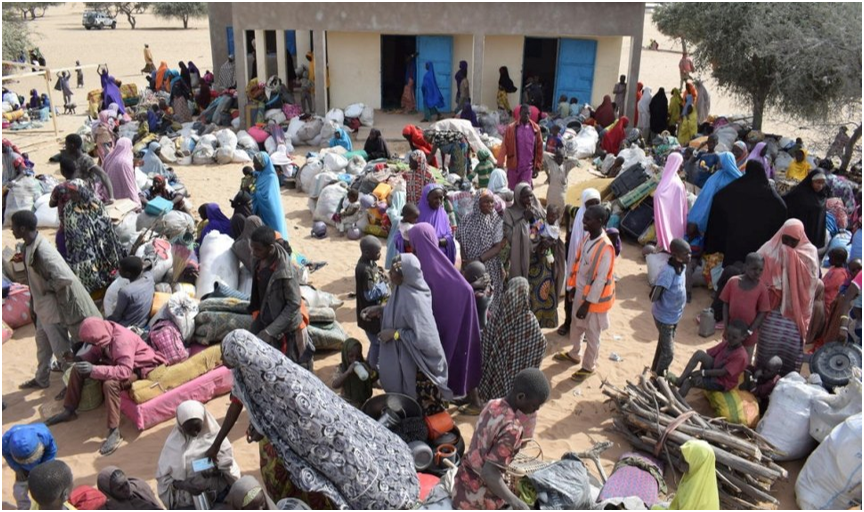
Conservationists and environmental activists alert to the fact that desertification continues to take an alarming toll on the Lake Chad Basin and 11 states of the country, insisting that the government must make concerted efforts to salvage what is left of the Lake Chad and affected states
By Edu Abade
In what appears a last-minute effort to salvage the Lake Chad Basin and wade off the devastating impact of climate change and desertification in 11 states of Northern Nigeria, environmental watchdogs and climate justice crusaders have cautioned that unless urgent measures are put in place, desertification will soon deal a deadly blow on a larger part of the North.
This was the verdict of participants at a one-day virtual training on Desertification in Northern Nigeria for journalists and frontline community representatives on June 18, 2026 organized by the Citizens Free Service Forum and its partners
In his welcome address, Executive Director of the Citizens Free Service Forum (CFSF), Comrade Sani Baba said the workshop, was deliberately organized to draw attention to the environment, adding that the engagement by the civil society space was aimed at advancing the cause of saving not only communities and the nation, but also the entire world, which is currently in peril of climate impacts.
“As you all know, globally June is acknowledged as the month of the environment. Earlier on June 5, 2026 there was commemoration of World Environment Day. There was World Day of Oceans on June 8, Wind on June 15 and yesterday June 17, the World Day to Combat Desertification and Drought.
“Every part of Nigeria is beset with climate impacts. From rising sea levels, coastal erosion, gulley erosion and loss of forest cover and biodiversity, we make bold to say we are under assault. If we take the situation happening in about 14 states of the North where the Sahara continues to march downwards, this Expert Workshop on Desertification in Northern Nigeria is timely.
“Desert encroachment affects nearly 45 of Nigeria’s landmass in the northern part of the country. Some of the affected states are Adamawa, Bauchi, Borno, Gombe, Yobe, Jigawa, Katsina, Kebbi, Sokoto and Zamfara with studies showing that the region loses about 350,000 hectares of land annually,” he stated.
Sani lamented that climate change has resulted to the Lake Chad declining from 25,000 square kilometers in the 1960s to less than 1,500 square kilometers adding that the decline did not only affect space; it has affected livelihoods of over 40 million people who were fisherfolks and farmers. The region is now experiencing dwindling or no rainfall.
The desert encroachment in the region is further exacerbated by human activities such as overgrazing and intensive farming. Cumulatively, millions of people in Northern Nigeria are affected by desertification and they suffer crop failures, water scarcity, and land owner-herder conflicts. There have been government interventions that have led to little or no positive impact and unfortunately, these issues are under-reported in the media to elicit policy level interventions.
Informed by the need to reverse this trend and enliven reports on desertification and its impact, the CFSF has brought together community activists and veteran journalists to share their experiences and help hone the skills of media participants on this subject to elicit robust news reports and articles that can pressure our government into concrete action.
Also speaking on the Impact of Desertification on Livelihoods in Northern Nigeria, Executive Director Centre for Transparency Advocacy and Coordinator of Women in Extractives, Faith Nwadishi, explained that desertification means land degradation in dry areas caused by climatic pressures and human activities. It is not simply “the desert moving;” it is land losing fertility, vegetation, water retention and productivity.
In Northern Nigeria, the concern is serious because many communities depend directly on land, water and pasture. The result is: Reduced capacity of land to support people, animals and ecosystems.
Citing data from the Federal Ministry of Environment, she explained that the scientific reality showed severe dryland degradation transforming fertile ecosystems into chemically barren, eroded soil, just as about 43 percent of Nigeria’s total landmass is currently threatened by desert encroachment.
Revealing that Nigeria actively loses roughly 350,000 hectares of land to the desert yearly, she canvassed restoration of degraded land through planting of trees, grasses, shelterbelts and assisted natural regeneration.
“We need to quickly protect water sources and invest in climate resilient water systems, support climate smart farming, soil conservation and sustainable grazing management, provide alternative energy and livelihoods to reduce pressure on trees and land and make public programs transparent, community owned and inclusive of women and youth.
“There is also the urgent need to encourage communities to protect and nurture native tree stumps to regrow naturally, peacebuilding, early warning and fair resource governance, while women and affected communities should be included in land, water and restoration decisions, as well as the use of simple, traditional techniques that do not require expensive machinery,” she said.
“On what is already being done, “Nigeria is not starting from zero. Existing responses include the Great Green Wall, the National Agency for the Great Green Wall, shelterbelts and sand-dune stabilization, Agro-Climatic Resilience in Semi-Arid Landscapes (ACReSAL’s) watershed and landscape restoration work, afforestation, community woodlots, climate resilient agriculture and livelihood support.
“The challenge is not only implementation, but scale, maintenance, transparency, community ownership and measurable impact. Desertification is a livelihood, food, water, peace and governance issue. Northern Nigerian communities need restoration, adaptation and fair resource management.
“Women, girls, youth, farmers, pastoralists and vulnerable groups must be part of solutions. Government action should be evidence based, transparent and sustained beyond ceremonies. Protecting land is protecting lives, food, peace and the future,” she concluded.
On her part, Trustee, Community Based Initiative for Growth and Sustainability, Hajia Azizat Mohammed Adangba, whose presentation focused on The Impact of Desertification on Women in Northern Nigeria, said, “Desertification is often discussed as an environmental crisis. For millions of women in Northern Nigeria, it is also an economic crisis, a health crisis, a food security crisis, and a social welfare challenge.”
Describing women as agents of resilience and environmental stewardship, she pointed out that women had led efforts at community afforestation, sustainable farming, water conservation, renewable energy and climate adaptation, among others.
She further explained that environmental sustainability requires gender inclusion, maintaining that no desertification strategy would be complete without a deliberate, resourced gender lens embedded from design to evaluation.
“Women’s resilience is Northern Nigeria’s resilience. Empowering women to adapt, lead and steward land and water resources multiply the impact of every intervention. Every intervention needs a deliberate gender lens. From policy design to financing and community implementation, gender is not an add-on. It is the foundation.
“Over 35 percent of Nigeria’s land area is found in 11 desertification front line states including Adamawa, Bauchi, Borno, Gombe, Jigawa, Kano, Kebbi, Kaduna, Sokoto, Yobe and Zamfara,” she stated.
In her recommendations, she advocated protection, empowerment, inclusion and investment, especially in the areas of land rights, climate finance, climate-smart agriculture, water infrastructure, women-led enterprise, governance inclusion, education capacity and social protection.
On his part, Chair, Socialist Workers League and Senior Organizing Secretary, National Union of Petroleum and Natural Gas Workers (NUPENG), Kelvin Ayemhenre, whose presentation dwelled on Desertification Impacts on Nigerian Workers, maintained that desertification is caused by natural factors including climate variability, drought and rising temperatures
He also identified human factors such as deforestation, overgrazing, unsustainable farming and industrial activities (including extractive sectors), as well as political-economic drivers, poor environmental governance, neglect of rural development and capitalist extraction and sustainability.
On the impacts of desertification on workers, he disclosed that small holder farming, agrarian crisis and rising cost of living; falling agricultural output, reduction in the supply of food, which drives up prices, largely affect workers negatively.
“Workers are forced to spend more on basic needs, especially food, while wages remain largely stagnant. This widening gap between income and living costs places increasing financial pressure on working people.
“It results to loss of livelihoods. Desertification is steadily destroying the economic base of many rural communities. As land becomes less productive, farmers are unable to sustain their activities, leading to loss of income and employment. Similarly, fishing and related sectors decline due to shrinking water sources and ecosystem damage, leaving many workers without stable means of livelihood.
“It also leads to poor working conditions. Desertification contributes to rising temperatures and harsher environments, which directly affect workers, particularly those in outdoor occupations such as construction, transport, and other forms of manual labour.
“Prolonged exposure to extreme heat increases fatigue, reduces productivity and exposes workers to serious health risks, including dehydration and heat-related illnesses,” he said.
He further pointed out that desertification induces migration and job pressure, adding that the loss of rural livelihoods pushes many workers to migrate to urban areas in search of greater opportunities.
“However, cities are unable to absorb this growing labour force, leading to intense competition for limited jobs. As a result, more workers are pushed into informal, unstable, and low-paying employment,” Ayemhenre added.
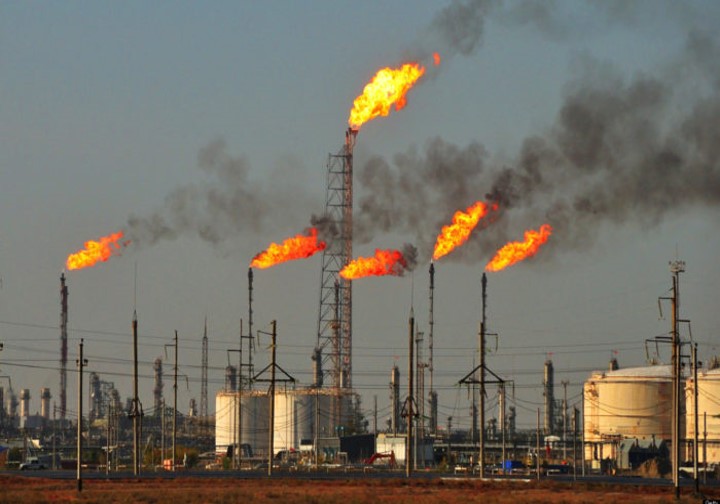
In his intervention on The Place of The Media in Reporting Desertification, Executive Director of Renevlyn Development Initiative (RDI), Philip Jakpor, blamed fossil fuel industry players such as Shell, Chevron, Eni, ExxonMobil, BP and TotalEnergies, among others as being behind the crisis
He also attributed the desertification challenge to Agro-industrial plantation companies including Wilmar International Limited, IOI Group and Agropalma, among the biggest contributors to the crisis.
Jakpor chided the industry for always deploying the language of false solutions, such as Geoengineering, Ocean fertilization, Ocean Pump, Biomass, Biodiesel, Biofuel, Clean Development Mechanism (CDM), Carbon Markets, Carbon Credits, Emission Trading, REDD and Net Zero to evade responsibility and accountability.
He stressed the need for journalists to deploy effective communication such as storytelling techniques with relatable examples, engaging audiences using audiovisuals, pictorials, as well as exposing workable mitigation and adaptation projects in frontline communities.
Speaking further, he lamented that even journalists were not paying adequate attention to the Great Green Wall initiative adding, “Nobody is talking about this initiative. About 15 percent of Nigeria’s Ecological Fund goes to Great Green Wall. In the 2026 budget, the $222 million goes to GGW. Journalists have not visited the GGW project sites
“Equally worrisome is the fact that the Lake Chad continues to shrink and nobody is talking about it. Lake Chad used to be 25,000 square kilometers in the 1960s and it has now shrunk to a mere 1,500 square kilometers and still shrinking.
“This comes with loss of livelihoods, migration issues and land owners and settler crisis. But to effectively report these challenges, journalists must avoid a situation in which they resort to only despair, sensationalism, arm chair reporting and ambiguities,” he stated.