In what participants describe as the first of its kind, the Nigeria Customs Service parleys journalists in the South-East and South-South comprising commands under Zone C, while seeking professional training for maritime reporters
By Jude Nzennaya, Port Harcourt
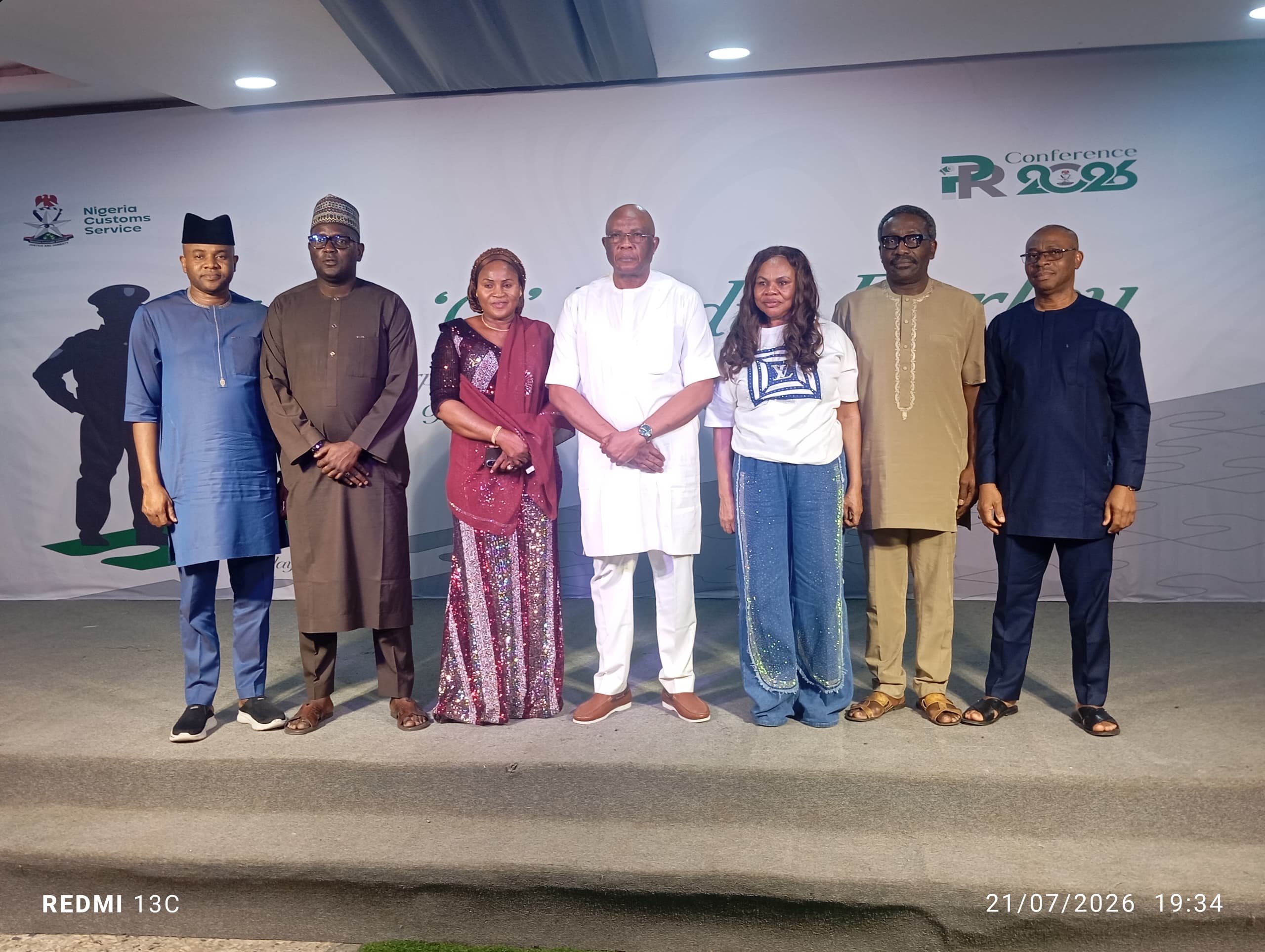
The ballroom of a Port Harcourt hotel buzzed with uniforms, recorders and notepads on July 21, 2026. This time it was not to announce seizure or a raid on smugglers as officers of the Nigeria Customs Service (NCS) usually do, but rather a very engaging dialogue between the officers and journalists.
For the first time, the NCS mobilized its National Public Relations Officer (NPRO), Abdullahi Maiwada, a Deputy Controller (DC) and reporters from the South East and South-South under one roof for a strategic media parley with the theme: Realigning Corporate Communication as a Strategic Driver of Institutional Effectiveness and Public Trust.
From the onset, Maiwada’s message was clear: Train the watchdogs on effective reporting of the activities of the NCS and beyond.
In his opening remarks, Maiwada said, “The media serves as the bridge through which government policies, Customs procedures, trade regulations and enforcement activities are communicated to stakeholders and the general public, and this can only be achieved through balanced reportage.
“Collaboration, transparency and trust are no longer optional for the Service. With the Nigeria Customs Service (NCS) tightening the noose on smuggling of small arms, hard drugs and other prohibited items across land and sea borders, accurate information is as critical as patrol boats and scanners.”
He attributed ongoing reforms in the Service to the Comptroller General of Customs, Bashir Adewale Adeniyi, noting that new investments in technology and intelligence gathering will only succeed if the media disseminates accurate, timely and responsible information, adding, “Trust remains the foundation on which the NSC operates of which the media plays a strategic and vital role in shaping public perception.”
The event was historic for two reasons. It was the first strategic media parley hosted by a National PRO specifically for the South East and South-South zones. And it was hosted in Port Harcourt, Nigeria’s second largest maritime and commercial hub.
Earlier in his welcome address, Chief Superintendent of Customs (CSP) Emmanuel Tangwa, the PRO Ibeto Area 5 Command and Chairman of the Local Organizing Committee, described the engagement as “robust, symbolic and strategic.”
“As one of Nigeria’s foremost maritime hubs, the South-South occupies a pivotal position in international trade, maritime security and national economic prosperity. Bringing this national conversation to the sea demonstrates the NCS’s recognition of the region’s contributions to national economic development and the successes recorded by the service.”
Tangwa commended the CGC Adeniyi for approving the 2026 Public Relations (PR) Conference and Maiwada for “pioneering” a PR unit that gives the Public Relations Officers (PROs) of all the commands a better sense of belonging.
Responding, Deputy Comptroller (DC) Esien Etim Esiet, Acting Controller, Eastern Marine Command, who patrols the nation’s eastern waterways, said illegally refined petroleum products, endangered species and hard drugs remain the highest smuggled items in the region.
“I just came back from Oron, where I went to auction seized petroleum products, almost everything goes through the water. If the water is quicker and a little bit security free, the smugglers go through the water,” he said.
Assistant Comptroller (AC) Haruna, who represented the Zonal Controller, Zone ‘C’ Owerri, listed codeine, tramadol, used cars, used tyres and clothes among items commonly seized across the Niger Delta.
Beyond seizures, journalists pushed for capacity development, while they asked questions ranging from freight and value differentials, mode of auction processes, number of persons prosecuted and the revenue target for 2026.
Maiwada’s response was direct, as he explained that Zone ‘C’ Area Controllers should work out modalities for the timely training and retraining of maritime journalists to understand Customs technicalities and terminologies.
Chairman, Rivers State Council of the Nigeria Union of Journalist (NUJ), Paul Bazia, who said the Union had shifted from “crisis reporting to developmental journalism, added, “Our responsibility is to communicate the truth and be transparent, so that we can build and sustain trust and assured Customs of the media’s commitment to timely and responsible reporting.
Assistant Comptroller General of Customs (ACG) Paschal Chibuoke, who is Zonal Coordinator Zone ‘C’ and Comptroller Salamatu Atuluku, CAC Port Harcourt Area 1, sent goodwill messages as they both commended the CGC’s leadership and the NCS-media partnership.
For Customs, the parley was more than PR. It was an admission that in an era where information travels at the speed of a tweet, silence creates a vacuum.
“As critical stakeholders in shaping the narrative of Nigeria’s economic security, trade facilitation, revenue generation and national development, we must ensure the Nigerian people receive accurate, balanced and timely information,” Tangwa further stated.
As the session draw to an end, the message was clear: If the NCS wants public trust at the nation’s borders, it must first invest in those who tell the story at their locations.