
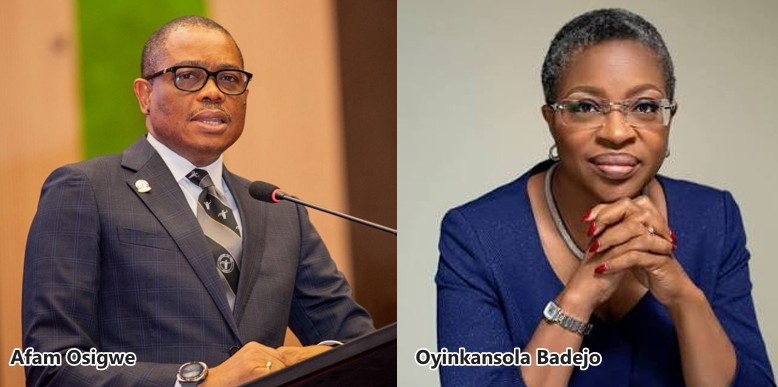
The Nigerian Bar Association (NBA) conducts an alleged manipulated election at which over 70 per cent of its members were disenfranchised, while others rush to court to stop the swearing in of the elected officials
By David Oladimeji
The Nigerian Bar Association (NBA), an institution long regarded as the conscience of the legal profession and a vocal advocate for constitutional democracy, is facing one of the most defining moments in its recent history following a legal challenge seeking to halt the swearing-in of its President-elect, Oyinkansola Badejo-Okusanya.
The lawsuit, filed by a group of aggrieved lawyers, has transformed what should have been a routine leadership transition into a debate about legitimacy, participation and the integrity of internal democracy within Nigeria’s largest professional body of lawyers.
But Badejo-Okusanya, a Senior Advocate of Nigeria (SAN), on Sunday, July 19, 2026 pledged to lead the legal association with fairness and accountability amid the controversy surrounding her election.
Badejo-Okusanya made the promise in her first speech following her emergence as NBA’s president-elect.
The female lawyer defeated two other senior lawyers in the presidential election.
She called on members of the legal profession to unite behind a common vision for the Bar.
She expressed her gratitude to lawyers across Nigeria for the confidence reposed in her, describing her victory as one that belongs to every member who believes the NBA can become stronger, more inclusive and more responsive to the needs of legal practitioners.
“I am truly humbled by the confidence that members of the Nigerian Bar Association have reposed in me by electing me to serve as your President,” she said.
“I extend my sincere appreciation to every member who participated in this election, regardless of the candidate you supported. The election is over. We are one Bar, united by a common commitment to the advancement of our profession and the defence of justice and the rule of law,” she maintained.
At the centre of the controversy is a striking statistic that has ignited intense discussion across the legal community. Of the NBA’s estimated 80,000 members, only about 26,000 reportedly participated in the election, representing approximately 30 per cent of the Association’s total membership.
While election laws and organizational constitutions often recognize outcomes based on valid votes cast rather than overall membership, the figures have nevertheless raised important questions about the level of engagement among lawyers.
For many observers, the issue extends beyond percentages. It touches on whether an association that consistently champions electoral reforms, constitutional governance and democratic accountability can ignore concerns about low participation within its own ranks.
The aggrieved lawyers argued that the circumstances surrounding the election warranted judicial intervention, urging the court to restrain the swearing-in ceremony until the legality of the electoral process is fully determined.
Their decision to seek judicial redress is itself a reflection of the profession’s commitment to resolving disputes through lawful means rather than through public confrontation or institutional discord.
Yet, the litigation presents the NBA with a delicate challenge. As the country’s foremost body of legal practitioners, its handling of the dispute will inevitably be measured against the very principles it expects governments, institutions and public officials to uphold.
The controversy also exposes a deeper institutional concern—voter apathy within professional associations. Whether caused by technological barriers, dissatisfaction with the electoral process, lack of confidence in candidates or simple indifference, low participation weakens the moral authority of elected leadership.
Leadership in democratic institutions is strengthened not only by victory at the polls but also by the breadth of participation that produces that victory. An overwhelming mandate inspires confidence, while limited participation often fuels questions that extend beyond legal technicalities.
The NBA has, over the years, positioned itself as a defender of democratic values, frequently commenting on national elections, constitutional crises and judicial independence. Consequently, its own electoral process is expected to meet equally high standards of transparency and credibility.
The pending court action is therefore more than an internal disagreement. It has become a test of institutional resilience and the Association’s willingness to subject itself to the same legal scrutiny it advocates for others.
Legal analysts observed that courts are not ordinarily concerned with public sentiment but with evidence, constitutional provisions and compliance with the Association’s electoral rules. Ultimately, the determination will rest on law rather than perception.
Nevertheless, perception remains a powerful force in public institutions. Even where legal requirements have been met, lingering doubts among members can erode confidence if not addressed through openness and effective communication.
The controversy should also prompt broader reflection on the NBA’s electoral framework. Questions surrounding voter accessibility, digital voting systems, membership verification and member engagement deserve careful examination to strengthen future elections.
Professional associations thrive when members feel that their votes matter and that every electoral process reflects fairness, inclusiveness and accountability. Restoring confidence requires continuous reforms rather than defensive reactions.
Regardless of the court’s eventual decision, the present dispute presents an opportunity for institutional introspection. Every challenge offers the NBA a chance to refine its electoral processes and reinforce its democratic credentials.
The legal profession has always maintained that justice must not only be done but must also be seen to be done. That enduring principle applies as much to the NBA’s internal affairs as it does to the nation’s courts and public institutions.
As lawyers prepare to argue the matter before the court, the outcome will likely extend beyond determining who occupies the NBA’s highest office. It may redefine expectations for electoral governance within professional bodies across Nigeria.
Ultimately, the controversy is not merely about numbers, court filings or leadership succession. It is about preserving the credibility of an institution that has long served as a guardian of the rule of law. For the NBA, the greatest victory may not come from who is sworn in, but from ensuring that its democratic processes command the confidence, trust and participation of the lawyers it exists to represent.


