Expert Advocates Eastern Marine Expansion
A maritime expert declares that the hitherto neglected Eastern Marine Ports Corridor remains an economic powerhouse in the country, urging Federal Government to make ports a national economic priority and placed in a level playing ground with their Western counterparts in Lagos
By Jude Nzennaya, Port Harcourt
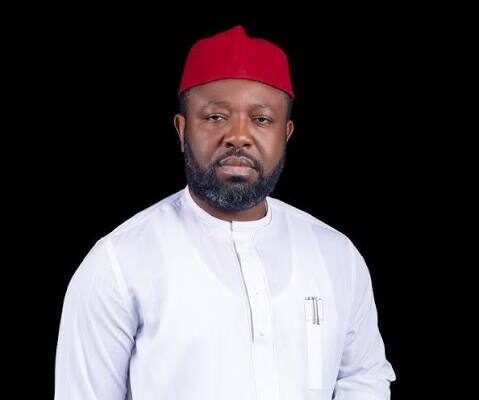
Chairman of the Association of Nigeria Licensed Customs Agents (ANLCA) Onne sea port chapter and Chairman of Godify Group, Chief Ifeanyi Isikaku, has called for a deliberate national agenda to transform the South East and South-South maritime corridor from a neglected asset into Nigeria’s next economic powerhouse.
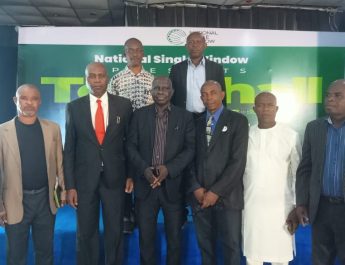
Isikaku made the call while delivering his address as Chairman of the National Conference of the Coalition of Maritime Journalists Association of Nigeria (CMJAN) held on November 26, 2026, in Port Harcourt, the Rivers State capital.
The conference with the theme, Unlocking the Potentials of the Blue Economy in the South East/South-South Maritime Corridor, brought together maritime regulators, port operators, freight forwarders, shipping companies and industry stakeholders.
Isikaku maintained that the Eastern maritime corridor did not lack potential, but lacked deliberate political will on the part of the government, strategic investments and coordinated leadership to convert the identified huge potential to prosperity.
“For too long, the conversation about Nigeria’s maritime economy has been dominated by developments around Lagos ports. While nobody disputes the strategic importance of Apapa, Tin Can and Lekki ports, it is economically unreasonable and a national security risk to concentrate all strategic ports in one region,” he said.
He noted that from Onne to Port Harcourt, Warri to Calabar and other coastal communities, the South East and South-South are blessed with strategic waterways, natural resources, industrial opportunities and access to international shipping routes that should make the corridor a major centre of maritime commerce.
The ANLCA Chairman interrogated why importers and manufacturers in Aba, Nnewi, Onitsha, Owerri, Enugu, Warri and Port Harcourt should continue to bear additional transportation and logistics costs when functional ports can be developed closer to them.
“Why should cargoes destined for businesses in the South East be unnecessarily concentrated around distant ports when the Eastern corridor can serve as a viable alternative hub?, he queried.
He insisted that Port Harcourt Port, Onne, Warri and Calabar Ports must not merely exist as alternative destinations to decongest Lagos whenever there is congestion, saying that they should be developed into competitive, efficient and commercially attractive gateways capable of handling substantial cargo volumes, he listed urgent needs to include rehabilitation of access roads, dredging of navigational channels, modernization of port facilities, provision of cargo handling equipment, efficient Customs processes and functional truck parks.
“A port without efficient access roads is an economic bottleneck. A port without modern facilities is designed to fail from the beginning. We cannot talk about unlocking the blue economy while road infrastructure to our ports remains a major challenge,” he stated, citing the Onne Port access road as a critical national economic infrastructure that deserves urgent attention.
Isikaku said the government should move beyond the emphasis on revenue collection and regulation to creating an environment where businesses thrive and investors can recover their investments.
He canvassed a comprehensive Eastern Maritime Development Policy that should address rehabilitation and modernization of the Eastern ports, dredging and maintenance of navigational channels, construction of access roads linking the ports to industrial centres, establishment of truck transit parks and logistics facilities, as well as expansion of rail connectivity.
Others are digitization of port operation, improved maritime security, development of inland container depots and dry ports, promotion of maritime training and local capacity, and strengthening of public-private partnerships [PPPs].
He also demanded an end to multiple charges, bureaucratic bottlenecks and operational inefficiencies that end up increasing the cost of doing business at the nation’s ports.
The Godify Group boss said the private sector must move from passive observation to active participation, adding, “The maritime industry thrives on investment, innovation and strategic partnerships. We need investors willing to develop cargo terminals, logistics parks, warehousing, and inland container depots.”
While stressing that private investments will only thrive where there is policy consistency, security, transparency and assurance of returns, he noted that Public-Private Partnership must move from conference rhetoric to practical economic engagement, saying, “The Eastern corridor needs investors, not just observers.”
As ANLCA Chairman, Isikaku further stated that freight forwarders and licensed Customs agents are central to port operations, not peripheral participants, stressing, “The efficiency of any port is directly proportional to the efficiency of its cargo clearance system,” and urged government agencies to see freight forwarders as their strategic partners.
He, however, charged his members to embrace professionalism, digital innovation, ethical practices and continuous capacity development, describing transportation as the lifeline of the Eastern corridor, noting that a situation where the cost of moving cargo from port to final destination is almost as expensive as importing it undermines maritime trade.
He also advocated urgent development of rail infrastructure, inland waterways and barge operations to reduce pressure on roads and lower costs, arguing that beyond ports and cargo, the nation’s Blue Economy offers enormous opportunities in sustainable fishing, aquaculture, marine tourism, shipbuilding, boat manufacturing and offshore services capable of creating thousands of jobs for youths in coastal communities.
He enjoined universities, maritime training institutions and private operators to collaborate in producing skilled manpower in marine engineering, logistics and port management.
He also charged the Federal Government, the Nigerian Ports Authority [NPA], the Nigerian Maritime Administration and Safety Agency [NIMASA], the Nigeria Ports Economic Regulatory Agency [NPERA], formerly the Nigerian Shippers’ Council, Nigeria Customs Service [NCS], South East and South-South State Governments and private investors to embrace a common development agenda for the Eastern corridor.
He commended COMJAN for providing a platform for sustained public discourse and urged journalists to continue to investigate challenges, question policy failures, highlight investment opportunities and hold institutions accountable.
“The Eastern maritime corridor is not asking for special treatment. It is asking for its rightful place in Nigeria’s maritime development agenda. We must move from a situation where Eastern ports are regarded as secondary alternatives to one where they become competitive centres of international trade.
“We demand a level playing field, same as opportunities accorded the Western corridor with even the Ogun Deep Seaport initiative. The time for excuses is over. The time for deliberate action is now,” Isikaku concluded.