While political analysts and the Civil Society Organizations (CSOs) continue to stress that the proviso which the National Assembly added to the Section 60 (3) of the amended Electoral Act 2026, to the effect that the Independent National Electoral Commission’s (INEC) Presiding Officers can deploy manual collation of results in the areas where there is no network coverage during the 2027 general election, is an open cheque that hands the All Progressives Congress (APC) the audacity to rig the election in its favour, the feeble approach by the opposition political parties to ensure that there would be a credible election next year raises concern
By Lukmon Ojerinde
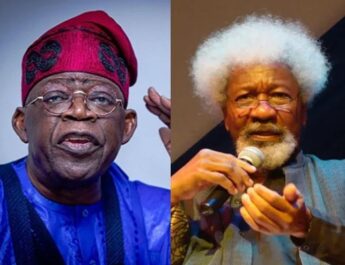
Opposition parties’ leaders have launched attacks last Thursday, February 26, 2026 against President Bola Tinubu and the ruling All Progressives Congress (APC)-led government over the latter’s plot to manipulate the 2027 general election in its favour. The leaders who vehemently rejected the amended Electoral Act 2026, accused President Tinubu and APC lawmakers of deliberate plot to make the upcoming election results collation more of manual than real-time electronic transmission. They alleged that the current hardship in the country caused by the APC misrule would not encourage the electorate to willingly cast their vote to the ruling party in 2027. Hence, opposition party leaders also accused APC lawmakers and Tinubu of deliberate move to deploy the proviso in the section 60 (3) of the new Act to rig the election, as they warned that it could spark a democratic crisis ahead of the 2027 general election.
The coalition, which brings together some of the country’s most prominent opposition voices, described the dispute over the electoral law as a critical test of Nigeria’s electoral credibility. It called for urgent amendments to the law and urged citizens, civil society groups and the international community to pay close attention to what it termed a growing threat to democratic rule in the country.
The position was contained in a statement read by Ajuji Ahmed, the national chairman of the New Nigeria Peoples Party (NNPP), and endorsed at the world press conference by Former Vice President Atiku Abubakar; Senator David Mark, national chairman of the African Democratic Congress (ADC), Ogbeni Rauf Aregbesola, national secretary of the ADC, former Anambra State Governor, Mr. Peter Obi, former Rivers State governor, Rotimi Amaechi, former Cross River State Governor, Senator Liyel Imoke, Senator Ireti Kingibe, representing the Federal Capital Territory, Abuja, Senator Dino Melaye and Secretary of the NNPP Board of Trustees, Buba Galadima, among other opposition figures who were present at the conference.
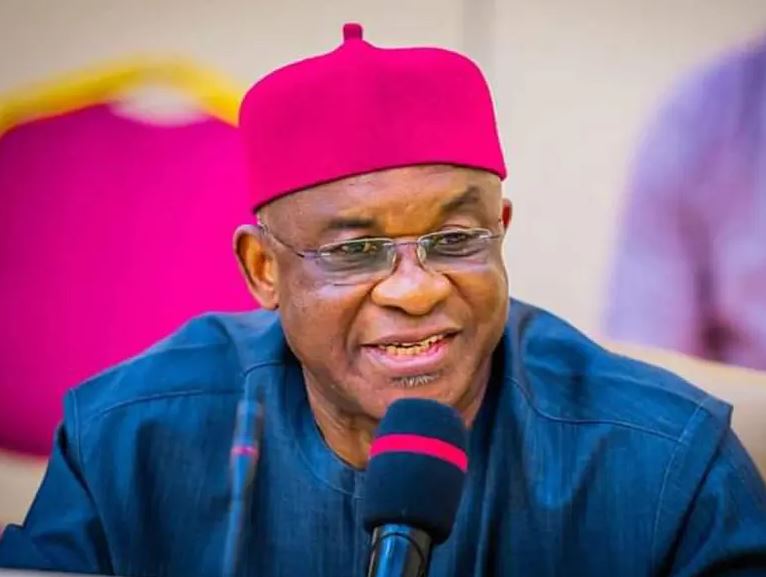
While reading the coalition’s position, Ahmed said the opposition leaders came together with a shared resolve to rescue Nigeria’s democracy and prevent the nation from sliding into anarchy.
The communique read, “We have met and decided to collectively articulate our position against the offensive and anti-democratic Electoral Act, 2026, as well as other related matters that equally portend danger to our democracy.
“We all saw as Nigerians across various divides expressed their discontent, how the peaceful citizens were met with violent repression and disdain by a government that has effectively become deaf, desperate and dictatorial.”
The leaders insisted that several provisions in the amended law, especially the changes affecting electronic transmission of results, could weaken the transparency and credibility of future elections.
According to them, “We therefore state unequivocally that the new Electoral Act is anti-democratic, and its implementation will undermine electoral transparency and sanctity of the ballot which are fundamental to free, fair and credible elections.
“This negation is unambiguously intended to provide a blank check to those who seek to manipulate election results by delaying the electronic transmission of results from the polling units to the IReV on the pretext of network failure.
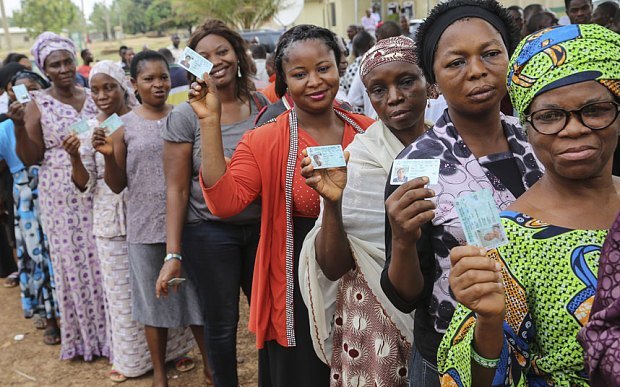
“The immediate past INEC Chairman stated on record that the BVAS equipment, which operates offline, had worked with over 90 per cent success rate across the nation.
“Denying mandatory real-time transmission of election results from the polling units on the basis of lack of communication network is not supported by evidence.
“Millions of our people who transact business daily with various financial platforms even from the remotest parts of the country know that the no-network argument is fraudulent.
“There is nothing undemocratic about indirect primaries, which create an electoral college for the selection of candidates in an objective, transparent and orderly manner.
“There can only be one reason for this particular amendment: to create chaos and disorder in the ranks of opposition political parties in the hope that they would not be able to present a candidate.”
The leaders of the opposition parties also made reference to the recent FCT Area Council elections as what it described as practical evidence of its concerns about the amended law.
“Perhaps, the most important lesson that the opposition learnt from the FCT election is that President Tinubu and his APC do not care about free and fair election.”
The amended Electoral Act 2026 became a new law on Wednesday, February 18, 2026 after its passage on Tuesday, February 17, 2026 when the two chambers of the National Assembly adopted the harmonized version. It will guide the INEC in the conduct of the 2027 general election. At its adoption during a joint plenary session of the two chambers, the opposition lawmakers had staged a walkout over the inclusion of the manual collation clause.
What baffled many analysts was the haste with which President Bola Ahmed Tinubu signed the controversial document into law. At the occasion of assenting to the Bill, President Tinubu said in Nigeria, electronic transmission of election results is merely supportive and not a replacement for manual transmission.
Signing of the amended Act came days after the Independent National Electoral Commission (INEC), released the time-table for the 2027 general elections.
The signing ceremony took place at the Presidential Villa, Abuja, in the evening of that Wednesday, with principal officers of the National Assembly in attendance.
Penultimate week, protests rocked the National Assembly complex as Civil Society Organisations (CSOs) and leaders of the opposition staged protests at the National Assembly entrance to pressure it to include real-time transmission of results from polling units directly to INEC’s central server known as the IReV.
They argued that transmission of results to the INEC viewing portal would reduce result manipulation and enhance credibility of the electoral process.
But the APC and some stakeholders expressed concerns over the technical feasibility of real-time transmission in areas with poor telecommunications infrastructure, making a case for an approach that would allow manual collation where electronic systems failed.
The failure of INEC’s IReV on the day of presidential election of 2023 elicited widespread allegations of rigging against Tinubu and APC.
Speaking against Tinubu’s hasty assent to the Bill, Ene Obi, a human rights and social justice advocate, argued that it was the fastest bill ever to be signed into law in the history of Nigeria’s democracy. “What was the speed about? You never give citizens opportunity to study the law and know what it’s all about.
“Tinubu protests were mere pretence. It was Tinubu’s bill, he was watching it, and he has passed what he wants.
“How can such law be used to do credible election?” Obi wondered.
In his opinion, Bode George, a former Deputy National Chairman of the People’s Democratic Primary (PDP), insisted that a rigged election in 2027 in favour of the APC, especially the presidential election, would elicit crisis in the country similar to that of the 1962 which happened in the Western Region.
According to George, “We cannot continue to deceive Nigerians. Let the will of the people prevail. In countries like Japan and India, elections are concluded within two days. Why must ours be endless and controversial?
We must learn from history. The 1962 Western Region crisis started with seemingly minor political manipulations. I recall what Baba Obafemi Awolowo said in the National Assembly when a state of emergency was declared in the West.
“Mr Prime Minister, why do you want to declare a state of emergency in the Western region? Was there violence in Mokola? Was there violence in Oghomosho? Was there violence in Ajegunle? Was there any violence in Badagry?’ he said, ‘you can only know the beginning of your crisis; nobody knows how it will end.
“I want to remind the Senate President; he had all these experiences when he was trying to be governor of Akwa lbom. I was the Deputy Chairman (South). We waded into it and supported the truth. Today, he’s my son.
Justice, fairness and equity are the pillars of any stable nation. Those in authority must be careful not to promote illegality. Power is transient. At the end of the day, history will judge everyone.
“This is a sensitive period for Nigeria. Ramadan and Lent coinciding this year are symbolic. Nigerians are praying for peace. We must not undermine those prayers with actions that erode public trust. No one can deceive God.” George warned in a recent interview.
A member of the House of Representatives who was among minority lawmakers who walked out of the chamber in protest, Afam Ogene, recalled that in 2013 APC had said it would persuade INEC to deploy electronic voting in 2015, he wondered why the ruling party now backed out of real-time electronic transmission of results across board.
Ogene said, “It is quite interesting that, even before the ink with which the parliament crossed the t’s and dotted the i’s on the clean copies of the Electoral Reform Amendment Bill dried up, the President has gleefully put his imprimatur on the bill, leaving Nigerians to wonder if, indeed, the executive had ample time to look through the document. Gone with the signing are the genuine concerns of apprehensive Nigerians regarding what the new Act portends to the integrity of the country’s future elections.
“In fact, Nigerians and indeed the world must now begin to see the clear difference between campaign promises and actual motives of political players. While it was convenient outside the confines of power to oppose incremental increase in the price of petroleum products, it is convenient to pronounce ‘subsidy gone’ when they have the opportunity. While it was right to advocate electronic voting in 2013, it has become obtuse, 13 years after, to even canvass a fragment of it: electronic transmission of results. While it was convenient to ask a sitting administration to quit on account of an alleged inability to halt the spread of insecurity, today, under their watch and allure of office, insecurity of multivarious forms has become an insistent byword.
“For emphasis, on January 13, 2013, the National Publicity Secretary of the defunct Action Congress of Nigeria (ACN), Alhaji Lai Mohammed, had in a statement said, ‘We assure INEC of our full support towards using electronic voting in 2015. We also appeal to all other political parties, Civil Society Organisations and indeed all Nigerians to join us in pushing for a system that will eliminate the role of thugs and sideline vote thieves during our elections, in addition to making our elections free, fair and credible.’
“Today, 13 years afterward, neither Mohammed, who moved on to become Nigeria’s Minister of Information and Culture for eight years, nor his principal, who is now our country’s current leader, sees anything worthy in electronic transmission of results, much more electronic voting. Now that they have had their way, we call upon Nigerians not to despair. On the contrary, the battle for our country’s redemption has only just begun.”
A public affairs analyst who asked not to be mentioned in print, told this medium that opposition parties should expect that the INEC Result Viewing Portal (IReV) must collapse in 2027 to allow for manual collation of results. He warned that the collation centres for the manual results across the country would be heavily secured by armed security agencies to make it difficult for agents of the opposition parties to notice how results would be manipulated.
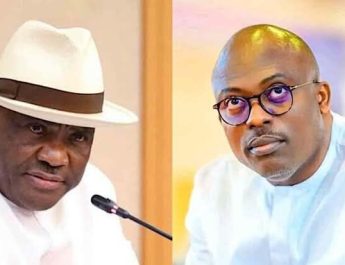
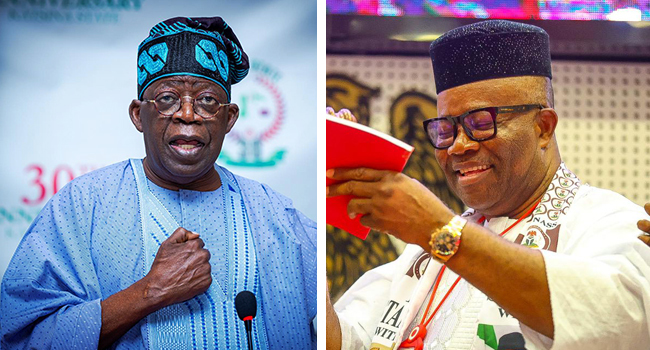
This commentator argued that should Tinubu lose in 2027 election, those he tagged unpatriotic elements, including Nyesom Wike the Minister of the Federal Capital Territory (FCT), Senate President Godswill Akpabio, former INEC Chairman Mahmoud Yakubu among others, may go to jail for corruption.
According to him, the INEC and APC would go out of their way to resist the effectiveness of the IReV so that votes of the electorate would not decide who wins the elections in 2027.
Meanwhile, there are speculations in the polity that the APC is plotting to retain the presidency for the next 100 years. This rumour has not been confirmed officially by the party.