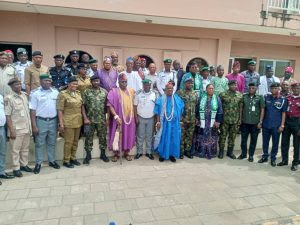

The Apapa Area Command of the Nigeria Customs Service (NCS) has long stood as the nation’s busiest and most strategic customs formation. Under the leadership of Comptroller Emmanuel Oshoba, the Command has not only consolidated its reputation as a revenue powerhouse but has also expanded its influence into trade facilitation, community engagement, and national security.
This report explores how Apapa Customs is redefining its role beyond revenue collection, positioning itself as a central player in Nigeria’s economic and socio-political landscape.
Driving Trade Facilitation and Port Efficiency
Apapa Port remains Nigeria’s primary maritime gateway, handling a significant share of imports and exports. Comptroller Oshoba who assumed leadership of the premier port command came with an unwavering focus. To achieve results, his administration prioritized the following:
Digital transformation: Effective deployment of e-customs platforms and automation tools to reduce clearance times.
Stakeholder collaboration: Engagement with shipping companies, freight forwarders, and terminal operators to streamline cargo movement.
Trade agreements alignment: Ensuring compliance with ECOWAS and AfCFTA protocols, thereby enhancing Nigeria’s competitiveness in regional trade.
The result has been improved efficiency, reduced bottlenecks, and greater confidence among international trading partners.
Strengthening National Security
While revenue generation may be the headline function, but Apapa Customs plays a critical role in safeguarding Nigeria’s borders:
Anti-smuggling campaigns: As the standard bearer, Oshoba’s records of interceptions of contraband ranging from narcotics to counterfeit goods, clearly, stands out.
Arms and ammunition control: This is even as his focus on preventing illicit inflows that could destabilize national security also remain an unmatched records.
Intelligence-led enforcement: The Apapa customs boss has also earned unarguable frontline position in leveraging surveillance technology and inter-agency cooperation to stay ahead of criminal networks.
These efforts underscore the Service’s dual mandate of protecting the economy while defending the nation.
Community and Socio-Cultural Engagement
Beyond its operational duties, Apapa Command has invested in building bridges with its host community:
Corporate Social Responsibility (CSR): This is evident in initiatives in education, healthcare, and youth empowerment.
Employment and training: Without noise being made, the Command under Oshoba’s watch has been creating opportunities for local residents and fostering skills development.
Trust-building: This unique operational approach has also produced outreach programmes that demystify Customs’ role and encourage voluntary compliance.
Indeed, these sorts of engagements have helped reduce friction between enforcement officers and the public, fostering a culture of cooperation.
Environmental and Sustainability Initiatives
Under Oshoba’s indefatigable leadership, in the current era of climate consciousness, Apapa Customs has begun to integrate sustainability into its operations:
Other areas the Command has excelled comprise of curbing illegal trade in endangered species and hazardous waste, supporting green port initiatives that align with international environmental standards; and promotion of responsible trade practices among importers and exporters. This positions the Command not just as a revenue collector but as a guardian of Nigeria’s ecological future.
Human Capital Development
Comptroller Oshoba’s leadership has emphasized the welfare and professionalism of officers:
Capacity building: Regular training programmes on compliance, technology, and international trade law.
Morale boosting: Improved welfare packages and recognition of outstanding officers.
Professional ethics: Reinforcing discipline and integrity as cornerstones of Customs service delivery.
This focus on human capital ensures that Apapa Customs remains resilient and adaptive in a rapidly changing global trade environment.
Conclusion
The Apapa Area Command under Comptroller Emmanuel Oshoba exemplifies how the Nigeria Customs Service is evolving beyond its traditional revenue mandate. By shaping trade facilitation, strengthening national security, engaging communities, and embracing sustainability, Apapa Customs is redefining its role as Nigeria’s gateway port guardian. This transformation reflects a broader vision, which is to say that that Customs is not merely a fiscal institution but a strategic partner in national development, diplomacy, and socio-cultural progress.