The Nigeria Customs Service (NCS) and the National Drug Law Enforcement Agency (NDLEA) establish a joint committee to strengthen their partnership in the war against narcotics trafficking and organized crime
By Innocent Chukwu
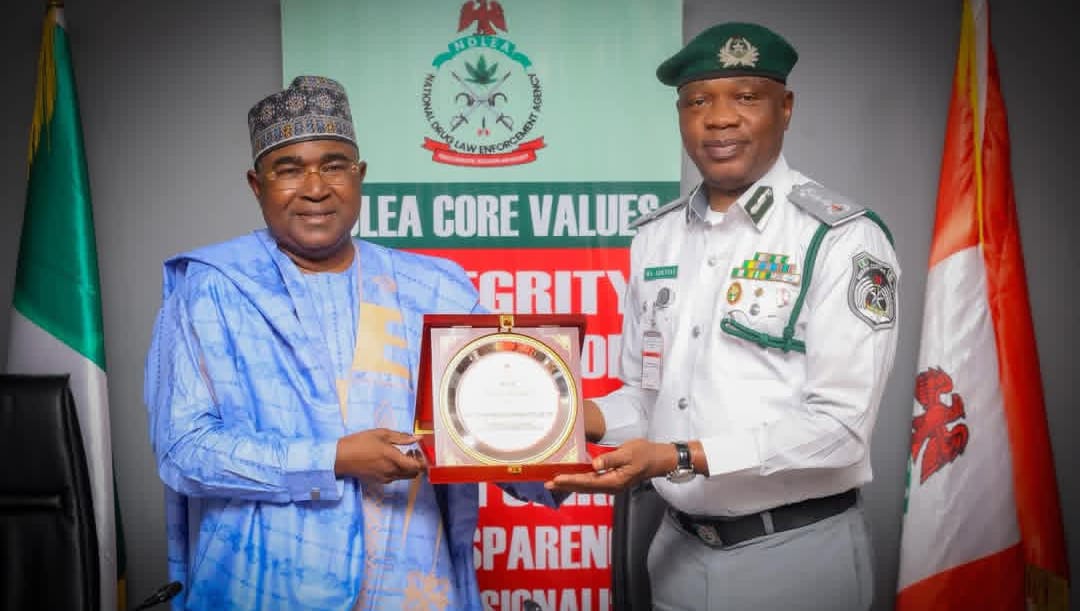
The Nigeria Customs Service (NCS) and the National Drug Law Enforcement Agency (NDLEA) have taken steps to strengthen their collaboration against narcotics trafficking and organised crime. The development followed a high-level meeting between the Comptroller-General of Customs (CGC), Bashir Adewale Adeniyi, and NDLEA Chairman/Chief Executive Officer, Brigadier General Mohamed Buba Marwa (rtd).
The strategic meeting held on Monday, April 27, 2026 at the NDLEA Headquarters in Jahi, Abuja, focusing on boosting the existing collaboration between the two agencies, improving accountability on seized narcotics cases and building a more coordinated enforcement structure between both agencies.
Leading members of his management team to the meeting, Adeniyi said the fight against drug trafficking has gone beyond domestic enforcement, he warned that Nigeria’s credibility before the international partners depends largely on how effectively local institutions work together.
Adeniyi said, “I came here directly from international engagements in Europe and Asia, and at every table narcotics trafficking remained a major issue. The West African corridor is under serious watch.
“The agreements we signed abroad will only carry value when our operational credibility at home supports them. If intelligence shared with Nigeria is not pursued to interception, prosecution and destruction, our standing is weakened”.
The CGC hinted that the NCS had continued to make major seizures and handovers to NDLEA, particularly through the Apapa Area Command and other operational formations.
The Customs boss, however, stressed that interdiction alone was not enough, he called for stronger post-seizure accountability, regular prosecution updates and transparent destruction procedures.
According to him, “Interdiction is only the first act of enforcement, not the last. Where narcotics are transferred but not promptly destroyed, where prosecution advances without feedback, and where exhibits are separated from originating officers, then the chain of enforcement is incomplete.”
He proposed a fresh framework between both agencies, including joint destruction of seized drugs where suspects are not arrested, periodic case status reports, coordinated court appearances and standing liaison channels at command level.
“We have not come here to apportion blame. We have come to design the next phase of a partnership that has carried Nigeria this far and must now carry it further”, the CGC added.
In his response, the NDLEA Chairman described the concerns raised by Customs as legitimate and timely, and assured the CGC that the agency remained committed to transparency, accountability and professional cooperation.
Marwa said, “The concerns relating to post-transfer accountability, prosecution outcomes and disposal processes are valid concerns. We must move beyond ceremonial handovers to a structured and mandatory reporting framework under which NDLEA provides formal updates on investigations, prosecutions and final disposal of Customs-originated seizures.”
Marwa proposed the immediate establishment of a joint committee to review grey areas in the existing Memorandum of Understanding signed by both agencies under previous administrations.
According to him, the committee would recommend clearer procedures and, where necessary, draft a supplementary agreement for approval by both leaderships, stating, “Today’s meeting is timely. It gives us the opportunity to discuss areas of concern frankly and strengthen our collaboration.”
The two agencies reached a deal on a comprehensive collaborative framework to streamline operations and enhance inter-agency synergy.
The agreement was reached following which a communiqué was signed by Marwa and Adeniyi.
Femi Babafemi, spokesman of NDLEA said, “Both agencies acknowledged that the increasing complexity of transnational organized crime, including drug trafficking, requires a more sophisticated, united institutional response.
“The new framework is designed to eliminate operational overlaps, minimize inter-agency friction, and create a seamless flow of intelligence.”
Speaking on the significance of the partnership, the heads of both agencies reaffirmed their commitment to fostering mutual respect and professionalism, while discharging their respective mandates to safeguard national security and facilitate lawful trade.
Babafemi added, “The communiqué outlines several critical areas of immediate cooperation, including the establishment of a structured and secure platform for the exchange of actionable intelligence to preempt criminal activities; the formation of joint task forces at critical intersection points, governed by clearly defined leadership and operational guidelines.”
“Other highlights of the communiqué are the commitment to respecting the specific legal functions and jurisdictions of each agency to avoid undue interference; the constitution of a standing inter-agency committee tasked with resolving any operational disagreements promptly and amicably as well as closer collaboration at all seaports, airports, and land borders to ensure efficient enforcement without duplicating efforts or delaying legitimate trade.
“Both Marwa and Adeniyi reiterated that the partnership is a national interest priority by aligning the strengths of the NDLEA and the Nigeria Customs Service, to create a more formidable barrier against the trafficking of illicit substances”.