After three years of what many Nigerians regard as era of broken promises, President Bola Ahmed Tinubu rolls out the drums to celebrate his administration’s achievements, but many analysts insist that his war of statistics does not tally with the misery and suffering in the land which are exacerbated by insecurity, power failure, unemployment, inflation and corruption
Nigeria entered May 2023 with anxious hope and cautious optimism as President Bola Ahmed Tinubu took over the reins of power with thunderous promise to “Renew Hope.” Tinubu’s renewed hope agenda is encapsulated in his promise to create jobs, fight insecurity that is tearing Nigeria to shreds, fix electricity, fight corruption, fix the economy which was battered by the administration of his immediate predecessor, Muhammadu Buhari, as well as ensure better life for millions of Nigerians living in squalor. citizens expected relief from years of economic suffering, insecurity and unstable governance. Three years later, however, many Nigerians say those promises have faded into painful echoes swallowed by hardship, fear of uncertain future and frustration. More annoying to Nigerians is Tinubu’s campaign promise that if he failed to fix the power sector, the electorate should not vote him if he sought reelection. Unfortunately, to the chagrin of Nigerian voters, Tinubu is passionately pushing to occupy the Aso Rock Presidential Villa for another four years despite the unfulfilled promises.
Across the nation, from the dusty villages of the North to the bustling commercial streets of Lagos, the mood is heavy with disappointment. What was sold as economic reform has translated into rising hunger, collapsing businesses and unbearable living costs. Citizens who once endured hardship with patience now speak openly with anger and despair.
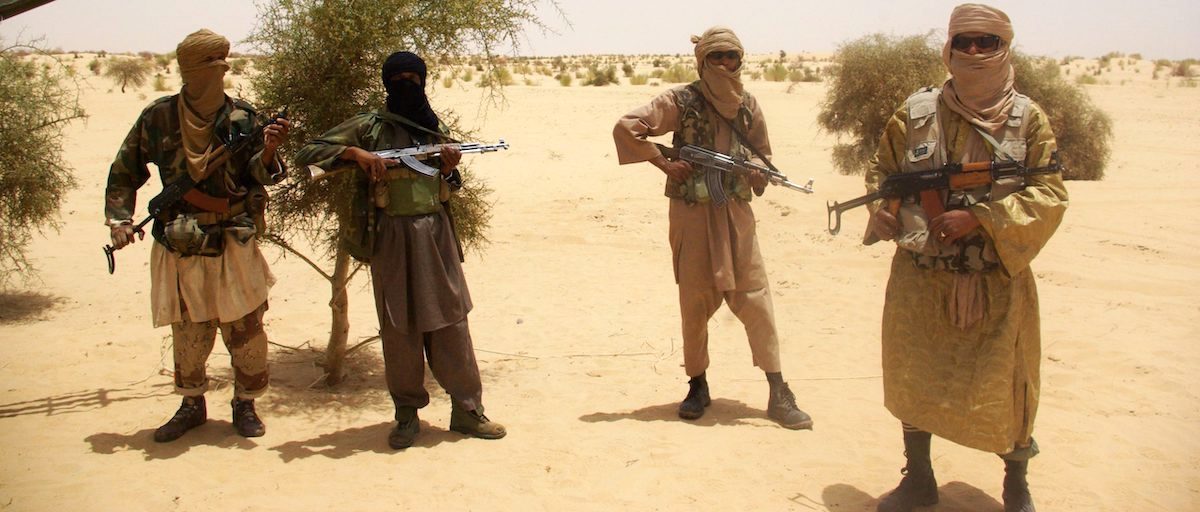
Insecurity remains the darkest stain on the administration’s scorecard. Terrorists, bandits and kidnappers continue to roam freely across highways and rural communities, turning once peaceful settlements into theatres of blood and panic. Travelers now embark on journeys with silent prayers, uncertain whether they will arrive alive.
The screams of abducted victims and grieving families have become chilling sounds in the Nigerian landscape. Communities in Benue, Plateau, Zamfara, Kaduna and parts of the South west continue to bury their dead while government assurances often sound repetitive and powerless. In many areas, the state appears weaker than the criminals tormenting innocent citizens.
Schools, once symbols of hope and enlightenment, have become hunting grounds for kidnappers. Terrified parents now fear sending their children to classrooms located in vulnerable communities. Teachers abandon rural schools, while pupils study under the shadow of possible abduction or violent attacks.
Farmers who feed the nation are among the worst victims of insecurity. Vast farmlands have been deserted as armed gangs invade agricultural communities, kidnap farmers and demand huge ransoms. The consequences are visible in the markets where food prices rise daily like a raging wildfire consuming households’ income.
In a damning revelation, a coalition of Civil Society Organisations (CSO’s) recently raised the alarm to the effect that no fewer than 19,980 persons have been killed, while 12,362 others were abducted across Nigeria since Tinubu assumed office as President on May 29, 2023.
In the same vein, former Vice President Atiku Abubakar criticised the Tinubu-led administration, saying that kidnappings and violent attacks have become so rampant that many Nigerians now “budget for ransom payments the same way they budget for school fees or rent.” Atiku slammed the administration’s attempt to justify Nigeria’s growing debt burden despite worsening economic hardship and insecurity across the country.
The coalition of CSOs, in a joint statement issued to commemorate the Ninth National Day of Mourning with the theme ‘Nigerian Lives Matter’ and signed by 52 organisations, cited data collated from massattrocities.org that at least 1,486 security personnel were also killed in active duty during the period.
The CSOs include Global Rights, BudgIT, Centre for Social Justice, Centre for Transparency Advocacy (Centre LSD), Civil Society Legislative Advocacy Centre (CISLAC), Centre for Information Technology and Development (CITAD), Citizens Advocacy for Social & Economic Rights (CASER), Clean Technology Hub, and CLEEN Foundation.
According to the report, at least 865 students have been abducted from schools across the country since 2023, while thousands of children remain displaced or out of classrooms, worsening Nigeria’s out-of-school children crisis.
The coalition also expressed concern over alleged extra-judicial killings and civilian casualties during security operations, including repeated incidents of accidental airstrikes on civilian communities.
The groups stated that the figures, which exclude casualties from regular crimes such as armed robbery, highlight the severity of insecurity in a country “that insists it is not at war.”
DIRECTOR of Research, NIIA, Prof. Joshua Bolarinwa, said the Children’s Day event was not merely a celebration of children but also a moment for reflection on the growing threats facing children globally.
Bolarinwa lamented that schools, which should serve as sanctuaries of learning and safety, had increasingly become targets of terror and violence, while borders meant to define sovereignty had turned into channels for trafficking and exploitation.
Head, International Law Unit, NIIA, Dr Rita Agu, speaking on ‘From Global Commitments to Local Action: Why Child Protection Laws Often Fall Short’, stressed that “child protection goes beyond signing international agreements and passing laws”, noting that implementation remains the biggest challenge.
She explained that despite global commitments such as the United Nations Convention on the Rights of the Child and the Sustainable Development Goals, many children still suffer abuse, neglect, violence, exploitation, bullying, and unsafe learning conditions.
According to her, weak implementation, lack of awareness, inadequate resources, and the culture of silence often prevent vulnerable children from getting help.
Dr Agu urged teachers, parents, and communities to become more proactive in identifying signs of abuse among children, including emotional withdrawal, fear, frequent injuries, poor academic performance, and unusual silence.
She also encouraged children to speak up whenever they feel unsafe and to report suspicious behaviour to trusted adults, insisting that protecting children must become a collective responsibility.
Senior Research Fellow at the NIIA, Dr Philippa Inyang, highlighted the growing role of international partnerships in combating child trafficking and cross-border abduction.
Director-General, NIIA, Prof. Eghosa Osaghae, welcoming the children, assured them of a bright future, adding that many of them had the potential to become governors, doctors, lawyers, diplomats, entrepreneurs, and global change-makers.
Also, research fellow, NIIA, Beauty Ogbologu, said that safe schools were not a privilege but a minimum standard of child protection required under international law, while stressing that children cannot effectively learn in environments threatened by violence, abduction or armed conflict.
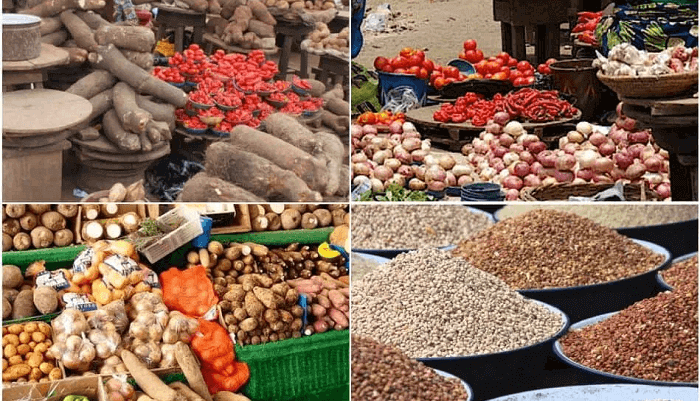
Food insecurity has quietly transformed into a national disaster. Rice, garri, yam, beans and bread have become luxury items in many homes. Families now ration meals while parents painfully skip food so their children can eat. The hunger spreading across the land is no longer hidden behind statistics; it stares openly from tired faces in overcrowded markets and hungry homes.
The removal of fuel subsidy, though defended by government officials as necessary economic surgery, unleashed devastating consequences on ordinary Nigerians. Transportation fares exploded overnight. The prices of goods doubled and sometimes tripled. Workers watched helplessly as salaries became almost worthless in the face of relentless inflation.
Inflation itself has become an invisible monster terrorizing the country more viciously than armed robbers. Market women no longer quote stable prices because costs change almost daily. Every visit to the market feels like entering a battlefield where survival depends on how much cash one carries.
The naira’s collapse deepened the national agony. Imported products, medicines and industrial raw materials became painfully expensive as businesses struggled to access foreign exchange. Manufacturers who once thrived now operate under suffocating pressure, unable to cope with rising operational costs.
Darkness also continues to mock government promises. Despite repeated assurances of improved electricity supply, millions of Nigerians still live under epileptic power conditions. Entire communities spend days in blackout while the national grid repeatedly collapses like a wounded giant unable to stand.
For small business owners, the electricity crisis has become a death sentence. Tailors, frozen food sellers, cybercafés, welders and artisans spend enormous amounts on petrol and diesel just to survive. Many businesses that once provided jobs have shut their doors permanently, crushed by unbearable energy costs.
Unemployment has equally become a ticking time bomb. Thousands of graduates roam the streets clutching certificates that no longer guarantee opportunity. Youth frustration is rising dangerously as dreams collapse under economic pressure. Many skilled Nigerians now desperately seek escape routes abroad in the growing “Japa” wave draining the nation of talent and productivity.
The departure of multinational companies from Nigeria has further exposed the fragile state of the economy. International firms that once viewed Nigeria as Africa’s biggest investment destination are now quietly exiting or reducing operations. Some cite forex instability, hostile business conditions and policy uncertainty as reasons for their departure.
The exit of companies like Procter & Gamble, GlaxoSmithKline and others sent shockwaves through the business community. Factories that once buzzed with activity now stand quieter while workers face layoffs and uncertain futures. Investors watching from abroad interpret these exits as warning signs about the country’s economic health.
Political instability has also intensified national anxiety. Opposition parties accuse the ruling government of intolerance and suppression while citizens complain about shrinking democratic space. Protest movements driven by hunger and frustration continue to emerge across different regions of the country.
Within political circles, fierce battles for power ahead of the 2027 elections are already distracting leaders from governance. Alliances are collapsing, defections are increasing and political gladiators appear more focused on retaining power than solving the suffering confronting ordinary Nigerians.
The widening gap between the political elite and struggling citizens has fueled public resentment. While millions battle hunger and unemployment, government officials continue to travel in convoys, approve luxurious projects and display extravagant lifestyles that offend public sensibilities. To many Nigerians, leadership now appears disconnected from reality.
Even sectors like healthcare and education remain trapped in crisis. Hospitals battle shortages of personnel and equipment while doctors continue to flee abroad for greener pastures. Public universities struggle with poor funding and recurring uncertainty, leaving students trapped in an educational system gasping for survival.
Three years after the loud declaration of “Renewed Hope,” many Nigerians insist that hope itself is under attack. Insecurity stalks the highways, darkness suffocates businesses, inflation crushes salaries and hunger invades homes. For millions across the nation, the Tinubu administration’s scorecard is not written in glowing speeches or government statistics, but in the painful realities of empty pockets, fearful nights and broken dreams.
President Bola Tinubu has defended the economic reforms introduced by his administration, saying Nigeria had avoided fiscal collapse and was now showing signs of recovery after three years of “difficult but necessary decisions”.
In a nationwide address to mark the third anniversary of his administration, Tinubu acknowledged the hardship caused by the removal of fuel subsidy and foreign exchange reforms but maintained that the measures had begun to stabilise the economy and restore investor confidence.
The President said his administration inherited “profound economic and structural difficulties”, including mounting fiscal pressures, unsustainable subsidies, declining revenues, exchange-rate distortions, rising debt-servicing costs, insecurity and weakening public confidence in institutions.
“At the height of the subsidy regime, Nigeria was spending as much as N18.4 billion daily to sustain petrol subsidies—over N4 trillion in 2022 alone—resources that could have been invested in roads, healthcare, education, housing, and critical infrastructure,” he said.
He added that multiple exchange-rate windows and forex arbitrage had cost the country more than N8 trillion in three years through “rent-seeking and speculative practices”.
According to Tinubu, the situation required urgent intervention to prevent a deeper national crisis.
“Had we refused to act, our nation would have drifted toward fiscal breakdown, worsening poverty, and severe economic uncertainty. Together, we chose reform over ruin and decisiveness over hesitation.”
The President admitted that the reforms triggered a sharp rise in the cost of living and placed pressure on households and businesses across the country.
“These decisions came with sacrifice. The rising cost of living triggered by our measures placed enormous pressure on families, workers, and businesses,” he said.
“I remain deeply conscious of those sacrifices, and I assure you: your sacrifice has not been in vain.”
Tinubu said the economy was now “more competitive and better positioned for sustainable growth” than it was in 2023, adding that public finances had improved while states and local governments now had more resources to invest in development.
He also cited gains in the capital market, saying the All-Share Index had risen from 53,000 in 2023 to 250,000 in 2026, while market capitalisation increased from N30 trillion to N160 trillion.
“Companies are declaring record profits and dividends,” he said.
The President highlighted infrastructure development as one of the major achievements of his administration, stating that over 2,700 kilometres of highways and major roads were under construction, reconstruction or rehabilitation nationwide.
The projects, he said, included the Lagos-Calabar Coastal Highway, Sokoto-Badagry Super Highway, Abuja-Kaduna-Zaria-Kano Road and the East-West Road.
“Significant sections are already completed or nearing completion, improving transportation, reducing travel time, boosting regional trade, and creating thousands of jobs,” he said.
Tinubu also said rail modernisation projects were ongoing to improve connectivity and logistics across the federation.
In the oil and gas sector, the President said reforms introduced by his administration had attracted fresh investments from international oil companies.
He said the $5 billion NLNG Train 7 project was nearing completion and would boost liquefied natural gas production and exports.
“Local refining capacity has improved our energy security. With large-scale domestic and modular refineries operational, Nigeria is reducing its dependence on imported petroleum products and conserving foreign exchange,” he said.
On electricity supply, Tinubu said the government was addressing long-standing challenges in the power sector through investments in transmission infrastructure, renewable energy and grid expansion.
“Our administration is clearing legacy obligations, expanding transmission infrastructure, investing in renewable energy, and strengthening the national grid because no modern economy can grow in darkness,” he said.
The President also outlined interventions in agriculture, education, housing and healthcare.
According to him, government programmes had supported millions of farmers through improved seedlings, fertilisers, mechanisation and irrigation, while agricultural corridors were being opened to strengthen supply chains and reduce pressure on household incomes.
Tinubu said the Nigerian Education Loan Fund had provided more than 1.5 million students access to higher education, with over N282 billion disbursed in student loans.
He added that the Renewed Hope Housing Programme and projects by the Federal Housing Authority were delivering more than 10,000 housing units across 14 states and the Federal Capital Territory.
“Our consumer credit initiative, CREDICORP, is opening up new economic opportunities for workers and families,” he said.
The President said thousands of primary healthcare centres were being revitalised, while health insurance coverage for vulnerable Nigerians was being expanded.
Tinubu also spoke on telecommunications and digital development, saying steps had been taken to restore investor confidence in the telecoms sector after years of operational challenges.
“Telecom operators are expanding networks, investing in infrastructure, recruiting Nigerian talent, and widening digital access across the country,” he said.
Addressing young Nigerians, the President described youths as “the engine of Nigeria’s future” and said the government was investing in digital skills, innovation, technical education and enterprise support.
On security, Tinubu said the Armed Forces and security agencies had intensified operations against terrorists, kidnappers, bandits and oil thieves.
“While challenges remain, many communities and highways are becoming safer and more economically active,” he said.
“We continue investing in intelligence, surveillance, logistics, technology, and inter-agency coordination.”
The President, however, acknowledged that the country had not overcome all its challenges.
“We have not solved every problem, and we are not yet where we want to be. But the foundation for recovery has been laid,” he said.
He said the next phase of governance would focus on ensuring that the benefits of reforms were more directly felt by ordinary Nigerians through lower food and transportation costs, expanded enterprise opportunities and job creation.
“We shall achieve this task by continuing to ensure that food prices, which have largely come down from their peak in 2023/2024, remain low,” he said.
Tinubu called for national unity and urged Nigerians to remain hopeful despite present difficulties.
“We must choose hope over despair, unity over division, and nation-building over narrow interests,” he said.
Meanwhile, the pan-Yoruba socio-political organisation, Afenifere, yesterday criticised the administration of President Bola Tinubu, describing the last three years as a period marked by poverty, unemployment, insecurity and weakening democratic institutions.
The group, however, faced opposition from an All Progressives Congress (APC) chieftain, Chief Jamiu Ekungba, who defended the administration, insisting that Tinubu had taken difficult decisions that previous governments had avoided for decades.
In a statement signed by its Leader and National Publicity Secretary, Oba Oladipo Olaitan and Prince Justice Faloye, Afenifere said it was worried about what it described as the current direction of Nigeria’s democracy.
The group urged the administration to abandon what it called a drift toward one-man rule by allowing credible opposition voices and parties to thrive.
The statement read: “On May 29th, formerly Democracy Day, now Inauguration Day, Afenifere is fearful of the current course of our democracy, and commiserates with Nigerian citizens following three years of the inauguration of this maladministration that has bred poverty, unemployment, mass killings and kidnappings, tampering with democratic federalism and subjugation of other arms of government.
“Across the world, citizens are motivated by their governments either with Summum Malum – fear of ultimate evil – violent death, poverty, tyranny, or Summum Bonum – promise of ultimate good – homes, prosperity, security.
“For an administration that came to power on a mantra of renewed hope, we can only dare to hope that our electoral system can do the right thing by the next Inauguration Day.”
Afenifere accused the APC-led government of failing to address insecurity and criticised the absence of state and community policing.
“The nightmare of ultimate evil has become a reality under APC administration with teachers being beheaded, children being kidnapped and villages ransacked and displaced,” the statement said.
“The ongoing kidnapping of students and teachers and gruesome murders in Kwara, Oyo and other states is a painful reminder of the Tinubu government’s culpable wilful negligence of not restructuring our security architecture, especially the failure to create state and community police.”
The group also alleged that democratic institutions were being undermined under the current administration.
“The continued institutional bullying of opposition parties, labour and student unions is a defiant march towards fascism. The independence of our electoral and judicial institutions is being compromised. Instead of our electoral system evolving to a higher state, new reforms have degraded its moral compass,” it stated.
On the economy, Afenifere faulted the administration’s economic policies, saying they had worsened poverty and hardship across the country.
However, APC chieftain Ekungba defended Tinubu’s reforms, saying the President confronted economic challenges successive administrations avoided because of political considerations.
According to him, the economy would remain the major issue ahead of the 2027 general election because Nigerians were primarily concerned about inflation, cost of living and purchasing power.
“For millions of Nigerians, the election may revolve around one question: Are we better off than we were four years ago?” he said.
Ekungba maintained that the removal of petrol subsidy was necessary despite the hardship that followed.
“The problem of economic hardship did not start today. Successive governments avoided confronting subsidies because of political fear. President Tinubu took the risk because he believed the country could no longer sustain it,” he added.
He also linked worsening insecurity to opposition from interests affected by the administration’s reforms.
According to him, some powerful groups that benefited from the previous subsidy regime might be working against the government through political and economic sabotage.
Ekungba urged the ruling party to improve engagement with citizens and communicate the long-term benefits of the administration’s reforms more effectively.
He added that developments in the next 12 months could shape the political landscape ahead of the 2027 elections.
“The next 12 months may eventually determine whether Tinubu consolidates power through improved governance and opposition disunity or whether worsening economic realities and shifting political alliances create the conditions for a major political upset in 2027,” he said.
In a related development, Governor Seyi Makinde of Oyo State urged the Federal Government to stop “deceiving Nigerians” over the proposed creation of state police, insisting that states already possess the legislative capacity to establish their own policing structures.
Makinde made the remarks during the governorship and legislative primary elections of the Allied Peoples Movement (APM) held at the Watershed Event Centre, Old Ife Road, Ibadan.
The governor said insecurity remained one of the major priorities of his administration and defended the establishment of the Oyo State Security Network Agency, codenamed Amotekun, as a response to security challenges in the state.
“Some people will know insecurity was one of the major pillars of this administration when we established Omitutun phase one and phase two, and it will remain a major pillar. Before this government’s emergence, there was nothing like Amotekun in Oyo State. We wanted State Police. It was because we couldn’t get the State Police that we established Amotekun as a stopgap. They should stop wasting Nigerians’ time,” he said.
Makinde maintained that state police could be created through state legislatures without waiting for what he described as prolonged bureaucracy involving the Federal Government and the Nigeria Police Force.
He said the creation of Amotekun in the South-West provided a model for how state policing structures could emerge through legislation passed by state Houses of Assembly.
“We know how we established Amotekun. The Speaker of the Oyo State House of Assembly is here. We passed a common law in the whole of the South-West. The whole Houses of Assembly in all states in the South-West passed the law, and that led to the creation of Amotekun. The only state that didn’t create Amotekun is Lagos State, and we know it is because their boss didn’t want Amotekun,” he said.
The governor called on the Federal Government to empower state assemblies and support efforts toward decentralised policing.