
Eventually, the South west geopolitical zone dominated by the Yoruba ethnic stock, appears to have succumbed to the deadly invasions of the ISWAP, Boko Haram terrorists and bandits who hold the Northern regions captive
By David Oladimeji
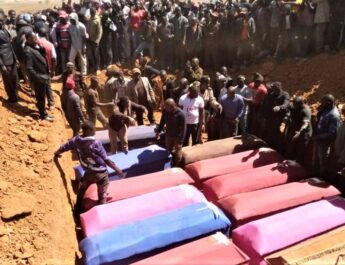
The 2022 church massacre in Owo Local Government Area (LGA) of Ondo State in 2022 signposted the conquest of the Yorubaland by the dreaded Islamic terrorists, including the Islamic State of West Africa Province (ISWAP), Boko Haram insurgents and bandits. These terrorist groups have held sway in the three regions of the Northern Nigeria for almost two decades now.
Precisely on June 5, 2022, terrorists suspected to be ISWAP members attacked the Saint Francis Catholic Church, Owo, Ondo State where they slaughtered scores of Christian worshippers. At the last count, over 80 worshippers were gunned down by the terrorists.
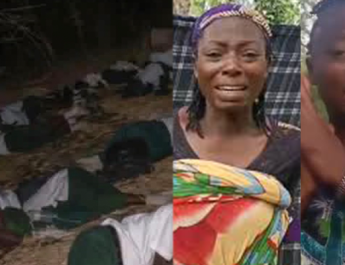
On May 15, 2026, armed men in military camouflage attacked three schools in the Ahoro-Esinle and Yawota axis of Oriire Local Government Area, Oyo State, abducting 39 students, seven teachers, and a toddler. The tragic incident resulted in the tragic killing of a mathematics teacher, Michael Oyedokun, and sparked widespread protests and nationwide security concerns.
Reports indicate that at about 8a.m. on the said day, heavily armed men on motorcycles stormed Community High School, Ahoro-Esiele, and two primary schools, Yawota Baptist Nursery/Primary School and L.A. Primary School. The dare-devil terrorists abducted 39 students and seven teachers, including the Vice Principal, Rachael Alamu, and a two-year-old toddler who was with a staff member.
Shortly after the abduction, a disturbing video emerged showing the brutal beheading of a kidnapped mathematics teacher, Michael Oyedokun, which caused public outrage. Videos later surfaced of the abducted principal pleading for government attention.
The Oyo State governor, Seyi Makinde confirmed the deployment of security agencies and local hunters to comb the forests for the victims. The government also ordered the immediate closure of schools in surrounding communities as a precautionary measure.
On its part, the Defense Headquarters announced intensified rescue efforts, and several suspects were arrested in connection with the kidnapping.
The above gory incidents, security analysts insisted, are signs of the conquest of the Yorubaland in the South west Nigeria by terrorists, and the inability of its leaders to secure the region. Notably, the abducted children and adults were still in captivity when the country celebrated this year’s Children’s Day anniversary, thus fueling the suspicion that the region has fallen prostrate to the fire powers of the marauders.
There was a time when Yorubaland stood proudly, the symbol of peace, civilization and progress in Nigeria. The South west was respected as a region where education flourished, commerce expanded and communities lived without the daily fear of terror. From Lagos to Ibadan, Akure to Abeokuta, the Yoruba homeland once represented stability in a country struggling with insecurity. Today, that image is collapsing under the weight of bloodshed, kidnappings and brutal violence.
Fear now walks openly across Yorubaland like a conquering force. Highways have become hunting grounds for kidnappers. Forests have turned into criminal camps. Rural communities now live under permanent tension as armed gangs strike with frightening boldness while helpless citizens pray not to become the next victims.

The horror reached a heartbreaking level with the killing of the school teacher in Oyo State — a tragedy that sent shockwaves across the South west and exposed the terrifying collapse of security around ordinary citizens in the zone. A profession once regarded as sacred and noble has now become vulnerable to the cruelty of criminals who no longer respect humanity, dignity or innocence.
That teacher reportedly left home like every hardworking Nigerian searching for daily bread, never knowing the journey would end in tragedy. By the time news of his death spread, grief and outrage had already swallowed communities across the region. Parents wept. Colleagues mourned. Citizens struggled to understand how a man dedicated to shaping young minds could become another victim of rising lawlessness.
The emotional pain surrounding the incident was made worse by the disturbing circumstances of his death. The brutality shocked many people because it represented more than an attack on one individual; it symbolized the frightening descent of society into fear and barbarity. It was a reminder that insecurity is no longer distant news but a cruel reality touching ordinary families directly.
Even more painful is the growing pattern of attacks on schools, teachers and innocent children. Across different parts of Nigeria, schoolchildren have repeatedly been kidnapped by armed gangs while terrified parents scramble desperately to raise ransom money. The fear that such horrors could spread deeper into the South west now hangs heavily over many communities.
The kidnapping of innocent pupils, teachers and school administrators has transformed education into a nightmare in some areas. Parents who once worried only about tuition fees and examination results now worry whether their children will return safely from school.
In some rural communities, school attendance is declining because families no longer trust the safety of lonely roads and isolated learning environments. Teachers increasingly reject postings to remote areas while others abandon the profession entirely, afraid that they could become the next victims of violence. For example, the Nigeria Union of Teachers (NUT) in Oyo state which recently went on protests has also called for the closure of all schools in the state pending the rescue of the school children.
The tragedy is not only the violence itself, but the growing helplessness of the people. Families now contribute money collectively to negotiate with kidnappers. Villagers organize local vigilante patrols because confidence in formal security structures continues to collapse. Fear has become the new language of survival.
When the Amotekun, the Yoruba nation security apparatus, was established some years ago, many believed the South west had finally found a regional answer to insecurity. The outfit was celebrated as a bold declaration that Yorubaland would no longer wait helplessly for protection from distant federal authorities. Citizens embraced it with hope and pride.
Amotekun quickly became a cultural symbol of resistance and self-defense. Hunters, youths, traditional rulers and community leaders rallied around the initiative believing that local intelligence and regional unity would protect the homeland from criminal invasion.
But years after its creation, insecurity continues to spread with disturbing speed. Kidnappings are increasing. Highways remain dangerous. Farmers are abandoning their lands. Communities still cry for help while armed gangs continue to operate with confidence. Many residents now question whether the Amotekun has become more symbolic than effective.
The recent warning by the Aare Ona Kakanfo of Yorubaland, Iba Gani Adams, reflects the growing panic across the region. His declaration that “evil has entered Yorubaland” captured the frustration and fear many citizens already feel in their daily lives.
Adams spoke emotionally about murdered monarchs, abandoned farms and highways overtaken by kidnappers. But perhaps, the most frightening part of his warning was the suggestion that the South west may be drifting slowly toward a full-scale security collapse if urgent action is not taken.
The Aare Ona Kakanfo of Yorubaland, on Friday, May 22, 2026, urged governors and traditional rulers in the South west to tackle the worsening kidnapping and insecurity in the zone, saying the time to wage war against the terrorists is now.
In a statement titled ‘Yorubaland is Troubled, Darkness Looms’, which was addressed to the governors and monarchs, Adams said kidnapping and payment of ransom were creating fear in the zone.
He further challenged the leaders to use the powers at their disposal to curb the menace which he described as a monster.
Adams: “Evil has entered Yorubaland. The more than 70 million Yoruba living in the South west, parts of South south and North central of Nigeria, are troubled.
“On November 26, 2020, a first-class traditional ruler in Ondo State, the Olufon of Ifon, Oba Israel Adeusi, who just left the Governor’s Office, Akure after a security meeting with the then Governor, the late Arakunrin Oluwarotimi Akeredolu, SAN, (may his soul rest in peace), was shot dead by suspected Fulani herdsmen on Akure-Owo Highway.
“All hell was let loose. Imagine the insult on the Yoruba race. The Yoruba, home and abroad, saw this as an unprecedented sacrilege.
“Youths in Ondo State immediately threatened to take up arms but the then President Muhammadu Buhari pacified the Yoruba, saying the killers would be apprehended.
“Till today, the killers have not been apprehended. We thought we had seen the last of that sacrilege. But now, there is evil in the land. Even during the Kiriji War, between 1860 and 1886, I don’t think what happened a few days ago ever happened in Yorubaland.
“From Ekiti to Kwara states, three traditional rulers were shot dead by these blood-thirsty maniacs.
“The Alara of Ara who escaped in Ekiti narrated what happened and the people who perpetrated this heinous crime.
“Never in the history of Yoruba were three Obas shot dead in a spate of four days. So, obviously, evil has entered Yorubaland.
“And as our progenitors did, we must not appease this evil in our land. It must be dealt with immediately and decisively.
“But that decisive action requires speed. The evil gradually creeping into Yorubaland is a monster which must be fought with all powers at our disposal.
“This scourge of foreign banditry is similar to the scorched-earth policy of the Fuhrer, Adolf Hitler, during the Second World War, an intentional course of military and para-military action that was drastic, maximum and ruinous.
“The ‘clear and present danger’ is to behave as if this hydra-headed monster is not already constituting a problem.
“The matter is so serious now that some Yoruba are being abducted on the highway. If our people are afraid of going to their farms and travelling on the highway, danger looms.
“Due to the fact that this ‘cancer’ was not given an urgent and decisive operation when it started, it is now spreading like wild fire because the perpetrators get high financial returns with less risk, unlike armed robbery which involves a lot of risk and high uncertainty.
“We have a situation on our hands now in which if an intending victim escapes, the kidnappers will go for the wife. If she escapes, they will go for the children.
“Since nobody wants to lose a loved one, family members look for money by all means to pay these evil doers. And the vicious circle continues.
“Aside making money from this evil venture, these killers and their sponsors want to destroy the economy of Yorubaland. That is why they must be stopped now.
“Kidnapping for ransom is already creating fear in Yorubaland and if our people can no longer go to farms or travel through the highways, our economy will be affected.
“Let me acknowledge the efforts of the Amotekun and other security agencies, but the fact still remains that there is need to complement their efforts.
“We must wage war against kidnapping and the time for that fight is now.
“When I was installed as the 15th Aare Ona Kakanfo of Yorubaland by the Alaafin of Oyo, Oba Lamidi Adeyemi III, on January 13, 2018, I vowed, before the distinguished audience, that I would do everything to project the image and protect the name of Yorubaland”.
“It is high time we stopped this cancer that is spreading its virus across Yorubaland. We must act now before the situation becomes unbearable.”
Nothing humiliates Yorubaland more than the feeling that criminals now operate without fear of consequences. Armed gangs kidnap schoolchildren, terrorize villages and kill innocent citizens while political leaders continue to issue speeches and promises after every tragedy.
The bitter irony is impossible to ignore. Politicians are already busy calculating alliances and positions for future elections while innocent citizens are being abducted, teachers murdered and children trapped in captivity. Campaign discussions dominate political circles while fear dominates the lives of ordinary people.
Opinion leaders said that the contradiction becomes even more painful during national celebrations. They ask, how can a nation celebrate Children’s Day while several innocent children remain in kidnappers’ dens? What comfort do speeches and ceremonies bring to parents who do not know whether their children will return home alive?
Many argued that the failure of leadership is becoming increasingly difficult to hide. Security meetings are held regularly, yet kidnappers continue to strike repeatedly. Public officials condemn attacks, but citizens see little evidence that the system is winning the war against terror and violent crime.
Critics argue that Amotekun lacks the operational strength, intelligence capability and political backing needed to confront organized criminal networks effectively. Others believe political interference and weak coordination between regional and federal security agencies have crippled efforts to protect communities.
Meanwhile, the psychological damage on society continues to deepen. Children grow up surrounded by fear. Teachers work under anxiety. Parents live with constant panic. Communities once known for peace and education now speak more about kidnappers than academic progress.
Yorubaland is bleeding slowly. The people are tired of condolences, tired of empty promises and tired of watching innocent citizens become victims while leaders appear powerless or distracted. Until decisive action replaces rhetoric, the haunting fear that terror is conquering the South west will continue to spread across the land like a dark and unstoppable storm.