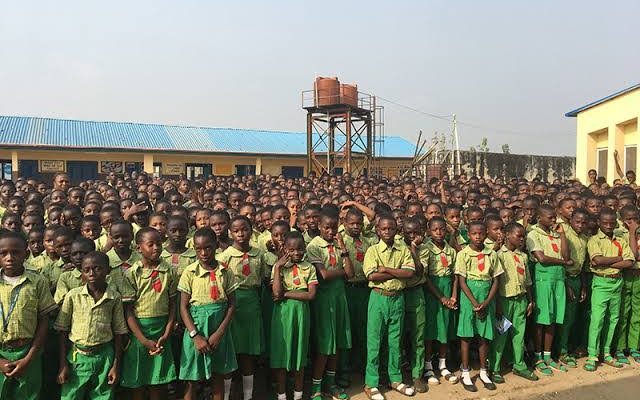
Stakeholders in the nation’s education sector continues to debate on the Federal Government’s proposed merger of the Junior Secondary School (JSS) and Senior Secondary School (SSS) into single education cycle of six years
By Udoka Ekeleme, Abuja
The Federal Government’s proposal to merge the Junior Secondary School (JSS) with the Senior Secondary School (SSS) systems into a continuous six-year secondary education cycle has ignited a nationwide debate, with stakeholders divided over whether the reform will improve student retention or merely gloss over deeper problems confronting Nigeria’s education sector.
Recently, the Minister of Education, Dr. Tunji Alausa unveiled the proposal, noting that its intention is to replace the current 6-3-3-4 structure with a 6-6-4 model, creating a seamless six-year secondary education system.
Alausa postulated that the existing arrangement has outlived its usefulness, contributing to high dropout rates, duplication of administrative structures and poor utilisation of school facilities.

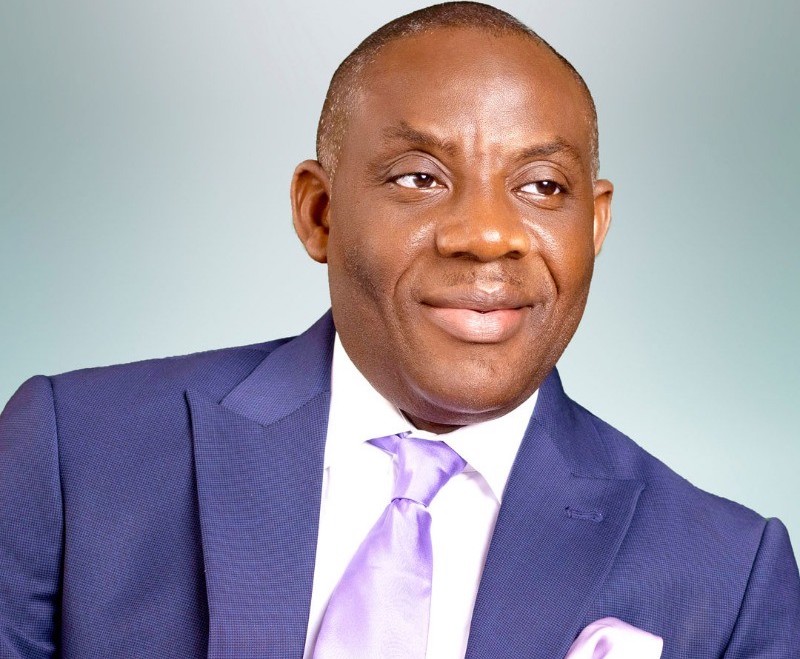
The Minister said, “While many junior secondary schools are overstretched, several senior secondary schools operate below capacity because both are managed separately.”
The proposal expected to be considered by the National Council on Education (NCE) later in the year, has generated mixed reactions from parents, school proprietors and education experts.
On why the Federal Government intends to merge the two education systems, the Minister insisted, “Existing JSS-SSS disarticulation policy has failed to achieve its objectives and has become one of the factors contributing to Nigeria’s worsening education crisis. Many junior secondary schools are overcrowded while several senior secondary schools remain underutilised because both operate under separate administrations.
“The transition from JSS3 to SS1 has become a major point at which many students discontinue their education due to admission bottlenecks, placement challenges and additional financial burdens on parents.
“Millions of children who enroll in primary school never complete secondary education, making it imperative to remove barriers that interrupt their academic progression. Integrating junior and senior secondary education into one uninterrupted six-year cycle will improve retention, reduce administrative duplication, maximise existing infrastructure and ensure that more Nigerian children complete secondary education.”
Notably, Nigeria’s education system has undergone several reforms since independence. For many years, the country operated the 6-5-4 system before introducing the 6-3-3-4 structure in the early 1980s. The reform divided secondary education into three years of junior secondary school and three years of senior secondary school, with the intention of exposing students to both academic and vocational learning.
In 1973, the Federal Government changed the academic calendar from January-December to June-June.
In 2004, the introduction of the Universal Basic Education (UBE) programme made nine years of schooling comprising six years of primary education and three years of junior secondary education which were proclaimed free and compulsory.
However, implementation has varied in the states because education is on the concurrent legislative list. While some schools operate integrated secondary education, others maintain separate junior and senior secondary schools, often under different management authorities.
The recent proposal by Alausa has earned the support of the National Parents-Teachers Association of Nigeria (NAPTAN). The Association’s National President, Prof. Boniface Odeh, described the initiative as a timely intervention capable of addressing one of the major weaknesses in Nigeria’s education system.
Odeh said, “Many students fail to proceed to senior secondary school because of placement challenges, additional costs associated with the transition and limited admission spaces. Replacing the current structure with a continuous six-year secondary education cycle will remove these barriers and significantly improve student retention.
“The uninterrupted six-year system will provide sufficient time for effective curriculum implementation, deeper subject mastery and greater emphasis on vocational education, skills acquisition and Science, Technology, Engineering and Mathematics (STEM).
“The establishment of the National Secondary School Commission (NSSC) to oversee the six-year secondary education cycle will strengthen governance, improve quality assurance and enhance parental participation in school administration.
“Beyond academic gains, the reform will reduce the financial and emotional burden on parents by eliminating one stage of school transition, thereby reducing admission-related expenses, uniform costs and other associated charges especially important for low-income households.
“The Federal Ministry of Education should engage parents, teachers, school proprietors and state governments before implementation. There’s need for teacher retraining, infrastructure assessment and a phased implementation strategy.”
As the debate continues, some stakeholders in the education sector have warned that restructuring the education system alone will not solve Nigeria’s school dropout challenge. According to Adamu Yushau, an education analyst, the proposal could improve learners’ progression if properly implemented, he also observed that many students leave school after JSS3 because of financial difficulties, poor access to schools and weak transition mechanisms.
Yushau added, “If the policy removes unnecessary barriers and ensures that learners progress seamlessly to senior secondary school, it could help improve retention. But the reform must be accompanied by increased funding, improved infrastructure, recruitment of more qualified teachers and sustained stakeholder engagement.
“It is easy to formulate a policy. But implementing it successfully across schools nationwide will require careful planning, close monitoring and strong collaboration among federal and state governments, school administrators and parents.”
Further reactions have continued to trail the announcement by the Minister of Education, that the Federal Government is thinking of scrapping the Junior Secondary School and Senior Secondary School system of education in the country.
Recall that the idea of the merger was mooted by Alausa during the February 2025 Emergency National Council on Education meeting and it did not fly. Many educationists have pointed out reasons against the workability of the merger such as Administrative Hollow-out and Jurisdictional Overlap, stripping senior secondary schools away from the Ministry of Basic and Secondary Education would leave the ministry hollowed out. Furthermore, because State Universal Basic Education Board (SUBEB) Chairmen report directly to state governors rather than federal mandates, forcing a merger introduces unnecessary administrative friction between federal policy and state execution.
Another reason adduced by stakeholders against the implementation of the merger include dilution of supervision and demotivation of staff; operating with distinct Junior Secondary and Senior Secondary principals ensures focused management, closer student monitoring, and better supervision. In a country where the student-to-teacher ratio already grossly exceeds international standards, split leadership keeps schools manageable. Moreover, having separate administrative tracks serves as a vital career motivation and promotion pathway for senior education officers within the Nigerian civil service.