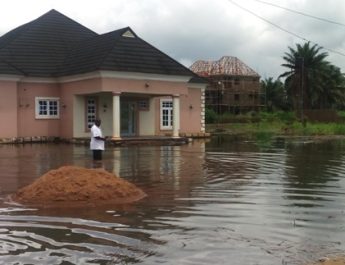
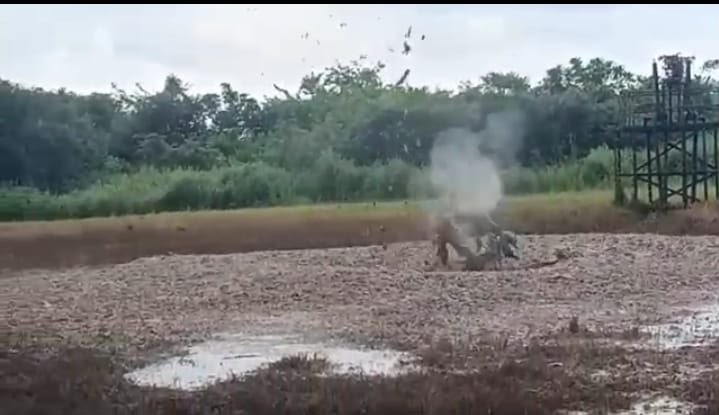
For over a month, the Uzere Community in Isoko South Local Government Area of Delta State continues to burn as a major oil spill devastates the community and its environs while Heritage Energy Operational Services Limited (HEOSL), regulatory agencies and the government ignore calls for an end and cleanup of the raging spill
By Edu Abade
Environmental activists have berated the Federal and Delta State Government for allowing a Wellhead blowout in Uzere Community, Isoko South Local Government Area of Delta State to continue spewing for over a month after the people noticed it and raised the alarm.
Uzere Community has a long history of oil exploration activities and incidents. It is adjudged the second location where oil was found in Nigeria shortly after Oloibiri in present day Bayelsa State. The latest incident adds to the growing list of environmental challenges facing the Niger Delta region, where decades of oil extraction have left a legacy of pollution and ecological damage.
The catastrophic spill that has thrown the community into turmoil started with equipment failure at the facility owned by Heritage Energy Operational Services Limited (HEOSL) on Saturday, June 27, 2026. The incident has left a trail of destruction, displacing residents and devastating livelihoods of hundreds of families in the area.
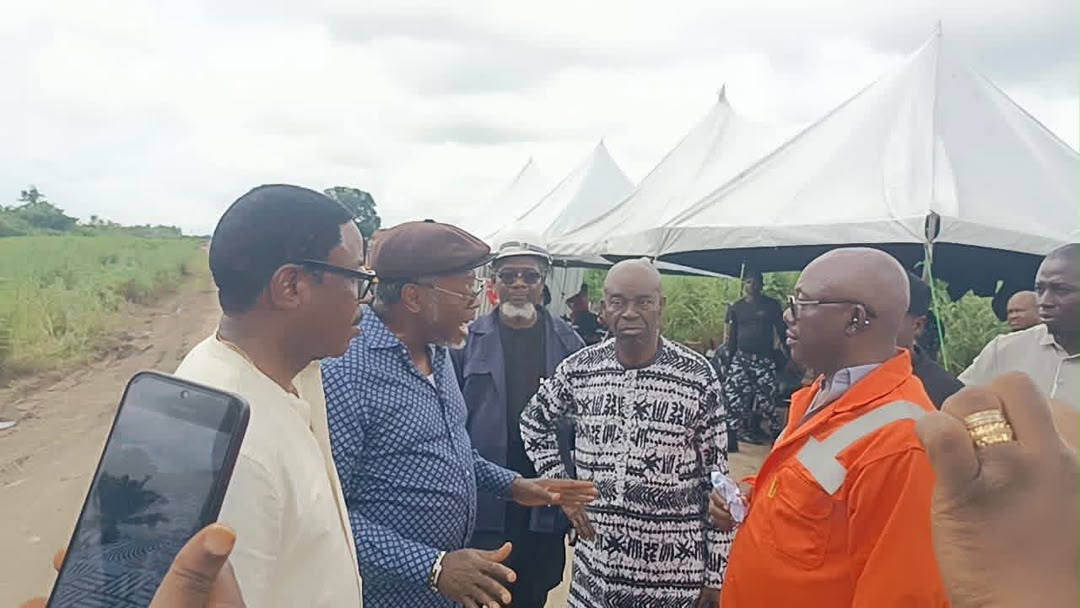
Most affected is Uheri Quarter where farmlands and crops have been destroyed, aquatic life decimated and citizens forced to abandon their homes and belongings.
In a statement made available to newsmen, a host of environmental activists, including the Isoko Environment Monitoring Committee (IEMC), Community Development Advocacy Foundation (CODAF), Environmental Defenders Network (EDEN), Renevlyn Development Initiative (RDI) and NGOs for A Better Delta, condemned HEOSL, owners of the facility for abdicating responsibility and the government for its unseriousness.
Reacting to the development, Executive Director of CODAF, Benin Richard, who spoke on behalf of civil society organizations monitoring the crisis, expressed grave concern over the slow pace of response on the part of HEOSL and the authorities.
“What we are witnessing in Uzere Community is nothing short of an environmental emergency. This equipment failure has unleashed a catastrophe that will take years to remedy. Our hearts go out to the people of Uheri Quarter in Uzere Kingdom who have lost their farmlands, their sources of livelihood and their homes.
“We learnt the company has reached out to the community, but their response has been far from proactive. This is not the time for half-measures; this is a moment that demands urgency, transparency, and genuine commitment to restoration. We cannot continue to treat these spills as isolated incidents when they represent a pattern of negligence that has plagued our oil-producing communities for decades.”
Also responding, Chairman of IEMC and Director of Climate Justice at EDEN, Dr. Maimoni Ubrei-Joe, whose committee has been at the forefront of environmental monitoring in the region, called for immediate and comprehensive action on the part of those saddled with the responsibility of remediating oil spills.
He said, “I have witnessed firsthand the devastation that oil spills inflict on our communities. The Uzere incident is a stark reminder of why we must remain vigilant. The joint investigation visit was a necessary first step, but we cannot afford to stop there. Heritage Company must move beyond token gestures and demonstrate genuine commitment to the people of Uheri Quarter.
“Environmental restoration must begin immediately, not weeks or months from now. The aquatic life that sustained our fishermen is gone, the crops that fed our families are destroyed, and our people have been displaced from their ancestral homes. This is not merely an environmental issue; it is a human rights crisis that demands a coordinated response from both the company and the government.”
In his intervention, Executive Director of RDI, Philip Jakpor, whose organization has been involved in community development and advocacy in the Niger Delta, emphasized the need for systemic solutions, saying, “The Uzere oil spill is yet another chapter in the long and painful history of environmental degradation in the Niger Delta. The people of Uheri quarter have paid the price for oil extraction with their health, their livelihoods and their environment.
“The joint investigation visit confirms the severity of the situation, but we must ask: what next? Heritage Company’s outreach to the community, while noted, has been insufficient. We need a comprehensive plan that includes environmental remediation, compensation for affected families and a thorough investigation into the root cause of this equipment failure. The era of impunity must end. This is not a battle between the company and the community, it is a battle for justice, for sustainability, and for the future of our people.”
Also, Media and Communications Lead to the Convener, NGOs for A Better Delta, Osariodion Andrew Ugbogbo canvassed a broader, more inclusive approach to resolving the crisis, adding, “This spill is a tragedy, but it is also an opportunity for all stakeholders to come together and chart a new path forward. We are calling for a Town Hall meeting to address this issue in its entirety-an inclusive forum where the community, the company, government agencies, and civil society can engage in honest dialogue.
“Beyond immediate relief, we need long-term solutions: a thorough investigation into the cause of the spill, a comprehensive environmental restoration program, and fair compensation for all victims. Heritage must be held accountable, but the government also has a responsibility to ensure that our regulatory frameworks are strengthened and enforced”.
Also speaking, Executive Director of EDEN, Barrister Chima Williams, said, “The impunity that has gone on for more than a month must not be allowed to continue. The failure of the operators of the Wellhead to clamp the blow-out has already led to forced displacements in Uzere Community.
“The government at Federal and state level must not allow the polluter to continue looking away and feigning helplessness in the face of their assault on the environment in the community.”
On his part, a Niger Delta youth activist, Idowu Eseku, noted that the Uzere incident shows that we have a government that seems to prioritize profits over human life and a habitable environment.
The Uzere spill reinforces our position that while oil and gas sustain Nigeria, the Niger Delta which produces the golden egg has been on the receiving end of oil incidents. Community leaders have wasted no time in demanding accountability, writing to the company to swiftly address the situation and warning residents to relocate their goods from the danger zone.
As of press time, Heritage Energy Operational Services Limited has yet to issue an official statement on the incident, but stakeholders are hopeful that the company would soon respond positively to the calls for urgent action.
The groups, therefore, demand a declaration of a state of emergency in the affected areas to facilitate rapid response and resource mobilization, establishment of an Emergency Relief Fund (ERF) to provide immediate support to displaced families and affected individuals, an independent forensic investigation into the equipment failure, with findings made public, community health assessment to monitor and address potential health impacts on residents and regular public updates on the progress of remediation efforts.
Other recommendations are strengthening of environmental regulations to prevent future occurrences, capacity building for community members on environmental monitoring and advocacy, legal support for affected community members seeking justice and compensation, development of a comprehensive disaster management plan for oil-producing communities and the establishment of a multi-stakeholder oversight committee to ensure accountability throughout the restoration process.