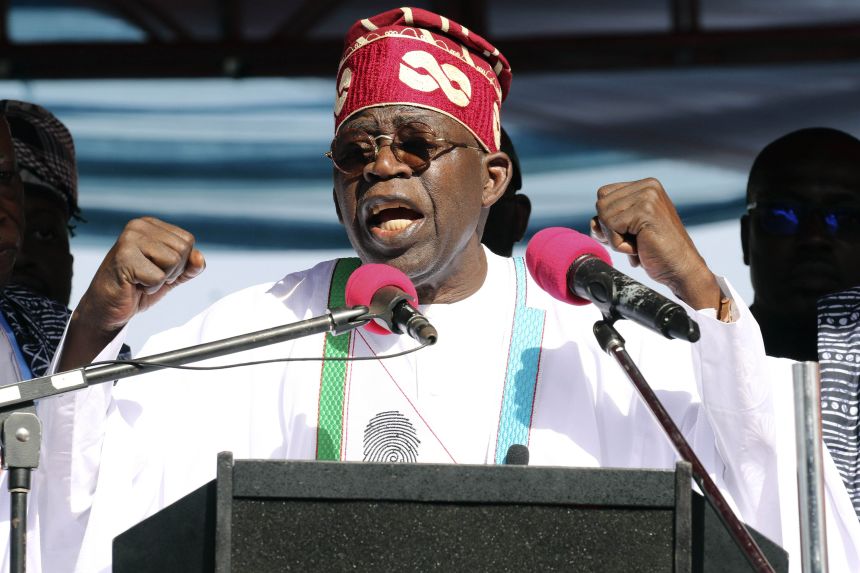
Tinubu’s Paper Prosperity Reforms Bite
There is visible anger and frustration on faces of millions of hungry Nigerians whose lives have been impoverished by President Bola Tinubu government economic reforms which appear good on paper but wrapped with hardship
By David Oladimeji
Prosperity has reportedly arrived in Nigeria, but millions of citizens are still waiting for it to knock on their doors. While the Federal Government celebrates economic recovery and President Bola Tinubu speaks optimistically about a brighter future, the reality confronting many households remains a daily struggle against soaring prices, expensive fuel, crushing electricity bills, unemployment and insecurity.
For the government, the economic indicators may be pointing in the right direction. For the ordinary Nigerian, however, the question is simple: What exactly has improved when the cost of surviving another day continues to rise? The disconnect between official optimism and the harsh realities of the streets is increasingly becoming a defining feature of the country’s economic debate.
Tinubu’s administration has repeatedly defended its economic reforms, particularly the removal of the petrol subsidy and the unification of foreign exchange rates, arguing that difficult decisions were necessary to restore economic stability, eliminate distortions and lay the foundation for sustainable growth. The President’s message is that Nigerians must endure present difficulties to reap the benefits of tomorrow.
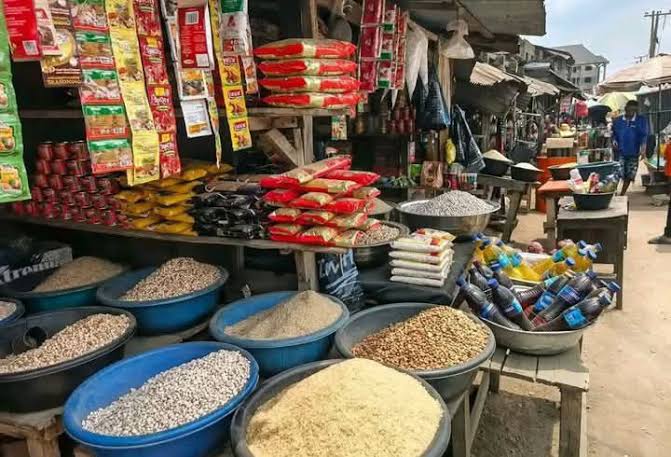
But tomorrow appears painfully distant for families struggling to afford today’s necessities. For millions of citizens, economic recovery cannot be measured merely by government announcements, rising headline growth figures or improved fiscal projections. It must be reflected in the prices of food, the cost of transportation, the availability of jobs and the amount of money left in workers’ pockets after paying their bills.
The International Monetary Fund (IMF) has repeatedly highlighted the importance of addressing inflation, protecting vulnerable households and ensuring that the benefits of economic reforms reach ordinary citizens. The broader challenge confronting Nigeria is that economic growth does not automatically translate into improved living standards. An economy can expand while households become poorer in real terms if prices rise faster than incomes.
This is where the government’s prosperity narrative encounters its most difficult test. Growth statistics may provide evidence of economic activity, but they cannot independently establish whether the average Nigerian can afford three decent meals a day, pay rent, settle electricity bills and transport children to school without sinking deeper into debt.
Consider the price of petrol, which has climbed to levels that would have appeared extraordinary to many Nigerians before the subsidy reforms. With pump prices in some locations reportedly approaching N1,400 per litre, the cost of transportation and distribution has become a major concern for commuters, traders, manufacturers and service providers.

The consequences extend far beyond the filling station. When transport operators spend more on fuel, commuters face higher fares. When distributors pay more to move goods, traders adjust their prices. When businesses spend more on logistics and power generation, consumers often bear the additional costs. The result is an economic chain reaction that makes the simplest transactions increasingly expensive.
For workers whose salaries have remained largely unchanged, the mathematics of survival is brutal. A monthly income that once covered food, transportation and basic household expenses may now disappear before the middle of the month. Those who earn daily wages face an even more precarious situation because a day without work can mean a day without food.
Electricity bills have added another layer to the burden. Households and businesses already battling higher fuel prices must contend with electricity tariffs and the cost of alternative power supplies where public electricity remains unreliable. For small businesses, the combination of expensive grid electricity, generators and fuel can determine whether an enterprise remains open or shuts its doors.
The contradiction is particularly troubling in a country where reliable electricity is essential to industrial development, job creation and economic competitiveness. Manufacturers require dependable power to produce goods at reasonable costs. Small businesses need affordable electricity to operate profitably. Students need light to study. Hospitals and other essential services require stable power to function effectively.
Yet, Nigeria’s power sector continues to struggle with generation, transmission, distribution and supply challenges. Installed generation capacity does not necessarily translate into electricity delivered to consumers, while grid constraints and operational difficulties can undermine the benefits of available capacity. Until the country achieves substantial improvements in reliable electricity supply, high energy costs will remain a formidable obstacle to productivity. Notably, President Tinubu had promised he would make electricity available for Nigerians in his first term, whereupon he also told the electorate never to vote him a second time if he failed to provide electricity for them. The promise was never fulfilled, rather what Nigerians witnessed was astronomical hike in the electricity tariff via removal its subsidy. Yet, Tinubu has, once again, made himself available to contest for the second term.
Then comes the food crisis, arguably the most immediate expression of economic hardship for millions of households. Food inflation has remained a major concern, although the precise rate changes over time and depends on the period and statistical measure being used. The reported figure of 49 per cent must therefore be tied to a specific official reference period before publication. Whatever the exact current rate, the experience of expensive staple foods has become central to the national conversation.
For families, inflation is not an abstract percentage published in an economic report. It is the difference between buying a full basket of groceries and returning home with only a few items. It is the parent who reduces the number of meals a family eats, the student who skips lunch and the pensioner who must choose between purchasing food and paying for medication.
The situation becomes more disturbing when rising prices are accompanied by stagnant earnings. Inflation reduces purchasing power, meaning that citizens must spend more money to obtain the same quantity of goods and services. Even when nominal incomes remain unchanged, the real value of those earnings declines. For low-income households, whose budgets are already dominated by food, transportation and accommodation, the impact can be devastating.
Unemployment and underemployment further complicate the prosperity picture being painted by the government. Recall that during his Independence Day address, Tinubu had told citizens that the reforms pains had been over, while prosperity era berthed. Economic growth that fails to generate sufficient productive jobs risks widening the gap between national output and household welfare. Young Nigerians leaving schools and universities need opportunities to earn decent incomes, while existing workers require wages that can keep pace with the cost of living.
For those without stable employment, the promise of future prosperity offers little immediate relief. Informal workers, artisans, traders and casual labourers often depend on unpredictable daily earnings. When demand falls because customers have less money to spend, these workers can experience a double blow: higher operating costs and declining income.
Insecurity remains another obstacle to economic recovery. Persistent threats from banditry, kidnapping, insurgency, communal violence and other criminal activities have affected communities, livelihoods and commercial activity in different parts of the country. Farmers who fear attacks may abandon their fields, while traders and transport operators must factor security risks into their decisions.
Agriculture illustrates the relationship between security and the cost of living. Where farmers cannot safely access their land, production suffers. Disruptions to farming, storage and transportation can constrain food supplies and push prices higher. Although insecurity is not the only explanation for food inflation, restoring safety in farming communities is an important part of any credible strategy to improve food availability and affordability.
Against this background, the government’s emphasis on macroeconomic stability raises an important question: stability for whom, and measured by what standard? Improved government revenue, stronger foreign reserves, changes in exchange-rate conditions and economic expansion can be important achievements. However, their ultimate significance depends partly on whether they support investment, employment, public services and higher living standards. The irony is that while the government admonishes citizens to tighten their belts and remain patient, the ruling class, the political elite and government officials are seen everyday living large on public funds as if they are not affected by the hardship in the land.
The government has a legitimate argument that reforms inherited from previous administrations and long-standing economic distortions could not be corrected without difficult adjustments. But the ostentatious lifestyle of people in government does not support government claims that there is limited resources in the country.
There may be prosperity in official projections, encouraging indicators and government presentations. But on the streets, in crowded markets, at filling stations and inside households struggling to make ends meet, the story remains more complicated. For millions of Nigerians, hunger, poverty and hardship have not disappeared because economic growth has been announced. The ultimate measure of reform will be the moment prosperity ceases to be a promise on paper and becomes a reality in the lives of the people.
Meanwhile, Nigeria’s headline inflation rate declined to 14.63 per cent in September 2026 from 15.39 per cent the previous month of August, driven by a moderation in food prices, even as core inflationary pressures strengthened during the month.
The September headline inflation figure which indicates the fourth consecutive monthly decline since June, reflects a slowdown in the annual rate of price increases.
The National Bureau of Statistics (NBS) disclosed this in its Consumer Price Index (CPI) report released on Thursday October 15, showing that headline inflation fell Year-on-Year (YoY) by 6.35 percentage points from 20.98 per cent recorded in September 2025.
However, the moderation in headline inflation masked a divergent trend in underlying prices, as food inflation declined month-on-month while core inflation, which excludes volatile agricultural produce and energy prices, accelerated.
According to the NBS, food inflation stood at 19.59 per cent year-on-year in September, down from 20.16 per cent in the corresponding period of 2025.
On a month-on-month basis, food inflation dropped to -1.55 per cent from 1.02 per cent in August, reflecting a decline in the average prices of several food items, including local rice, maize flour, guinea corn flour, eggs, onions, palm oil, potatoes, okra, tomatoes and plantain.