Seplat’s Revenue Hits $2,764M
Seplat Energy Plc’s nine months revenue in 2026 rises by 27 percent to $2,764m compared to $2,177m in the corresponding period of 2025, while canvassing structured financing, transparency, cooperation and strong governance for a sustainable energy sector
By Edu Abade
Leading Nigerian independent energy company listed on the Nigerian Exchange Group and the London Stock Exchange, Seplat Energy Plc (“Seplat Energy” or “the Company”), announces its un-audited results for the nine months ended September 30, 2026.
Strong production and price realizations delivered free cash flow of $749 million in the nine months of 2026, further improving net leverage to Net Debt/ EBITDA, and underpinning increased distributions. 3Q 2026 dividend raised by 58 percent sequentially to $19.0 cents/share, reflects the strong operational and financial performance.
The company’s operational highlights showed that working interest production averaged 144,999 boepd rose 7 percent from 135,636 boepd in 2025 with onshore increasing by 22 percent, while working interest production in the third quarter [Q3] averaged 155,801 boepd, rising by 13 percent year-on-year [YoY] from 137,888 boepd in 3Q 2025 and up 5 percent sequentially, among other accomplishments.
Its financial highlights showed revenue rising by 27 percent to $2,764 million from $2,177 million in the nine months of 2025 on an average realized oil price of $96.19/bbl, an $8.12/bbl premium to average Brent price, 3Q 2026 average realized oil price of $100.44/bbl, a $10.21/bbl premium to average Brent price.
“Adjusted EBITDA of $1,530 million rose by 38 percent on prior year (9M 2025: $1,111.9 million). Net income increased to $260.2 million, up 174% YoY. Earnings per share USD 42 cents, up 172% YoY (9M 2025: USD 16 cents). Cash generated from operations of $1,478.7 million, up 6% on prior year (9M 2025: $1,395.4 million).
“Balance sheet remains strong, end-Sept cash at bank $556.9 million (FY 2025: $332.3 million). Net Debt at end-Sept of $234.9 million down 65% since YE 2025 ($673.3 million). Net Debt/EBITDA improves to 0.14x from 0.53x at YE 2025. On 27 October, the Company repaid the $100 million balance on the APF. As such, all debt raised to acquire MPNU in 2024 has been repaid,” the results revealed.
While Seplat’s corporate update and 2026 outlook showed that the sale of a 10 percent interest in NNPCL-SEPNU JV to NNPC Limited would be completed in the fourth quarter [4Q] of 2026, the company said, “As previously disclosed, following completion, the Company intends to pay a transaction dividend of approximately half the consideration ($23.3 cents per share, $140 million).
A statement made available to journalists by Media and Communications Manager of Seplat, Stanley Opara, indicated that the 3Q 2026 declared dividend of $19.0 cents/share ($114 million), comprising $5.0c per share core and USD 14.0c per share special dividend. Total dividend declared YTD USD 40.0 cents pershare. FY 2026 dividend guidance of $270 million ($45.0 cents per share) is retained.
“The 2026 guidance updated to reflect progress year to date: Production guidance narrowed to the upper end at 145-155 kboepd (from 135-155 kboepd), reflecting strong YTD performance. Capex guidance lowered to $280-$340 million (from $360-440 million), primarily due to phasing, given the late arrival of the offshore rig. Unit operating cost guidance increased to $15.5-$16.5/boe (from $14.5-$15.5/boe), due to ongoing costs related to Yoho.
Commenting on the results, Chief Executive Officer, Engr. Effiong Okon, said: “In my first update as CEO, I am delighted to report another quarter of robust production growth, averaging over 155 kboepd in 3Q 2026, which puts us firmly on track to meet the upper half of our full year guidance. This was delivered in a period of continued high crude prices, we realized $100.4/bbl in the quarter, a full $10.2/bbl higher than the average Brent price in the period, further enhancing our results.
“Operationally, in our Onshore business, we achieved record gas production levels in the quarter, supported by continued solid ANOH ramp-up alongside strong performance on our Western assets, and we have clear line of sight to continued growth that will be underpinned by operational excellence as offshore gas production comes back online.
“Yoho restoration project was completed during the quarter, although start-up has been delayed due to pipeline damage that was identified and is being repaired, production is expected online in 4Q 2026. I’m pleased to announce exploration success at Aku-01, a strong reminder of our rich portfolio of prospects and the quality of the subsurface in Nigeria.
“Our strong financial performance supports the interim dividend payment of USD 19.0 cents per share. When paid, the 3Q 2026 dividend will lift cumulative dividends declared since our IPO to over $1.0 billion, and we are firmly on track to return our second $1.0 billion to shareholders as we deliver on our five-year plan. A clear demonstration of the financial robustness of our business.
Meanwhile, Seplat Energy Plc has underscored the critical role of transparency, strong corporate governance and stakeholder collaboration in unlocking structured financing opportunities and accelerating sustainable growth across Nigeria’s energy sector.
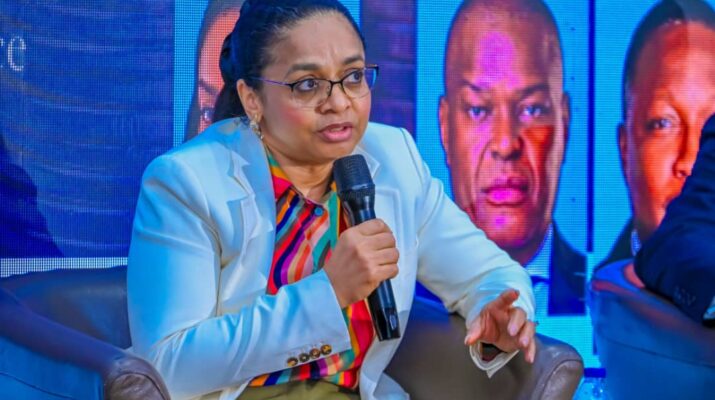
Speaking at the Olaniwun Ajayi Structured Finance Roundtable in Lagos recently, Seplat Energy’s Chief Financial Officer [CFO] and Executive Director, Eleanor Adaralegbe, urged companies, particularly industry pioneers, to embrace accountability, openness and strong governance standards to build investor confidence and create pathways for successful financing transactions.
Adaralegbe made the remarks during a panel session with the theme, From Theory to Transactions: Overcoming Barriers and Scaling Structured Finance in the Nigerian Market.
According to her, trust remains the foundation of every successful financing arrangement, maintaining that the reputation of a company’s leadership and governance framework play a decisive role in attracting capital.
“I think one of the most fundamental things for the success of structured financing is the management team. The role of a management team is unbelievable. I’ve found in my journey with the company that this has been one area where a lot of people have invested in us because they believe in the management team,” she said.
She equally noted that beyond management credibility, Seplat Energy’s commitment to transparency and partnership has enabled the company to cultivate enduring relationships with financial institutions, regulators and investors.
“At Seplat, we work with financiers as partners. We don’t try to package a deal so that they can approve it. We work with them to ensure there’s a general understanding of what we’re trying to achieve, and we carry them along in our process,” she explained.
Adaralegbe also highlighted that Seplat Energy’s governance journey has been instrumental in shaping the company’s financing success story. Since its inception, the company has built a reputation for robust corporate governance, disciplined financial management and adherence to global reporting standards, positioning it as one of Africa’s most respected independent energy companies.
The company’s commitment to governance has earned widespread recognition, including industry awards and commendations for maintaining a strong governance framework and implementing international best practices. Seplat Energy has also continued to strengthen its Environmental, Social and Governance (ESG) architecture, which supports long-term value creation for stakeholders while promoting responsible business operations.
According to Adaralegbe, these governance credentials have helped the company access significant pools of capital required to fund its growth ambitions and strategic investments.
Over the years, Seplat Energy has established a strong track record in the debt and capital markets, raising substantial financing to support the development and expansion of its operations while maintaining prudent leverage levels. The company’s ability to attract funding from a broad range of local and international lenders and investors has been underpinned by its transparent operating model, strong governance culture and proven execution capability.
“The quality of our governance, the strength of our management team and our willingness to engage openly with stakeholders have enabled us to build credibility in the market. Governance is not just a compliance exercise; it is a strategic enabler that gives investors and lenders confidence to support long-term growth,” she said.
She further explained that Seplat’s dual listing on the Nigerian Exchange Limited (NGX) and the London Stock Exchange imposed stringent compliance obligations that strengthened the company’s institutional framework and enhanced investor confidence.
“The regulators and listing authorities helped shape us as a company because we had to meet listing requirements in both Nigeria and London. There was a discipline that we had to build into how we operated as a business, and that really helped us. Being listed in London was particularly beneficial because of the stringent governance and disclosure obligations that we had to comply with,” Adaralegbe stated.
She also commended the Securities and Exchange Commission (SEC) for fostering an enabling environment for innovation and capital formation, adding, “The SEC has been amazing with us because we engaged them, and they’ve done a lot of projects with us, enabling us to do many of the things we’ve accomplished over the years.”
Director-General of the Securities and Exchange Commission, Dr. Emomotimi Agama, who delivered the keynote address at the Roundtable, emphasized the importance of collaboration among market participants in deepening Nigeria’s capital markets and expanding structured finance solutions.
He enjoined regulators, legal practitioners, issuers, investors and other stakeholders to work together to strengthen the ecosystem and unlock the full potential of structured financing as a catalyst for economic growth.
“We must work together. There is nothing wrong with our law firms identifying challenges in regulation and proposing ways to improve the regulatory framework. We must make this market better together because it is for the benefit of all of us,” Agama said.
He reiterated the SEC’s commitment to protecting investors while supporting market innovation, noting that a balanced regulatory framework would be essential to ensuring the continued growth and credibility of Nigeria’s structured finance market.