
NIMASA On The Fast Lane
The Nigerian Maritime Administration and Safety Agency (NIMASA) and the International Transport Workers’ Federation (ITF) enter a Memorandum of Understanding (MoU) to enhance the wellbeing of Nigerian seafarers, even as NIMASA calls for stronger global maritime collaboration
By Innocent Chukwu
The Nigerian Maritime Administration and Safety Agency (NIMASA) has formalised its partnership with the International Transport Workers’ Federation (ITF) through the endorsement of a Memorandum of Understanding (MoU) aimed at promoting the mental health and wellbeing of Nigerian seafarers and cadets through training, awareness and capacity building.
The agreement was the highlight of a three-day Seafarers’ and Cadets’ Wellbeing Awareness and Train the Trainers Programme, themed, “Stress: Understanding, Early Management and Coping,” organised by NIMASA in collaboration with the ITF.
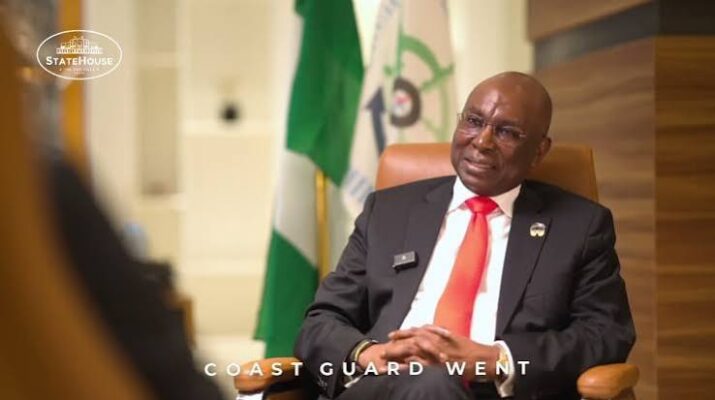
Speaking at the event, the Director-General of NIMASA, Dr Dayo Mobereola, said the partnership would support capacity building and the integration of wellbeing modules into maritime training curricula, with plans to make seafarer wellbeing a permanent component of preparations for life at sea.
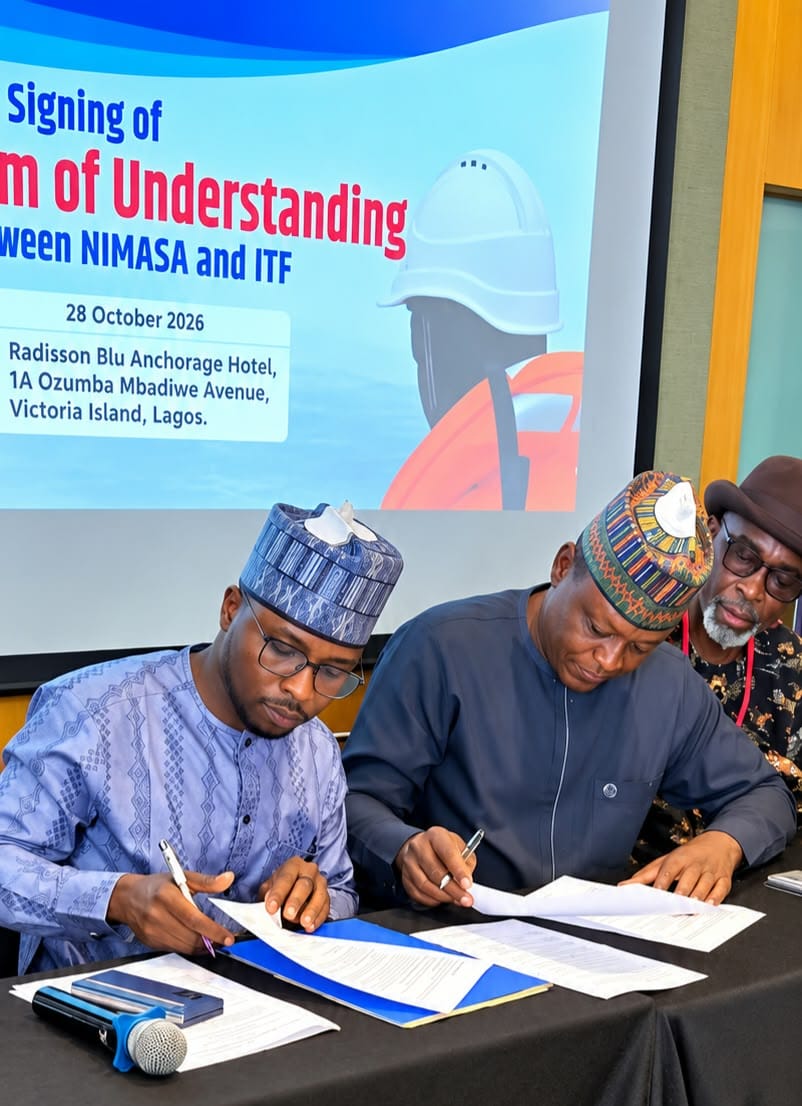
Represented by the Executive Director, Maritime Labour and Cabotage Services, Mr Jibril Abba, who also endorsed the MoU on behalf of NIMASA, Mobereola said seafarers’ wellbeing was essential to safe shipping and reaffirmed the agency’s commitment to protecting maritime workers’ welfare.
He added that the programme would equip maritime training institutions, agency officers and union partners with the skills to identify and manage stress and provide psychological first aid when necessary.
The NIMASA Director-General also emphasised the need to address psychological challenges associated with life at sea, including stress, anxiety, depression and burnout.
Citing a 2019 study commissioned by the ITF in collaboration with Yale University, he noted that one in four seafarers surveyed showed signs of depression, while approximately one in six exhibited signs of anxiety.
Also speaking, the ITF Africa Regional Secretary, Mr Safiyanu Dauda Mohammed, who signed the MoU on behalf of the federation, disclosed that the agreement was the first of its kind the ITF had entered into with any country in Africa.
He described the development as significant, noting that Nigeria was the first African country to establish such an arrangement with the federation.
According to him, seafarers are critical workers in the maritime sector, making it important to prioritise their wellbeing and welfare to help mitigate anxiety and depression.
In his remarks, the President-General of the Maritime Workers Union of Nigeria, Comrade Francis Bunu, applauded the initiative, describing it as a significant development for Nigerian seafarers.
Bunu stressed the importance of ensuring that seafarers remained mentally fit while carrying out their duties.
Also present at the event were the National President of the Nigerian Merchant Navy Officers and Water Transport Senior Staff Association, Chief Engr Bob Joseph Yousou; ITF Wellbeing Coordinator, Dr Asif Altaf; and ITF Inspector, Mr Hamani Amadou, among other stakeholders.
The training programme highlights the growing need to prioritise the physical and mental health of seafarers, who work under challenging conditions and endure extended periods away from their families and loved ones.
According to a statement signed by Osagie Edward, a Deputy Director and Head of Public Relations at NIMASA, on October 26, 2026, the collaboration reinforced the agency and ITF’s commitment to strengthening seafarer welfare through sustained training, institutional cooperation and improved mental health support, recognising that a healthy seafarer is a safe seafarer.
Meanwhile, during the 2026 World Maritime Day Parallel Event, NIMASA called for stronger global maritime collaboration.
The call was for a stronger international collaboration in the maritime sector to promote the exchange of ideas, expertise and technologies that would support safer, more efficient and environmentally sustainable shipping.
The Director-General of NIMASA, Dr. Dayo Mobereola, made the call while representing the Honourable Minister of Marine and Blue Economy, His Excellency, Adegboyega Oyetola, at the 2026 World Maritime Day Parallel Event in Busan, Republic of Korea.
Dr. Mobereola stressed the need to translate the engagements and deliberations at the global maritime gathering into practical partnerships that deliver measurable benefits to participating countries, particularly in strengthening maritime regulation, developing professional capacity and improving the competitiveness of the maritime industry.
He stated that Nigeria’s priority is to build on the opportunities presented by the event to strengthen regulatory performance, expand opportunities for Nigerian maritime professionals and enhance the country’s competitiveness in the global maritime industry in line with the Federal Government’s Marine and Blue Economy agenda.
According to the NIMASA Director-General, sustained international cooperation remains essential to addressing emerging challenges in global shipping, promoting innovation and advancing a maritime industry that is safe, efficient and environmentally responsible.
Dr. Mobereola is leading Nigeria’s delegation to the event, which brings together maritime leaders, policymakers and industry stakeholders to deliberate on issues affecting the global shipping industry and explore opportunities for cooperation.
In a separate meeting with former Secretary-General of the International Maritime Organization (IMO), Mr. Kitack Lim, Dr. Mobereola expressed appreciation for his contributions to the development of the global maritime sector during his tenure at the helm of the United Nations specialised agency.
The engagement also provided an opportunity to recognise the importance of sustained dialogue and collaboration among maritime leaders in advancing shared industry objectives and supporting the development of the global maritime community.