

Respite comes the way of African Democratic Congress (ADC) as it narrowly escapes exclusion from the 2027 general election due to Supreme Court’s intervention, but can the party surmount other challenges posed by INEC guidelines?
By Udoka Ekeleme, Abuja
There was relief for the African Democratic Congress (ADC). The suspense that raised the blood pressure of its leadership has been removed. Thus, the party heaved a sigh of relief on Thursday, April 30, 2026. On the said day, the judgement of the Supreme Court relating to the leadership crisis that tore the fabrics of the party apart was delivered.
The Supreme Court in the ruling gave a temporary relief to the Senator David Mark-led national caretaker committee of the ADC.
The apex court ruling vacated the Court of Appeal’s order which the Independent National Electoral Commission (INEC) relied on to delist the Mark-led leadership from its portal.
The ruling elicited mixed reactions from stakeholders, as the electoral umpire said it would obtain the certified true copies of the judgement on ADC, study them and take appropriate actions on whether or not to recognise the Mark-led exco.
The Supreme Court judgement came on a day the Attorney General of the Federation (AGF) and Minister of Justice, Prince Lateef Fagbemi a Senior Advocate of Nigeria (SAN), threw his weight behind a suit seeking to compel the INEC to de-register the ADC, Accord Party and three other political parties.
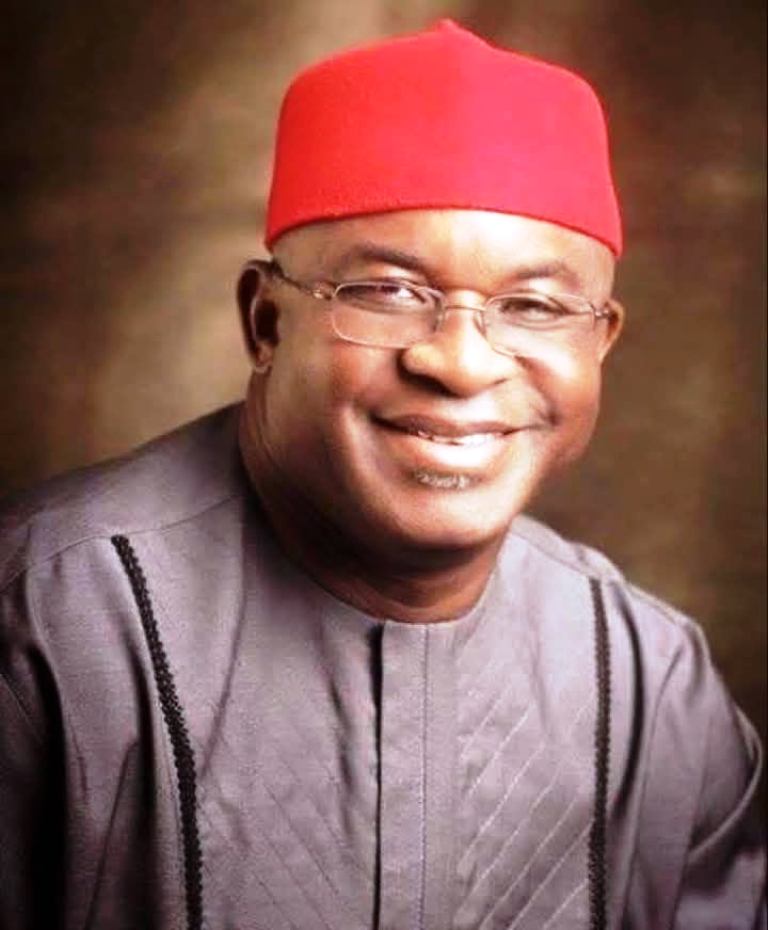
This was as Senator Mark said that the ADC would appeal a lower court’s ruling restraining the INEC from recognising its recent congresses.
The apex court in a unanimous decision by a five-member panel of Justices, headed by Justice Mohammed Garba, faulted the Court of Appeal for ordering maintenance of status quo ante bellum in the ADC leadership tussle that is still pending before the Federal High Court in Abuja.
It held that although a court has inherent jurisdiction to make preservative orders to safeguard the subject matter of a case pending before it, in ADC’s case, the appellate court unilaterally made the order after it had already dismissed an appeal lodged by Senator Mark.
The judgement read, “The directive or order made by the lower court suo motu, after striking out the appeal before it was unnecessary, unwarranted and improper,” the Supreme Court added in its lead judgment read by Justice Garba.
In a reference to the Black Law Dictionary, the apex court explained that status quo means a return to a situation that existed before something occurred.
It maintained that the error on the part of the appellate court was in the nature of the injunction it made in respect of a matter pending before the trial court.
Accordingly, the Supreme Court held that, “It was neither a consequential or preservative order. Giving such an order in an appeal that had already been dismissed is unwarranted and the order of the lower court is hereby set aside,” the apex court panel held.
However, the Supreme Court held that Senator Mark’s appeal succeeded in part, even as it ordered the warring factions of the ADC to return to the high court for determination of the leadership case pending there.
It upheld the dismissal of the interlocutory appeal that challenged the jurisdiction of the trial court to entertain the case.
According to the Supreme Court, the appellate court was right when it dismissed Senator Mark’s appeal as legally defective.
Again, the Supreme Court noted that what Senator Mark went before the appellate court to challenge was a discretionary order the trial court made on the basis of an ex-parte application that was brought before it.
It held that on the face of the order, it was in favour of Senator Mark as the trial court merely ordered that he should be put on notice to enable him respond to a case lodged against him.
Although the apex court acknowledged that the issue of jurisdiction could be raised at a point in a proceeding, however, the high court had yet to reach a conclusive decision on the suit before it.
The Supreme Court also held that while Senator Mark’s lawyer predicated his appeal on the enrolled order of the trial court, the record of proceedings showed that the judge only directed that his client should be put on notice in the interest of fair hearing.
“By the nature of the subject matter of the appeal, leave of the trial court and the Court of Appeal was needed to make it valid.
“Failure to obtain the leave rendered the appeal incompetent. The condition precedent must be met before a party can pursue a cognizable right of appeal,” the apex court added.
Senator Mark who leads a faction of the ADC that is backed by frontline opposition figures, had in the appeal marked SC/CV/180/2026, sought to set aside a March 12 Court of Appeal judgment, which he said was against the interest of justice.
Mark argued that the appellate court exceeded its jurisdiction by ordering maintenance of the status quo ante bellum in a suit filed by aggrieved party members led by Nafiu-Bala Gombe.
He also contended that the dispute involves a political party’s domestic affairs, in which courts lack jurisdiction to intervene.
Besides Gombe, other respondents in the appeal include the ADC National Secretary, Rauf Aregbesola, the INEC, and the immediate past National Chairman of the party, Chief Ralph Nwosu.
Mark sought, among other reliefs, an order restraining INEC from recognising anyone other than him and the current national officers, pending determination of the appeal.
He also requested orders barring INEC from altering the party’s leadership structure as currently constituted and staying proceedings in Suit No. FHC/ABJ/CS/1819/2025 before Justice Emeka Nwite at the Federal High Court, Abuja, until the appeal is heard.
Although INEC did not file any process to either support or counter the appeal, all the other respondents except Gombe, urged the apex court to allow the appeal.
INEC had removed Mark and Aregbesola from its portal and website as ADC National Chairman and Secretary, respectively, on April 1, citing the Court of Appeal’s judgment.
However, despite INEC’s action, which the Mark-led faction has asked the Supreme Court to nullify, the ADC vowed to proceed with its scheduled national convention.
In the meantime, the electoral umpire has promptly updated its official register of political party leadership to reflect former Senate President Mark as the National Chairman of the ADC and former Osun State Governor Aregbesola listed as the party’s National Secretary.
The decision followed the Supreme Court judgement which vacated a status quo ante bellum order that had previously frozen the leadership question, and directed that related proceedings return to the Federal High Court.
In a related matter, Senator Mark vowed that the ADC would appeal a Federal High Court ruling barring INEC from recognising its state congresses, insisting it would still be on the ballot for all elections in 2027 despite ongoing legal battles.
The ruling effectively halts recognition of congresses conducted by committees set up by the Mark-led National Working Committee.
Mark, a former Senate President, spoke on Wednesday, April 29, 2026 night in Abuja after being briefed by the party’s legal team on the judgment of the Federal High Court.
He said: “You do not have anything to be afraid of regarding all the litigations before the party. I want to assure you that we shall triumph in all the cases, and we shall be on the ballot for every election.”
According to him, the party has already begun the appeal process and filed for a stay of execution.
Reacting to the Supreme Court judgement, former Vice President Atiku Abubakar warned his members against celebrating too early, despite the Supreme Court’s affirmation of Mark as leader of the ADC, saying the real political battle still lay ahead.
In a statement, Atiku said: “Even as we welcome the Supreme Court’s firm affirmation of Senator David Mark and the leadership of our great party, the African Democratic Congress, no one should be lulled into complacency
“This victory belongs to Nigerians, the millions who have refused to surrender their future. The road ahead remains long in our collective mission to reclaim and rebuild our country.”
The Supreme Court judgement came amid threats from ADC that the APC which it accused of orchestrating crisis in opposition parties would truncate democracy if the opposition party was barred from participating in the 2027 general election. On Tuesday, April 28, 2026, ADC had written to the Chief Justice of Nigeria (CJN), Justice Kudirat Kekere-Ekun, asking her to intervene in the appeal at the Supreme Court, and ensure that the apex court would deliver a quick judgment in the leadership case tearing its fabrics apart.
The party, which is home to a coalition of frontline opposition figures in the country, lamented that if the Supreme Court did not deliver its judgment within the next three days, it would face the grave and irreversible risk of being excluded from participating in the 2027 general election.
The letter, dated April 28, and written by Senator David Mark-led faction of the ADC, drew the attention of the CJN to the elections timetable and the schedule of activities that were earlier released by the INEC.