
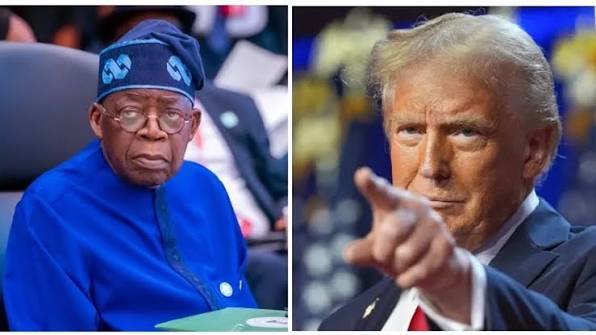
President Bola Ahmed Tinubu is entangled in numerous controversies and alleged criminalities that are threatening his reelection in 2027, including his inability to participate in open debates, misgovernance, certificate forgery and involvement in drug trafficking scandal
By Our Correspondent
The decades-old United States (US) law-enforcement investigation involving Nigerian President Bola Tinubu returned to public attention since last month. This is following a new Federal Bureau of Investigation (FBI) court filing and a campaign by a Washington lobbying firm engaged by former Vice President Atiku Abubakar.
In the renewed inquest, Von Batten-Montague-York, L.C. is trying to use the court to compel American authorities to release additional records in connection with a long-running Freedom of Information Act (FOIA) lawsuit concerning documents held by US law-enforcement agencies.
The firm said it had distributed more than 60 pages of Department of Justice records and related court documents to officials in President Donald Trump’s administration, members of Congress and senior congressional staff.
The war against Tinubu’s alleged drug trafficking deal intensified after a sworn FBI declaration, reportedly filed on August 28, 2026, stated that records sought in the FOIA case were compiled during an investigation of several individuals suspected of drug-trafficking offences.
Excerpts of the declaration published by the lobbying firm identified Tinubu as one of the subjects of the investigation.
The filing formed part of the ongoing case of Aaron Greenspan v. Executive Office for U.S. Attorneys et al., pending before Judge Beryl Howell of the US District Court for the District of Columbia.
The FOIA lawsuit, filed in June 2023, seeks access to records held by the FBI, Drug Enforcement Administration and other American agencies concerning Tinubu and other individuals.
The latest filing confirms the existence of investigative material, but it does not establish that Tinubu committed a criminal offence or was convicted of drug trafficking.
The records relate to a US investigation dating back to the late 1980s and early 1990s and a subsequent civil forfeiture proceeding filed in Chicago in 1993.
US authorities alleged that funds held in certain bank accounts represented proceeds connected to narcotics trafficking or money laundering.
The civil case resulted in the forfeiture of $460,000 associated with accounts linked to Tinubu, while other funds were released under the settlement.
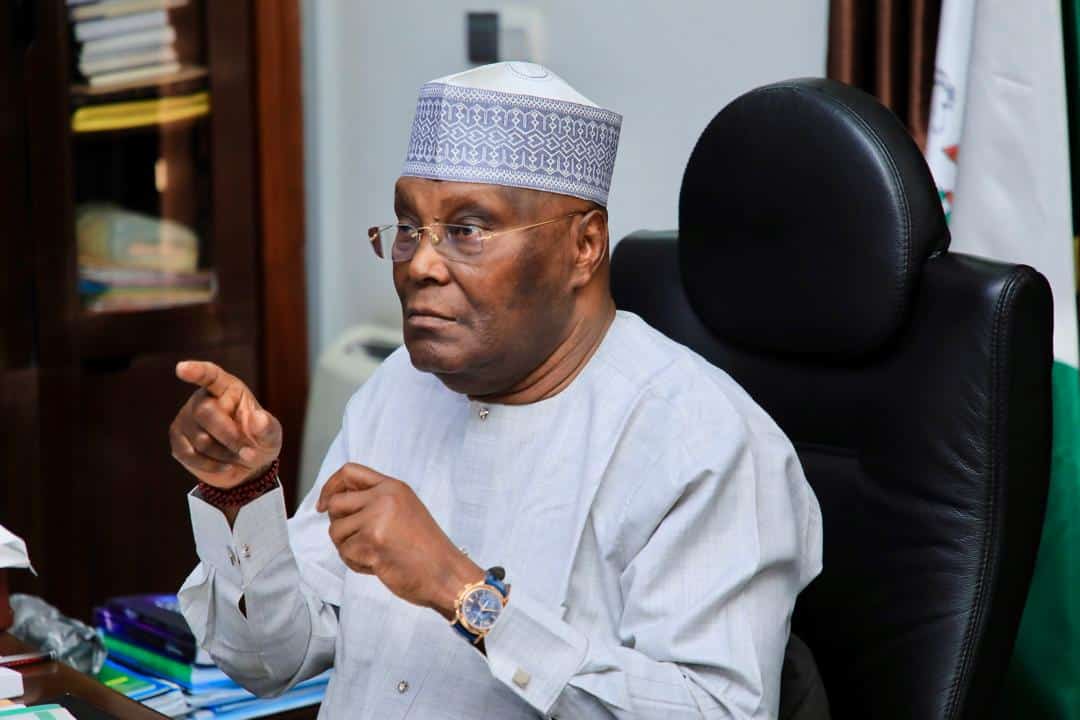
However, the proceeding was civil rather than a criminal prosecution. Tinubu was not criminally charged or convicted in the United States in connection with the case.
The issue later featured in legal challenges to Tinubu’s eligibility to contest Nigeria’s 2023 presidential election. But in a controversial judgement, the Presidential Election Petition Court dismissed the challenges and affirmed his election, in the same vein, the Appeal and Supreme Courts would not find faults with Tinubu in connection with such celebrated scandal.
The FBI, last August, had asked the US court for permission to submit some explanations privately in support of its decision to withhold or redact parts of the requested records.
The agency cited several FOIA exemptions covering personal privacy, confidential sources, law-enforcement techniques and information whose disclosure could endanger an individual’s safety.
One of Greenspan’s requests reportedly sought Tinubu’s “entire FBI file,” while another requested records of FBI interviews conducted between 1992 and 1993.
However, FBI argued that publicly explaining why some information should remain protected could expose the same details it was seeking to safeguard. The agency therefore asked the court to review its justifications privately and under seal.
In April 2025, Judge Howell ordered the FBI and Drug Enforcement Agency (DEA) to search for and process non-exempt records responsive to Greenspan’s requests after finding that the agencies had not adequately justified their earlier refusal to confirm or deny the existence of relevant documents.
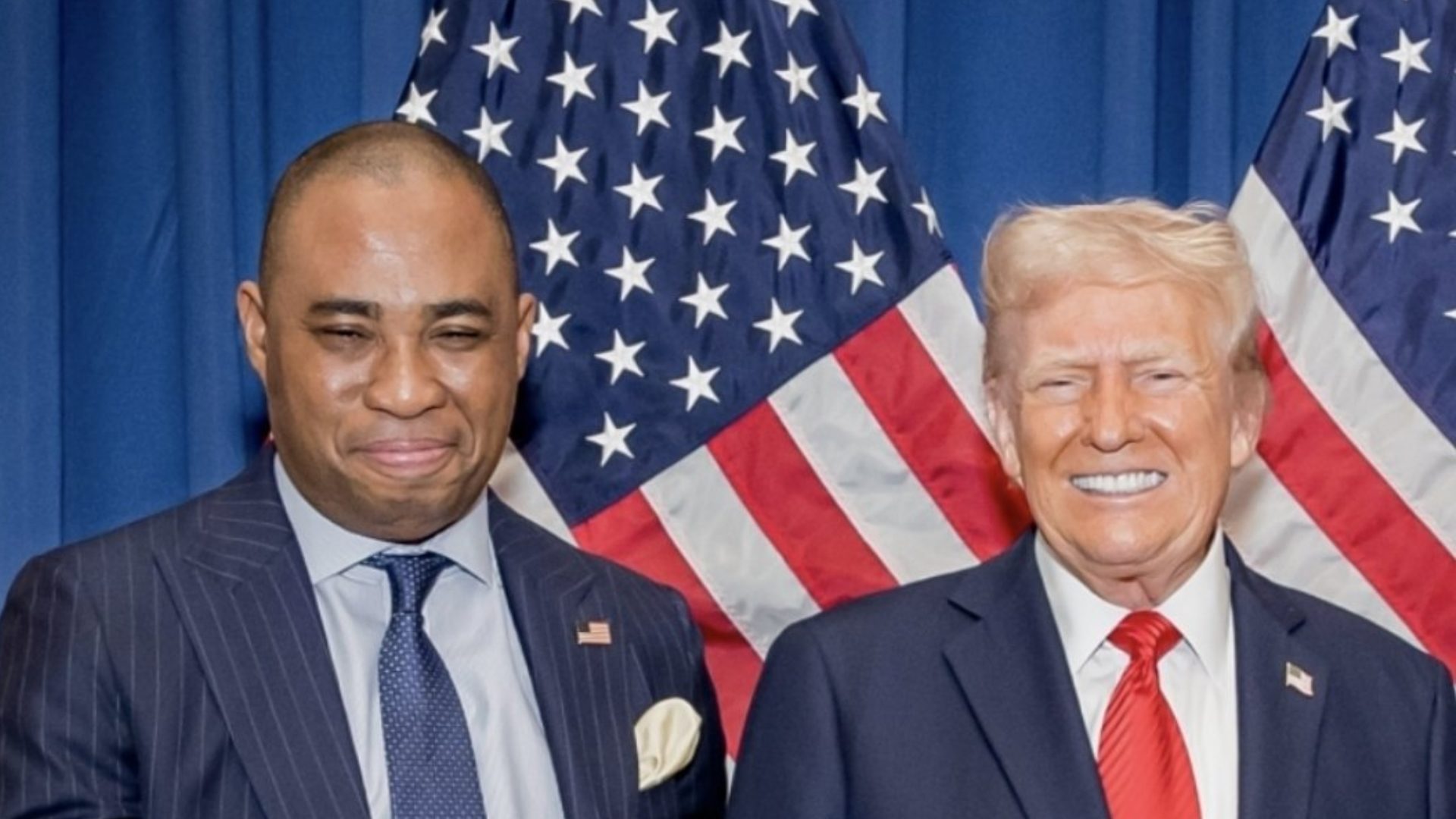
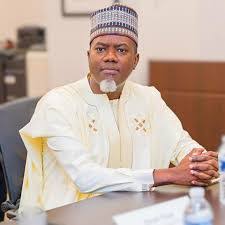
Von Batten-Montague-York was engaged by Atiku in March 2026 under a 12-month agreement reportedly worth $1.2 million. Public filings under the US Foreign Agents Registration Act confirm the firm’s registration and its work for the former vice president.
The lobbying firm has framed the release of the records as a transparency issue and urged US agencies to disclose all material that is not legally protected. It has also used social media statements and meetings in Washington to draw the attention of American officials, lawmakers and advocacy groups to the historical case.
Tinubu’s legal team is opposed to the unrestricted release of some records, arguing that protected personal and law-enforcement information should remain redacted under American privacy laws. The President has consistently denied criminal wrongdoing, and there is no established US criminal conviction against him arising from the historical investigation.
In a contentious response, President Tinubu filed a challenge in the US court to prevent the Department of Justice, FBI and DEA from releasing records that linked him to allegations of drug trafficking. A 16-page court documents shared by his legal team, Christopher W. Carmichael, Victor P. Henderson, and Oluwole O. Afolabi, argued that the release of the records could infringe on Tinubu’s privacy.
The team argued, “Submission in that proceeding did not reveal the details of a possible criminal investigation (or its results) involving Intervenor. Other than by speculation or labels, Plaintiff did not point to an existing public record that contains details of a governmental criminal investigation or findings about Intervenor. (DE 85-3, No. 16.)”, one of the documents said.
“The purpose of Plaintiff’s motion is to obtain such information because it is not public. Moreover, Plaintiff’s argument that the limited disclosures in connection with the forfeiture negates all privacy interests is not consistent with precedent. The Supreme Court explained that an individual retains a privacy interest in an entire file or document being produced, even where there are ‘scattered’ disclosures of information from that same file.
“While some information may appear in portions of public records, an individual still retains a privacy interest in the details that remain undisclosed. Applying the Reporter’s Committee, this Court explained that an individual retains a privacy interest even if they were previously publicly associated with criminal activity. “Other decisions have likewise described the fact someone was under investigation as ‘distinct’ from the contents of the investigative files.
In another development, Tinubu secretly submitted a request to US District Judge Beryl Howell to block the release of the records.
The case assumed a dramatic turn after the FBI submitted disputed records connected to the investigation directly to a US federal judge for private examination.
The material was submitted under seal, meaning the public cannot see the records while the judge considers whether the US government has a lawful basis for keeping them hidden.
Nigerians are demanding the release of the records, arguing that citizens have a right to know the full history of the person occupying the country’s highest office.
The calls for disclosure have intensified because the records are connected to a US investigation involving allegations of narcotics trafficking and because Tinubu is Nigeria’s sitting president and a potential candidate in the 2027 presidential election.
Those demanding transparency say Nigerians should be allowed to examine whatever records can legally be released and decide for themselves what the documents show.
Nigerians argued that information concerning a president’s past cannot simply be hidden from the public when the records are held by a foreign government and are being considered in a US court process.
Another ugly dimension to the shameful investigation of President Tinubu’s drug case in the US is the allegation by Von Batten-Montague-York, that its president, Dr Karl Von Batten, was offered $3 million and invited to a confidential meeting in London to persuade him to end the campaign to make public the investigation by law enforcement agencies. Many Nigerians are pained that while over 140 million citizens representing 65 per cent of the population wallow in abject poverty, President Tinubu finds pleasure in wasting borrowed funds to block his alleged heroin case in faraway US.
The firm, Von Batten-Montague-York, made the allegation in a statement posted on its X account on Wednesday, September 2, 2026, where it claimed that the offer was made “a few days ago” by a highly placed individual whom it was informed was connected to President Tinubu.
The allegation has drawn a fresh response from the Presidency, which has questioned the credibility of the firm and accused it of presenting political claims as intelligence reports.
According to Von Batten-Montague-York, the alleged offer was intended to persuade Von Batten to end its campaign concerning what it described as allegations relating to Tinubu’s alleged heroin-trafficking records.
The company said, “A few days ago, Dr. Von Batten received unsolicited offers of $3 million, along with an invitation to a confidential meeting in London, from a highly placed individual whom we have been informed is connected to Nigerian President Bola Tinubu”.
The firm said its founder rejected the offer and immediately preserved copies of the communications exchanged with the alleged intermediary.
But in quick reaction to the controversy, Special Adviser to President Tinubu on Media and Public Communications, Sunday Dare, dismissed the claims attributed to Von Batten as the position of a commercial lobbyist and not that of the United States government or President Donald Trump.
Dare, in a statement, challenged those behind the allegations to produce what they described as a “highly classified intelligence report”, identify their unnamed sources and provide documentary evidence.
Dare questioned the relationship between Atiku and the lobbying firm, citing what he said were publicly verifiable filings under the United States Foreign Agents Registration Act (FARA).
According to him, the filings showed that Atiku contracted Von Batten-Montague-York, L.C. on a $1.2 million, 12-month retainer.
Dare alleged that the arrangement was aimed at countering Nigerian government narratives and using historical US legal records for political leverage ahead of the 2027 general election.
Von Batten-Montague-York maintained that it had preserved the communications relating to the alleged $3 million offer and would provide them to US authorities for review in due course.
On August 28, 2026, the FBI formally submitted the Tinubu-related records to Judge Beryl Howell for private review. The documents were hand-delivered to the court under seal that same day, in line with the judge’s earlier order. This step placed the material directly in the judge’s hands for the first time.
The review is being conducted “in camera” and ex parte. That means Judge Howell can examine the records privately, while the plaintiff, Aaron Greenspan, and the public remain barred from seeing them at this stage. The FBI is asking the court to keep certain portions confidential, citing the need to protect law-enforcement methods, sensitive information, and possible risks to individuals.
Once she completes her private review, Judge Howell will determine what, if anything, must be released and what can lawfully remain sealed. The central change is that the court is no longer relying solely on the FBI’s descriptions—it can now look at the documents directly. All attention now turns to her decision.
As a consequence, the presidency may have ruled out any United Nations meeting between Presidents Trump and Tinubu in the US during the upcoming United Nations General Assembly (UNGA) forum in that country, indicating that Tinubu may have lost backing from the US in pursuit of his reelection next year.
Tentacle gathered that on account of the cancelled meeting, there would be no endorsement from the US President, no international legitimacy for Tinubu’s master strategy for the 2027 presidential election campaign which collapsed, allegedly, after official report from Washington DC announced that there will be no meeting with the Nigerian leader, whether privately or publicly, with Trump. It was further learnt that the White House’s Calendar for the UNGA remains empty for President Tinubu and may still stay empty.
Reports by the “Atiku Is For The People” global movement on Tuesday evening, September 1, indicated that after months of secret international meetings, paid consultants, and what sources described as a $9 million lobbying campaign, President Tinubu’s bid to secure the endorsement of Trump, ahead of the 2027 presidential election, may have officially failed.
The planned meeting at the UNGA, starting this month, will officially not hold. The White House has refused to meet with the Nigerian Leader.
This confirmation came directly from Washington DC. In a tweet, Dr. Karl Von Batten, a Senior Government Advisor and Consultant, based in Washington DC, exposed the failure and the anger it has caused at the Aso Rock Presidential Villa, Abuja, specifically calling out the President’s Spokesman.
He said: “We have learned that Nigerian President Bola Tinubu, Dr. Sunday Dare, Special Adviser to President Tinubu, and their supporters, are deeply unhappy with us, particularly with our founder, Dr. Von Batten, over our work destroying their reported $9 million lobbying campaign to win over President Trump. We understand their frustration, and we would like to play the world’s smallest violin for their sorrows.”
“Here are the facts, President Tinubu’s planned UN meeting with President Trump is dead. The effort to secure President Trump’s support for Tinubu has failed. The pushed White House meeting is not going to happen. The effort to secure U.S. support for Tinubu’s Presidential Campaign has failed.”
According to him, millions of dollars and countless hours were spent trying to reshape Washington’s perception of President Tinubu. However, the strategy backfired, and instead of accountability, the Presidency resorted to attacks.
“You spent millions of dollars and countless hours trying to shape Washington’s perception of President Tinubu. If your response to failure is to invent false stories about our work and Dr. Von Batten, then you have learned nothing from that failure. We are just a Lobbying Firm. You are the Federal Government of Nigeria. Show some dignity when you lose”, Von Batten added.
Reacting, Political Analysts have stated that the collapse is a major blow to President Tinubu’s 2027 Presidential election strategy. A United Nation meeting or endorsement from President Trump, was meant to project International legitimacy for the Nigerian leader, ahead of the elections. Without it, the administration returns with nothing to show for the reported $9 million spent.
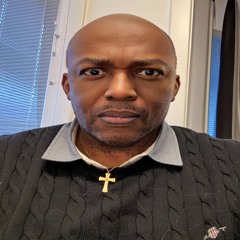
Profiling the heroin trafficking scandal on his Facebook page on Friday, August 28, 2026, Kio Amachree, a Nigerian based in Stockholm, Sweden, insisted that there were incriminating issues in the FBI record of Tinubu. Amachree wrote, “President Bola Tinubu’s lawyers filed sixteen pages before Judge Beryl Howell in Washington, D.C., begging an American court to keep his FBI and DEA files sealed. On Sunday, August 30, the President boarded a plane and left Nigeria for three weeks. And on Monday, the government’s chosen defender, Ambassador-designate Reno Omokri, waved a one-page consular letter from February 2003 and declared the matter closed.
“A twenty-three-year-old courtesy note from an embassy clerk to Inspector-General Tafa Balogun — a routine records check that nobody in this litigation asked for, that answers a question nobody in this litigation is asking — is now presented to 230 million Nigerians as the final word. This is the best they have. A letter that predates the lawsuit by two decades, that says nothing about the 1993 civil forfeiture in which an American court took $460,000 from accounts linked to Mr. Tinubu as suspected proceeds of narcotics trafficking, that says nothing about FBI Case No. 245-IP-71386, nothing about the Form 302 interviews of 1992 and 1993, nothing about why the FBI is right now pleading with a federal judge to explain its secrets behind closed doors, ex parte and in camera, because it says disclosure could endanger lives.
“If there is nothing in the files, why is the President of Nigeria personally intervening in an American courtroom to keep them shut? Why did his lawyers join the Department of Justice in begging for extensions that Judge Howell refused? Why does a man with an “all clear” spend a fortune on Chicago attorneys to argue that Nigerians’ interest in their own President’s past is mere “public curiosity”?
“And here is the political reality no spin can alter. No presidential candidate can honestly run a campaign with this festering behind him. The January 16 election is four and a half months away. Atiku Abubakar and the opposition are reportedly sparing no expense to put the full record before the Nigerian people, and unlike 2023, the documents this time are moving through an American court that has already ruled — twice — against secrecy”.
In defence of Tinubu, a Senior Advocate of Nigeria (SAN) and member of President Tinubu’s legal team in the United States, Wole Afolabi, argued that the President would have been indicted, arrested and prosecuted if there were evidence linking him to drug trafficking in the United States.
Afolabi made the submission during an appearance on Channels Television’s Sunday Politics, while responding to questions about the ongoing legal battle over the release of records held by the United States Department of Justice, FBI and DEA.
“This matter has been going on for quite some time, as you rightly said, and the DEA and other government agencies have produced documents and made available to Mr Greenspan.
“Now Mr Greenspan is asking that documents should be unredacted before they are handed over to him. The way the system works is this: it’s not what you want, it’s what the law stipulates.
“So precisely what we are doing is going under the coverage of the law. It’s what the law gives us the right to do. It would amount to professional malpractice on our part if we don’t take advantage of what the law offers,” Afolabi said.
Afolabi argued that drug trafficking was treated as a serious offence by US authorities and questioned why Tinubu would have been allowed to enter and leave the country without being arrested or prosecuted if there had been sufficient evidence against him.
On its part, the presidency clarified that the ongoing FOIA litigation is a civil records-disclosure dispute and not a criminal case against the President.
The Special Adviser to the President on Information and Strategy, Bayo Onanuga said: “For clarity, the matter is a civil records-disclosure dispute under the United States Freedom of Information Act. It is not a criminal case against President Tinubu, nor has the court found him guilty of any criminal wrongdoing.”
Tinubu’s challenge regarding drug trafficking scandal is yet to abate as the Yoruba Ronu Leadership Forum has lauded Trump’s appointment of lobbyist Von Batten into his government which signals growing Washington relevance of Atiku and opposition campaign.
In a statement signed by the forum President Chief Akin Malaolu last week, it stated that the appointment of Dr. Von Batten, Managing Partner of Washington-based lobbying firm Von Batten-Montague-York, L.C., by US President Donald Trump to serve as a Commissioner on a White House presidential commission, has given fresh international significance to the political campaign of former Vice President of Nigeria, Atiku Abubakar and the opposition African Democratic Congress (ADC).
Fake Certificate Scandal
In a related development, the Federal High Court sitting in Abuja on Tuesday, September 1, 2026 fixed September 28 for further proceedings on the suit seeking to stop Tinubu from seeking re-election in 2027 over alleged certificate forgery.
The suit, marked FHC/ABJ/CS/1888/2026, was brought before the court by Atiku. While the ADC was joined as the 2nd plaintiff, President Tinubu, his political party the ruling All Progressives Congress (APC), and the Independent National Electoral Commission (INEC) were listed as 1st to 3rd defendants, respectively.
In specific terms, Atiku, in a 25-paragraph affidavit he personally deposed to in support of the suit, alleged that Tinubu submitted a bogus National Youth Service Corps (NYSC) discharge certificate to INEC in aid of his qualification for the presidential seat.
Atiku insisted that Tinubu gave false information about himself in the Form CF0001 he tendered before INEC, and drew the court’s attention to the fact that the NYSC certificate he submitted to the electoral body bears the name “Tinubu Bola Adekunle”.
The former vice president said, “I know that the NYSC certificate is clearly not one obtained by the 1st defendant, as it belongs to one Adekunle. The said NYSC certificate, bearing the name Tinubu Bola Adekunle, is herein attached and marked as Exhibit P2.
“I know that the said NYSC certificate is still in existence and in the custody of the 3rd defendant (INEC) and that it is a forgery, as the 1st defendant’s name is not Adekunle, and yet he submitted it to the 3rd defendant to be acted upon as genuine”.
Atiku told the court that Tinubu had been parading the forged certificate since 1999, when he contested the Lagos State governorship election. He, therefore urged the court, among others, to determine, “Whether, in view of the limitations in sections 138(1)(a) & (b) of the Electoral Act, 2026, and section 285(14)(c) of the Constitution of the Federal Republic of Nigeria, 1999 (As Amended), the Plaintiffs will not be allowed to enforce the binding provision of section 137(1)(j) of the Constitution of the Federal Republic of Nigeria, 1999 (As Amended), which applies, mutatis mutandis, to all candidates aspiring to the office of President of the Federal Republic of Nigeria.”
“Whether the 1st and 2nd Defendants should be disqualified for presenting a forged NYSC certificate to the 3rd Defendant for the 2023 and 2027 Presidential Elections, in breach of Section 137(1)(j) of the Constitution of the Federal Republic of Nigeria, 1999 (as amended).”
Upon a positive determination of the legal questions, the plaintiffs sought a “declaration that the 1st Defendant presented a forged certificate to the 3rd Defendant when he contested for Governor of Lagos State in 1999 and thereby breached the provision of section 137(1)(j) of the Constitution of the Federal Republic of Nigeria, 1999 (as amended)”.
Likewise, “An order disqualifying the 1st and 2nd Defendants from participating in the 2027 Presidential Election for presenting a forged certificate to the 3rd Defendant when the 1st Defendant contested for Governor of Lagos State in 1999.”
Meanwhile, when the case was called up, a team of lawyers led by Mr Omosanya Popoola announced their appearance for Tinubu, whom Atiku’s lawyer, Mr Joseph Onu, said they had been unable to serve with a copy of the suit.
Tinubu is not new to certificate forgery scandal. His Chicago State University’s certificate which bears Bola A. Tinubu allegedly belongs to a female student of that school. Investigations revealed that Tinubu may have attended that school but never graduated. Again, Tinubu also claimed to have attended Government College Lagos where he allegedly graduated from in 1970. Unfortunately, the same Secondary School was established in 1974, four years after Tinubu left the school.
In Section 124 of the Constitution, the law says that the presentation of forged or fake certificate for an election will lead to disqualification of the candidate. However, the National Assembly had amended the Electoral Act 2026 to exclude academic qualifications as basis for seeking elective office. Yet, the Constitutional provisions supersedes an Act of the Parliament on issues where they clash, indicating that Tinubu cannot contest the 2027 election except the courts rule otherwise.
The exclusion of academic qualifications in the Electoral Act is viewed by many as a ploy to allow Tinubu contest the 2027 election. Recall that Salisu Buhari, a former Speaker of the House of Representatives was shamefully booted out of that position for possessing fake university certificate from Toronto University in Canada. What baffles many people is how the courts and the NASS have closed their eyes against the fake certificates being paraded by the number one citizen of the country.
This has led to many citizens calling on these two institutions to legalize fake and forged certificates in the country, since they allegedly legalized it for Tinubu.
Angered by Tinubu’s drug trafficking allegations and presentation of fake certificates for election ahead of the 2027 general elections, prominent socio-political organisations have thrown their weight behind calls for presidential candidates and other politicians seeking elective offices to open up their pasts for public scrutiny, saying Nigerians had a right to know the antecedents, educational background, integrity and track records of those seeking their votes.
The Arewa Consultative Forum (ACF), fired the salvo, and said politicians aspiring to lead Nigeria must be prepared to account for their past, stressing that the issue of candidates’ qualifications should go beyond the presentation of certificates to encompass the credibility, consistency and transparency of their personal histories.
The position, however, has triggered a wider debate on the balance between public scrutiny of candidates’ backgrounds, morality, legal qualification and the ultimate responsibility of voters to determine who should govern the country.
Backing the ACF, the Pan Niger Delta Forum (PANDEF), and Middle Belt Forum, MBF, said Nigerians must examine the records of aspirants before entrusting them with political power.
But the Afenifere General Secretary, Chief Ademola Folarin, introduced a caveat, arguing that while interrogating candidates’ backgrounds was desirable, moral judgments could be subjective and must ultimately give way to the legal standards prescribed by the constitution and other statutes.


