In a bid to achieve efficiency in Nigerian Ports and save the country from further losing $19 billion or an equivalent of about N27 trillion yearly to inefficiency in the nation’s ports, stakeholders who brainstormed at a summit in Lagos canvass ‘smart ports’ and the use of emerging technologies to further boost earnings across all the value chains of the Marine and Blue Economy
By Edu Abade
Maritime stakeholders, including the Nigerian Ports Authority (NPA), the Nigerian Maritime Administration and Safety Agency (NIMASA), the Nigeria Customs Service (NCS) and the Maritime Police Command, among others, have canvassed the upgrade of the nation’s ports to smart ports through the deployment of emerging technologies.
They argued that such a move would save the country $19 billion being lost yearly to ports inefficiency, boost revenue generation for all agencies under the Marine and Blue Economy value chain and help create new jobs, as well as open up new frontiers of prosperity for industry players and Nigerians at large.
This was the verdict of participants and panelists at the just concluded 2026 Annual Conference and Awards organized by the Association of Maritime Journalists of Nigeria (AMJON) with the theme: Attaining Ports Efficiency in the Face of Emerging Technologies in Lagos.
In her opening remarks, President of AMJON, Mrs. Vera Osokpo, stated that the media would no longer act as passive observers or mere “cheerleaders” for industry stakeholders, adding, “We are the bridge between policymakers and the ports, between technology and the truck drivers, and between the boardroom and the bedroom.
“When you deploy technology that works, we will amplify it. When you install scanners that gather dust, we’re going to ask, ‘Why?”
Citing statistics from Lagos Chamber of Commerce and Industry (LCCI) estimating that Nigeria loses approximately $19 billion yearly due to port inefficiencies, she stated that despite 80 percent of the nation’s trade passing through its ports, the World Bank reports consistently highlight that about 5 percent of that trade is severely hindered by operational bottlenecks.
Comparing Nigeria’s current state to its Benin Republic, Togo and Ghana, Osokpo referenced the success of regional counterparts such as Singapore’s AI-driven cargo clearance, Rotterdam’s blockchain-based container tracking and Ghana’s seamless 24-hour port operations managed entirely through mobile applications.
She argued since those countries and especially Nigeria’s West African neighbours with lesser capacity and resources could achieve smart and seamless port operations, Nigeria stood a better chance of achieving same or even better outcomes.
Osokpo, therefore, advocated greater transparency, improved access to information and mutual respect between industry players and the media, noting that such collaboration remains crucial to projecting a positive image of Nigerian ports globally.
Also speaking, Chairman, Nigerian Port Consultative Council, Bolaji Sunmola, who chaired the occasion and was represented by Barrister Jean Chiazor Anishere (SAN), outlined five pillars necessary for Nigeria to transition from analogue to smart-ports.
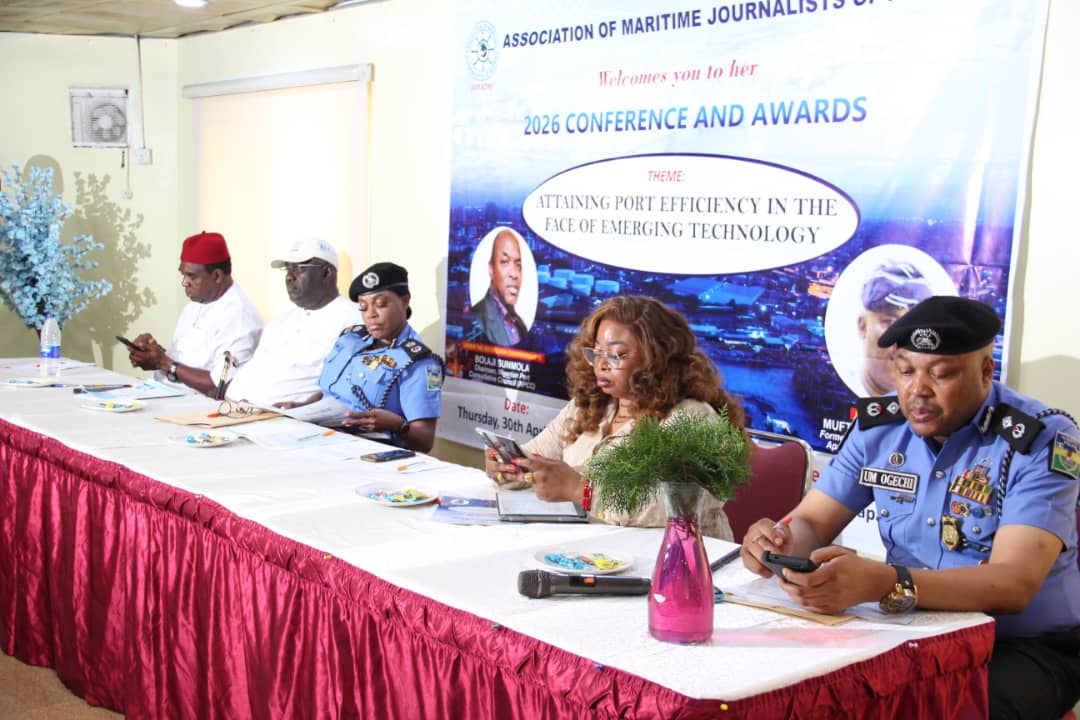
She identified Artificial Intelligence, which she noted was necessary for vessel scheduling, berth allocation, predictive equipment maintenance, and customs risk profiling to eliminate human discretion and corruption.
Urging journalists to report developments in the maritime sector fearlessly and fairly, she further named Blockchain Technology to provide an immutable, transparent record of all transactions, reducing document fraud and unofficial levies and the the Internet of Things (IoT) to utilize RFID tags and sensor-enabled yards for real-time cargo visibility from ships to final destination.
There is also the need for Automated Ports Equipment, which is a mandatory requirement for terminal operators, specifically calling for the federal government to make automation a condition for the renewal of Build-Operate-Transfer (BOT) agreements, as well as Enhanced Security for continuous reliance on the Deep Blue Project and the Suppression of Piracy and Other Maritime Offences (SPOMO) Act to maintain security in the nation’s territorial waters.
“The era of analogue port management is over,” the keynote address concluded. “Countries and ports that embrace technology will lead. Nigeria has the assets, the policy framework, and increasingly the infrastructure to lead in West Africa. What we need now is speed, commitment and collaboration.”
The conference, which hosted key industry figures including the Commissioner of Police (CP), Western Port Authority, Oluwatoyin Agbaminoja highlighted the necessity of a strong governance framework to support these technological advancements.
Speakers collectively called upon regulatory bodies including the Nigerian Ports Authority (NPA), NIMASA, and the Nigerian Shippers’ Council to accelerate the adoption of the National Single Window project and enforce stricter compliance with technological mandates.
In his keynote address, former representative of Apapa Federal Constituency in the House of Representatives, Hon. Muftau Egberongbe, pointed out that the ports serve as critical gateways for international trade and economic growth, but most ports in Nigeria continue to struggle with congestion, avoidable delays, high operational costs and infrastructure deficits.
He also noted that emerging technologies like Artificial Intelligence (AI), Internet of Things, Blochchain, automation and digital twin systems were reshaping port operations globally.
He equally cited the ports of Rotterdam, Shanghai and Singapore as leading global ports with facilities that leverage smart technologies to enhance efficiency, reduce turnaround time and boost competitiveness, adding, “Efficient ports are defined by minimal delays, lower costs, high productivity and improved customer experience and satisfaction, as well as vessel turnaround time, cargo dwell time and customs clearance speed, as major performance indicators.
Egberongbe, who also listed the challenges affecting ports efficiency to include infrastructure gaps, reliance on manual processes, congestion, security lapses, labour-related issues and environmental pressures, explained that AI can help forecast vessels arrival and optimise resource allocation, while IoT enables real-time monitoring of port equipment and operational procedures.
On his part, Managing Director of the Nigerian Ports Authority (NPA), Dr. Abubakar Dantsoho, whose presentation dwelled on The Evolving State of Nigeria’s Port Modernization in the Post-Reform Era, said the Authority has put measures in place to secure a dominant position in intra-African trade under the African Continental Free Trade Area (AfCFTA).
Dantsoho, who was represented by the Manager Tin Can Port Complex, Abubaker Sani Musa, described port modernization as a critical economic imperative that will shape Nigeria’s competitiveness in a rapidly integrating continental market.
“With AfCFTA lowering trade barriers across Africa, countries with faster, more efficient and technology-driven ports will capture a disproportionate share of cargo traffic and investment flows.
Nigeria’s geographical advantage alone is no longer sufficient. Efficiency, speed, innovation and reliability will define leadership in this new era,” he stated.
He stressed that at the core of the NPA’s strategy is a broad reform programme targeting long-standing structural bottlenecks that have historically weakened Nigeria’s port competitiveness, adding that ongoing infrastructure upgrades at the Apapa and Tin Can Island ports was aimed at improving berth productivity, expanding capacity and reducing vessel turnaround time-key indicators of port efficiency.
The NPA helmsman also underscored the increasing role of deep seaports in the country’s port system, particularly the Lekki Deep Sea Port, in transforming Nigeria’s maritime landscape by accommodating larger vessels and boosting cargo throughput.
Industry players view these developments as crucial to easing congestion at the nation’s ports, while positioning Nigeria for greater capacity to handle anticipated rising trade volumes under the AfCFTA. But beyond physical infrastructure, the NPA has committed to accelerating a shift towards digitisation to tackle inefficiencies associated with manual processes and fragmented systems.
Under the transformation mandate, the Port Community System (PCS), the Federal Government’s National Single Window initiative, both designed to integrate port stakeholders, streamline documentation and enhance transparency, remain crucial to attaining efficient ports.
Other papers presented at the conference include: The Evolving State of Nigeria Port Modernization in the Face of AfCTA Regime by the Nigeria Customs Service; Appraising Nigeria’s Maritime Security Gains Under the SPOMO Act by NIMASA; Police and Safety on Nigerian Waterways by the Maritime Police Command, delivered by Udu Moses Ogechi (PhD) and Driving Prosperity for Host Communities: Environmental, Social and Governance (ESG) Perspective by Dr. Mike Egbayelo.
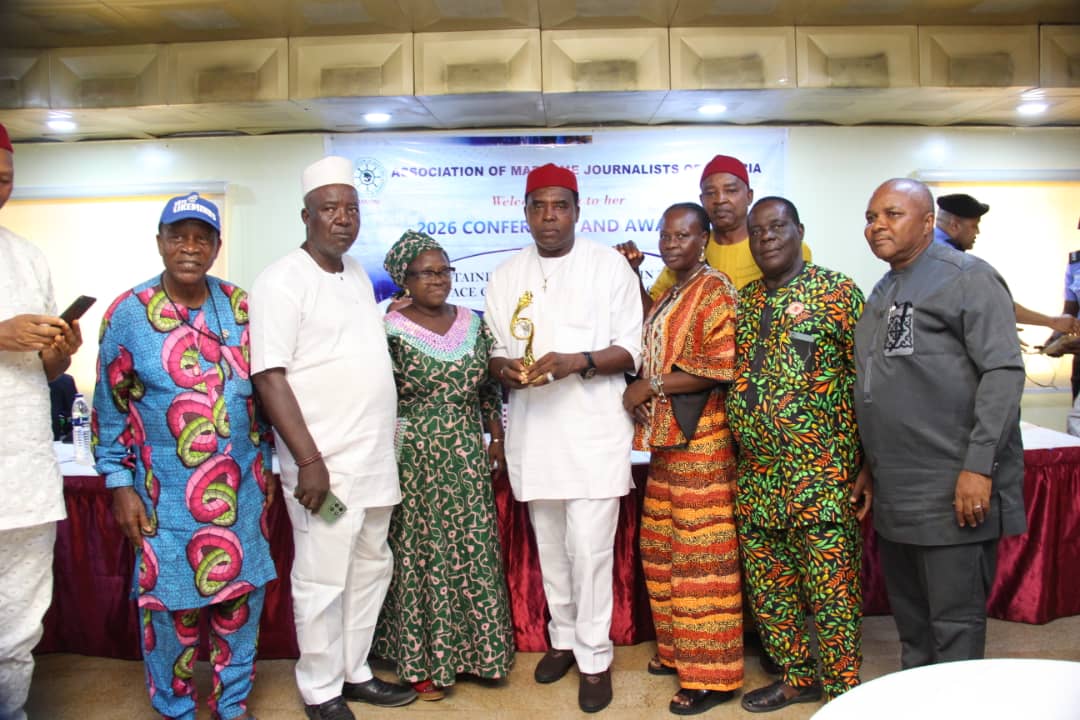
A high point of the event was the presentation of awards to deserving industry players and supporters of the development of maritime journalism. The awardees include Managing Director of Olaide Tyres and Chief Executive Officer of Horlad Apartments, Alhaji Olaide Olaiya, who emerged outstanding Resourceful Entrepreneur of the year 2026 and managing Director of Waltolye Limited, Dr. Atoloye Adewale Joseph, who clinched AMJON’s Excellence Award in Corporate Freight Management and Humanitarian Services.
The association’s Excellence Award in Port Infrastructure Consultancy and Public Service went to a Ports and Surveyor Consultant, Dr. Festus Nwuie; Founder and Global President, Peace, Progress and Unity Global Initiative/Farida Charity Foundation, Ambassador Prevail Farida Ahmed, was recognized as the Iconic Peace Ambassador and Philanthropic Personality of the Year, while Chairman of the Apapa Chapter of the Association of Nigeria Licensed Customs Agents (ANLCA), Chief Chukwumalu Emeka emerged Most Impactful Freight Icon of the Year.
Others are, Lekki Port Manager, Anda Emmanuel (Most Resourceful Port Manager of the Year 2026); Deputy President General, Maritime Workers Union of Nigeria (MWUN), Comrade Funmi Fasan (Most Distinguished Female Entrepreneur of the Year 2026) and Customs Pubic Relations Officer, Lekki Free Trade Zone Command, CSC Abdullahi Lagos Abiola (Most Articulate and Strategic Customs Image Maker of the Year 2026).
Describing AMJON as the pride of maritime reporting, the awardees commended members of the association for their foresight, dedication to duty and commitment to the ideals of journalism, especially in the maritime sector, maintaining that their contributions to the growth and development of the industry and elevation of stakeholders remain indelible.