The intense struggle for the 2027 presidential poll to elect the next landlord of the highly coveted Aso Rock Presidential Villa, exposes the strengths, weaknesses, opportunities and threats (SWOT) of the individual principal actors which are about to redefine Nigeria’s growing desire for credible leadership
By David Oladimeji
Nigeria’s road to the 2027 presidential election is already shaping into what may become one of the most dramatic and unpredictable political contests in the nation’s democratic history.
Though the election remains months away, quiet consultations, backdoor negotiations, defections, and regional alignments are already redefining the battle for Aso Rock Presidential Villa.
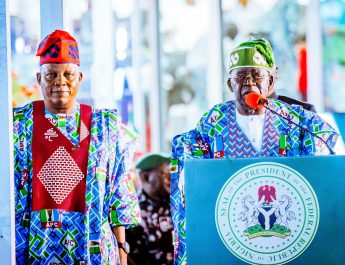
At the center of the unfolding contest is the incumbent President Bola Ahmed Tinubu, whose re-election ambition is expected to rest heavily on the formidable strength of incumbency and federal might.
As the leader of the ruling party, the All Progressives Congress (APC), Tinubu controls significant federal political structures, state alliances, and exerts institutional influence that could prove decisive in 2027.
However, incumbency comes with enormous political risks.
The economic realities facing millions of Nigerians, including inflation, unemployment, foreign exchange instability, and rising living costs, could become major campaign weapons for opposition candidates.
For many voters, the 2027 election may become a referendum on whether Tinubu’s economic reforms delivered meaningful results or deepened hardship.
Still, many analysts argued that as these mounting threats challenge Tinubu’s reelection, the incumbent President has his biggest strengths and opportunities rest on his deep pockets and state funds under his control. Many political observers argued that Tinubu is also in control of the Independent National Electoral Commission (INEC) which Chairman is his appointee, as well as being in control of the country’s security architecture which incumbent presidents have always deployed in the past to theirs and their party’s advantage.
Similarly, political pundits said that Nigeria’s judiciary has never been bastardized in its history more than it is being bastardized under Tinubu’s government. A combination of these factors, pundits argued, is envisaged to give incumbent Tinubu an upper hand at the 2027 presidential election not on account of his visible performance but on account of his ability to deploy these institutions of the state to harass, intimidate voters and opposition parties and manipulate the outcome of the election.
The manipulative tendency of these state apparatuses was on display during the 2023 presidential election when INEC allegedly shut down its server against the uploading of presidential election results under the cover of security agencies, while those of the National Assembly that came simultaneously were smoothly uploaded. The courts were to downplay all evidences relating to the manipulation and stamped Tinubu the winner of that election to the consternation of a bewildered nation.
It is being suspected in many quarters that Tinubu may be plotting, through his body language and that of his foot soldiers, to deploy his deep pockets and these institutions of the state to ensure his victory in 2027 if his opponents fail to checkmate him on time.
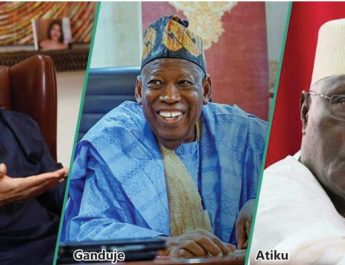
Former Vice President Atiku Abubakar remains one of the most experienced political figures in the race.
Aligning with the African Democratic Congress (ADC), his new-founded coalition political party, Atiku faces mounting pressure to prove he can unite fragmented opposition forces.
Reports of internal confusion surrounding nomination processes have raised concerns about organizational discipline within his camp.
Political analysts also warned that repeated presidential bids on the part of Atiku can create fatigue among voters seeking generational change. Atiku’s major weak point lies on his age, repeated presidential contests which are appearing monotonous and the contentious zoning arrangement. Another weakness of the former vice president is that he is considered among the old political elite who have nothing much to deliver in a fast-changing world ruled by the famed Artificial Intelligence (AI). But Atiku’s strength and opportunity lie on the vast number of votes available in the northern region where it is hoped that ethnic and religious sentiments may generate sympathy votes for him.
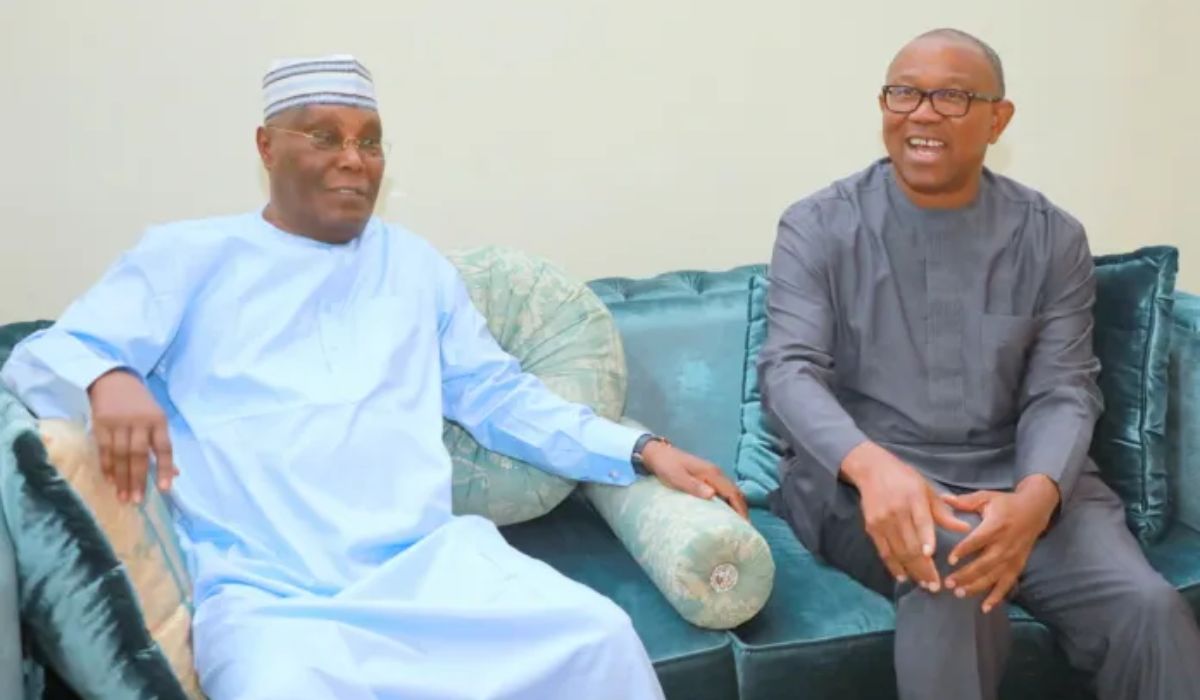
The changing political energy appears to be favouring Peter Obi, the expected presidential candidate of the Nigeria Democratic Congress (NDC). Obi continues to build momentum among young voters, urban professionals, middle-class Nigerians, and frustrated citizens demanding a break from traditional politics.
His influence, once largely concentrated in the South-East, is gradually expanding into North-Central and other parts of the Northern region. Obi’s major strengths are his youthful and charismatic appeal, middle-class credibility and followership, as well as strong South-east, South-south, North-central footing. During the last presidential election, Obi defeated Tinubu both in Lagos and Abuja and even in Rivers State where the result was allegedly manipulated in favour of Tinubu by the current Minister of the Federal Capital Territory (FCT), Nyesom Wike, who governed the state at the time. Obi is also touted to have a clean bill of health when it comes to corruption, an edge that is not available to Tinubu and Atiku, his major opponents.
If Obi successfully converts digital popularity into grassroots structures nationwide, he could become the biggest political disruptor of 2027.
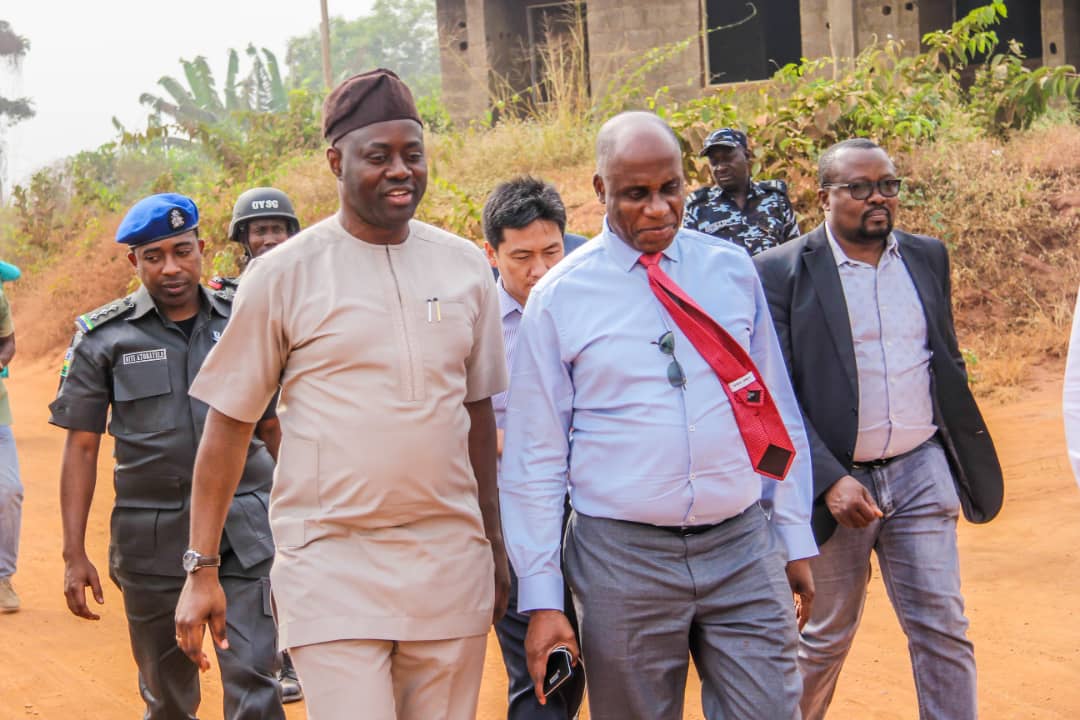
Meanwhile, Seyi Makinde remains a growing factor in national calculations. Makinde has declared his presidential ambition under the Allied People’s Movement (APM) platform. The Oyo State governor, last Friday, May 14, formally declared his intention to contest the 2027 presidential election under a new opposition alliance involving the People’s Democratic Party (PDP) and APM during a rally in Ibadan, the state capital. Makinde is considered a weak opponent who lacks the needed popularity to win presidential election. However, he is expected to share South-west votes with Tinubu.
His candidacy could divide Yoruba votes traditionally considered a major advantage for Tinubu.
Former Rotimi Amaechi remains another intriguing wildcard amid speculation that he could emerge as a vice-presidential option in opposition coalition talks.