The Southern Nigeria presidency gambit exposes how the Nigerian Democratic Congress (NDC’s) zoning move sends shockwaves through the Atiku Abubakar’s African Democratic Congress (ADC) camp and triggers anxiety within the All Progressives Congress (APC)
By David Oladimeji
Nigeria’s political landscape is once again being stirred by the familiar but controversial debate over power rotation, and this time, the latest tremor is coming from the National Democratic Coalition (NDC), whose decision to zone its presidential ticket to the South has sparked intense conversations across party lines.
What appeared at first like a routine internal political decision has suddenly evolved into a major national conversation capable of reshaping alliances ahead of the 2027 general elections.
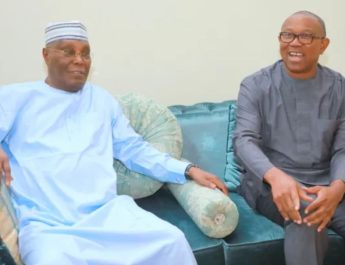
For the former Vice President Atiku Abubakar, the announcement by the NDC reportedly landed like a political thunderbolt. On Saturday, May 9, 2026, the NDC zoned its presidential and vice presidential ticket to the southern and northern Nigeria respectively. The development was viewed by many analysts to have cleared the coast for Peter Obi and Rabiu Musa Kwankwaso who joined the party lately to clinch the presidential and vice presidential ticket respectively to contest in the presidential election of 2027.
The NDC resolution was made at its maiden National Convention held at the Los Angeles Events Centre, Abuja sequel to a motion moved by the member representing Ogbaru Federal Constituency of Anambra State in the House of Representatives, Hon. Victor Afam Ogene.
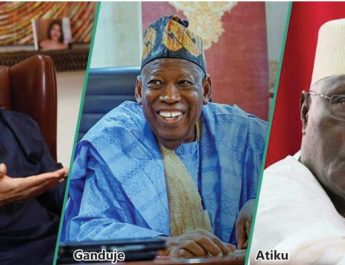
Atiku, who has remained one of the most consistent presidential contenders in Nigeria’s democratic history, is strategizing for another shot at the presidency having bought and submitted his African Democratic Congress (ADC) nomination form.
However, the NDC’s latest position has introduced a fresh layer of uncertainty into Atiku’s political calculations, especially as the argument for equity and regional balance gains momentum across the country. In a prompt reaction to the NDC’s zoning, Atiku said, “It is important to ask how a southern opposition candidate can realistically defeat a southern incumbent president.
“No such electoral outcome had occurred in the country’s political history.”
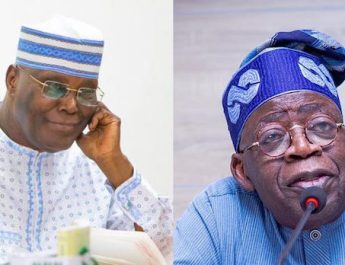
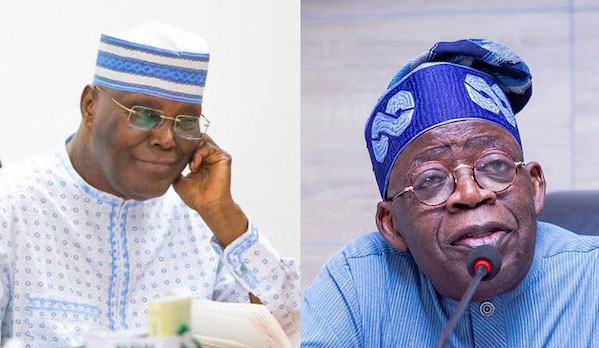
He maintained that while the ruling Bola Tinubu-led administration and the All Progressives Congress (APC) may choose to retain power within the South, the opposition must approach the contest with a more strategic calculation rather than relying on sentiment or symbolic considerations.
He said defeating an incumbent President required broad political realism and coalition-building, warning that emotional appeals around zoning could undermine the opposition’s chances in 2027.
He also rejected claims that fairness demands that there should be another southern presidency, noting that by 2027, the South would have occupied the presidency for about 18 years in the Fourth Republic, compared to about 10 years for the North.
Atiku said extending southern occupancy of the presidency by another four years would further widen the imbalance rather than address it.
He accused some political actors of inconsistency over zoning, recalling that the principle was effectively set aside in 2011 after the death of former President Umaru Musa Yar’Adua, when many northern politicians backed former President Goodluck Jonathan despite expectations that power should remain in the North.
He said: “It is contradictory for individuals who supported a southern presidency at that time to now present zoning as an inviolable principle.”
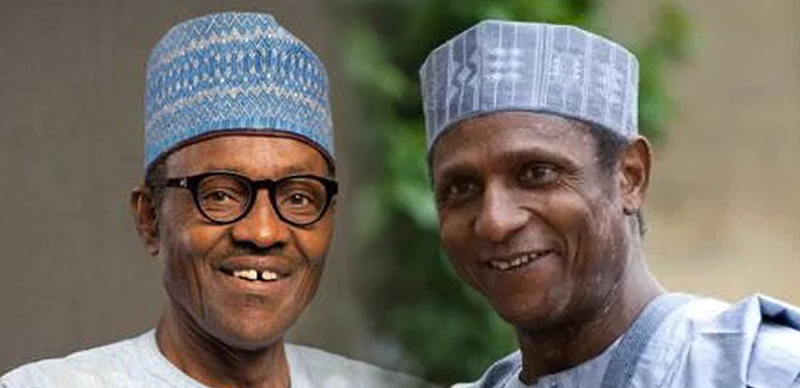
Recall that the zoning formula afforded Atiku the opportunity to contest the 2007, 2015 and 2019 presidential elections during which the slot were exclusively ceded to the Northern part of the country. In those presidential elections, most major parties zoned their presidential slot to the north, Umaru Yar’Adua and Mohammadu Buhari both of blessed memory won the elections. However, in 2023, Atiku vehemently violated the zoning, contested for and won the People’s Democratic Party’s (PDP’s) presidential ticket thereby sparking outrage across the polity.
Political observers argue that the zoning decision reflects growing sentiment that Southern Nigeria should retain presidential power after the administration of President Bola Ahmed Tinubu.
Supporters of the zoning arrangement insist that allowing power to rotate between the North and South remains one of the few mechanisms capable of preserving national unity in a deeply divided political environment.
Within Atiku’s political camp, there are reportedly concerns that such sentiments may weaken northern support for another presidential bid.
Some loyalists are said to be pushing back against what they describe as an unfair narrowing of democratic choices based solely on geography.
They argue that leadership competence, national acceptance, and experience should be placed above regional considerations.
Yet, political reality in Nigeria often bends toward unwritten agreements and strategic calculations.
Beyond Atiku’s camp, the ruling APC is also said to be watching developments with growing concern.
Although the APC currently controls federal power, internal succession battles have reportedly intensified behind closed doors.
Several prominent southern and northern politicians within the ruling party are quietly positioning themselves for relevance in the post-Tinubu era.
The NDC’s zoning declaration may further complicate those ambitions by strengthening southern political agitation.
There are also fears that new coalitions may emerge as dissatisfied politicians explore alternative platforms ahead of 2027.
Political strategists believe Nigeria may soon witness fresh defections, unusual alliances, and ideological compromises.
The unfolding developments suggest that the road to 2027 may be defined less by policy debates and more by regional bargaining.
For millions of Nigerians battling economic hardship, insecurity, and unemployment, the political drama may appear disconnected from their daily realities.
Still, in a country where political zoning often shapes leadership outcomes, the NDC’s latest move may have just triggered the opening chapter of another fierce struggle for power.