The Lagos State political environment shakes due to the rising storm over political imposition and the struggle for internal democracy
By David Oladimeji
The political atmosphere in Lagos State is gradually thickening as attention shifts toward the 2027 governorship election, reviving an old but unresolved debate: who truly selects those who govern the state?
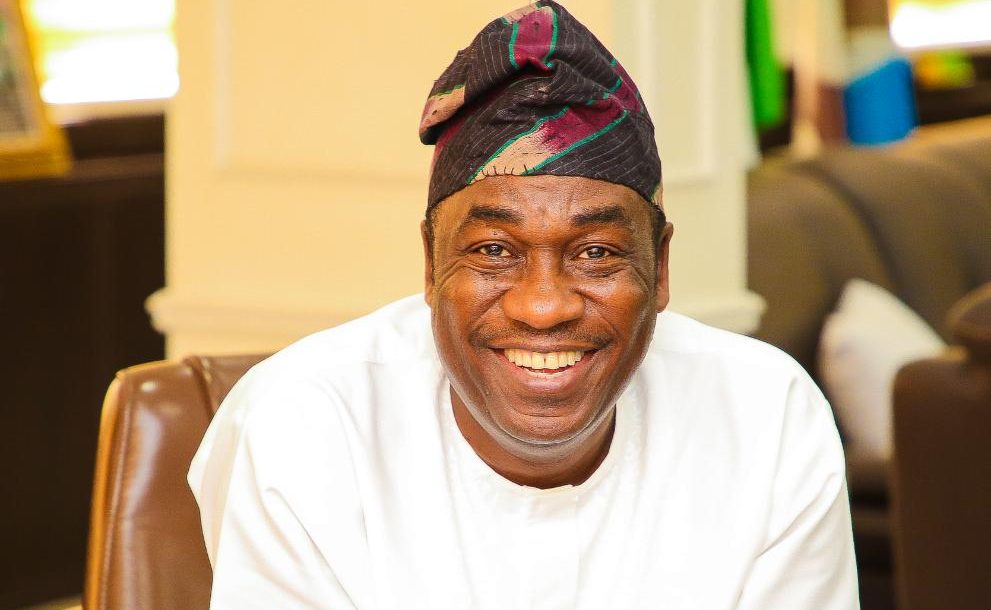
At the centre of the current political tension is the growing speculation around the reported anointing of Deputy Governor Obafemi Hamzat as a preferred successor within influential circles of the All Progressives Congress (APC).
There is an official confirmation of the selection of Hamzat as the next Lagos governor by President Bola Tinubu which has triggered unease across party lines and within the civil society.
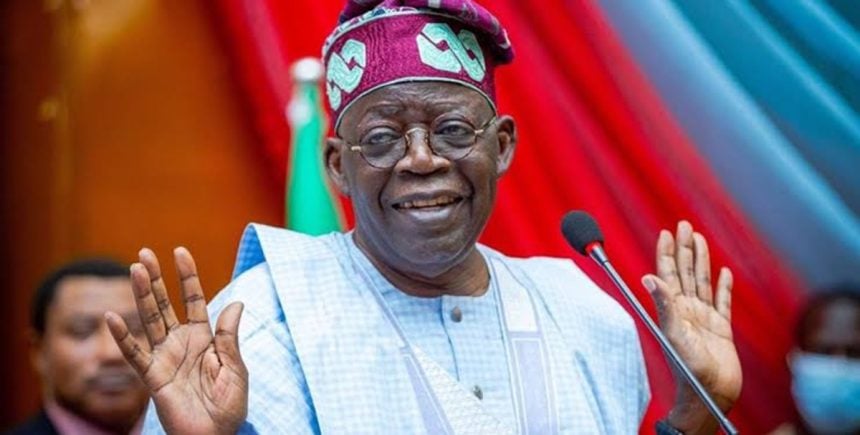
President Tinubu formally endorsed the Lagos State Deputy Governor, Hamzat as the APC consensus candidate for the 2027 governorship election in the state.
The President’s Special Adviser on Information and Strategy, Bayo Onanuga, disclosed this on Wednesday, April 29, 2026 in a post on X, stating that the endorsement was made during a meeting with members of the Lagos Governance Advisory Council (GAC), led by Tajudeen Olusi, alongside Governor Babajide Sanwo-Olu.
Tinubu’s endorsement of the deputy governor, has since consolidated Hamzat’s position within the ruling party ahead of the 2027 general election. It is instructive to note that since 2007 when he left the state’s Government House as governor, Tinubu has singlehandedly decided, chosen, handpicked and anointed his successors as Lagos State governors without interference from anybody. Also, whomsoever Tinubu selected since then would automatically become the governor of Lagos State notwithstanding jamboree governorship elections that were conducted to fulfill all righteousness.
Since 2007, governorship elections in Lagos have remained shambolic, chaotic and a waste of resources because according to analysts, candidates of other parties contesting against Tinubu anointed candidate would end up wasting their hard-earned resources.
Analysts also described the development as part of a recurring pattern that many refer to as “managed democracy,” where outcomes are allegedly shaped long before ballots are cast.
For critics, the issue transcends personalities and points instead to a deeper structural challenge within party politics in Lagos State.
They argue that when political choice is narrowed by internal arrangements, democracy risks becoming a ritual rather than a competition.
Political analyst Dr. Kunle Adebisi described the situation as “A slow erosion of democratic choice disguised as strategic consensus-building.”
He warned that when a few actors dominate candidate selection, elections lose unpredictability and, with it, public excitement and trust.
“Democracy thrives on uncertainty,” he noted. “Once outcomes feel predetermined, citizens disengage emotionally and politically.”
Across political and civic spaces, concerns are growing that internal democracy within major parties is steadily weakening in favour of elite negotiation.
A civic reform advocate, Chinyere Okonkwo, argued that this trend sidelines emerging leaders who lack access to powerful political networks.
According to her, “What we are seeing is a system where loyalty is rewarded more than competence, and connection matters more than capacity.”
She added that the development creates a political environment where citizens are expected to endorse choices they did not influence.
Observers frequently reference past leadership transitions involving former governor Babatunde Raji Fashola, Akinwunmi Ambode, and current governor Babajide Sanwo-Olu as part of a broader discussion on succession politics in the state.
While supporters of the ruling establishment argue that such transitions ensure continuity and policy stability, critics insist they reflect excessive centralization of political authority.
A political sociologist, Prof. Idris Bello, cautioned that “Continuity without competition gradually hardens into controlled democracy.”
He explained that when pathways to leadership are tightly managed, institutions may appear stable while public trust quietly erodes underneath.
Within party structures, some insiders reportedly worry that repeated exclusion of aspirants could create long-term resentment.
They warn that while imposed consensus may secure short-term unity, it often plants the seeds of future internal fractures.
Civil society voices also cautioned that voter apathy could deepen if citizens begin to see elections as formalities rather than genuine choices.
They argued that once the electorate believes decisions are already made, participation naturally declines.
The Independent National Electoral Commission (INEC) has been urged to maintain strict oversight of party primaries to safeguard internal democratic processes.
As 2027 draws closer, many residents of Lagos State said the real question is no longer only about who will emerge, but about whether the process itself will remain open, competitive, and credible.
Ultimately, the unfolding debate reflects a deeper anxiety: whether the democratic space in Lagos is expanding with its population—or quietly narrowing under the weight of Tinubu’s draconian political control.