

As President Bola Tinubu extends olive branch to dare-devil terrorists, fear empties schools’ classrooms across Nigeria, even as many citizens regard government’s threats to exterminate terrorism as mere empty threats that carry no force of action
By David Oladimeji
The school bell, once a symbol of hope and opportunity, is increasingly becoming a sound of uncertainty across several Nigerian states. As President Bola Tinubu renews calls for terrorists and armed groups to lay down their weapons and embrace peace, a different reality is unfolding in communities where fear now dictates whether children go to school or not.
From Niger to Plateau, Benue to Nasarawa, and parts of Oyo and Edo States, educational institutions are either shutting their gates or operating under an atmosphere of anxiety as security concerns deepen. What was once considered an emergency measure has gradually become a recurring feature of Nigeria’s educational landscape.
For many parents, the question is no longer about academic excellence but survival and return of their wards from school. The haunting memories of school abductions and attacks on learning institutions continue to influence decisions being made in households across affected regions.
In communities where rumours of impending attacks spread faster than official reassurances, parents are quietly withdrawing their children from boarding schools. Some have relocated their wards to urban centres, while others have suspended education altogether until what they describe as “safer days” appear.
The irony is difficult to ignore. While government officials continue to emphasize educational development as a cornerstone of national progress, insecurity is steadily eroding access to the very classrooms meant to produce the next generation of leaders.
President Bola Tinubu’s appeal and threats to violent groups have been welcomed by some peace advocates as a necessary component of conflict resolution. Yet many citizens believe dialogue without visible security improvements offers little comfort to families living under constant threat.
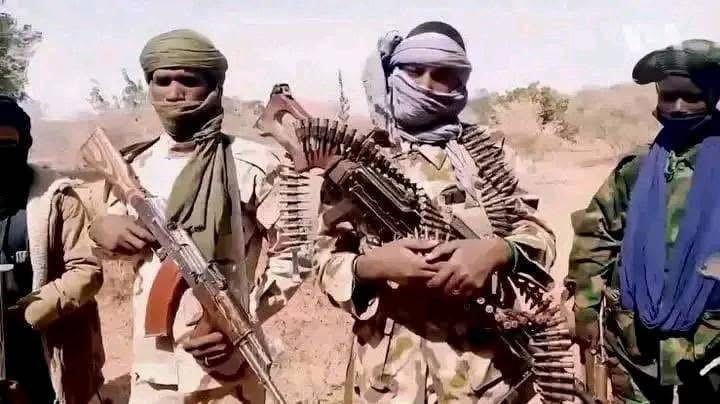
“The President’s message is noble, but parents need more than speeches; they need guarantees,” said Ibrahim Gambo, Executive Director of the Centre for Community Security and Development. “Children cannot learn effectively when communities are living in fear”, Gambo added.
Analysts cautioned that the growing school closures reveal a deeper national challenge—one that extends beyond terrorism itself. They said this challenge exposes weaknesses in intelligence gathering, rural policing, emergency response systems and educational infrastructure.
In several affected communities, school administrators now spend as much time discussing security protocols as they do academic performance. Fences are being reinforced, entry points monitored and emergency evacuation plans developed.
Yet, experts argued that physical barriers alone cannot solve the problem. According to education consultant Dr. Adaora Benson, the persistent targeting of schools reflects a broader failure to secure vulnerable populations.
She said, “When schools become battlefields of fear, society loses more than classroom hours. It loses confidence in the future.”
The economic consequences are equally troubling. Many private schools in affected regions report declining enrolment as parents seek safer alternatives or relocate entirely. Some institutions are struggling to pay staff due to shrinking revenues.
Teachers have also become casualties of the crisis. Many educators posted to rural areas are requesting transfers, citing security concerns for themselves and their families. Others have abandoned their positions altogether.
For students, the disruption extends beyond missed lessons. Psychologists have warned that prolonged exposure to insecurity can leave lasting emotional scars, affecting concentration, confidence and overall development.
Aisha Mohammed, coordinator of the Parents Alliance for Safe Education, described the situation as heartbreaking. “Every child deserves to worry about examinations, not whether armed men might invade their school,” she said.
Critics argued that Nigeria’s Safe Schools Initiative, though well intentioned, has not been implemented with the urgency required by current realities. In many rural communities, stakeholders say promised protective measures remain largely invisible.
Meanwhile, community leaders continue to call for stronger collaboration between security agencies, traditional institutions and local residents. They insist that intelligence from grassroots communities remains one of the most effective tools against criminal networks.
The situation also raises uncomfortable questions about national priorities. While billions of naira are invested annually in educational reforms, recurring security threats continue to undermine those investments and discourage participation in formal education.
Analysts also warned that if the trend persists, Nigeria could witness a new wave of school dropouts, particularly among vulnerable populations already facing economic hardship. Such an outcome would have profound implications for national development and social stability.
For many observers, the challenge confronting the nation is no longer simply about reopening schools. It is about restoring public confidence that classrooms remain places of learning rather than potential targets of violence.
Until that confidence is rebuilt, the silence echoing through abandoned school corridors in parts of Nigeria will serve as a sobering reminder that insecurity is not only a security crisis—it is rapidly becoming an education crisis capable of shaping the country’s future for generations.
Meanwhile, for the umpteenth time, President Tinubu has slammed terrorists with threats to crush them if they fail to lay down their arms and return to normal life. Tinubu urged citizens to remain united in confronting what he called a common threat, insisting that terrorism and banditry would eventually be defeated.
Tinubu issued one of his strongest warnings to bandits, kidnappers and sponsors of terrorism, declaring that those who continue to threaten Nigeria’s peace and security will face the full force of the law.
In a hard-hitting nationwide Democracy Day broadcast message on Friday, June 12, 2026, aimed at criminal elements across the country, the President said the window for surrender and repentance would not remain open indefinitely.
He said, “To bandits, kidnappers, and sponsors of terror: Surrender or face the full force of the Nigerian State. These windows of surrender will not remain open forever. No mercy will be shown to those who trade in the blood of Nigerians.”
His comments come amid recurring debates over the identity of criminal groups and concerns that insecurity could deepen ethnic divisions in the country.
However, even as he vowed decisive action against perpetrators of violence, Tinubu cautioned Nigerians against politicising insecurity or attaching criminality to any ethnic group.
According to him, “At a time like this, let us not assign blame or point fingers. Crime has no ethnicity.
“We must stand united and be assured that the enemies of our nation shall soon be history.
“We will triumph over terror and continue to build a more prosperous nation.
Tinubu’s threats to terrorists, security experts claim, appear like a cliché which has no element of seriousness attached to them. These analysts insist that government’s threats against terrorists even embolden them to continue to unleash mayhem on the citizens while governments remains helpless.